Wrap your pork butt when it hits 160–180°F internally and the bark looks dark and set—usually around 4–6 hours in. You’ll know it’s ready when the surface feels hard and mahogany-colored, not soft or pale. This timing lets you push through the temperature stall while locking in moisture and fat. Use butcher paper to preserve bark or foil for maximum tenderness. Get the timing right, and you’ll finish strong without dry, mushy results.
When to Wrap a Pork Butt: Temperature, Bark, and Timing
Wrapping your pork butt at the right moment can make or break your whole cook. You’ve got two solid approaches: watch your internal temperature or check your bark development. Most pitmasters wrap around 150–170°F when the stall hits hard. This timing locks in moisture and keeps things juicy. Alternatively, you can wrap after four to six hours once your bark sets nicely. Either way works, depending on your style. After wrapping, keep cooking until you hit that sweet internal temperature 195–205°F range. That’s when your meat’ll pull apart like butter. Whether you choose foil or butcher paper depends on how crispy you want that bark. Both methods speed things up and deliver results you’ll love.
The 160–180°F Rule: When to Wrap (and When to Skip It)
You’ve probably heard the 160–180°F sweet spot mentioned by every pit master online, and here’s why it actually matters. At this temperature range, your bark’s already set nicely, but you’re still trapping moisture before things get dry and tough. The key is knowing whether you’re prioritizing that gorgeous crust or juiciness—because honestly, wrapping too early tanks your bark, while waiting too long just drags out your cook time.
Bark Development Before Wrapping
When your pork butt hits that sweet 160–180°F range, you’ll face a pivotal decision: wrap now or wait? Here’s the thing—your bark development actually matters more than the thermometer reading. If that crust still looks soft or pale, wrapping too early will just steam it away. You’re looking for a dark, textured exterior that feels set when you lightly scrape it with your fingernail. Once you’ve got that bark looking right, wrapping becomes your secret weapon for stall management. The moisture seal accelerates finishing while keeping that hard-earned crust intact. Trust your eyes here. That visual crust appearance tells you everything about wrapping timing. When the bark’s truly ready, you’re golden.
Temperature Indicators For Wrapping
So how do you know the exact moment to wrap? Your internal temperature becomes your best friend here. You’re looking at a specific window that’ll guide your wrap decision and help you nail the stall timing.
Most pitmasters watch for these temperature milestones:
- 150–165°F – Your meat’s hitting the stall zone, and bark’s looking solid enough to protect during wrapping.
- 165–170°F – This sweet spot balances bark development with moisture retention needs perfectly.
- 170–180°F – You’re getting late-stage bark, but wrapping still locks in juices before the final push.
Skip obsessing over time alone. Instead, combine internal temperature readings with how your bark looks. You’ll know you’re ready when both factors align, signaling it’s time to wrap and power through toward that 195–205°F finish.
Moisture Retention Through Wrapping
Hitting that 160–180°F sweet spot is where the real magic happens for keeping your meat juicy. At this stall temperature, wrapping your pork butt becomes your top-secret tool. You’ll trap steam and precious juices inside, preventing them from escaping into thin air.
Here’s the thing: foil works best if you want maximum moisture retention. It basically locks everything down. Butcher paper lets some moisture escape, but you’ll keep more of that coveted bark texture you worked hard to develop.
When you wrap, those captured juices stay put. You can even pour them back over the meat later for extra flavor and tenderness.
Skip wrapping too early though. Let that bark set first, or you’ll end up with mushy, disappointing results. Timing matters more than you’d think.
Spot Ready Bark: Color, Texture, and Feel
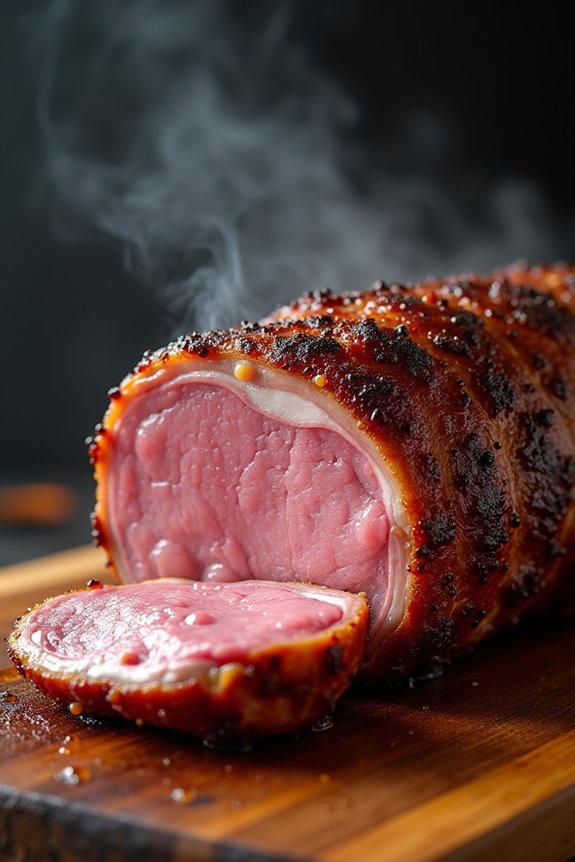
How’s your pork butt looking so far? You’re getting close to wrapping time, so let’s talk bark. Your crust needs to feel ready before you wrap it up.
Here’s what you’re checking for:
- Color and appearance – Look for a dark, mahogany-colored surface that appears dry and hard, not glossy or wet.
- Texture check – Scrape your fingernail across the bark gently. You’ll feel a satisfying crunch if it’s set properly.
- Temperature timing – Around 165°F at the stall, your bark usually reaches peak readiness for wrapping.
A firm bark protects your meat during the final cook. Wrapping too early risks mushiness, so trust what you see and feel. You’ve got this.
Account for the Stall: Why Your Butt Stops Rising
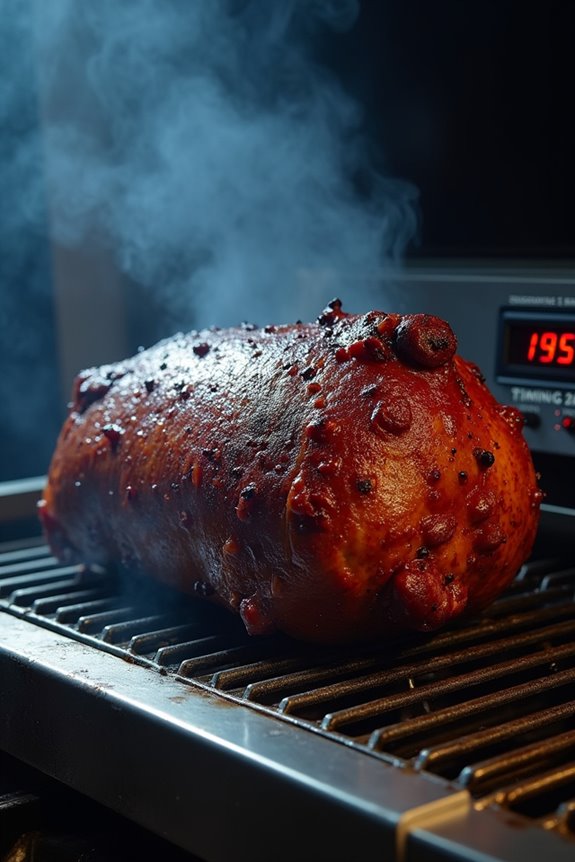
Your pork butt’s temperature will hit a frustrating plateau around 150–170°F, where it seems stuck no matter what you do. This stall happens because moisture’s evaporating from the meat’s surface, and you’ll need to wrap it with aluminum foil or butcher paper to push through. Wrapping around 4–6 hours in, or when you hit 160–180°F internally, traps heat and moisture, letting you reach that tender 195–205°F finish without losing your bark.
The Stall Explained Simply
Why does your pork butt suddenly stop climbing in temperature? Welcome to the stall—that frustrating plateau we’ve all encountered. Here’s what’s actually happening:
- Moisture evaporation cools your meat. As internal temperature rises, surface moisture evaporates and pulls heat away from the butt. This cooling effect temporarily halts temperature progress.
- The stall typically hits around 150–165°F. You’ll notice it after several hours of smoking when bark’s developing nicely.
- Wrapping pushes you through it. By wrapping your butt around 150–170°F, you trap moisture and heat, speeding up the stall considerably.
The stall isn’t permanent—it’s just your butt’s way of resisting. Understanding this natural process helps you stay patient and decide when wrapping makes sense for your cook.
Temperature Plateau And Wrapping
Once you understand why the stall happens, you’re ready to use wrapping as your hidden tool against it. When your pork butt hits that annoying temperature plateau around 4–6 hours in, wrapping becomes your covert weapon. Watch for an internal temperature between 150–170°F, though many pitmasters aim for 165–175°F specifically. At this point, wrapping locks in moisture that’d otherwise escape into thin air. This clever move pushes your meat toward that final target of 195–205°F without endless waiting. You’re basically telling evaporation to take a hike. The tradeoff? Wrapping limits additional smoke exposure, but it protects your bark and keeps those precious juices exactly where they belong—inside your meat, not floating away.
Managing Time Through Stall
Around the 4–6 hour mark, your pork butt’ll hit what we call the stall—that frustrating moment when the internal temp plateaus right around 165°F. It’s totally normal, but here’s the thing: moisture’s actively evaporating from the meat’s surface, which actually slows temperature rise.
You’ve got options for pushing through:
- Wrap immediately when you hit 150–160°F to trap steam and speed things along toward 195–205°F doneness.
- Keep cooking unwrapped if you’re chasing maximum bark, but expect longer stall times and patience.
- Monitor closely every 30–45 minutes so you’re not caught off-guard by timing surprises.
Wrapping creates that braising environment that preserves moisture beautifully. Most of us wrap because honestly, who wants to wait eight hours? Your call, friend.
Why Wrapping Matters: Moisture, Speed, and Crust
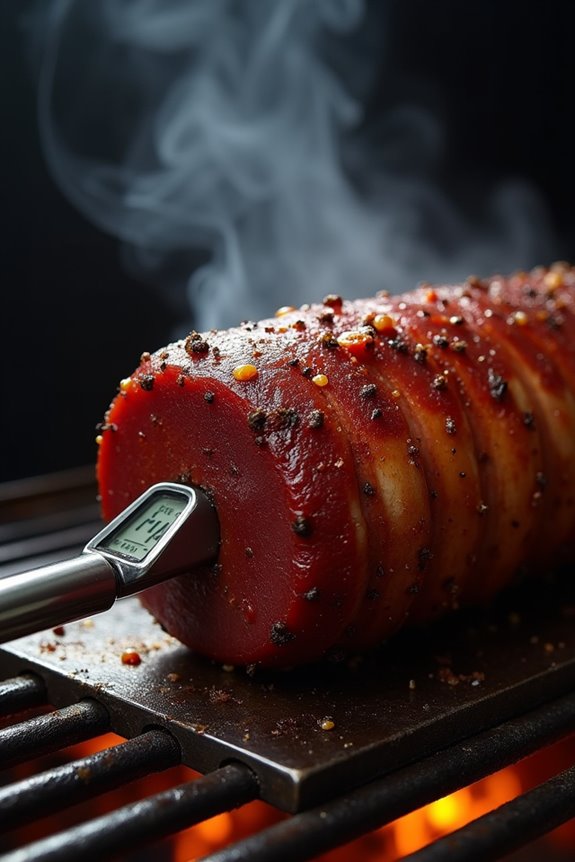
Wrapping your pork butt isn’t just a fancy competition trick—it’s actually a breakthrough for your results. When you wrap around 160–180°F, you’re locking in moisture and fat drippings that’d otherwise escape as steam. This creates a steamy braising environment that infuses flavor while protecting your crust from over-browning.
| Wrapping Method | Moisture | Bark Quality |
|---|---|---|
| Aluminum Foil | Maximum | Softer |
| Butcher Paper | Balanced | Preserved |
| No Wrap | Minimal | Crispier |
You’ll also push through the stall faster because trapped heat and moisture accelerate cooking. The speed boost means you’re finishing dinner closer to your target time. Here’s the balance: wrap too early and your bark stays mushy; wrap too late and you’re cooking longer anyway.
Foil or Paper? Which Wraps Faster
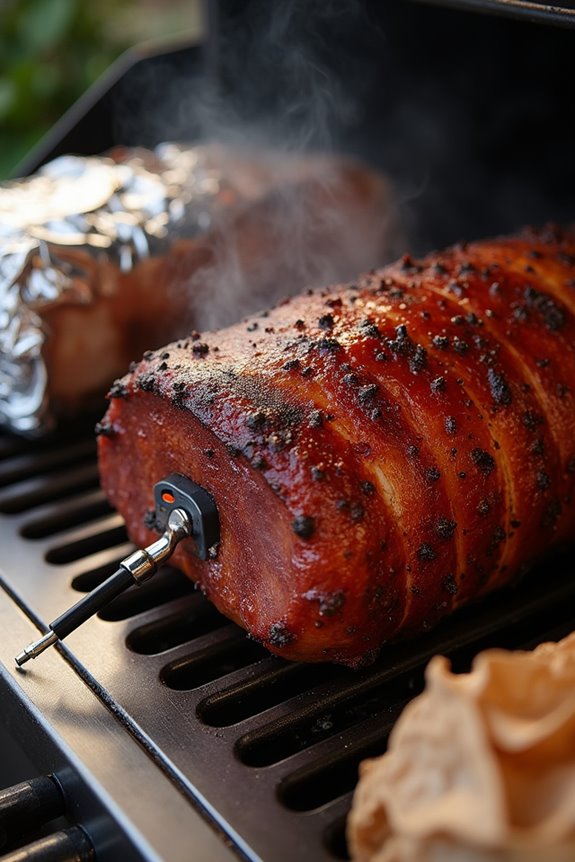
Here’s what you’re really deciding between:
- Foil wraps faster because it traps steam and braises your meat. You’ll shave 1–4 hours off your total cook time, pushing through that stubborn stall around 150–160°F.
- Paper preserves more bark and smoke flavor, but it takes longer. You’re trading speed for that crispy, smoky exterior you’ve been smoking for hours.
- Foil creates a softer crust from all that moisture, while paper lets steam escape and keeps your bark texture intact.
Common Wrapping Mistakes and How to Avoid Them
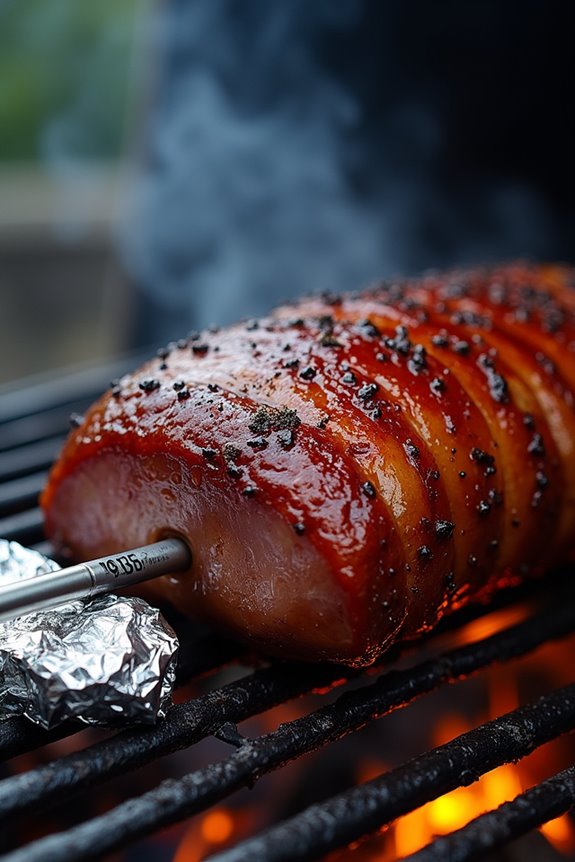
Because you’ve already invested hours in smoking that pork butt, wrapping mistakes can tank your whole cook. The biggest pitfall? Wrapping too early, which suffocates your bark development before it forms that coveted crust. Wait until your butt hits 150–170°F, or you’ll end up with mushy, disappointing bark instead.
On the flip side, wrapping too late extends your cook time unnecessarily. You’re basically working against yourself. Choose your wrap wisely—foil speeds things up but sacrifices smoke flavor, while butcher paper preserves it better for moisture retention.
Seal everything tightly. Loose wraps let steam escape, ruining your moisture retention efforts. Consider adding a foil pan with juices underneath for extra insurance. These small tweaks transform your wrapping timing from stressful to successful.
The 5-Hour Rule: Quick Reference for Most Cooks
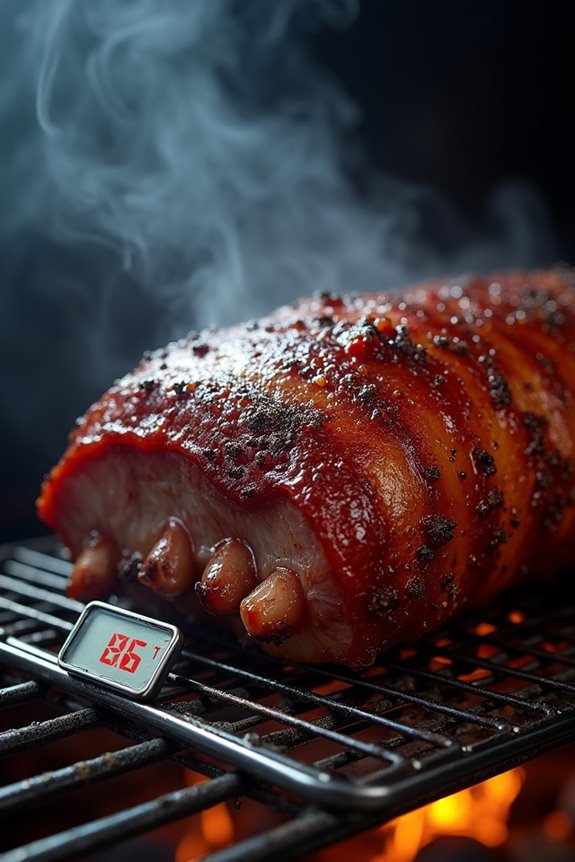
You’ve probably heard the five-hour rule thrown around at every BBQ gathering, and honestly, it works for most folks. Here’s the thing: after about five hours of smoking, your pork butt usually hits that 150–170°F sweet spot where wrapping makes sense. But here’s where it gets tricky—your smoker’s personality might speed things up or slow them down compared to someone else’s setup.
Why Five Hours Works
Why’d most pitmasters land on five hours? It’s the sweet spot where everything clicks together perfectly.
- Your bark’s fully developed. You’ve got that dark, crusty exterior everyone craves. It’s not wimpy or pale anymore—it’s legit.
- The stall’s approaching. Your pork’s hitting that temperature plateau around 160–180°F. Wrapping now prevents endless waiting and keeps things moving.
- Moisture stays trapped. When you wrap at this moment, juices don’t escape into thin air. They stay locked in your meat instead.
Five hours gives you the best of everything. You’re not sacrificing bark for tenderness. You’re not rushing the process either. It’s balanced, practical, and works across different smokers and temperatures. That’s why everyone recommends it.
Adjusting For Your Smoker
Not every smoker runs the same, so that five-hour mark isn’t totally set in stone. If your smoker runs hotter than average, you’ll hit the stall faster. That means you might wrap around the 4-hour point instead. Conversely, slower smokers might need closer to 5.5 hours before wrapping makes sense.
Here’s what matters most: watch your internal temperature, not just the clock. Aim to wrap when you hit 160–170°F. That’s when the stall typically kicks in, and wrapping seals in those precious juices.
You know your smoker best. Track how it performs over a few cooks. Once you figure out your rhythm, you’ll nail the timing every single time.
Adjust for Your Smoker: 225°F vs. 275°F Timing
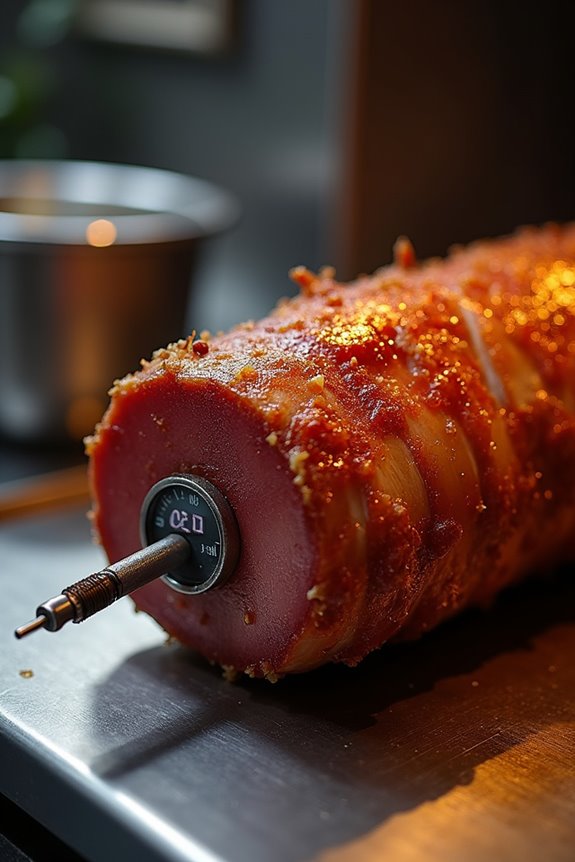
Because your smoker’s temperature dramatically changes how long everything takes, you’ll want to know what to expect before you even light it up. The wrap timing and internal temperature targets shift based on your heat choice.
Here’s what you’re working with:
- At 225°F, plan roughly 2 hours per pound, so an 8–10 lb butt takes 16–20 hours total with wrapping around 160–180°F internal temperature.
- At 275°F, you’re looking at 1–1.5 hours per pound, finishing in 8–15 hours with potentially earlier wrapping once you hit that sweet spot.
- The stall duration shrinks at higher temps, meaning less waiting around before your final push to the finish line.
Temperature guides your decisions more than the clock ever will.
After the Wrap: Resting, Pulling, and Serving
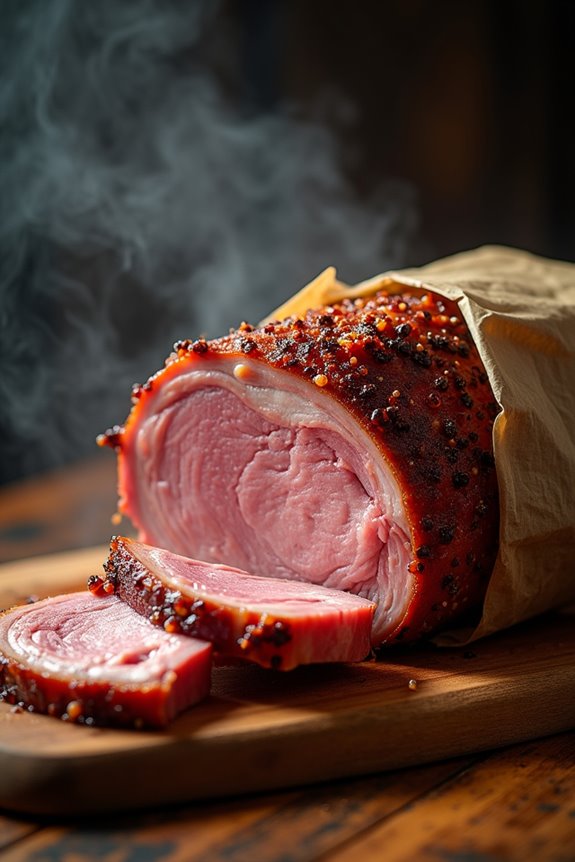
So you’ve finally hit that magical 195–205°F internal temp—congrats, you’re almost there. Now comes the patience part: resting. Keep that meat wrapped in foil, preferably nestled in a cooler or wrapped in towels. This isn’t just downtime; you’re letting juices redistribute throughout the meat, making everything more tender and easier to pull apart later.
Rest for at least one hour. Your future self will thank you.
Once rested, carefully remove the bone and start pulling. The meat should shred easily if you’ve done everything right. Don’t skip the pan juices from wrapping—mix them back in for moisture and flavor.
Pull while the meat’s still hot for best results. You’ve earned this perfectly textured, juicy pork butt.