Your pulled pork’s got a three to four-day window in the fridge—that’s it. Cool it down within two hours, then pack it into airtight containers or freezer bags to lock in moisture. Day four hits? Time to toss it or freeze what you’ve got left. After that, bacteria multiply fast, even in cold temps. Watch for off smells, slimy texture, or visible mold—those are your red flags to discard immediately. Want to make it last longer and reheat it perfectly?
How Long Does Pulled Pork Last in the Fridge?
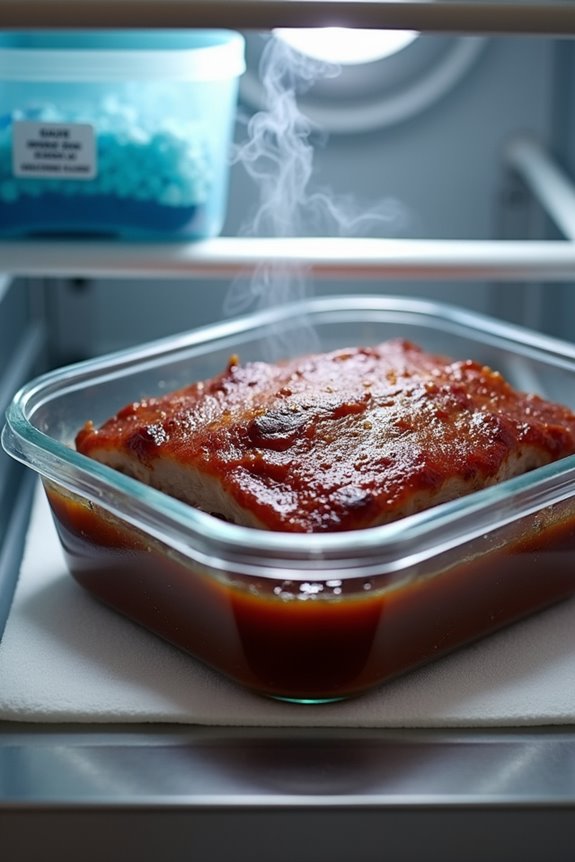
Ever wondered if that delicious pulled pork’s still good to eat? Here’s the deal: your refrigerated leftovers will last three to four days when your fridge stays at 40°F or below. That’s your window for enjoying that smoky, tender meat safely.
The key to making your pulled pork last longer within those three to four days? Store it right. Pop those leftovers into airtight containers or bags immediately after cooking. This locks in moisture and flavor, keeping everything fresher tasting throughout the week.
Don’t wait around before refrigerating. Get your pulled pork into the fridge within two hours of cooking to prevent bacterial growth. Following these storage guidelines means you’ll confidently eat your leftovers without worry, maximizing both safety and taste.
Cool and Store Pulled Pork Within Two Hours
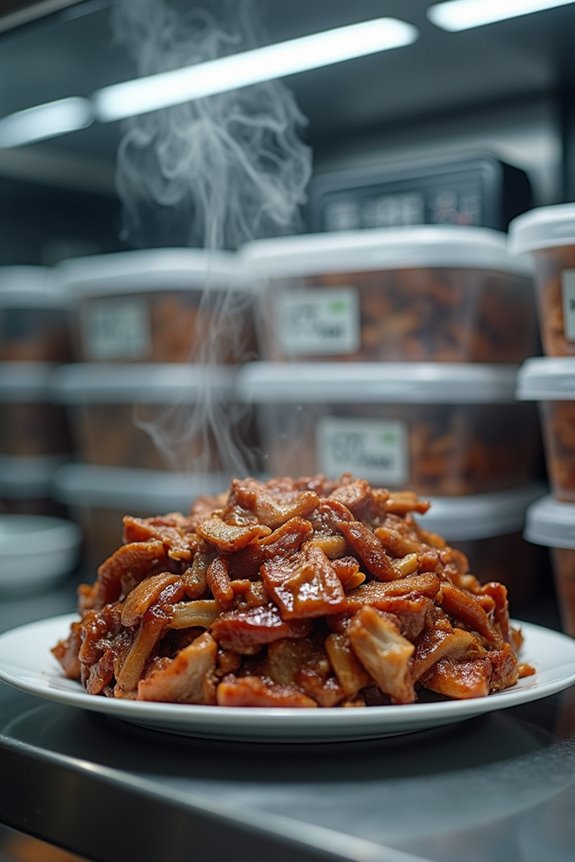
What’s the biggest mistake people make with pulled pork leftovers? They let it sit out cooling slowly on the counter.
Here’s what you need to do instead:
- Follow the two-hour rule – Refrigerate pulled pork within two hours of removing it from heat. If it’s hotter than 90°F outside, cut that time to one hour.
- Skip the slow cooling – Don’t leave it out to cool gradually. Rapid cooling preserves both safety and texture, keeping your meat tender and delicious.
- Use airtight storage – Place your pulled pork in airtight containers immediately after cooling. This prevents moisture loss and keeps contamination out.
When you refrigerate properly this way, your pulled pork stays fresh for about three to four days. You’re protecting your food and yourself. That’s the move.
Store Pulled Pork in Airtight Containers to Lock in Moisture
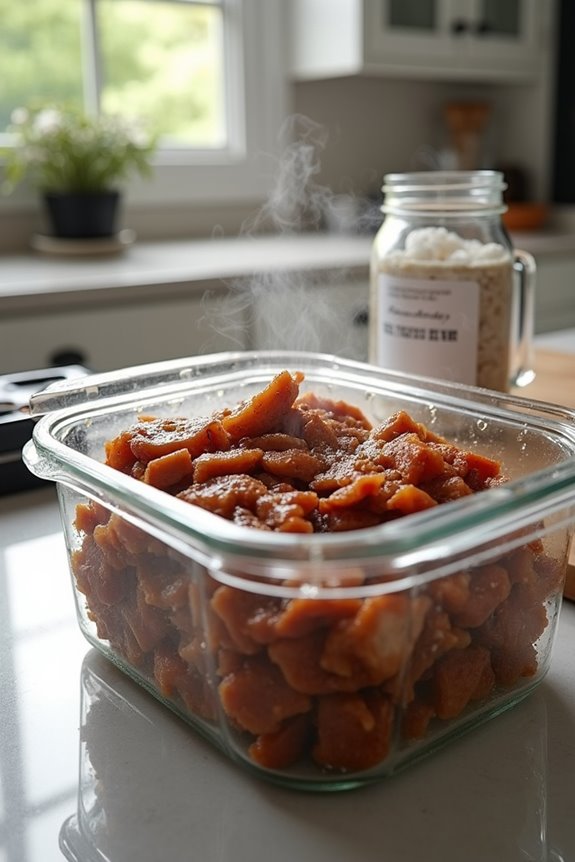
You’ll want to grab airtight containers because they’re honestly game-changers for keeping your pulled pork fresh and delicious. Skip the foil or loose bowl situation—sealed containers actually lock in moisture and flavor way better than those options. Pop your pork into meal-sized portions with today’s date written on the lid, and you’ve got yourself a solid three to four days of easy dinners ahead.
Airtight Container Benefits
Storing pulled pork in airtight containers is honestly the best move you can make for leftovers. You’re protecting your food safety and extending that fridge shelf life to a solid 3–4 days. Here’s why this approach works so well:
- Slows moisture loss – Your pulled pork stays tender and juicy instead of drying out on you.
- Blocks contamination – Airtight seals keep bacteria and odors from sneaking in and compromising your meat.
- Preserves flavor – You’re locking in all those delicious seasonings you worked hard to build.
Whether you’re refrigerating or considering freezer storage later, portioned containers minimize air exposure. When you’re ready to reheat, that sealed environment keeps everything moist and flavorful. Label your containers with dates and follow FIFO—first in, first out. That’s how you stay on top of food safety without overthinking it.
Preventing Moisture Loss
Because pulled pork dries out faster than you’d think, airtight containers are genuinely your best friend. When you seal your leftovers properly, you’re basically telling moisture loss “not today.” Glass containers with tight-fitting lids work great for refrigeration, as do freezer bags if you squeeze out the air first.
Here’s the thing: aluminum foil alone won’t cut it. It’s not airtight, so moisture escapes anyway. Instead, wrap your pork in foil, then transfer it to an airtight storage container. This double-layer approach keeps your pulled pork tender and flavorful for days.
Pack your leftovers while they’re still warm but cooled enough to handle safely. Portion into smaller containers so you’re not constantly opening and closing one giant tub. Less exposure means better moisture retention every single time.
Selecting The Right Container
What’s the secret to keeping pulled pork from turning into a dried-out brick? You’ll want to pick the right container.
Here’s what works best for moisture retention:
- Airtight containers with tight-fitting lids — Glass or plastic containers with solid seals prevent air from reaching your meat.
- Freezer bags — These flexible options work great because you can squeeze out extra air before sealing them up tight.
- Vacuum-sealed bags — They’re your MVP for maximum moisture retention and keeping everything fresh longer.
Skip aluminum foil entirely. It won’t create an airtight seal, so your pork dries out faster.
Transfer your cooled pulled pork into your chosen container within two hours of cooking. This timing keeps quality high and safety solid. You’ve got this!
The Pulled Pork 3–4 Day Fridge Window: Eat or Freeze
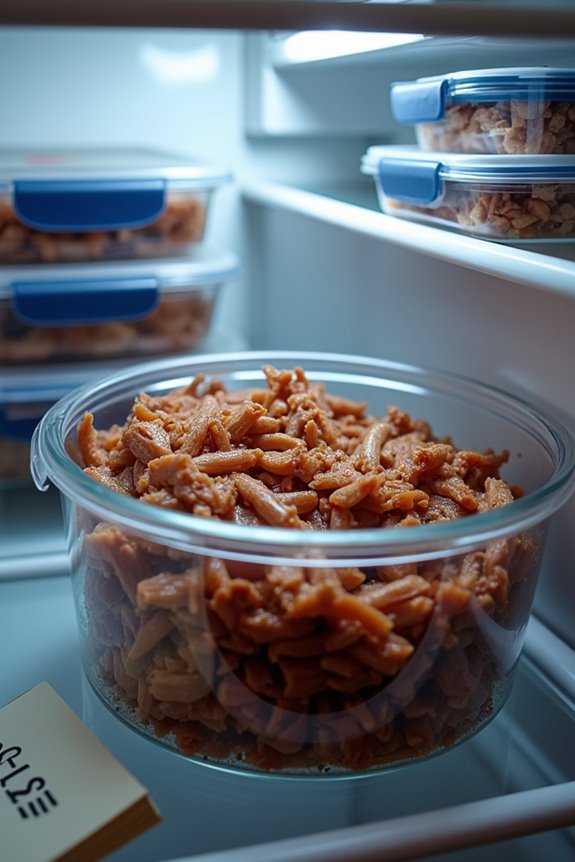
You’ve got a three to four-day window before your pulled pork starts getting risky in the fridge. If you’re eyeing that meat on day three and thinking you might not finish it, freezing’s your best move to extend its life way beyond that window. After day four, the bacteria risk climbs fast, so don’t gamble—eat it soon or wrap it up for the freezer.
Why The Three-Day Mark
Ever wonder why your pulled pork suddenly becomes questionable after a few days? Bacteria growth is the culprit here. Your refrigerator slows down bacterial multiplication, but it doesn’t stop it completely.
Here’s why the three-day mark matters for safety and shelf life:
- Bacterial multiplication accelerates – After day three, bacteria colonies grow faster than before, making foodborne illness more likely.
- USDA refrigeration guidelines align – Food safety experts recommend consuming pulled pork within 3–4 days for optimal safety standards.
- Storage methods lose effectiveness – Even airtight containers can’t prevent bacteria indefinitely at fridge temperatures around 40°F.
Think of day three as your warning bell. You’ve got that final day to enjoy your pulled pork before freezing becomes your best storage option. Don’t ignore this window.
Freezing Before Day Four
By day three, you’re standing at a fork in the road: eat it now or freeze it for later. Here’s the thing—freezing your pork leftovers before day four is honestly your best move. Why? Because it preserves both safety and that delicious flavor you worked hard to achieve.
When you freeze pulled pork properly, you’re looking at best quality months of around two to three. That’s solid time to plan future meals without waste. Cool everything rapidly first, then divide into small portions or vacuum-sealed bags. This approach minimizes air exposure and prevents freezer burn from ruining your stash.
Label each package with the date. Use older portions first. You’ve got this—it’s way easier than you’d think, and your future self will thank you.
Safety Beyond The Window
Now that you’ve got your freezing strategy locked in, let’s talk about what happens if you don’t freeze.
Your refrigeration window is tight—just 3–4 days at 40°F or below. After that, food safety becomes the real concern. Here’s what you need to know:
- Check for spoilage signs first: Look for mold, off smells, or slimy textures. If you spot any, toss it immediately.
- Trust your senses over dates: Expiration dates aren’t gospel. Your nose and eyes are better judges.
- Reheat to 165°F internally: This kills harmful bacteria lurking in your leftovers.
Don’t play Russian roulette with old pork. When that day-four mark hits, you’re either reheating it or saying goodbye. Your stomach will thank you for staying cautious.
When Should You Freeze Pulled Pork?
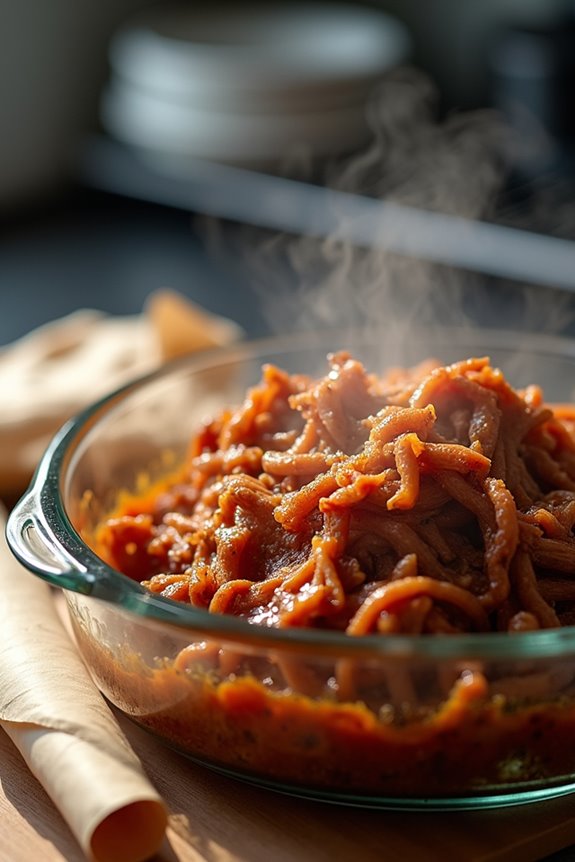
What’s the best time to freeze your pulled pork? You should freeze it right after it cools down completely. Don’t let it sit in your fridge too long first. Pop it into the freezer within a couple of hours of cooling.
Here’s the smart move: divide your pulled pork into smaller portions before freezing. Use airtight bags or containers to lock out freezer burn. Squeeze out as much air as possible—we’re talking getting those bags really flat. Label everything with today’s date so you can follow the FIFO approach, meaning you’ll use oldest portions first.
This freezing strategy keeps your pulled pork at peak quality for two to three months. You’re basically extending your pulled pork’s life way beyond what the fridge can offer.
Portion and Freeze Pulled Pork for Faster Thawing
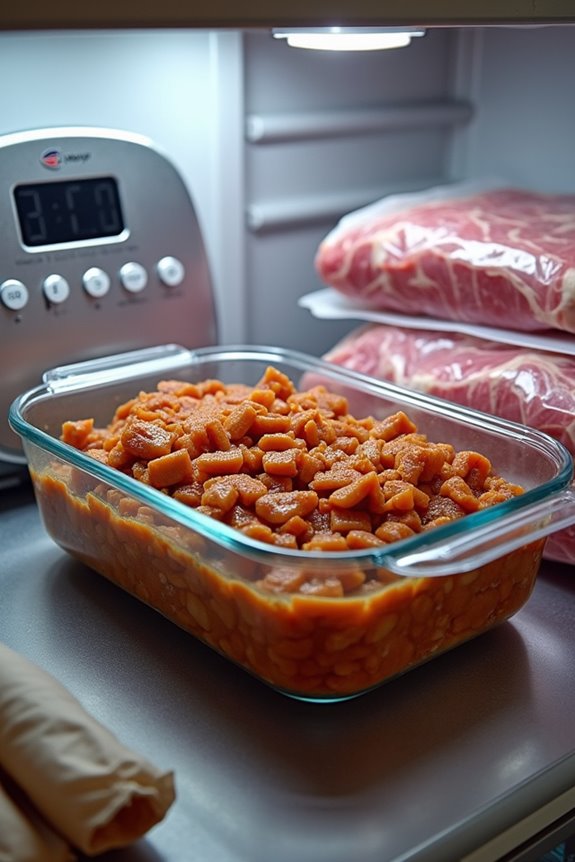
Dividing your pulled pork into smaller portions before freezing is honestly a transformer. You’ll thaw what you need way faster than one giant block. Here’s how to set yourself up for success:
- Use individual portions – Pack leftovers into meal-sized containers or bags you’ll actually eat in one sitting.
- Vacuum seal everything – Remove as much air as possible to prevent freezer burn and keep quality high.
- Label with dates – Write the freeze date on each portion and follow FIFO (first in, first out) to track freshness.
Smaller pieces thaw overnight in your fridge, so you’ll have ready-to-reheat pulled pork whenever hunger strikes. This portioning strategy transforms your leftovers into convenient future meals that taste just right every single time.
Label Pulled Pork With Dates for Easy Identification

You’ll want to use a simple dating system that works for your lifestyle and container setup. Write both the cooking date and the discard date (3–4 days later) on each container or bag so you’re not guessing what’s safe to eat. Once you’ve got your labeling routine down, you’ll grab the oldest portions first, keep everything organized, and actually use what you’ve stored instead of tossing mystery meat weeks later.
Dating System Best Practices
it’s easy to forget when you actually cooked that delicious batch. You’ll want to establish a dating system that actually works for you.
- Write the cooking date directly on containers using a permanent marker. This creates your baseline for the 3–4 day refrigeration window.
- Add a clear “use by” date so you’re not guessing whether that container’s still safe. Mark it three or four days out from cooking.
- Apply FIFO principles by storing newer portions behind older ones. This ensures you’ll grab yesterday’s batch before today’s.
For portioned servings, date each container individually. You’ll simplify your quick reheating decisions and stay confident about food safety. Your future self will appreciate this small effort tremendously.
Storage Container Organization Methods
How’s your fridge looking right now—organized chaos or complete mystery?
You’ll want to master container organization to keep your pulled pork fresh and accessible. Start by using airtight containers or vacuum-sealed bags that minimize air exposure. Label everything clearly with the cooking date and your refrigeration window. Stack containers using FIFO (first in, first out) so you eat older portions first.
| Storage Type | Container Choice | Label Info |
|---|---|---|
| Fridge | Airtight plastic | Date + 3–4 day window |
| Freezer | Vacuum-sealed bags | Date + portion size |
| Door | Quick reference chart | All safe storage times |
Single-serving portions thaw faster and maintain better quality. Post that quick reference label on your fridge door listing room temperature, fridge, and freezer times. You’ll grab what you need confidently, knowing exactly when it’s safe to eat.
Thaw Pulled Pork Safely in the Refrigerator Overnight
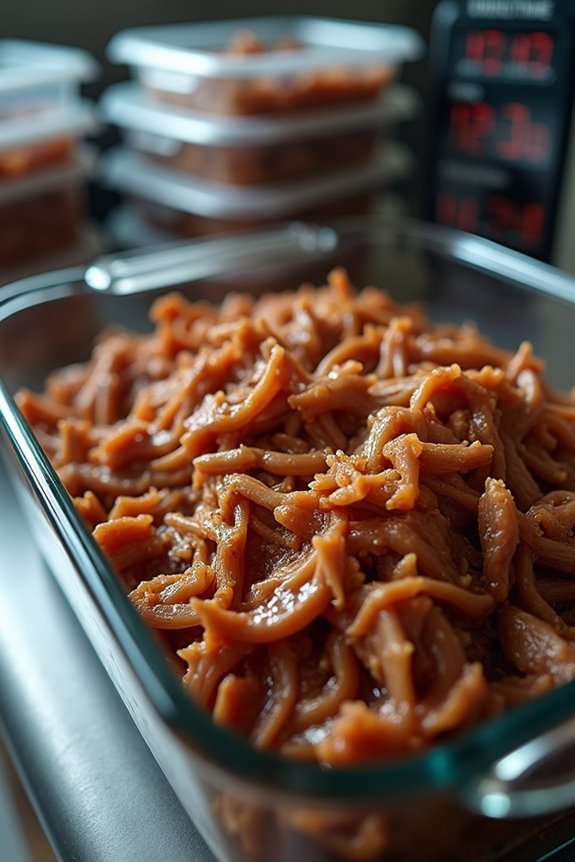
When you’ve got frozen pulled pork waiting in your freezer, the refrigerator’s your best friend for thawing it safely. Planning ahead makes everything easier and keeps your meat in the safe zone.
Here’s how to nail the overnight thawing process:
- Place your pulled pork in a container to catch drips and prevent cross-contamination with other foods.
- Allow about 24 hours per 5 pounds of meat to thaw completely and evenly.
- Keep everything refrigerated below 40°F so bacteria don’t get a chance to multiply.
Once thawed, you’ve got a three to four-day window to use it. When you’re ready to eat, reheat your pulled pork to 165°F for safe reheating. This method keeps you confident and your food delicious.
Cold Water Thawing for Pulled Pork: Faster Results
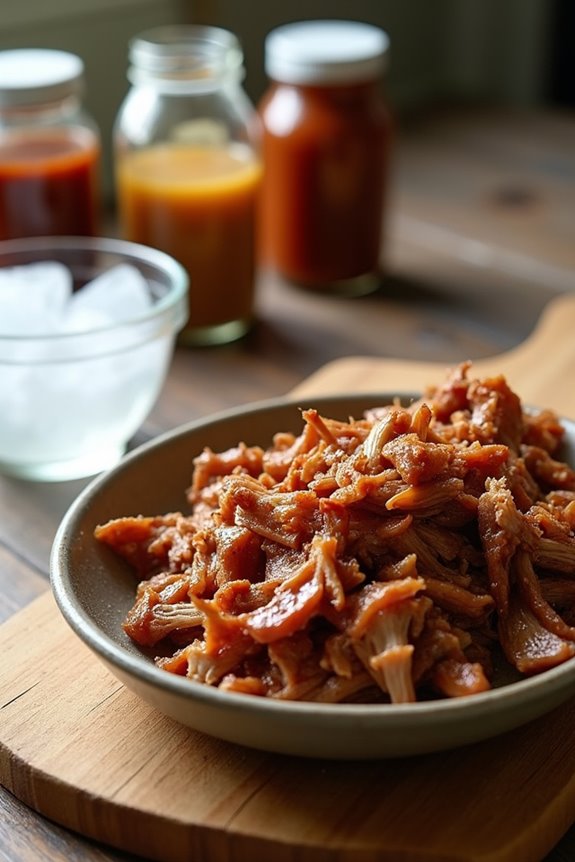
If you’re short on time and need pulled pork ready sooner, cold-water thawing’s your answer. This method beats fridge storage when you’re in a hurry. Seal your pork in a leak-proof bag, then submerge it in cold water. For smaller 1-pound portions, expect about an hour. Larger 3–4 pound portions need 2–3 hours instead. Here’s the key: change that water every 30 minutes. Seriously, don’t skip this step. Fresh cold water keeps the temperature down and protects your food safety standards.
Once your pulled pork thaws completely, reheat it promptly to 165°F. Never refreeze thawed portions—that’s non-negotiable for keeping things safe. Cold-water thawing works great for smaller portions when you need quicker results without compromising quality.
Identify Spoiled Pulled Pork: What to Look For
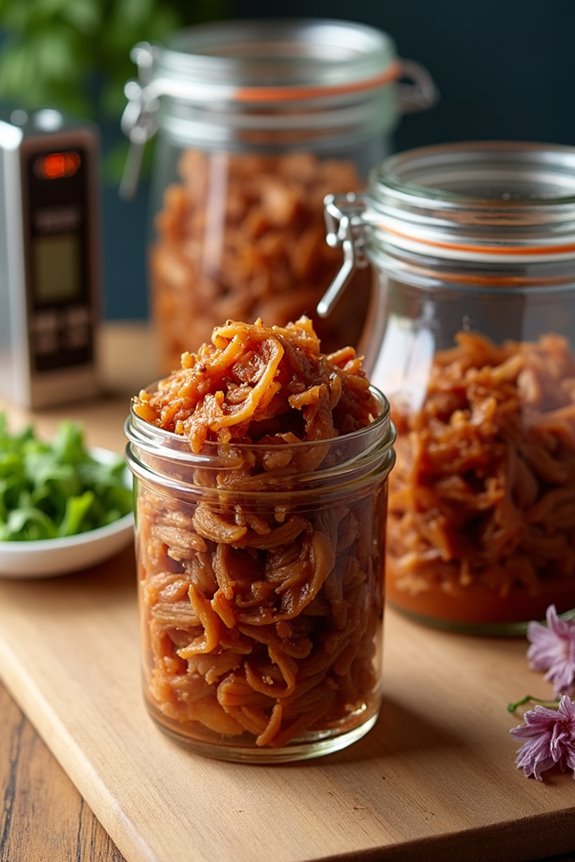
Your eyes and nose are your best friends when checking pulled pork safety. Trust your senses to catch spoilage before it causes problems.
Here’s what to watch for:
- Visual signs – Look for mold growth, unusual discoloration, or a slimy texture on the surface
- Smell test – Detect sour, sulfur-like, or rancid odors that signal spoilage indicators
- Texture changes – Notice if the meat becomes mushy or develops an odd sheen
If you spot anything suspicious, don’t taste it. An off taste during tasting confirms spoilage too. When doubt creeps in, throw it out immediately. Food poisoning isn’t worth the risk. You’ve got this—your instincts about safety matter. Stay confident protecting yourself and your family from foodborne illness.
Reheat Pulled Pork Gently to Preserve Moisture
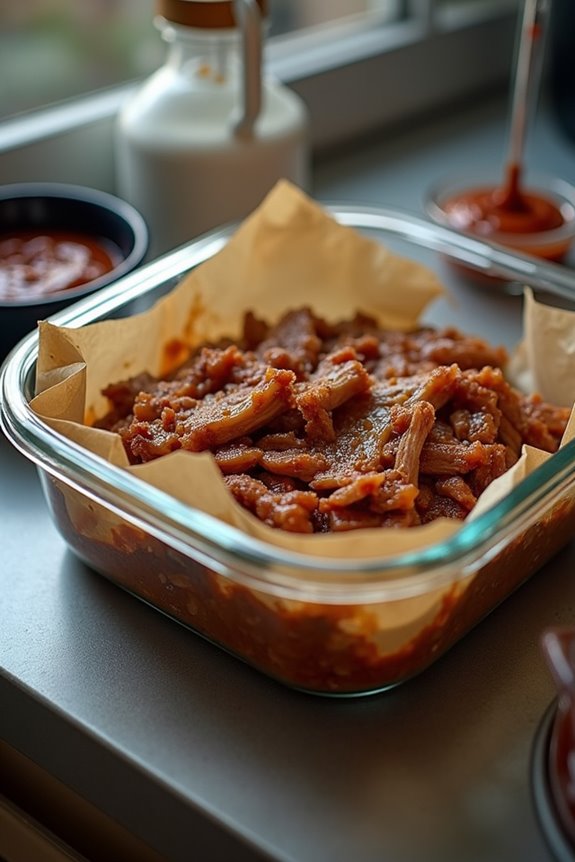
How’d you like your reheated pulled pork—still juicy or dried out like a sponge?
Here’s the thing: reheating matters just as much as refrigeration and storage for safety. You’ll want to reheat gently on low to medium heat, adding a splash of broth or water to lock in moisture. Skip the microwave’s high power setting, which zaps your pork dry faster than you’d think.
| Method | Heat Level | Liquid | Time |
|---|---|---|---|
| Stovetop | Low-Medium | Broth/Water | 5-10 min |
| Microwave | 50% Power | Sauce | 2-3 min |
| Slow Cooker | Low | Juices | 30 min |
| Oven | 325°F | Water | 15 min |
Always reheat only what you’ll eat today. Layer your pork with cooking juices or sauce beforehand. Check that internal temperature hits 165°F for food safety. You’ve got this—perfectly moist pulled pork awaits.
Restore Moisture to Reheated Pulled Pork With Broth
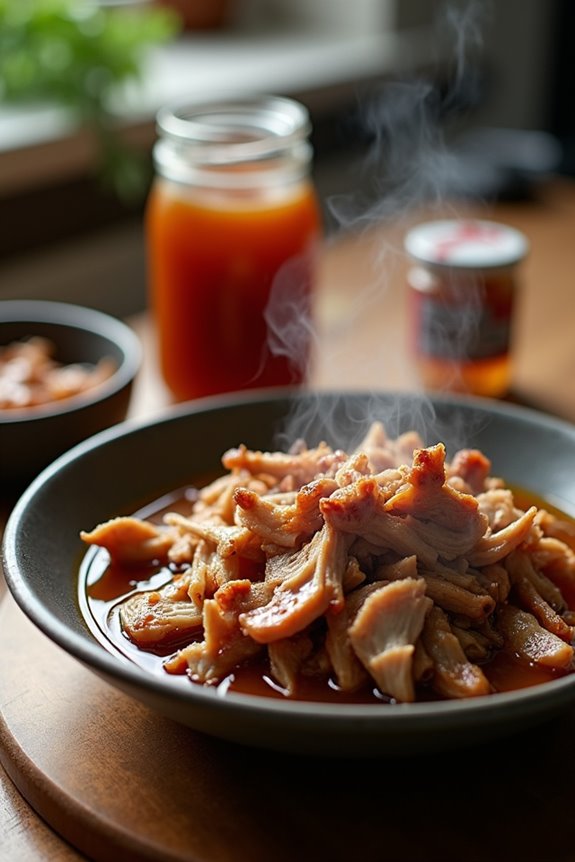
When you reheat pulled pork, it’ll dry out faster than you’d expect without added moisture. The good news? Broth is your secret weapon for fridge storage success.
Here’s how to restore that tender, juicy texture:
- Add broth gradually – Start with 1–2 tablespoons per cup of pork, then mix gently to avoid breaking apart the meat fibers.
- Choose your reheating method – Stovetop simmering in a shallow broth bed works best, but microwaving works too when you cover it and use short intervals.
- Use stored juices first – If your pork came with original juices from fridge storage, reheat those together before adding extra broth.
Low, slow heat keeps everything tender. You’ll get that saucy, moist consistency that makes reheating actually worth doing.
Pulled Pork Past the 4-Day Mark? Discard It
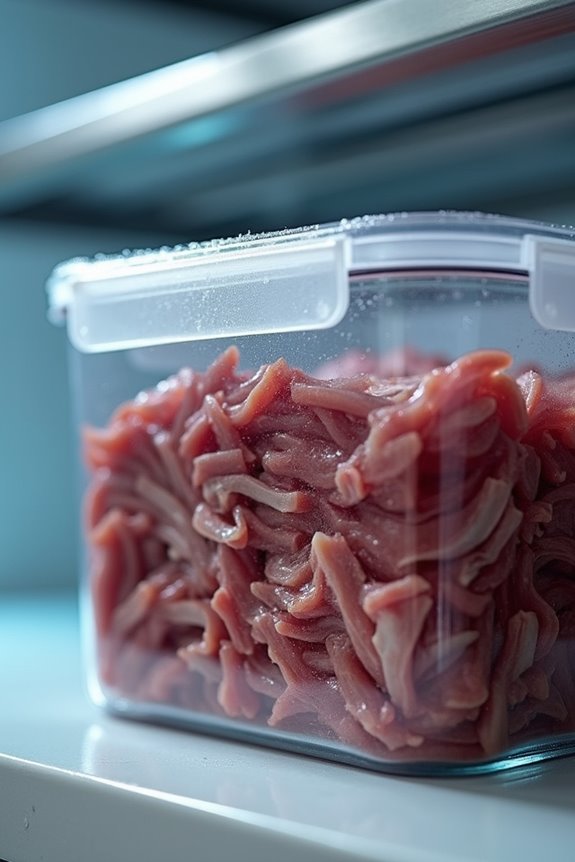
after four days in the fridge, it’s time to say goodbye to that pulled pork. We get it—throwing away food feels wasteful. But keeping leftovers beyond four days risks serious foodborne illness. That’s not worth the gamble, trust us.
After four days, bacteria multiply rapidly, even in refrigeration below 40°F. You might notice warning signs like an off smell, slimy texture, or visible mold. Don’t ignore these red flags. If you’re uncertain whether your pulled pork is safe, discard it anyway.
The safest rule? Mark your container with today’s date when storing pulled pork. Check it daily. When day four arrives, let it go. Your stomach will thank you for playing it safe and protecting your health.