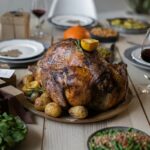
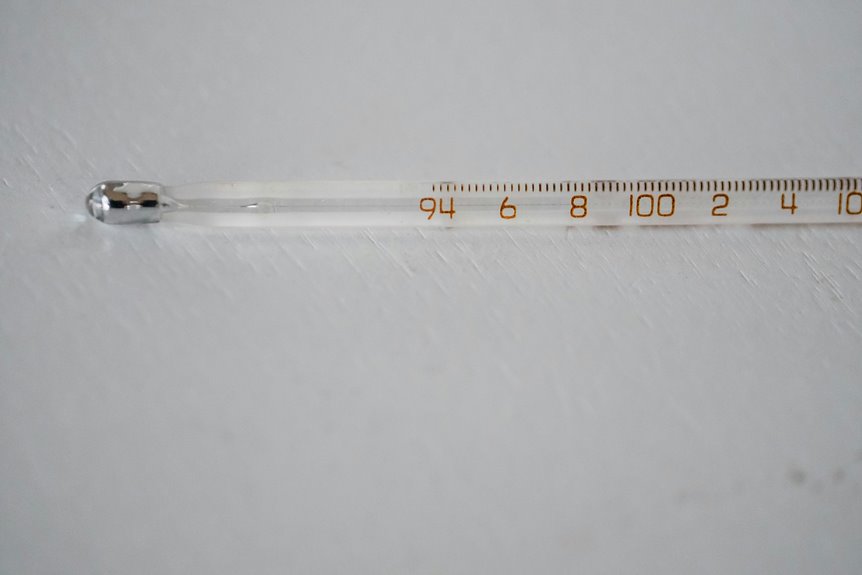
Stick your thermometer into the thickest part of the breast, aiming for the thermal center where heat arrives last. Insert horizontally from near the neck cavity, about ½ to 1 inch away from the internal cavity itself. Avoid bone completely—it conducts heat differently and’ll mess up your reading. You’re targeting 165°F for food safety. Push deep enough that the probe tip sits fully surrounded by meat, not touching the pan. Double-check with an instant-read thermometer for confidence, and you’ll discover why placement makes all the difference in nailing perfect doneness.
Where to Put Your Turkey Thermometer: The 165°F Target
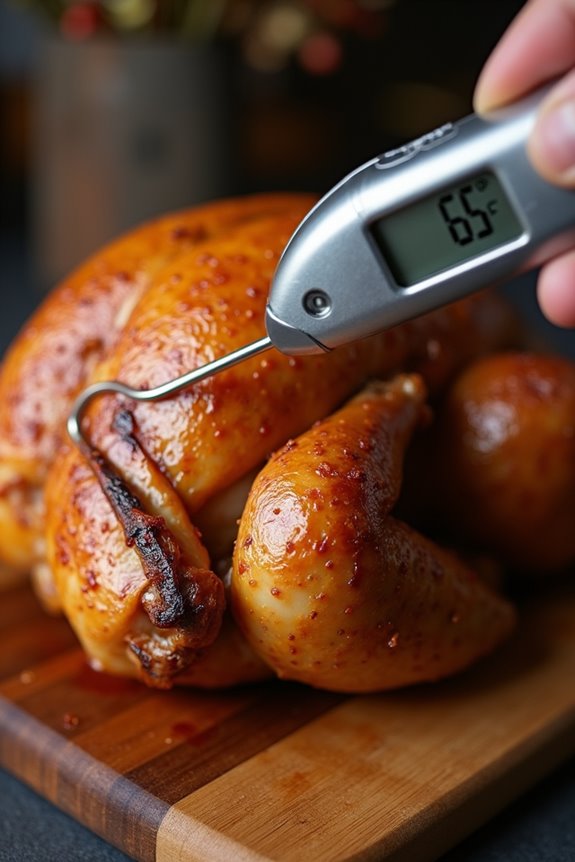
Ever wonder why your turkey turns out dry on the outside but raw inside? That’s where thermometer placement becomes your secret weapon. You’ll want to insert your thermometer into the thickest part of the turkey breast, steering clear of bone. This spot gives you the most accurate internal temperature reading.
Here’s the key: aim for that 165°F target—that’s the magic number for food safety. Position your probe near the neck cavity, about 1/2 to 1 inch from the internal cavity. Make sure the safety notch sits fully inside the meat, not touching bone or the pan.
For bigger birds, grab an additional probe for your thigh or wing. Double-checking with an instant-read thermometer guarantees you’re nailing those temperatures. You’ve got this!
Calibrate Your Thermometer Before You Start
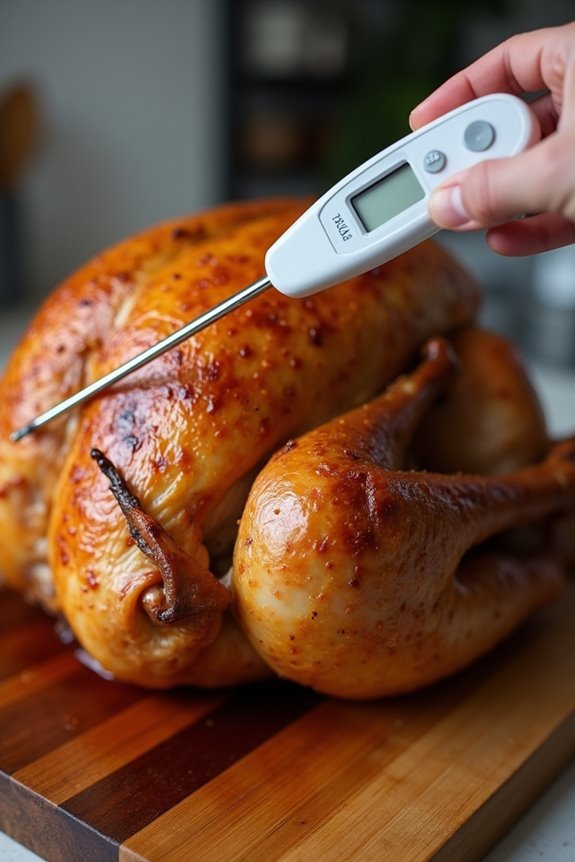
Before you rely on your thermometer to nail those temperature spots, you’ll want to make certain it’s actually telling you the truth.
Before you rely on your thermometer to nail those temperature spots, make certain it’s actually telling you the truth.
Here’s how to calibrate your thermometer for accuracy:
- Ice-Point Method: Submerge at least two inches of the stem in ice water. Wait about five minutes for a stable 32°F reading. This confirms your thermometer works at cold temperatures.
- Boiling Point Method: Place the stem in boiling water and expect 212°F at sea level. Adjust for high-altitude differences if you’re cooking up high.
- Check your results: If readings deviate from expected values, recalibrate using your manufacturer’s instructions before turkey time arrives.
Calibrating takes just minutes but saves you from guessing. Whether you’re using a digital instant-read or oven-proof thermometer, this step ensures consistent, trustworthy readings throughout your cooking process.
The Thermal Center: Where Your Turkey Heats Last
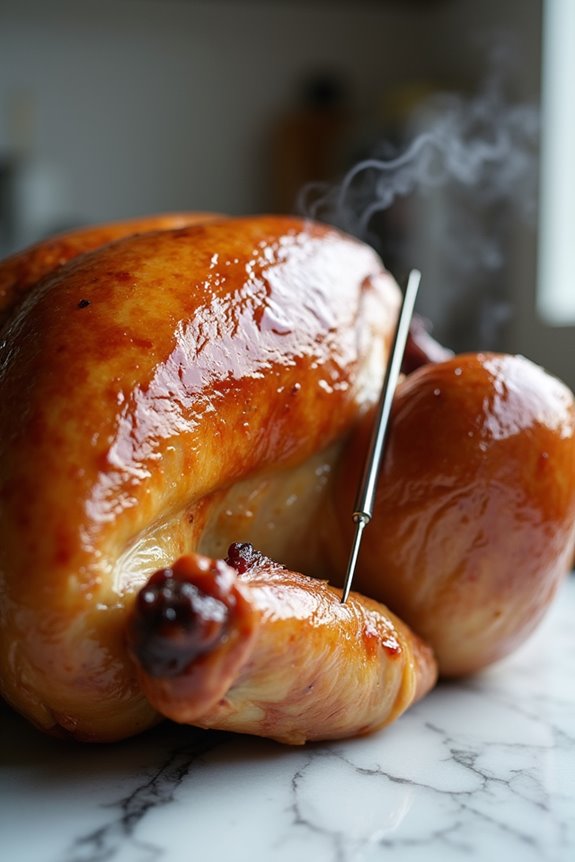
When you’re roasting a turkey, the thermal center is basically the last spot to heat up—and it’s your doneness gold standard. You’ve got to find where your bird’s thickest, so that’s where you’ll stick your probe for the real temperature story. Getting that sensing tip right into the thermal center (without hitting bone) is what separates a perfectly cooked turkey from one that’s sketchy in the middle.
Understanding The Thermal Center
Why’s the thickest part of your turkey’s breast so important? It’s your thermal center—the spot that heats up last. Think of it like your turkey’s slowest student; you’ve got to wait for everyone to finish the test.
Understanding this concept changes everything about thermometer placement:
- The thermal center is always the thickest area of your turkey’s breast, where cooking takes longest
- Internal temperature readings depend on probe position in this exact spot, not near bones or edges
- Temperature gradients mean exterior zones cook faster than your interior target zone
Your thermometer’s job is catching that deepest part reaching the safe 165°F. Place it wrong, and you’ll get false readings that make you think you’re done cooking when you’re really not. Nailing this spot guarantees accurate doneness every single time.
Placement For Accurate Readings
How do you actually find that thermal center everyone keeps talking about? It’s simpler than you’d think. You’re hunting for the thickest part of the breast—that’s where heat arrives last. Insert your thermometer placement horizontally from near the neck cavity, aiming straight into the deepest meat section. Keep the probe tip about half to one inch away from the internal cavity. This positioning matters because you’re targeting the thermal center, the spot farthest from outside heat. Always avoid bone; it conducts heat differently and throws off your reading. Make sure meat surrounds your thermometer evenly on all sides. This technique guarantees you’ll catch doneness right when it matters most. Your turkey will thank you.
Temperature Gradients: Why Interior Lags Behind Exterior
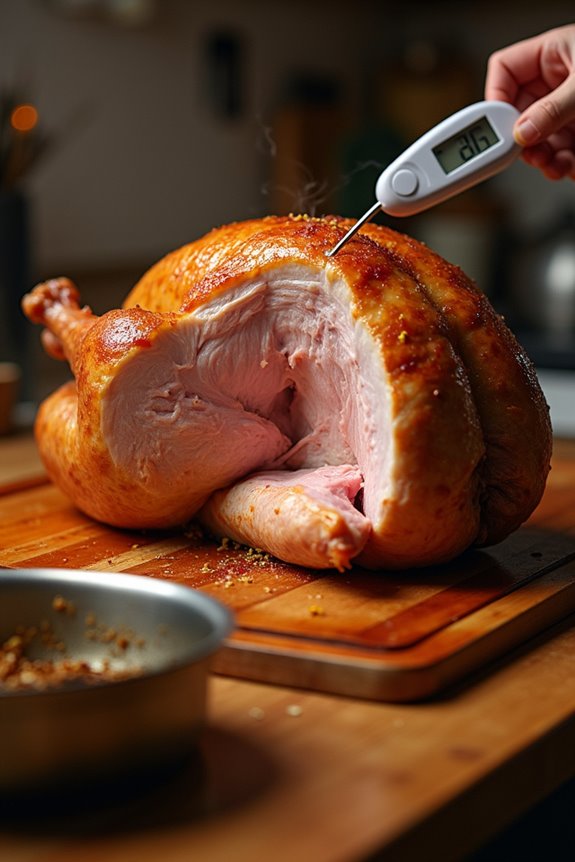
Ever notice that your turkey’s skin gets golden brown while the inside’s still cold? That’s because heat travels slowly through meat. Your turkey’s exterior heats up fast, but the interior lags considerably behind.
Heat travels slowly through meat, so your turkey’s golden exterior can mask a cold interior—that’s why probe placement matters.
Here’s what happens during cooking:
- The outer layers reach safe temperatures first, sometimes way before the center
- Higher oven temps actually widen this gap between surface and core
- Your thermal center—the thickest part—heats last of all
This temperature lag is why probe placement matters so much. You can’t just stick your thermometer anywhere. You need to target that thermal center while avoiding bone, which conducts heat differently than meat.
That’s where your internal temperature reading gets honest. Proper probe placement at the thermal center gives you the accuracy you need for a safely cooked turkey.
Probe Type Matters: Pro-Series vs. RFX MEAT
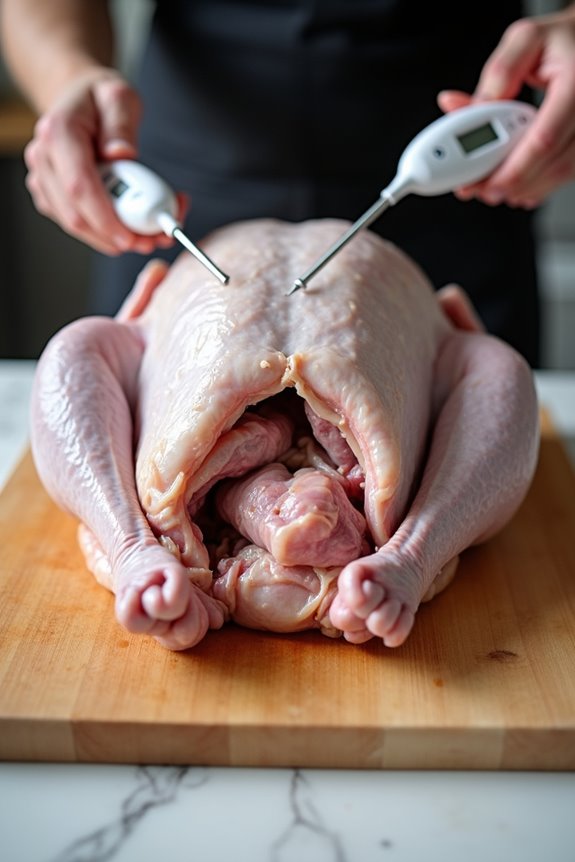
You’ll want to know the difference between Pro-Series and RFX MEAT probes before you stick one in your turkey. Pro-Series probes sense temperature at the very tip (about 1/8 inch), so you’ve got to position that tip right in the thickest breast area to nail your reading. RFX MEAT probes work differently, which means your placement strategy needs to shift depending on which thermometer you’re actually using.
Pro-Series Precision Sensing
When it comes to getting the most accurate turkey temperature, your probe choice really does matter. The Pro-Series delivers precision sensing right at your turkey’s thermal center—that crucial spot heating last.
Here’s where you’ll want to focus your Pro-Series placement:
- Insert horizontally from near the neck cavity into the thickest meat of the breast
- Position the tip about ½ to 1 inch from the internal cavity, avoiding bones completely
- Ensure the minimum immersion line reaches the meat for reliable readings
Your goal? Nailing the internal center temperature where it counts most. By targeting the thickest meat sections and keeping your probe away from bone contact, you’re essentially letting the Pro-Series do what it does best—give you honest, accurate numbers you can trust.
RFX MEAT Placement Differences
Now that you’ve got the Pro-Series fundamentals down, the point is—not all meat thermometers work exactly alike. RFX MEAT probes demand equally thoughtful probe placement, but they’ve got their own quirks to master.
Here’s the thing: your RFX MEAT still needs that tip nestled in the thermal center, away from bone. Insert it horizontally from the neck cavity into the thickest breast portion. You’ll want roughly 1/2 to 1 inch clearance from any internal cavity.
The difference? RFX MEAT’s ceramic base reads differently than Pro-Series sensors. So pushing past that immersion line matters even more. If you hit bone, reposition immediately—don’t force it.
Think of it this way: same goal, slightly different rules. Both demand respect for bone avoidance and thermal center targeting.
Choosing The Right Probe
Which probe you grab matters more than you’d think. Different probes require different placement strategies, and picking the wrong one means guessing your turkey’s actual doneness.
Here’s what separates them:
- Pro-Series probes deliver precise readings at the tip, so you’ll position it right in the thickest meat section for accuracy
- RFX MEAT probes work differently, requiring adjusted placement to avoid bone contact while reaching the thermal center
- Oven-safe probes let you leave them in during cooking, giving you real-time temperature updates without opening the oven
Your probe tip measures temperature at roughly 1/8 inch, so placement precision matters. You’re aiming for that thermal center in the breast or thickest portion. Think of it this way: using the right probe type takes the guesswork out of probe placement entirely.
Insert Into the Thickest Part of the Breast
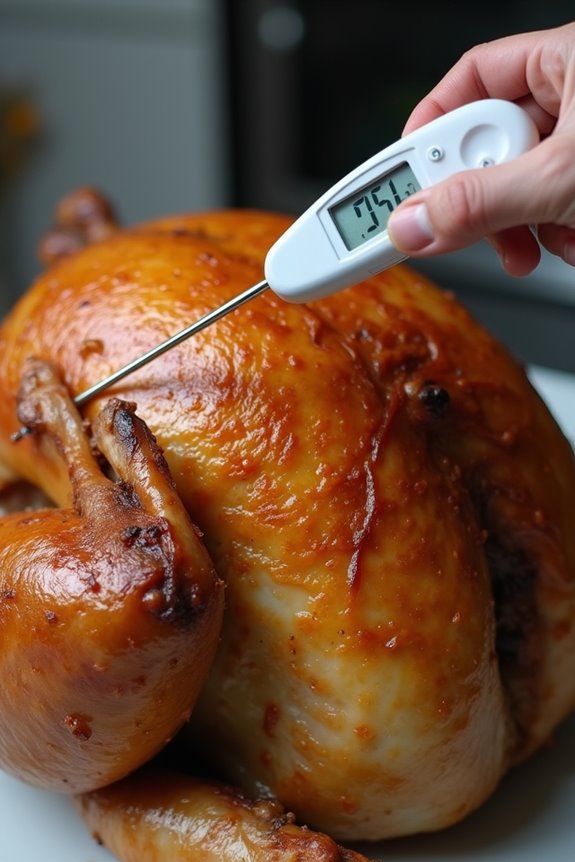
Why’s the breast the best spot for your thermometer? You’ll get the most honest internal temperature reading there. The breast cooks slower than other turkey parts, so nailing thermometer placement here keeps you in the safe zone.
Find the thickest section of breast meat—that’s your target. Aim your probe straight into the center, steering clear of bone and gristle. Those obstacles throw off your numbers big time. Insert the thermometer so the tip sits completely surrounded by meat, not touching anything else.
For bigger birds, locate that thermal center area where heat takes longest to penetrate. You’re basically finding the last spot to cook through. Use an oven-safe leave-in thermometer during roasting, then verify final doneness with an instant-read model. This two-step approach guarantees perfectly cooked turkey every single time.
Check the Innermost Thigh for a Complete Picture
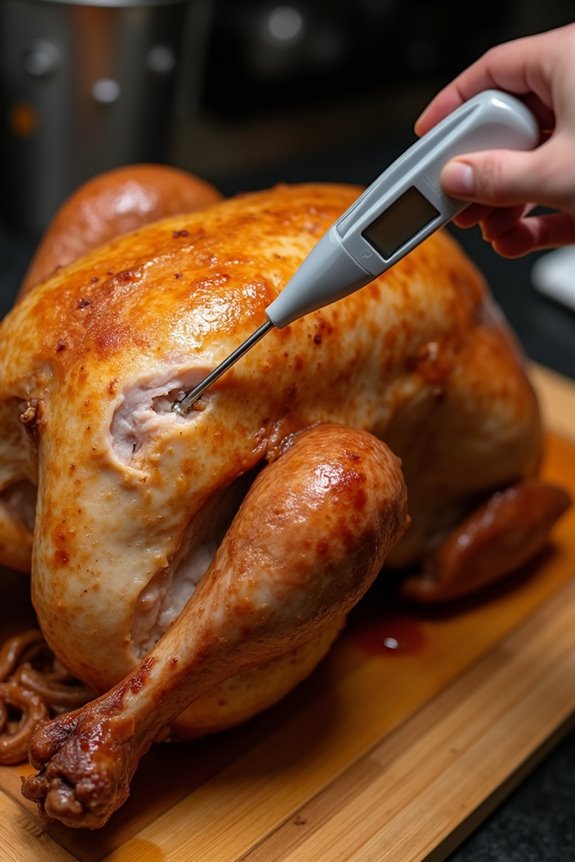
While the breast gives you one piece of the puzzle, the thigh’s where things get real. You’ll want to nail your thermometer placement here because thighs cook differently than breast meat. The innermost thigh is your golden ticket for accurate meat temperature readings.
Here’s how to do it right:
- Insert deep into the thickest part of the thigh, avoiding bone and any cavities that’ll throw off your reading
- Aim for 165°F (75°C) minimum, matching USDA safety standards that protect you and your guests
- Use a leave-in oven-safe probe when possible, keeping the sensor tip at the immersion line for consistency
For larger birds, check multiple spots across both thighs. This ensures everything’s cooked evenly without drying out adjacent areas. You’ve got this down now.
Should You Check Multiple Spots?
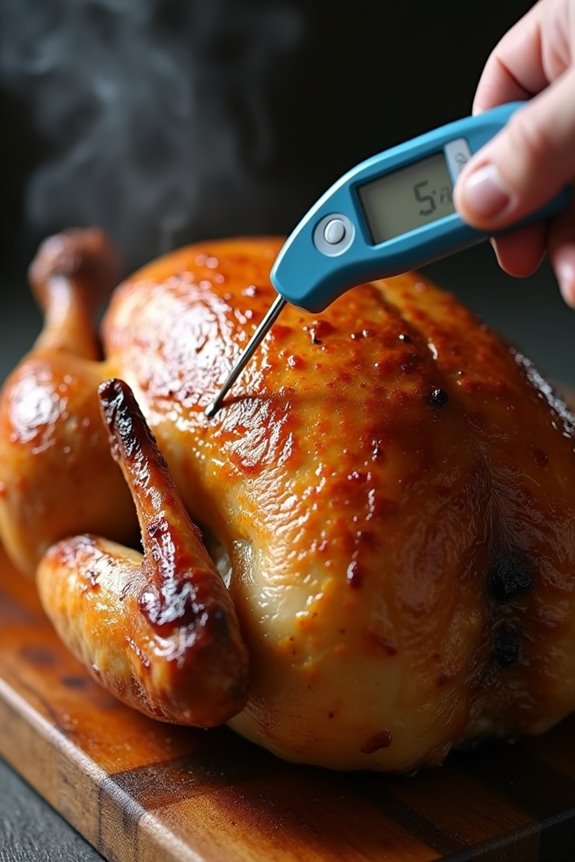
one thermometer reading isn’t always enough. You’ll want to check multiple spots across your bird. Different areas cook at different rates, and you need confidence everything’s safe to eat.
Start by checking the breast, then move to the thigh, and finish with the wing. This thermometer placement strategy catches hot and cool zones. Your internal temperatures should hit 165–170°F in the breast and 170–180°F in the thigh.
| Location | Target Temp | Why Check | Avoid | Tip |
|---|---|---|---|---|
| Breast | 165–170°F | Cooks fastest | Bone | Insert ½–1 inch deep |
| Thigh | 170–180°F | Often slowest | Pan | Deepest part matters |
| Wing | 165°F | Variable cooking | Bone | Secondary confirmation |
| Multiple spots | All targets | Complete picture | Guessing | Takes 2 minutes |
| Consistency | Same readings | Even doneness | Rush job | Rest turkey first |
Resting your turkey helps temperatures equalize. If readings vary, you’ll know what needs adjustment before serving.
How to Avoid Bone and Cavity Contact
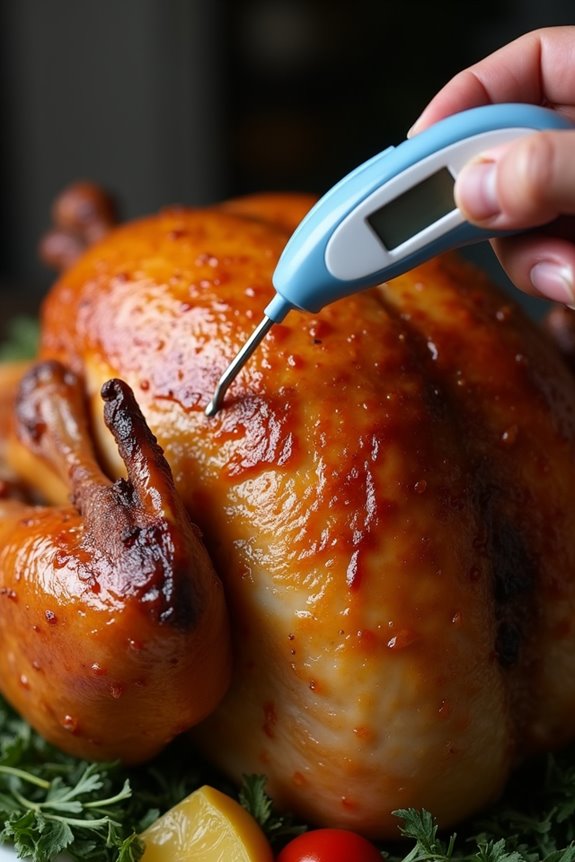
Now that you’re checking multiple spots, there’s one thing that’ll mess up your whole game: touching bone or cavity walls.
Your thermometer placement matters way more than you’d think. Here’s how to nail it:
- Insert from the neck area: Slide your probe toward the thermal center, about 1/2 to 1 inch from the internal cavity while keeping clear of bone
- Feel for resistance: If you hit something hard, you’ve found bone—reposition immediately and try a slightly different angle
- Monitor your tip placement: Keep roughly 1/8 inch of sensing area exposed in the meat itself, away from pan heat
The trick? Move slowly and deliberately. You’ll feel the difference between soft meat and hard bone pretty quickly. Once your probe sits still in the meat without obstruction, you’re golden. Wait for that stationary reading before trusting your temperature.
Push the Probe Deep Enough to Read Right
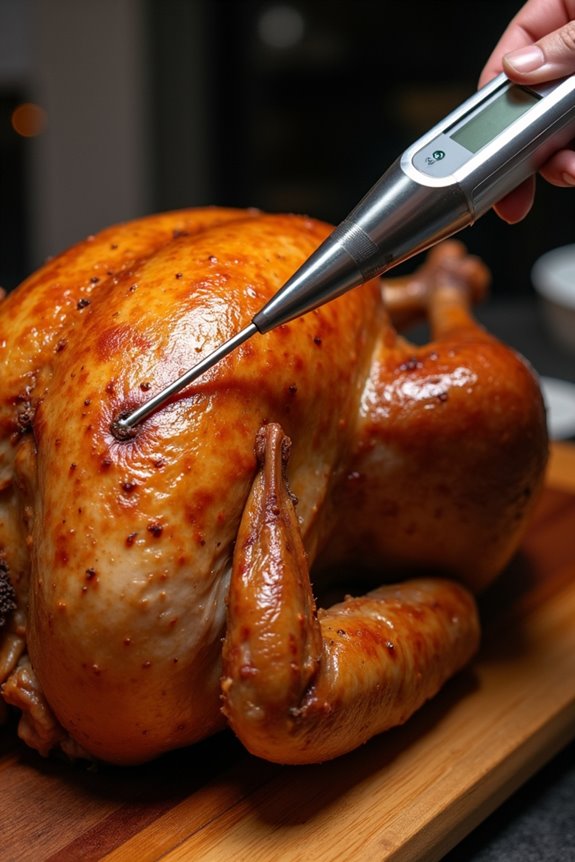
Getting your thermometer deep enough into the turkey’s thickest part is what separates undercooked poultry from perfectly done meat. You’ll want to insert the probe horizontally from the neck cavity, pushing it straight into the breast’s meatiest section. The thermometer placement matters because shallow insertions give you false readings from the exterior rather than the actual internal temperature.
Aim for 1/2 to 1 inch away from the internal cavity. Make sure the immersion line—that’s the marked measurement area on your probe—stays completely covered by meat. For larger birds, push deeper toward the thermal center where heat takes longest to penetrate. This ensures you’re capturing true doneness, not just surface temperature. You’ve got this!
Insert Horizontally From the Neck Cavity
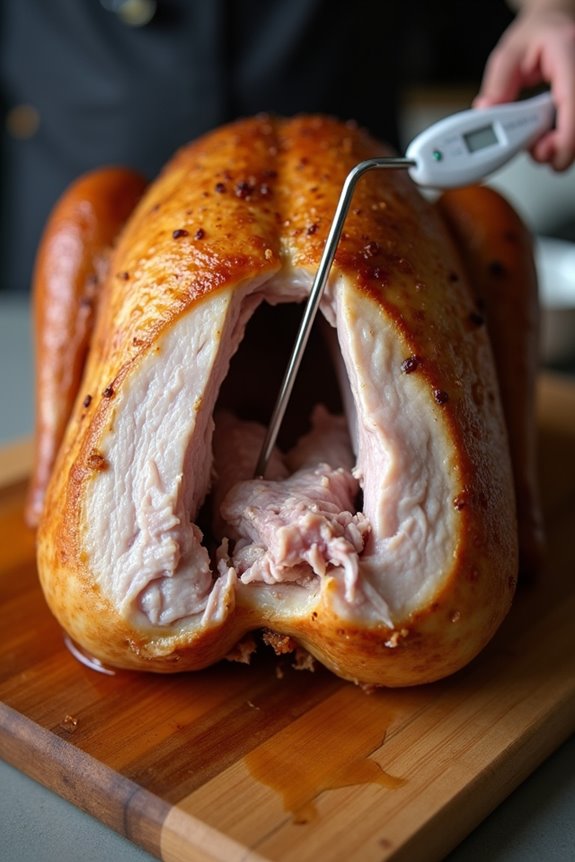
The neck cavity’s your golden ticket to nailing this thermometer placement. This approach gives you direct access to the thickest part of breast meat. You’ll slide the probe horizontally right from that opening, avoiding all the tricky angles.
Here’s what makes this method work:
- Easy access – You’re not wrestling with awkward positions or weird angles near the thighs
- Accurate readings – The probe sits 1/2 to 1 inch from the cavity, hitting the thermal center perfectly
- Bone avoidance – You’ll naturally steer clear of bone when inserting horizontally through the neck area
This thermometer placement technique keeps your probe surrounded by even meat on all sides. No contact with bone means no false readings throwing off your timing. You’re essentially taking the turkey’s temperature from its most reliable spot.
Reposition if You Hit Resistance or Bone
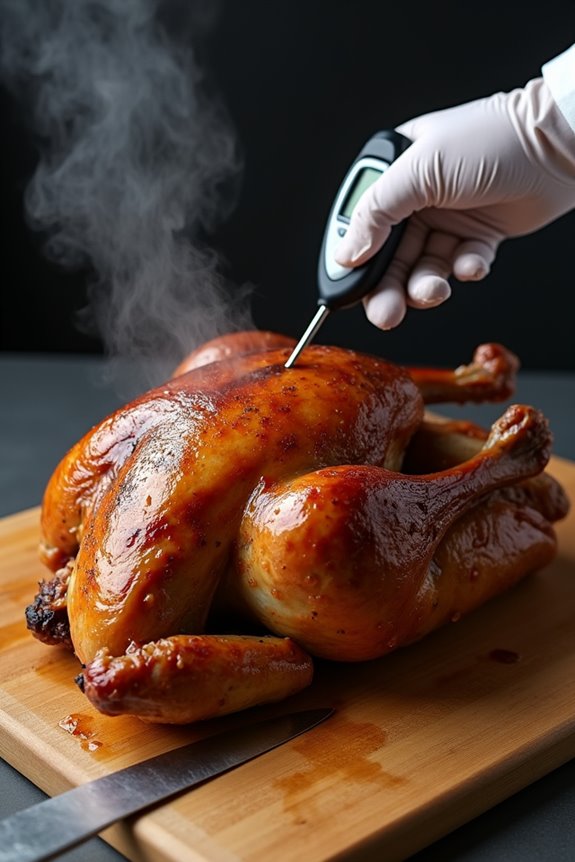
What happens when your thermometer suddenly hits something hard? You’ve likely found bone, and that’s your cue to reposition. Don’t panic—this happens to everyone cooking turkey. Simply back your probe out and try again from a slightly different angle. Aim for the thickest portion of meat, steering clear of any skeletal obstacles. Resistance or bone adjustment requires patience and gentle repositioning. Redirect your thermometer deeper into the meat’s center, away from bones that distort temperature readings. For larger birds, you might need multiple attempts across different spots. Think of it like finding the sweet spot in a tennis racket. Once you feel no resistance and the probe sits comfortably in thick meat, you’re golden. That’s accurate thermometer placement.
Verify Doneness With an Instant-Read Thermometer
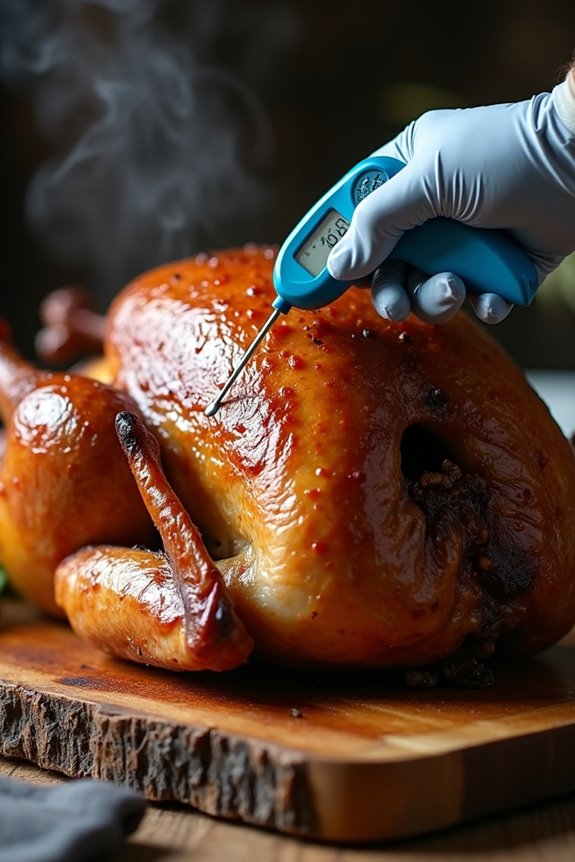
How do you know your turkey’s truly done cooking? Your leave-in probe gave you readings, but now it’s time to grab your instant-read thermometer for final confirmation. This step separates undercooked disasters from perfectly golden birds.
Your leave-in probe is just the start—grab your instant-read thermometer for final confirmation that separates undercooked disasters from perfectly golden birds.
Here’s where thermometer placement matters most:
- Insert the instant-read thermometer into the thickest part of the breast, aiming for 165–170°F
- Check the thigh’s innermost section, targeting 170–180°F for optimal doneness
- Avoid touching bone, stuffing, or pan surfaces during your internal temperature check
Take readings from multiple spots on larger birds. Temperature varies throughout, and you’re checking that every part reached safe levels. If readings seem off, quickly calibrate your thermometer using ice-water or boiling-point tests. You’ve got this—your turkey’s almost ready for the table.