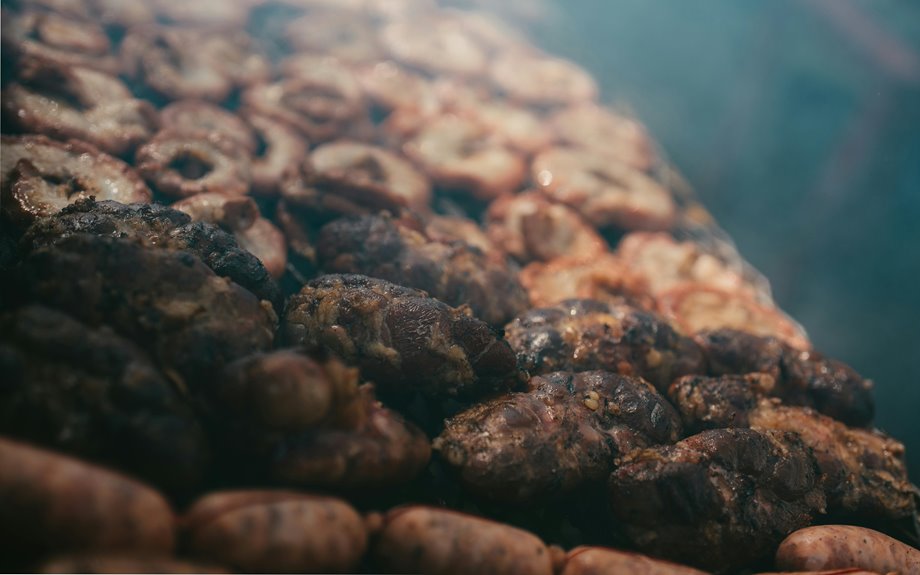
Korean BBQ isn’t automatically fattening—you’re actually in control. Pick lean meats like pork tenderloin (143 cal/100g) or chicken breast (165 cal/100g) instead of pork belly (518 cal/100g). Watch your portion sizes; aim for 250–350 grams cooked meat per plate. Skip heavy sauces and marinades that hide calories. Load up on grilled vegetables and lettuce wraps instead of rice. The real trick? Grilling renders fat away naturally. Stick to these moves, and you’ll keep Korean BBQ satisfying without the guilt—though there’s plenty more strategy to explore if you want specifics.
Is Korean BBQ Inherently Fattening?
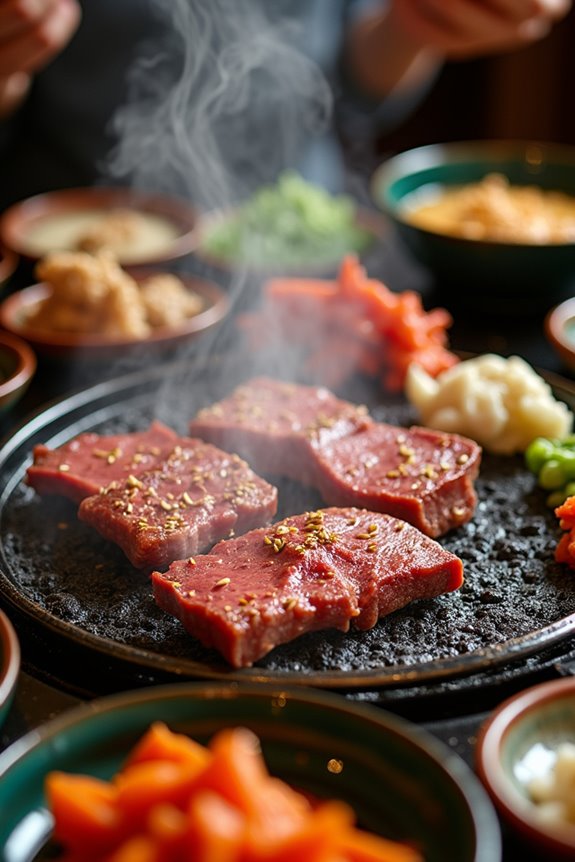
Korean BBQ doesn’t have to be fattening. You control what lands on your plate. Choose lean meats like chicken breast or beef sirloin instead of pork belly. The grilling process actually works in your favor—fats render away naturally as you cook. That’s huge for keeping calories down.
Where things get tricky is banchan and sides. Rice and japchae add up fast if you’re not watching portions. Sauces too—they’re sneaky calorie bombs. But here’s your secret weapon: lettuce wraps and veggies. They bulk up your meal without the calorie hit.
The real challenge? All-you-can-eat formats tempt you to keep ordering. Stay mindful of portion control. Pace yourself between rounds. You’ve totally got this—just make intentional choices.
The Healthiest Korean BBQ Meats: Calories and Protein Breakdown
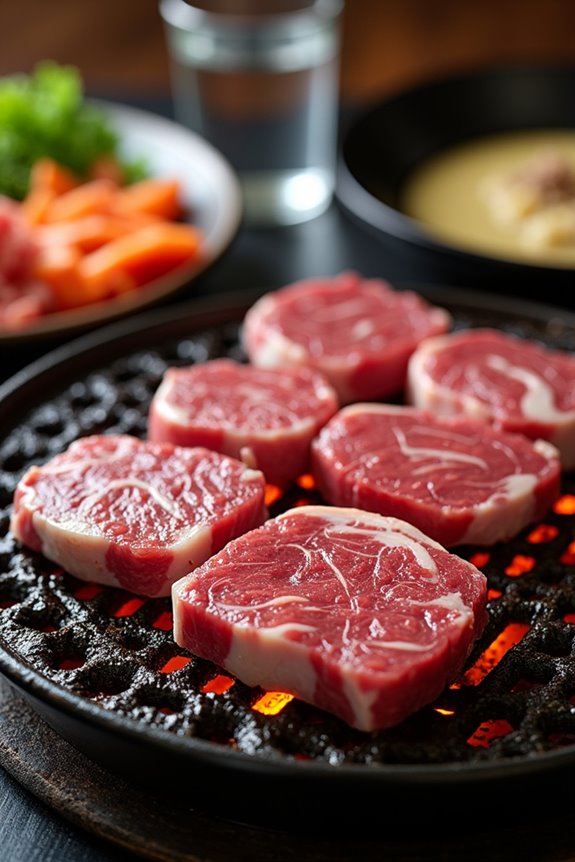
What’re your best meat picks for keeping things lighter at Korean BBQ?
You’ve got solid options when you’re watching calories. Pork tenderloin is your leanest choice at 143 calories per 100 grams. Chicken breast runs 165 calories and packs serious protein. Beef sirloin hits 206 calories—still respectable for a heartier option. Duck breast averages 337 calories, so enjoy it sparingly. Then there’s pork belly at 518 calories—definitely portion it carefully.
| Meat | Calories | Best For | Strategy |
|---|---|---|---|
| Pork Tenderloin | 143 | Leanest pick | Load up freely |
| Chicken Breast | 165 | Protein boost | Your go-to |
| Beef Sirloin | 206 | Richer taste | Balance with veggies |
| Pork Belly | 518 | Occasional treat | Small portions |
Smart choices here make all the difference at your table.
Why Pork Belly and Short Ribs Blow Your Calorie Budget
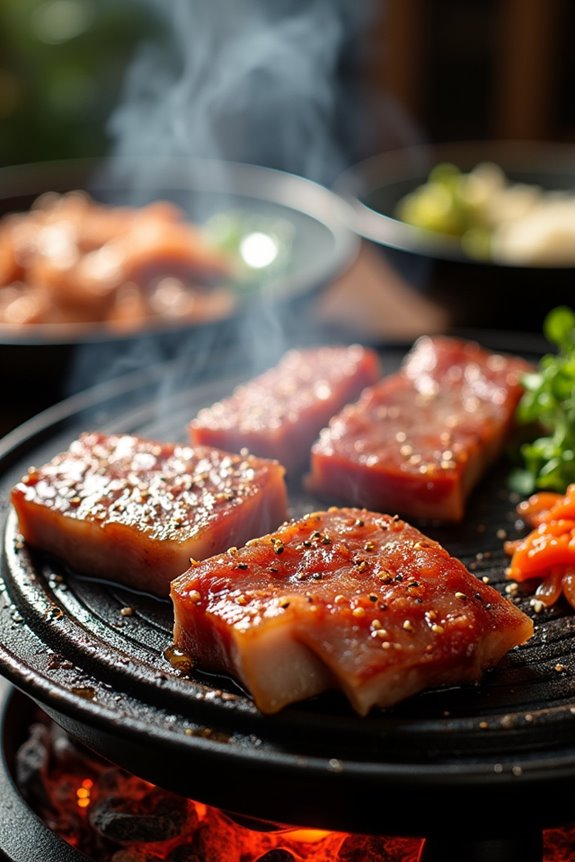
You’re looking at roughly 518 calories per 100 grams of pork belly and around 300–350 calories per serving of short ribs—basically your calorie budget’s worst nightmare. The thing is, when you’re at an all-you-can-eat spot, these fatty cuts show up in multiple rounds, which means you’re easily doubling or tripling your intake before you realize it. To keep yourself in check, you’ll want to load up on vegetables and lettuce wraps while skipping the rice and heavy sauces.
High-Calorie Meat Cuts
Why do pork belly and short ribs dominate Korean BBQ menus? You’re looking at the two heaviest hitters calorie-wise. Pork belly packs roughly 518 calories per 100 grams raw, while short ribs clock in around 300–350 calories per 85 grams cooked. Both cuts contain serious fat content that renders during grilling, sneaking extra calories into every bite.
| Meat Cut | Calories | Fat Content | Carbs |
|---|---|---|---|
| Pork Belly | 518/100g | 28–32g | N/A |
| Short Ribs | 300–350/85g | 22g | 8g |
| Restaurant Portion | 750–1,000 | High | Varies |
| With Marinades | +200–400 | Increased | Added |
Restaurant portions (150–200 grams raw) push single servings past 500 calories easily. Add sugary marinades and oil-based sauces? You’re looking at significant marinade calories boosting your totals further. These cuts aren’t bad—just calorie-dense choices requiring awareness.
Portion Control Strategies
Here’s how pork belly and short ribs can quietly derail your calorie goals. A standard 150–200 gram order transforms into 520–1,100 calories once cooked. That’s nearly half your daily intake in one sitting.
Smart strategies keep you satisfied without overdoing it:
- Order smaller portions – Request 100 grams instead of the standard 150–200 grams to stay in control.
- Balance with lean cuts – Mix short ribs with chicken or beef to reduce overall fat intake per meal.
- Load up on banchan – Fill your plate with vegetable side dishes instead of extra meat servings.
Marinades add hidden sugars and oils too, sneaking calories past your radar. You’ve got this—just enjoy these indulgent cuts mindfully alongside leaner options and plenty of veggies.
How Grilling Method Affects Fat Content
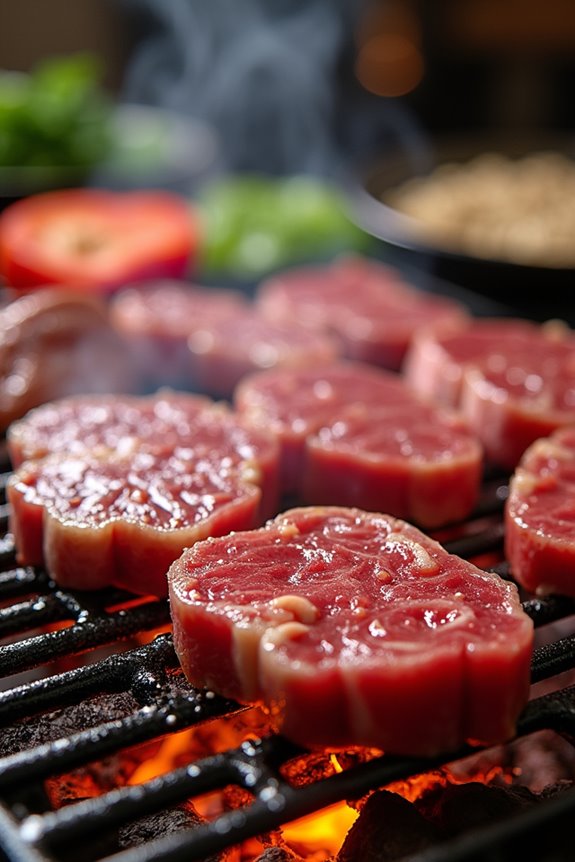
When you grill Korean BBQ at the table, fat literally drips away from your meat onto the grill grates. You’ve got control over how much oil touches your food, whether that’s a light brush or a heavy pour. That simple difference in oil application can cut your total fat intake way down compared to pan-frying the same cut.
Fat Drips Away During Grilling
One of Korean BBQ’s biggest advantages is how the grilling method itself reduces fat. You’re actively controlling what happens to your meat right at the table.
Here’s what makes fat dripping so effective:
- Excess fat literally slides away from your lean cuts like chicken breast and pork tenderloin as they cook on the hot grill surface.
- You avoid added oils that frying requires, so you’re not reintroducing fat during cooking.
- The calorie impact drops noticeably when you choose leaner proteins over fatty cuts like pork belly.
That said, marinated meats and sauces can still pack hidden calories. The grilling method gives you the power to eat smarter, but you’ve got to make intentional choices about marinades and dipping sauces too.
Oil Application Methods Matter
How you apply (or don’t apply) oil makes a real difference in your meal’s fat content. You’ve got choices that directly impact what you’re eating.
| Application Method | Fat Impact |
|---|---|
| No added grilling oil | Lowest fat option |
| Light brush of sesame oil | Moderate fat addition |
| Heavy oil coating | Significantly higher fat |
| Oil-based marinade oils | Extra hidden calories |
| Lean cuts without oil | Best fat-rendering results |
When you skip extra grilling oil entirely, you’re making a smart move. Your lean cuts still benefit from fat-rendering during cooking. Even better? Light marinades with minimal marinade oils work beautifully. Avoid slathering butter or oil-based sauces on the grill itself. You’ll preserve that authentic grilled flavor while keeping calories reasonable. Your body—and your jeans—will thank you.
The Hidden Calorie Culprits in Korean BBQ: Sauces and Marinades
You’d be surprised how quickly sauces and marinades can derail your calorie count at Korean BBQ. Those delicious basting sauces? They’re sneakier than you think.
Here’s what’s really happening:
- Ssamjang packs 30–40 calories per tablespoon, and you’ll use way more than you realize while eating.
- Sesame oil adds roughly 40 calories per teaspoon, which adds up fast when you’re drizzling it on everything.
- Marinades absorb into meat during preparation, meaning your beef or pork already contains hidden sugars and oils before it hits the grill.
The thing is, marinades taste so good that you don’t register you’re consuming extra calories from sugars and fats. Between the basting sauces and calories from sauces themselves, your meal climbs higher than expected. Stay mindful of your portions!
Load Your Korean BBQ Plate With Vegetables to Cut Overall Calories
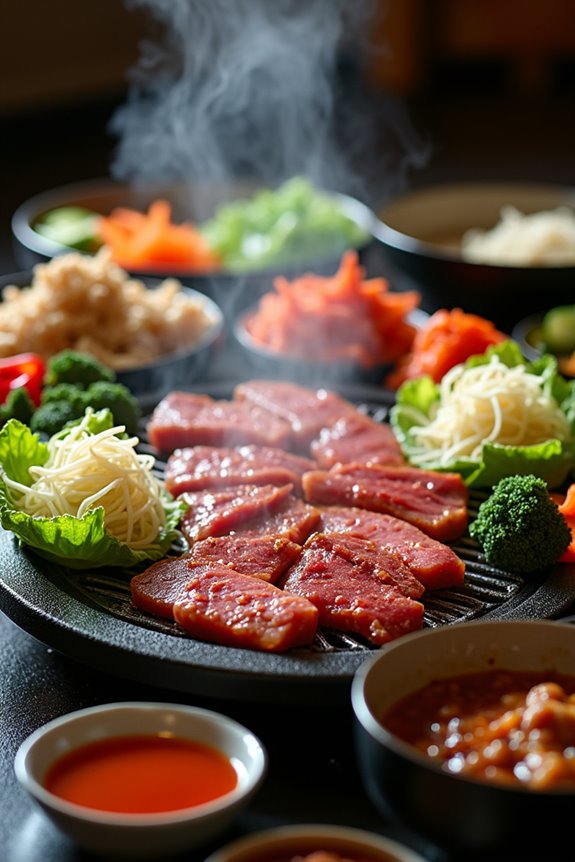
Now that you’ve got a handle on those sneaky sauces, it’s time to talk about the real game-changer at your Korean BBQ table: vegetables. Here’s the thing—loading your plate with grilled mushrooms, zucchini, peppers, and onions actually fills you up while cutting 150–200 calories per meal. These veggies bring serious micronutrients and antioxidants without the calorie overload.
Want to go even lighter? Lettuce wraps swap rice for fresh leaves, keeping things low-carb and satisfying. Don’t sleep on your banchan either—steamed vegetables and kimchi add nutrients plus probiotics without breaking your calorie bank.
You’re not sacrificing flavor here. You’re just being strategic about what lands on your grill. That’s how you stay part of the KBBQ crew without the guilt.
Lettuce Wraps vs. Rice: Why Ssam Changes the Equation
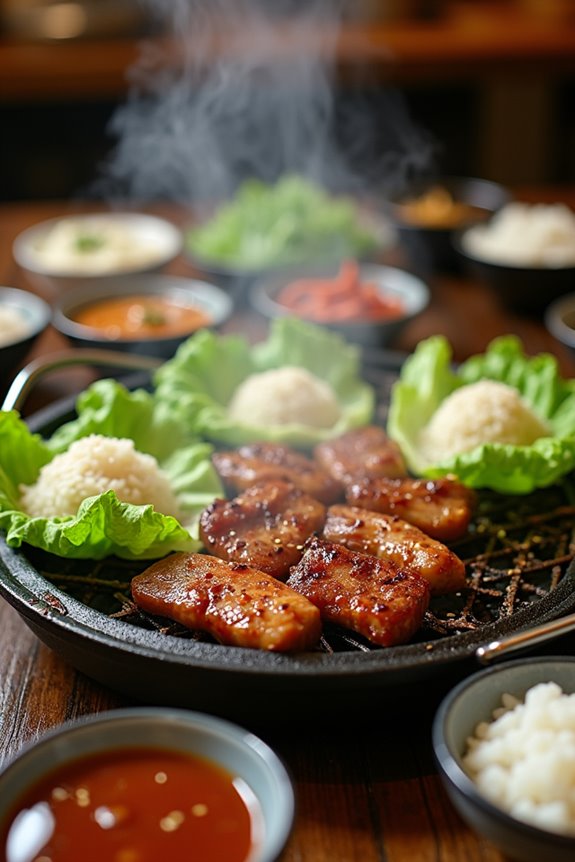
Ssam wraps flip the Korean BBQ game entirely. You’re swapping rice’s 150–200 calories for lettuce’s near-zero contribution per bite. That’s substantial for your overall calorie count.
Here’s why this matters:
- Lettuce wraps let you eat more protein without the starchy carb load that typically fills you up fast then leaves you hungry later.
- You control your portions better because leafy vessels don’t mask how much meat you’re actually consuming like rice does.
- Banchan sides like kimchi (just 11 calories per 60g serving) add fiber and probiotics that boost fullness without the calorie guilt.
You’re not sacrificing flavor or satisfaction either. Ssam wraps keep Korean BBQ genuinely filling while cutting calories considerably. That’s the real win here.
Lean Protein Swaps for Korean BBQ: Tofu and Shrimp
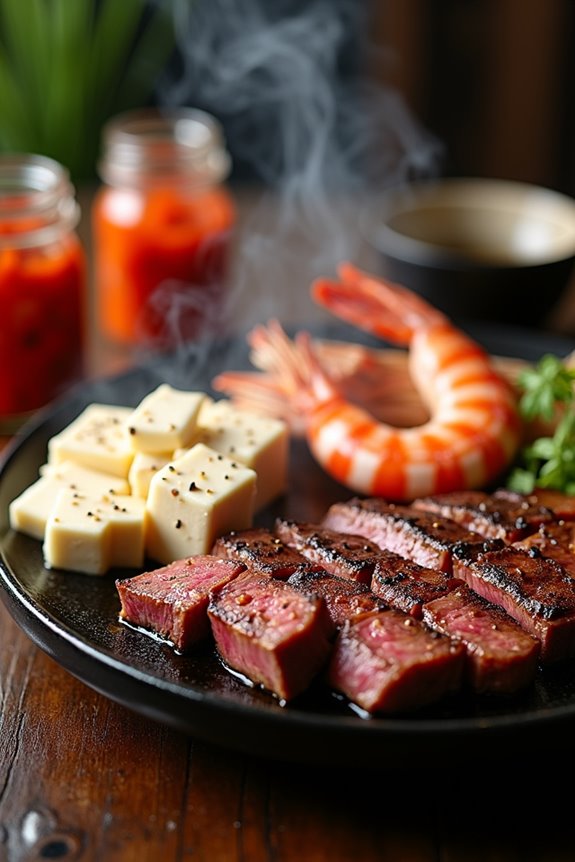
What if you ditched the beef entirely? You’d unlock some seriously lean KBBQ options that won’t derail your goals.
Tofu brings just 76 calories per 100 grams to your table. It’s basically a blank canvas that soaks up marinades like a champ. Shrimp clocks in around 99 calories per 100 grams and cooks in minutes—talk about convenient.
Tofu at 76 calories and shrimp at 99 calories per 100g deliver lean protein that soaks up flavor without the heavy fat.
Here’s the real win: you’re getting substantial lean protein without the heavy fat content of fatty meat cuts. Pair either option with ample vegetables, and you’re naturally controlling portions.
Keep marinades simple to dodge hidden sugars and extra fats. Skip the rice, grab lettuce wraps instead, and load up on banchan sides. This combo creates a balanced meal that actually tastes indulgent while keeping calories sensible.
Portion Control at the Korean BBQ Grill
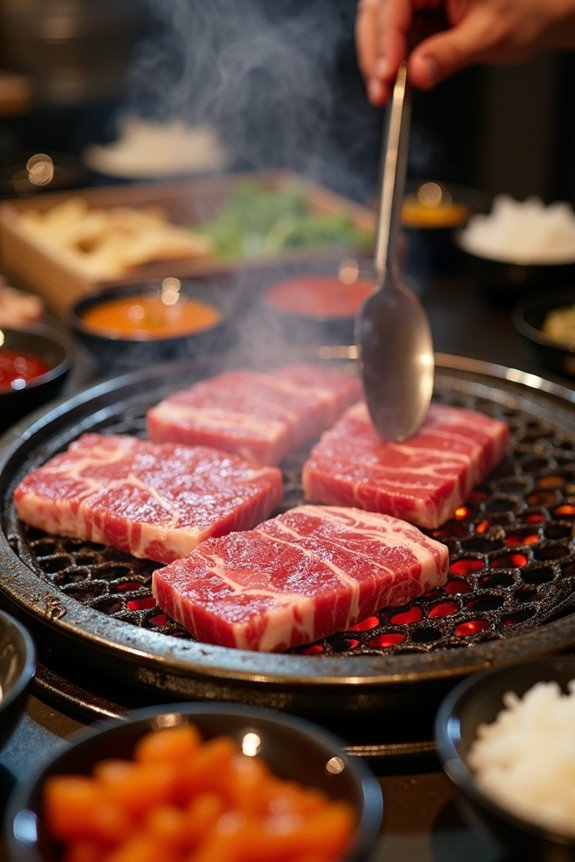
The beauty of KBBQ? You control what lands on your plate. Unlike fixed meals, you’re calling the shots at the grill, which means portion control becomes your superpower for calorie awareness.
Here’s how to master it:
- Stick with lean meats like chicken breast or sirloin instead of fatty short ribs, cutting calories without sacrificing flavor.
- Share rounds with your crew so you naturally eat less per person while enjoying more variety.
- Load up on side dishes like kimchi and pickled vegetables instead of rice, trimming 150–200 calories easily.
You’re not deprived—you’re strategic. Pacing your eating and choosing leaner cuts keeps you satisfied without overdoing it. That’s the KBBQ advantage right there.
Pick Banchan That Won’t Derail You
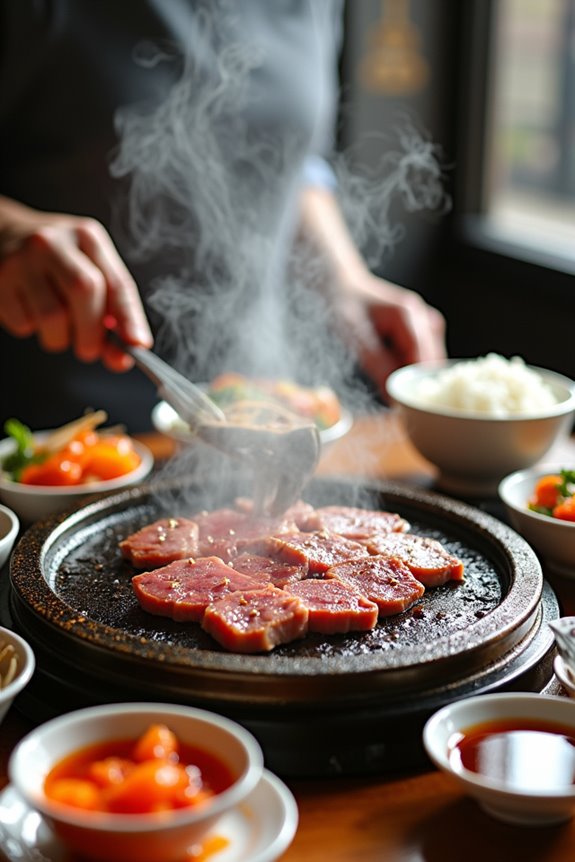
those little side dishes everybody ignores.
You’ve got options that won’t wreck your Korean BBQ calories goals. Kimchi (60g) delivers just 11 calories while boosting your gut health with probiotics. Kongnamul adds volume at only 25 calories per 80g serving. Pajeori brings freshness at roughly 30 calories, though watch the sesame oil. Skip japchae—those glass noodles hit 110–130 calories per 100g portion.
| Banchan | Serving | Calories |
|---|---|---|
| Kimchi | 60g | 11 |
| Kongnamul | 80g | 25 |
| Pajeori | 50g | 30 |
Smart banchan selection paired with lean meats and portion control makes Korean BBQ totally manageable. You’re building a plate that satisfies without sabotaging your progress.
Why Eating Together Stops Overeating
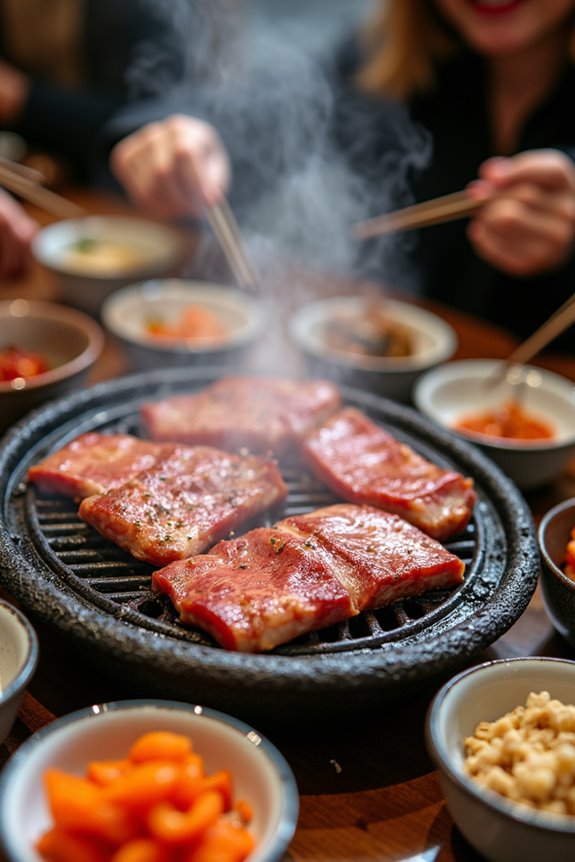
You’re not just eating meat—you’re hanging out with people. That changes everything about how much you actually eat.
When you’re eating with friends, the social vibe becomes the main event—portion control happens naturally without even trying.
When you’re grilling Korean BBQ with friends, something magical happens. You naturally slow down and eat less without even trying. Here’s why:
- Conversation keeps you distracted from mindlessly stuffing your face between bites of bulgogi.
- Shared banchan and lettuce wraps force you into smaller, cyclical portions instead of loading up one giant plate.
- The interactive grill creates natural pauses between cooking rounds, giving your fullness cues time to kick in.
You’re also accountable to your crew. Nobody wants to be the person eating nonstop while everyone else chats. The social entertainment actually beats the food as the main event. That’s portion control without feeling like you’re restricting yourself. You’re just vibing with your people.
Can You Build a Full Meal Under 1,000 Calories?
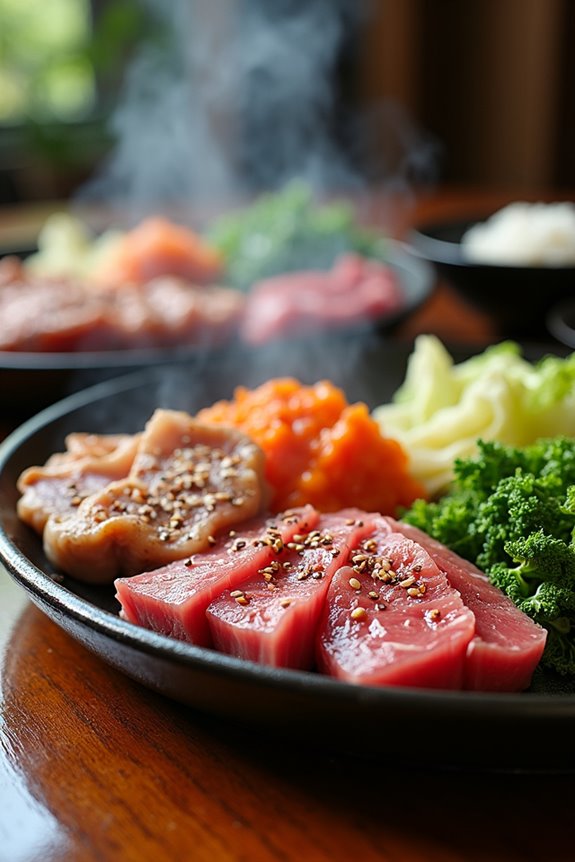
Now that you’ve got the social side locked down, here’s the real question: can you actually keep it light calorie-wise?
Absolutely. You’re building a sub-1,000-calorie KBBQ meal by choosing lean meats like chicken breast or pork tenderloin. Grab 150–200g of grilled meat, and you’re looking at roughly 200–280 calories. Tofu and shrimp work too—they’re surprisingly low at 76 and 99 calories per 100g.
Here’s where portion control saves you: skip the rice entirely. Load up on grilled vegetables instead. Your lower-calorie banchan are your hidden advantages—kimchi adds just 11 calories per 60g serving, while bean sprouts clock in around 25 calories per 80g.
Keep ssamjang to one tablespoon, avoid pork belly, and suddenly KBBQ calories become totally manageable. You’re eating satisfying amounts without the guilt.
Common Mistakes That Turn Korean BBQ Into a Calorie Trap
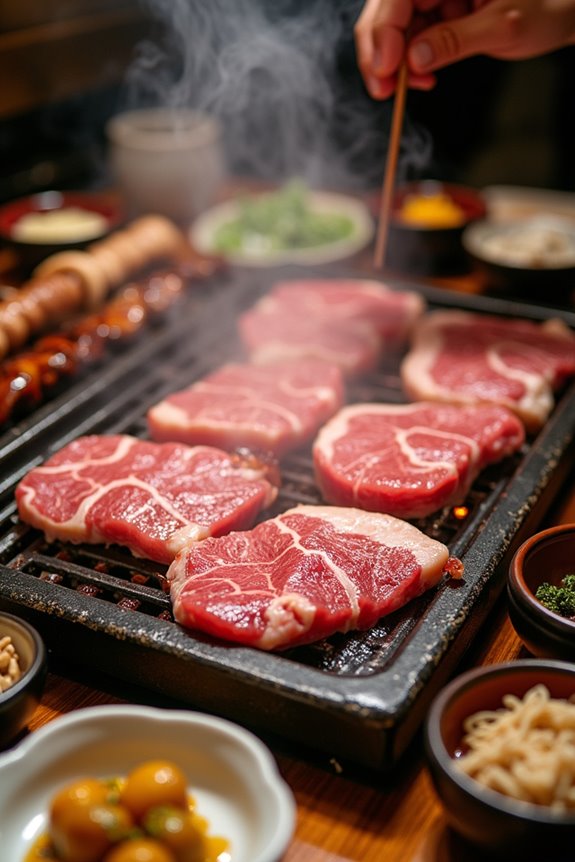
You’re probably making three big mistakes that turn Korean BBQ into a calorie bomb. First, you’re not watching your portion sizes—those meat rounds keep coming, and you eat them all without tracking. Second, you’re drowning everything in marinades and sauces that pack 100+ extra calories per serving, plus the fatty cuts like pork belly render oils that add up fast.
Oversized Portion Control
Here’s the catch about Korean BBQ portions—they’re deceptively easy to underestimate. You order what seems reasonable, but when it hits the grill, you’re shocked at the outcome.
Here’s what actually happens at the table:
- Raw meat expands dramatically—150–200 grams raw becomes 250–350 grams cooked, nearly doubling your calories per person.
- Marinades hide extra calories—sugary glazes and sesame oil add significant fat compared with plain grilled meat.
- Lean cuts get overlooked—you reach for pork belly (520–580 calories) instead of trimmer options that satisfy just as well.
The reality? One meal easily exceeds your daily targets without oversized portions feeling excessive. Stick with smaller initial orders and lean cuts. You’ll enjoy more, stress less, and actually feel satisfied afterward.
Sauce and Marinade Overload
Why do sauces and marinades trip up so many Korean BBQ lovers? You’re grilling lean meat, feeling virtuous, then drowning it in ssamjang and sesame oil. That’s your sauce overload problem right there.
Here’s the thing: one tablespoon of ssamjang adds 30–40 calories. A teaspoon of sesame oil? Another 40 calories. These tiny amounts stack up fast without making your plate look fuller.
Marinade calories matter too. Bulgogi and galbi marinades contain sugars and fats that boost calorie density compared to plain grilled meat. You’re not just eating protein anymore.
The side dish impact gets real when you add rice and japchae. Pairing lean meat with low-calorie banchan keeps you satisfied without the calorie trap that catches most of us.
High-Calorie Meat Selections
When it comes to meat choices, not all KBBQ cuts treat your calorie goals equally. You’ve probably noticed that some selections pack way more calories than others. Here’s what you’re actually ordering:
- Pork belly – yields 200–250 calories per 100 grams raw, climbing higher after grilling
- Galbi (beef short ribs) – reaches 300–350 calories per cooked serving with roughly 22 grams of fat
- Duck breast – tops out around 337 calories per 100 grams, making it the richest option
The real trap? Marinades amp up calories by adding sugars and sesame oil. Plus, portion sizes sneakily expand from 150–200 grams raw to 250–350 grams cooked. You’re eating way more than you realize. Balance these heavier meats with vegetables, and you’ll keep your KBBQ experience enjoyable without derailing your goals.
Build Your Custom Korean BBQ Plate
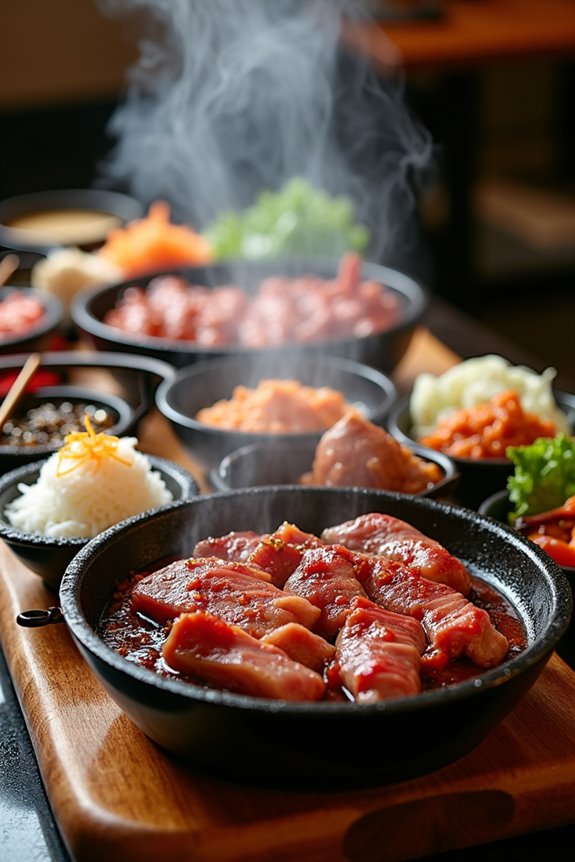
The best part about Korean BBQ? You’re totally in control of what lands on your plate. Build a custom Korean BBQ plate by mixing lean meats like chicken breast or pork tenderloin with your heavier choices. You’ll keep calories reasonable while still enjoying everything.
Here’s the strategy: grab about 250–350 grams of meat, then load up on vegetables and lettuce wraps for side balance. Wrapping your meat in lettuce cuts rice reliance significantly. This combo feels satisfying without overdoing it.
For portion control, pair one rich option like duck breast with lighter proteins. Skip heavy marinades or choose garlic and ginger versions instead. You’re making smarter choices without sacrificing flavor or that amazing Korean BBQ experience.