
Foil locks in moisture and speeds through the stall faster, getting you done predictably. Butcher paper lets your bark stay crispy while still helping you push past that stubborn 165°F plateau. Foil wins when guests arrive soon; butcher paper wins when bark matters most. Your smoker type, timing, and whether you’re chasing tenderness or crust texture all shift which one actually serves you better—and there’s a lot more to nail down depending on your specific situation.
Why You Wrap Pork Shoulder (and When the Stall Happens)
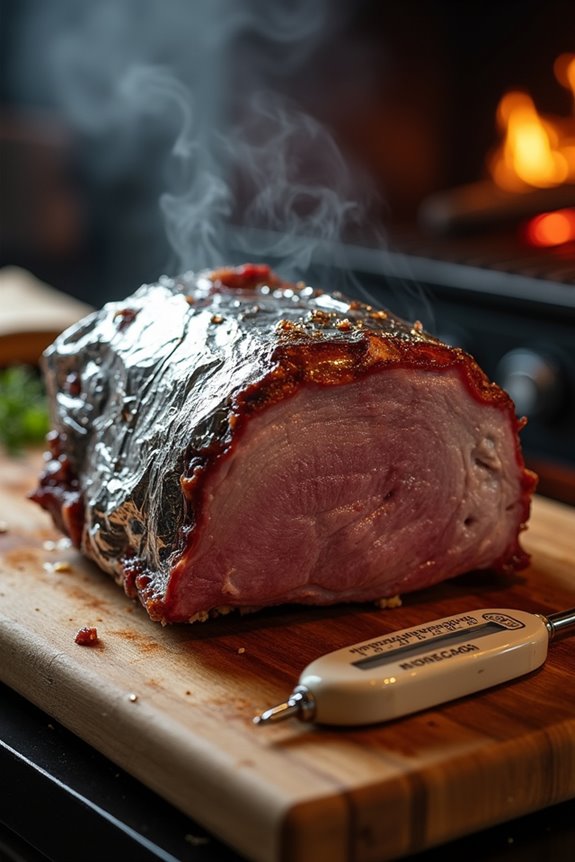
Why wrap your pork shoulder at all? You’re fighting the stall—that annoying plateau where your meat stops cooking around 150°F. It happens to everyone, and it’s frustrating. Foil wrapping tackles this directly by trapping heat and moisture around your shoulder.
Here’s what you’re really doing: around the 6-hour mark, foil wrapping with moisture retention becomes your essential tool. You’ll seal in juices that’d otherwise evaporate into thin air. This stall management technique cuts cooking time substantially.
You’re not just being impatient either. Adding liquids like apple juice and butter inside that foil creates steam, pushing through the stall faster. Your meat stays juicy while you actually get dinner finished on schedule. That’s the win-win you’re after.
Foil: Speed, Juiciness, and Braising Power
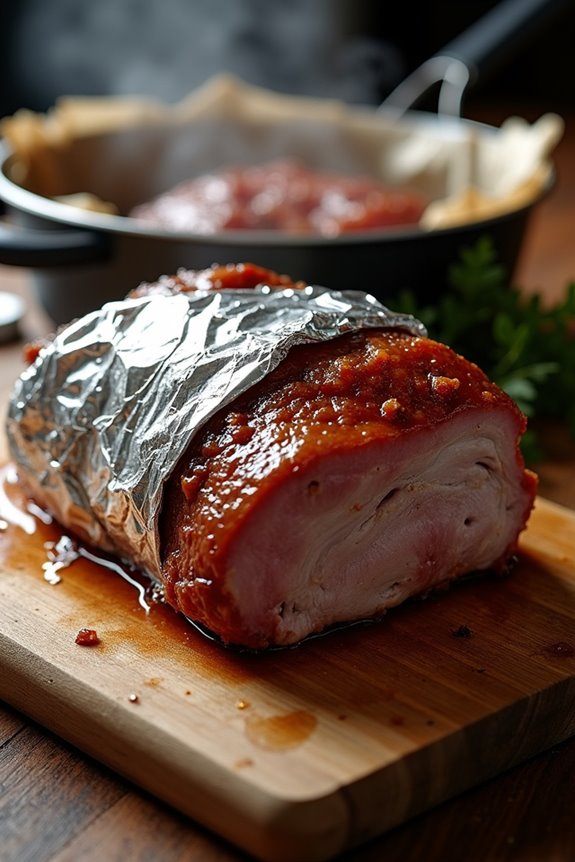
When you wrap your pork shoulder in foil, something pretty magical happens. You’re creating a moisture-trapping braising environment that speeds up cooking significantly. Here’s what makes foil so effective:
When you wrap pork shoulder in foil, you create a moisture-trapping braising environment that speeds up cooking significantly.
- It seals in steam from the meat’s own juices, pushing through those frustrating stalls faster
- Your pork stays plump and juicy without needing those long rest periods afterward
- Adding liquid to a foil tray boosts moisture even more and stabilizes temperature during the final stretch
- You’ll get incredibly predictable finish times, perfect for planning your serve time
Sure, foil softens the bark a bit compared to butcher paper. But you’re trading bark crispness for guaranteed tenderness and juiciness. That’s honestly a solid deal when you’re feeding a crowd and need reliability.
Butcher Paper: Bark Preservation and Balanced Cooking
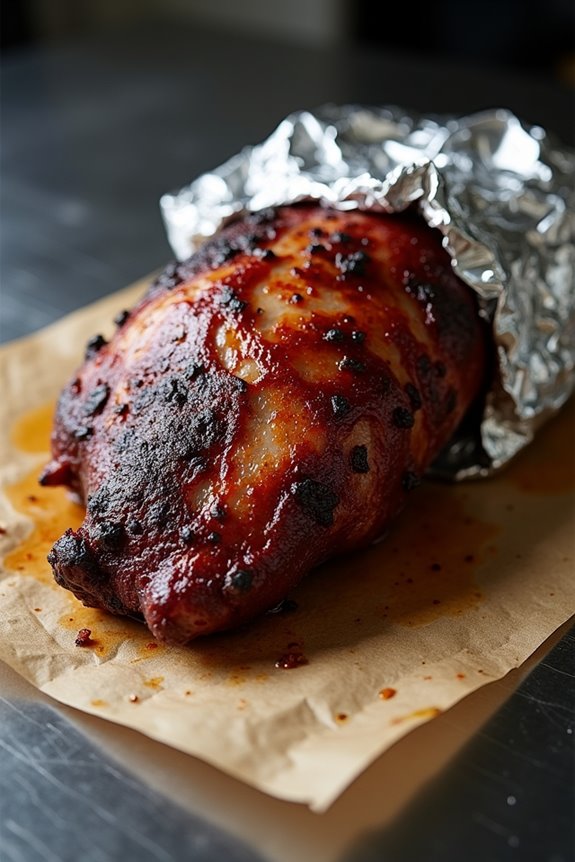
So you want that gorgeous, crispy bark without sacrificing tenderness? Butcher paper bark preservation is your secret weapon. Here’s the thing: butcher paper lets moisture escape while protecting your bark’s integrity. You’re getting the best of both worlds with balanced cooking.
Unlike foil’s tight seal, butcher paper breathes. This means your pork shoulder retains smoky penetration and maintains that satisfying crust you’ve earned. It prevents the stall without turning everything mushy.
When you’re wrapping pork shoulder, butcher paper offers middle-ground magic. You avoid the over-softening that happens with foil while still getting stall relief. Your bark stays crispy and appealing instead of becoming soggy and pale.
You’ll notice the difference around hour six. That’s when traditional bark-focused cooks swear by butcher paper. Your shoulder cooks evenly, stays flavorful, and looks restaurant-worthy.
Foil vs. Butcher Paper: Direct Comparison
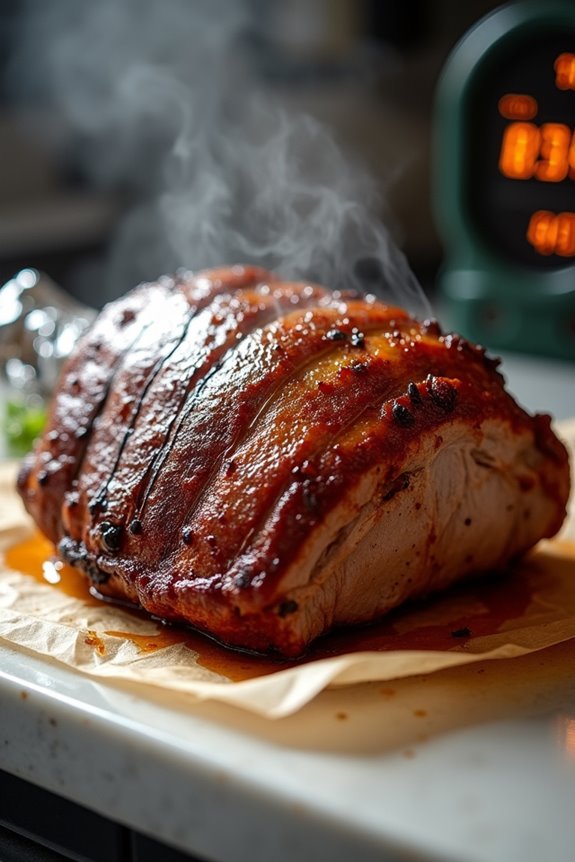
When you wrap your pork shoulder in foil, you’re basically locking in steam and moisture that speeds things up. Butcher paper, on the other hand, lets your meat breathe a bit while still protecting that crispy bark you’ve worked hard to develop. The real trade-off comes down to what you want more: a juicy, tender shoulder that’s done faster, or one with that satisfying crusty exterior.
Moisture Retention Differences
How much moisture ends up in your finished pork shoulder actually matters more than you’d think.
When you wrap in foil, you’re basically creating a steam chamber. Here’s what happens:
- Foil traps virtually all moisture inside, giving you incredibly juicy pulled pork that shreds like butter.
- Butcher paper lets some steam escape, which sounds bad but actually helps preserve that coveted bark texture.
- Your bark gets softer with foil wrap since moisture stays trapped against the surface throughout cooking.
- Butcher paper maintains moderate moisture retention while keeping your bark crispier and more defined.
Think of it this way: foil prioritizes tenderness and juiciness over everything else. Butcher paper gives you balance. You’ll want foil if bark preservation matters less than achieving that fall-apart texture everyone craves.
Bark Preservation Trade-offs
your bark choice actually determines your whole cook strategy.
Foil wrapping locks in moisture like a tight hug, but it softens that precious bark you’ve worked hard to build. You’ll finish faster, sure, but you’re trading crispiness for speed. Butcher paper? It’s the middle ground that most of us prefer.
With butcher paper, you’re protecting your bark without crushing it. The material breathes just enough to let smoke through while keeping things juicy inside. Your exterior stays firmer and more satisfying to bite into.
Here’s the real talk: if bark preservation matters to you, butcher paper wins. Many experienced cooks skip wrapping entirely until they hit the stall. That’s when butcher paper becomes your secret weapon—balancing moisture and texture beautifully.
Choose Foil When Time Is Short or You’re Feeding a Crowd
When you’re watching the clock or expecting a crowd, foil’s your best friend for finishing faster. It traps moisture and heat, pushing you through that stubborn stall quicker than butcher paper ever could. Plus, you’ll keep everything juicy and ready to serve without constantly peeking and poking at your meat.
Speed Matters Most
Foil reduces your cook time considerably—and that’s a game-changer when you’re racing the clock. You’re not just saving minutes here—you’re talking real hours of difference.
Here’s why foil speeds things up:
- Traps heat and moisture instantly, pushing through stalls faster
- Minimizes evaporative cooling that slows butcher paper wraps
- Creates a sealed environment that maintains consistent temperatures
- Lets you finish your pork shoulder reliably on schedule
When you’ve got thirty people showing up at 6 p.m., foil wrapping your pork shoulder becomes your secret weapon. You’re protecting yourself against the dreaded stall phase. The Texas Crutch effect works because that trapped steam keeps everything moving forward. You’ll hit your target temperature hours earlier than expected—giving you breathing room instead of panic.
Feeding Large Groups
Ever tried coordinating thirty hungry people and a smoker that won’t cooperate? Foil’s your answer. When you’re feeding a crowd, you need consistency across multiple shoulders finishing around the same time. That’s where foil wraps shine.
Here’s the thing: foil prevents the dreaded stall from derailing your timeline. It traps moisture and heat, speeding up cooking so everything finishes predictably. You’re not babysitting individual pieces hoping they cooperate.
Plus, foil lets you collect rendered juices in a tray below. You’ll reuse those juices to keep every shoulder equally tender. That’s consistency you can count on when serving many mouths.
Butcher paper gives you better bark, sure. But when predictable serving windows matter more than appearance, foil delivers reliability. Your guests eat on schedule, and you look like a planning genius.
Choose Butcher Paper When Bark Quality Matters Most
Butcher paper deserves serious consideration if you’re after that coveted, crispy bark.
Here’s why you’ll want to reach for it:
- Smoke still penetrates – Unlike foil, butcher paper breathes and lets smoke reach your meat throughout cooking.
- Your bark stays robust – You get that firm, textured crust you’re craving without sacrificing tenderness underneath.
- Moisture retention stays balanced – It traps just enough steam for stall relief while preventing that soggy exterior foil creates.
- Cook times are predictable – Yes, you’ll add maybe thirty minutes compared to foil, but you’ll know what to expect.
When bark quality matters most, butcher paper hits that sweet spot. You’re getting the best of both worlds—managing the stall while keeping your shoulder’s exterior looking impressive.
Temperature and Timing: When to Wrap In
You’ve got to nail the timing if you’re wrapping in foil, since jumping the gun softens that bark you’ve worked six hours to build. Watch for your shoulder to hit around 165°F internally, when the bark’s set firm, and you’re ready to wrap without regret. The stall typically hits between 150-170°F, so that’s your sweet spot to decide whether foil’s speed matters more than bark perfection for your timeline.
Bark Set Before Wrapping
The moment your pork shoulder’s surface hardens into that coveted dark crust—that’s your green light to wrap. You’ve got this timing down when you understand what bark actually means for your cook.
Here’s what you’re watching for:
- Wait until that exterior feels firm, not soft or tacky anymore
- Aim for the 160–170°F internal temperature range where the stall kicks in
- Check around the 6-hour smoking mark as your general wrap timing guideline
- Listen to your gut—if bark looks set, it probably is
Wrapping too early traps moisture and destroys that texture you’ve worked hard for. Your bark stays crispy and protected when you wrap timing aligns with bark setting. You’ll nail that perfect balance between preserving crust and powering through the stall efficiently.
Internal Temperature Milestones
When’s the right moment to wrap your pork shoulder? You’ll want to monitor your internal temperature closely. Most pitmasters wrap around 160–170°F to push through the stall faster. That’s when evaporative cooling slows your progress, and wrapping helps you power through. If you’re using foil, you’ll finish quicker because it seals moisture in completely. Butcher paper lets some moisture escape, which changes your timing slightly. Here’s the thing: wrap timing affects everything downstream. You’re aiming for final internal temperatures between 165–185°F, depending on your bark goals. The earlier you wrap, the faster you’ll finish—perfect when you’re feeding a crowd. The later you wrap, the better your bark development. Choose your wrap timing based on what matters most to you that day.
Stall Timing And Decisions
Once your pork shoulder hits that 160–170°F sweet spot, you’ve entered what we call the stall—and it’s a patience tester. This is when wrapping becomes your secret weapon.
- Foil wins the speed game by trapping heat and moisture, pushing you through faster than unwrapped meat.
- Butcher paper splits the difference, letting some moisture escape while still helping you beat the stall.
- Timing matters most—wrap after about 6 hours when bark sets, balancing that crispy exterior with tender inside.
- Your guest list decides everything—foil if they’re arriving soon, butcher paper if bark’s non-negotiable.
The stall typically lasts 3–5 hours unwrapped. Wrapping cuts that time significantly. You’re basically choosing between speed and texture, and both choices work great.
How Smoker Type Affects Your Foil vs. Butcher Paper Choice
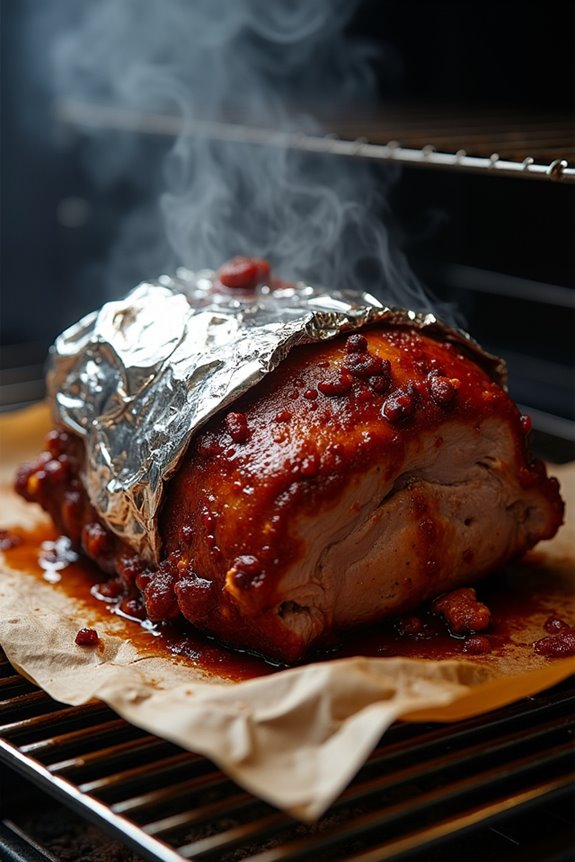
Did you realize your smoker’s personality actually matters here? Your choice between foil and butcher paper depends heavily on what you’re cooking with.
Pellet and electric smokers maintain steady temperatures like clockwork. You’ll want foil for consistency and reliable moisture retention. Charcoal or wood-fired pits? They’re more unpredictable, so butcher paper becomes your friend—it lets smoke penetrate while protecting your bark.
Lower heat retention smokers benefit from foil’s insulating power. It keeps temps steady and traps moisture when things get chilly. Butcher paper works better when your smoker holds heat moderately well, reducing soggy bark risks through controlled evaporation.
Think of it this way: match your wrap to your smoker’s strengths, not against them. You’ll nail that perfect shoulder every time.
Troubleshooting Common Wrapping Problems
Even with the right smoker matched to your wrap choice, things still go sideways sometimes.
You’ll hit the dreaded stall, and your wrapping decision becomes critical. Here’s what separates successful pitmasters from frustrated ones:
- Stall management with foil – Your shoulder stalls hard around 165°F? Wrap it in foil immediately. You’ll blast through those stubborn hours faster than butcher paper can.
- Bark turning mushy – Wrapped too early in foil? You’ve created a steam bath. Wait until 150–170°F before wrapping to protect that crust you’ve worked for.
- Rendered juices disappearing – Use foil in a pan. Those precious drippings reintegrate back into your meat, boosting tenderness and yield when you pull it apart.
- Inconsistent results – Document your wrapping temperatures. You’ll spot patterns quickly and dial in your personal sweet spot.
Liquid Additions and Flavor Techniques for Each Method
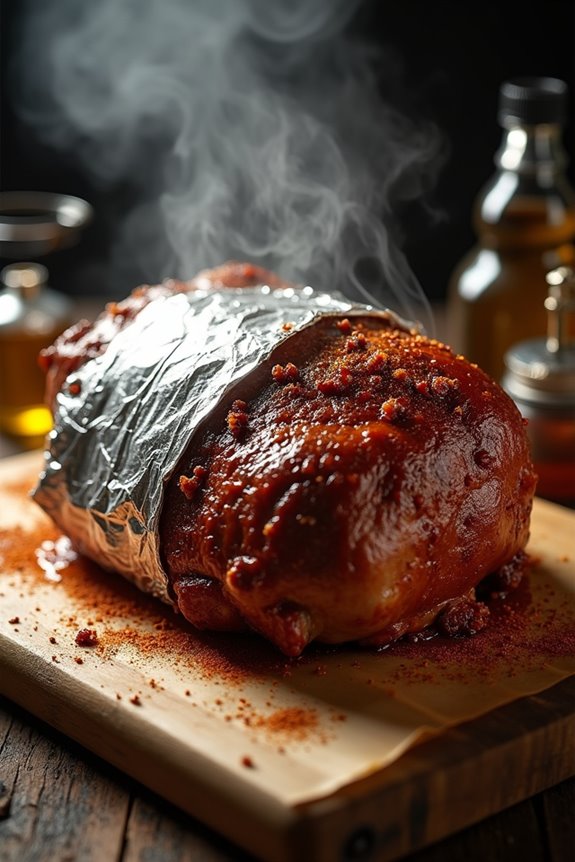
Wrapping choice completely changes how you’ll handle liquids during the cook. With foil wrap, you’re basically creating a sealed steam chamber. That means your liquid additions—apple juice, butter, or stock—stay put and concentrate their flavors right on the meat. You’re free to add generous amounts without worry.
Butcher paper tells a different story. It breathes, so moisture escapes naturally. You’ll want modest liquid additions here. Try light apple juice or butter-based bastes that won’t wash away your hard-earned bark.
Here’s the insider move: combine both methods. Place a small amount of liquid beneath your pork, then wrap with butcher paper. You’ll get controlled moisture and flavor infusion without sacrificing that crispy exterior everyone craves.