Your pork butt’s done when a probe slides through like butter, not just at 195°F. That temperature’s your starting point, but tenderness matters way more than numbers on a thermometer. Aim for 190–205°F while testing multiple spots across the meat for consistent softness. Your thermometer might be off by 50 degrees anyway, so grab a second one to double-check. After you hit your target temp, rest it wrapped in foil for an hour—that’s when the real magic happens.
The 195°F Sweet Spot: Why This Temperature Matters for Pulled Pork
Why does temperature matter so much for pulled pork?
You’re aiming for that magic internal temperature of 195°F because that’s when your pork butt becomes genuinely tender. At this sweet spot, your probe slides through the meat like butter—that’s the real test of doneness, not just hitting a number on your thermometer.
At 195°F, your pork butt becomes genuinely tender—when your probe slides through like butter, you’ve nailed doneness.
Here’s the thing: you’ll want to pull your meat around 195–200°F since carry-over cooking raises the temperature a few more degrees after you remove it. That means your final pulled pork lands right at 200–203°F, which is perfection.
Skip the guesswork. Invest in a reliable meat thermometer and trust the process. You’re joining countless pitmasters who’ve nailed this temperature for consistently tender, pullable results every single time.
The Probe Tenderness Test: Your Real Doneness Indicator
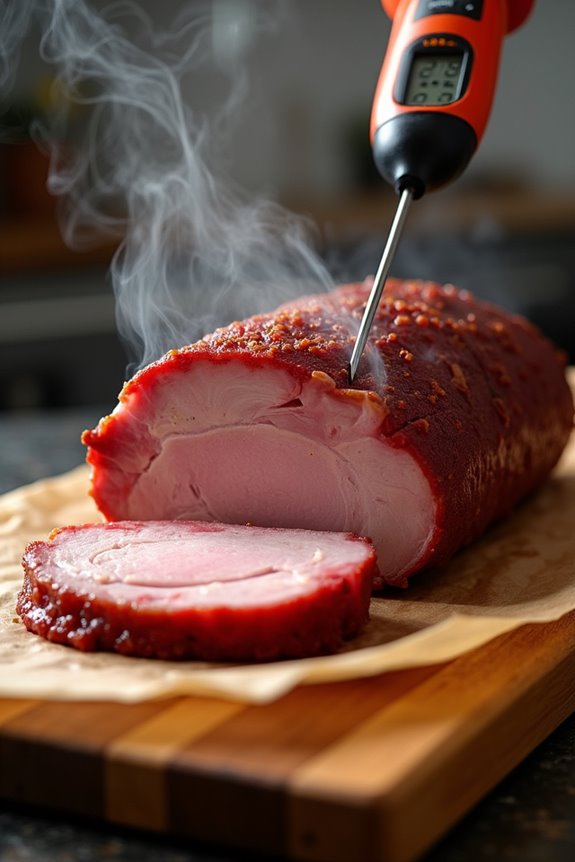
You’ll find that a meat probe is honestly your best friend here—forget staring at thermometers when you can simply slide the tip in like butter. That tenderness test matters way more than hitting exactly 195°F, because every pork butt cooks differently depending on size and your smoker’s personality. Once you master this feel, you’ll nail doneness every single time without second-guessing yourself.
Probe Slides Like Butter
| Temperature Range | Probe Feel | Pulled Pork Quality |
|---|---|---|
| 190–195°F | Slight resistance | Good, but may shred unevenly |
| 195–203°F | Slides smoothly like butter | Perfect pulled texture |
| 205°F+ | Zero resistance | Risk of mushy meat |
That “like butter” sensation? That’s when collagen’s converted to gelatin. Your probe should glide through without pushing. Test multiple spots across your pork butt. Temperature readings vary by location, so tenderness becomes your trusty guide toward restaurant-quality pulled pork.
Tenderness Over Temperature Reading
So the following is the matter—that thermometer reading? It’s just your starting point, not your finish line. True doneness comes down to probe tenderness, which beats internal temperature every single time.
Here’s what actually matters when you’re checking your pork butt:
- Your probe slides through meat like butter with zero resistance
- The bone pulls out cleanly without any stubborn sticking
- Meat near the bone separates easily from the bone itself
- You’re hitting that 190–205°F range, depending on your preference
- Resting for one hour wrapped allows conductive carryover cooking
Some cooks pull at 195°F, while others wait until 205°F for easier shredding. That resting period? Non-negotiable. It enhances final tenderness and keeps everything juicy. Skip the obsessive temperature checks and trust the probe instead.
Testing For Actual Doneness
Thermometers get you in the ballpark, but your instant-read won’t tell you everything. That’s where the probe tenderness test comes in—your real secret weapon.
Here’s what you do: take a wooden toothpick or metal probe and slide it into the thickest part of the meat. When your pork butt’s actually done, that probe glides through like butter. No resistance means you’re golden.
Around 195–205°F internal temperature, you’re in the sweet spot for pulling. But don’t obsess over that exact number. Instead, feel how easily the probe moves. That’s your honest doneness indicator.
Bonus tip: if you’ve got a bone-in butt, watch for the bone loosening or pulling out cleanly. Combine that signal with your probe tenderness test, and you’ll nail it every time.
Thermometer Accuracy: Why Your Reading Might Be 50 Degrees Off
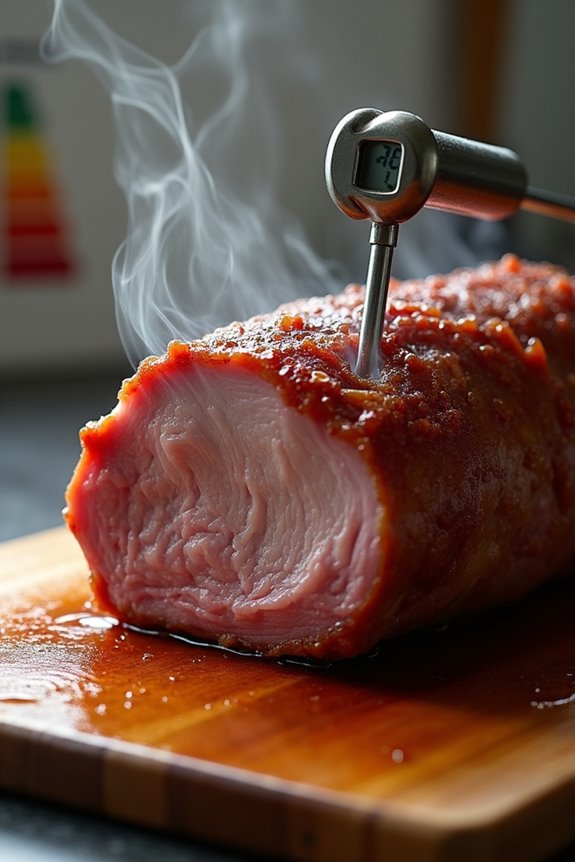
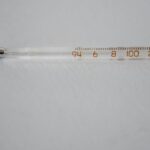
You’ve probably noticed your thermometer can swing wildly—sometimes reading 50 degrees off from reality, which throws off your whole cook. This happens because cheap thermometers drift from calibration, and probe placement matters more than you’d think. So before you pull that pork at 203°F, you’ll want to verify your thermometer’s actually reliable, or you might be way off.
Thermometer Calibration Matters
Ever wonder why your thermometer reads 165°F when your buddy’s reads 215°F for the same pork butt?
That’s calibration talking. Your thermometer can drift 50°F off without you noticing. Here’s how you stay accurate:
- Test your thermometer in ice water (32°F) before smoking
- Verify readings against boiling water (212°F at sea level)
- Check calibration monthly, especially during heavy smoking season
- Replace batteries in digital thermometers regularly
- Use multiple thermometers to cross-check internal temperature readings
Calibration matters because surface temps mislead you constantly. Your smoker’s thermometer might say 250°F while your internal temperature probe tells the real story. That’s why checking your thermometer’s accuracy keeps your pork butt perfectly done every time. Don’t skip this step—it’s the difference between undercooked and delicious.
Equipment Reading Discrepancies
Why does your smoker’s built-in thermometer claim 250°F while your instant-read probe says 200°F? You’re experiencing equipment reading discrepancies that’ll mess with your pork butt timing. External thermometers can be off by roughly 50 degrees—seriously. That’s why you’ll want to verify with a quality probe placed in the thickest meat section, away from bone. Your smoker’s surface temperature differs from what’s happening inside your pork. This gap matters because you’re judging doneness partly on internal temperature. Don’t forget carry-over cooking either—your meat keeps rising several degrees after removal. Account for that when targeting your final temperature. Combine probe tenderness checks with temperature readings for confidence. Trust your probe over the smoker’s display every time.
The Stall: Why Your Pork Stops Climbing in Temperature
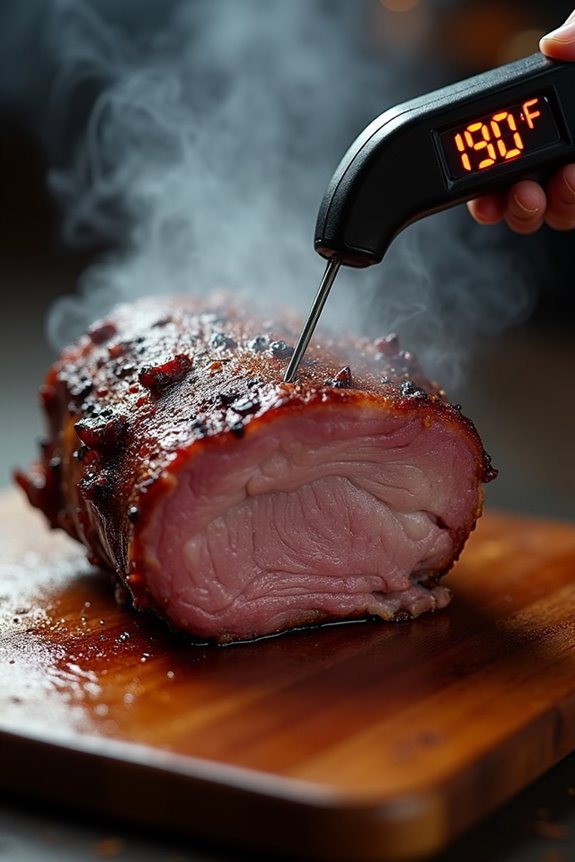
At around 150°F, something frustrating happens—your pork butt just stops cooperating. This annoying plateau is called the stall. Here’s what’s really going on:
- Juices rise to the meat’s surface and evaporate
- This evaporation cools your pork down
- Temperature climbs become nearly impossible
- The stall typically lasts 45 minutes to 2 hours
- Factors like meat size and fat content affect duration
You’ve got options to push through. Wrapping your pork in aluminum foil helps regulate surface moisture and temperature, shortening the stall notably. Some pitmasters raise their smoker to 250°F instead of 225°F. Either approach works—it depends on your patience and timeline. Knowing this stall is normal helps you stay calm and keep cooking confidently.
How Foiling Affects Your Target Temperature and Timing
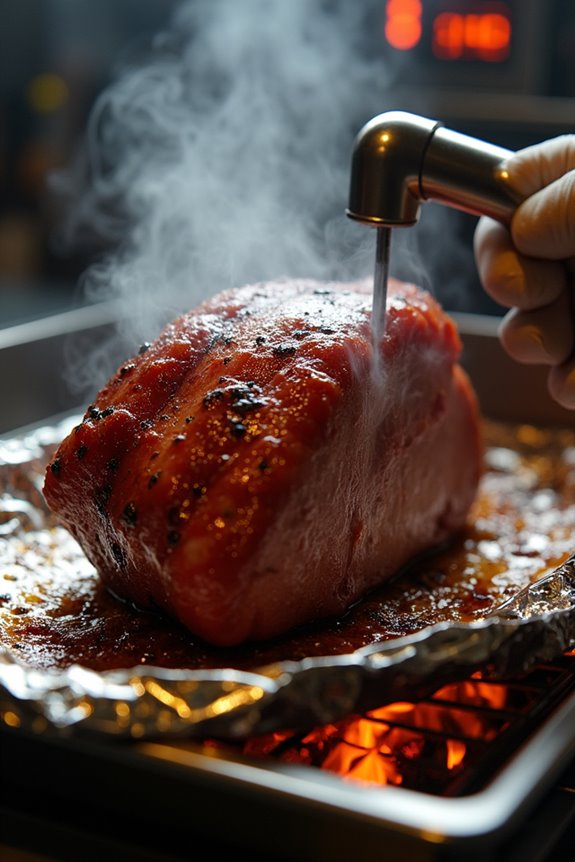
Once you wrap that pork in foil around 150–180°F, you’re playing a different game entirely. Your meat’s internal temperature still climbs, but slower than before. That’s carry-over temperature at work—it keeps rising even after you pull the butt off heat.
| Foiling Method | Final Target | Moisture Level |
|---|---|---|
| Full cook in foil | 195–205°F | High |
| Unfoil near end | 200–205°F | Medium |
| No foil (bark focused) | 203–207°F | Lower |
The liquid you add—apple juice, cider vinegar—changes how tender your meat becomes. You’re essentially creating a moist environment that pushes through that stubborn stall faster. Most pitmasters land around 195–205°F when they’re done. Your choice depends on whether you’re chasing bark or maximum tenderness.
Bone-In vs. Boneless: Reading Doneness Differently
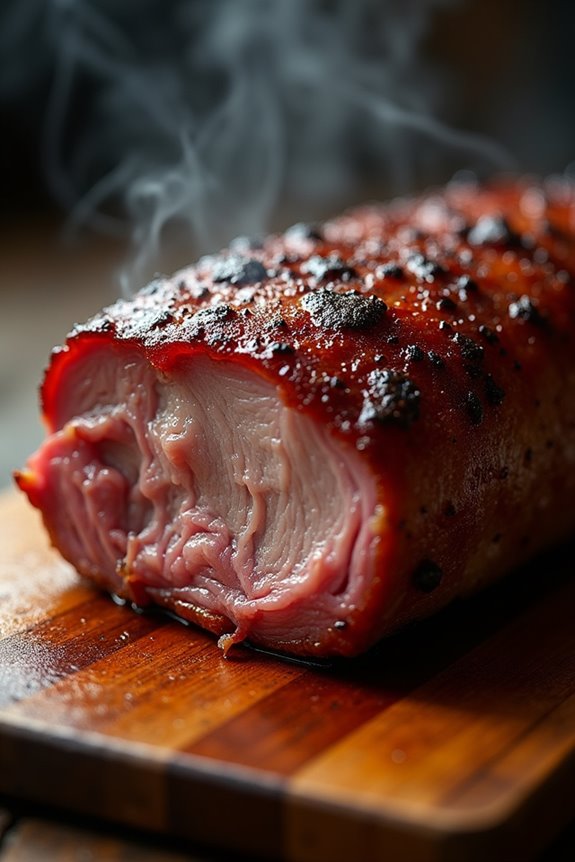
Your thermometer’s still your best friend, but bone-in and boneless butts tell you different stories. Bone-in pork butts finish around 200–203°F, while boneless versions land closer to 195–205°F. The real magic? Bone-in cuts give you extra doneness cues beyond temperature alone.
Here’s what separates them:
- Bone-in butts: Watch for the bone loosening or pulling out cleanly
- Boneless cuts: Rely purely on internal temperature readings in the thickest part
- Bone movement: When the bone draws back or falls out, you’re golden
- Carry-over cooking: Bone-in meat continues softening after you pull it
- Dual-check method: Combine your thermometer with bone signals for confidence
You’ll find bone-in doneness easier to read because the bone actually moves when everything’s tender enough.
The One-Hour Rest: Locking In Juiciness Before Pulling
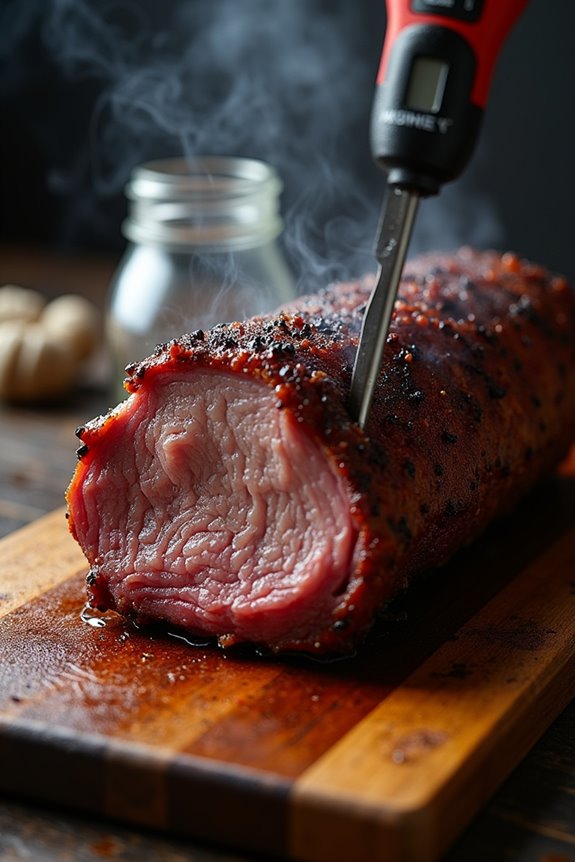
Why’d you pull that beautiful pork butt off the smoker just to dive right in? That’s where patience pays off, friend. Let your pull-ready meat rest for about one hour after reaching an internal temperature of 190–200°F. Wrap it tightly in foil or butcher paper, then nestle it into an insulated cooler to keep things warm.
Here’s the magic: while resting, those juices redistribute throughout the meat instead of running onto your cutting board. Carryover cooking pushes your internal temperature up to that perfect 195–205°F range without any extra heat needed.
You’re basically locking in all that smoky, tender goodness you’ve worked for. Trust the process. Your pulled pork—and everyone eating it—will thank you.
Why Pitmasters Pull Between 190–205°F
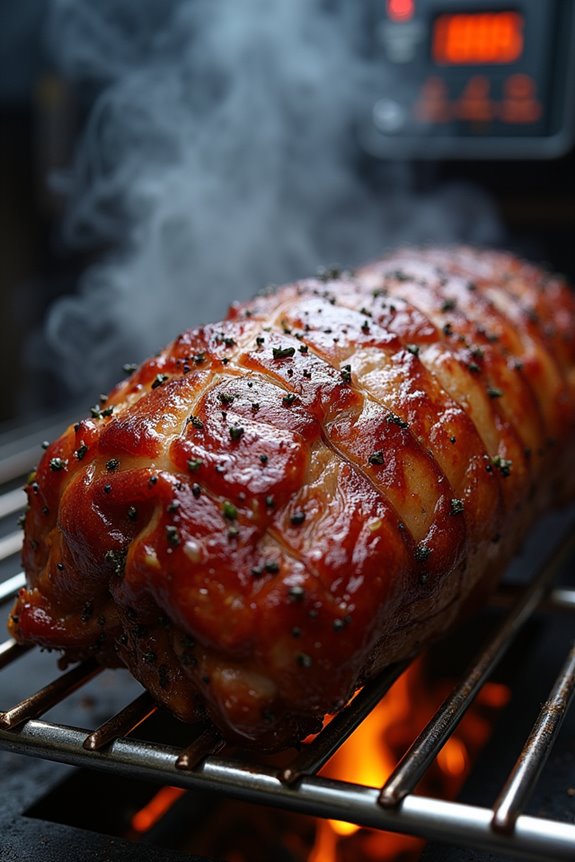
What’s the deal with that 190–205°F sweet spot? You’re hitting the goldilocks zone where magic happens. Here’s why pitmasters love this pull temperature range:
- Connective tissue breaks down perfectly at these internal temperatures for maximum tenderness
- Probe-tenderness becomes your best friend when the probe slides through like butter
- You balance tenderness with moisture by staying in this window instead of overshooting
- Carryover cooking works in your favor since temperature rises after you pull the butt off heat
- Easier shredding happens naturally when you hit 200–205°F versus stopping too early
Some pull at 195°F for a firmer texture. Others wait until 205°F for that softer, silkier pull. Your preference matters here. Test with your probe, feel that tenderness, and you’ll know you’re in the zone.
Pulling Too Early: The Cost of Trusting Temperature Alone
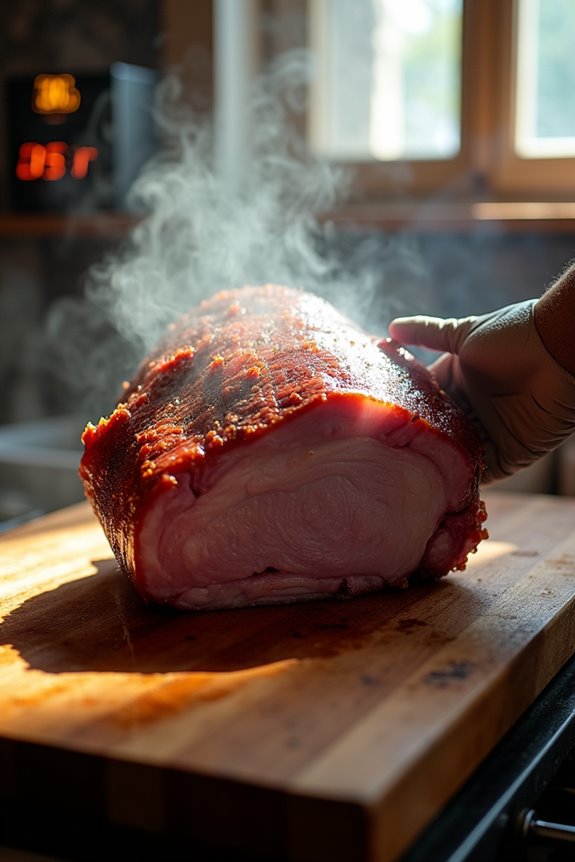
Hitting 190–205°F doesn’t automatically mean you’re done. You’ve likely hit the stall recovery phase, but your butt still needs probe tender confirmation. Many of us have pulled too early and regretted it hard.
| What You Feel | What It Means | Next Step |
|---|---|---|
| Meat resists probe | Still tough inside | Keep cooking |
| Probe slides through easily | Probe tender achieved | Check bone pull |
| Bone pulls out cleanly | Perfect doneness | Rest it now |
Temperature alone misleads you. Your meat might hit 195°F but feel like rubber. That’s the stall recovery playing tricks. Instead, trust the probe test—it tells the real story. When your probe glides through like warm butter and the bone pull test succeeds, you’re genuinely ready. Temperature’s just your guideline, not your guarantee.