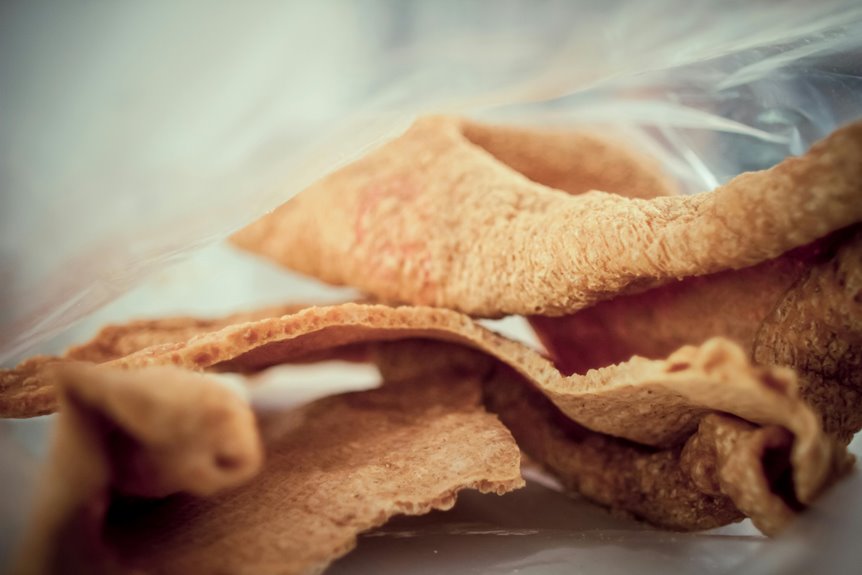
Pork rinds are inherently gluten-free because they’re made from fried pork skin—no grains involved. You won’t find wheat, barley, or rye hiding in plain varieties like Better Made Original, which contains just pork skins and salt. The real catch? Flavored versions can sneak gluten into seasonings and coatings, so you’ve gotta check labels carefully. Stick with simple options first, then verify each flavored variety before tossing it in your cart. Understanding what’s actually in your snack helps you stay safe and confident.
Why Pork Rinds Are Naturally Gluten-Free
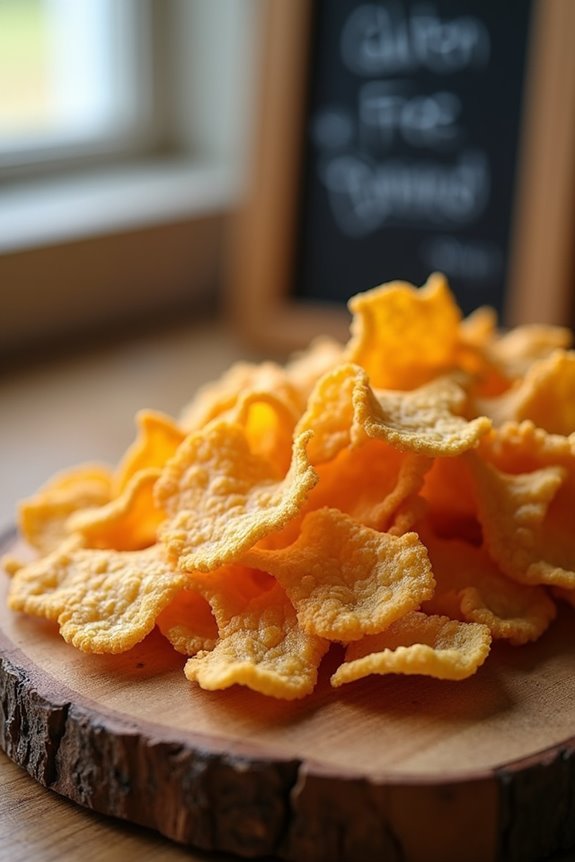
Since pork rinds come straight from pork skin, they’re innately gluten-free without any extra effort. You won’t find wheat, barley, or rye hiding in your snack bowl. The basic recipe is simple: fried pork skins and salt. That’s it. No grain-based ingredients sneaking into the mix.
When you’re scanning ingredient labels, you’re basically looking for what *isn’t* there. Most standard brands keep things straightforward with minimal additives. Even flavored varieties often skip gluten-containing coatings, though you’ll want to double-check specific products.
Think of it this way: pork rinds don’t need grains to be crunchy or delicious. They’ve got their own thing going. For anyone avoiding gluten, that’s genuinely good news. You can grab a bag without overthinking it.
How Pork Rinds Differ From Grain-Based Snacks
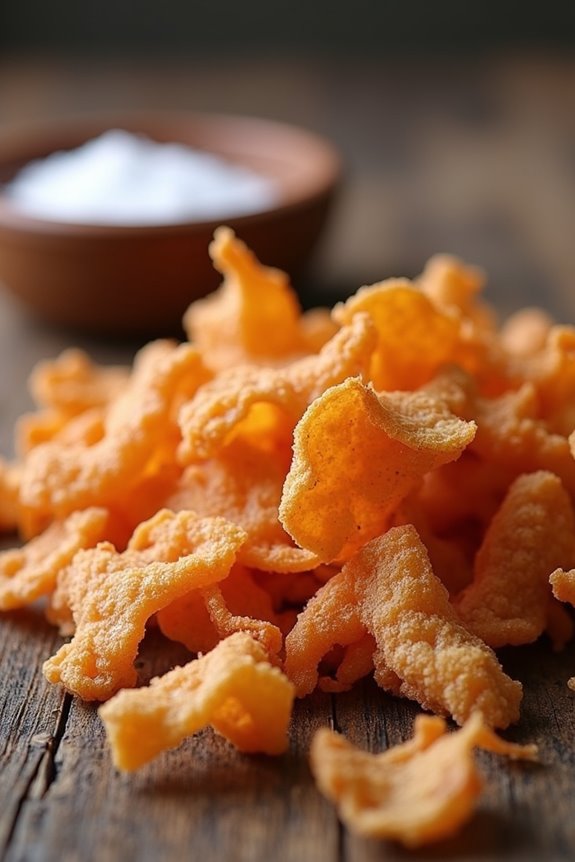
When you reach for pork rinds instead of potato chips or pretzels, you’re skipping the grain-based ingredients that sneak gluten into most packaged snacks. While grain snacks pile on wheat, barley, or rye for their structure, pork rinds get their crunch purely from fried pork skin—no grains needed. You’ll notice the nutritional difference too: pork rinds pack protein and fat with zero carbs, whereas grain snacks load up on carbohydrates that come alongside gluten concerns.
Ingredient Composition Differences
Most pork rinds keep things refreshingly simple: fried pork skins, salt, and that’s basically it. You won’t find wheat, barley, or rye hiding in there. That ingredient list is honestly shorter than most grain-based snacks you’d grab at the store.
Here’s what makes the difference: grain snacks often need thickeners, coatings, and flavor additives derived from wheat. Pork rinds? They skip all that. The frying process creates crunch naturally, no grain-based helpers required.
This straightforward composition is exactly why you can confidently call them gluten-free. No mysterious grain derivatives sneaking around in your snack. Just pork, salt, and satisfying crispiness. It’s refreshingly honest when you’re looking for genuinely clean options that actually deliver.
Nutritional Profile Contrast
Beyond just skipping grains, pork rinds actually flip the nutritional script compared to grain-based snacks. You’re looking at genuinely different fuel for your body.
Here’s what sets them apart:
- Zero carbs versus double digits – While chips pack 15–20g carbs per serving, pork rinds deliver a clean 0g
- Protein powerhouse – You get 7g of muscle-building protein without the grain bloat
- Fat that works for you – About 9g of fat supports keto and low-carb goals perfectly
- Sodium trade-off – At 270–515mg per serving, they’re saltier than alternatives, so monitor intake
This gluten-free snack aligns with how your body actually thrives. You’re not just avoiding wheat; you’re choosing a completely different nutritional foundation. That’s the real game-changer here.
Gluten-Free Simplicity: The Ingredient List That Keeps Them Safe
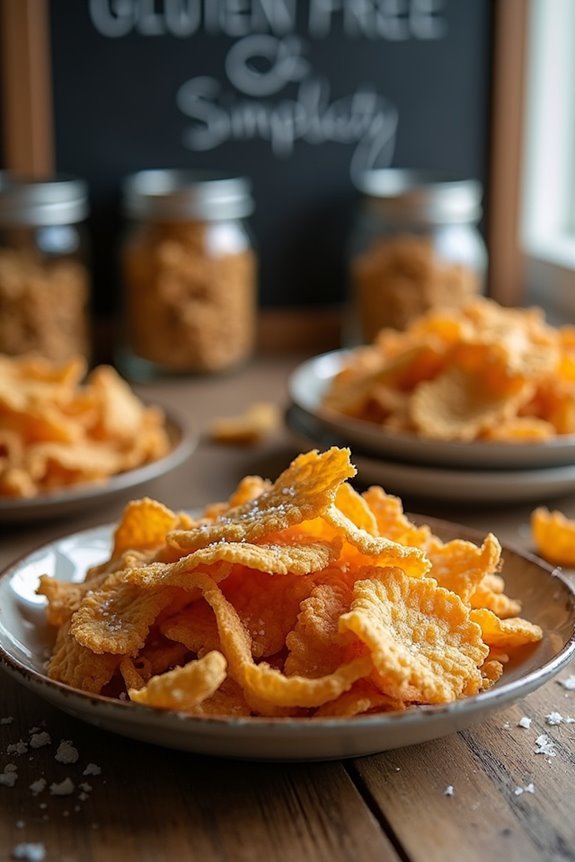
You’re looking at a revitalizing simple ingredient list when you grab pork rinds. Better Made Original Pork Rinds, for example, contains just fried pork skins and salt—no sneaky wheat, barley, or rye hiding anywhere. This pure pork skin foundation means you don’t have to decode complicated labels or hunt for hidden gluten sources like you would with grain-based snacks.
Pure Pork Skin Foundation
What’s the secret to pork rinds’ gluten-free status? It’s their beautifully simple foundation: just fried pork skin and salt. You won’t find wheat, barley, or rye hiding anywhere in that ingredient list.
Here’s what makes pork rinds gluten-free so reliably:
- Zero grain-based components means nothing sneaky lurking inside
- No wheat-based coatings or additives complicating the mix
- Just two pure ingredients working together perfectly
- Minimal cross-contamination risk from that stripped-down simplicity
You’re basically eating the skin itself, crisped up. No fillers, no binders, no confusing ingredient names you can’t pronounce. That’s the whole appeal here.
Sure, you’ll still want checking individual labels since variations exist. But most standard pork rinds give you that straightforward, trustworthy ingredient list. You’re joining plenty of people who’ve ditched gluten without sacrificing their favorite snacks.
Avoiding Hidden Gluten Sources
Once you’ve decided pork rinds are your go-to snack, there’s one thing you’ll want to do first: read that label. You’ll discover that basic pork rinds contain just pork skin and salt—naturally gluten-free. However, flavored varieties hide sneaky gluten sources in seasonings and coatings. That barbecue dust? Possibly contaminated. Those ranch crumbles? Check them twice.
| Hidden Source | What to Watch | Your Move |
|---|---|---|
| Seasonings | Spice blends may contain gluten fillers | Verify “gluten-free” label |
| Coatings | Breading or crumb toppings add gluten | Choose plain varieties |
| Processing | Cross-contact in shared facilities | Look for certified facilities |
| Flavorings | Malt vinegar contains barley | Read ingredient lists carefully |
| Additives | Thickeners sometimes hide gluten | Trust official certifications |
You’re joining a community that knows: staying gluten-free means staying vigilant. Simple pork rinds keep you safe and satisfied.
Why Seasonings Matter for Gluten-Free Status
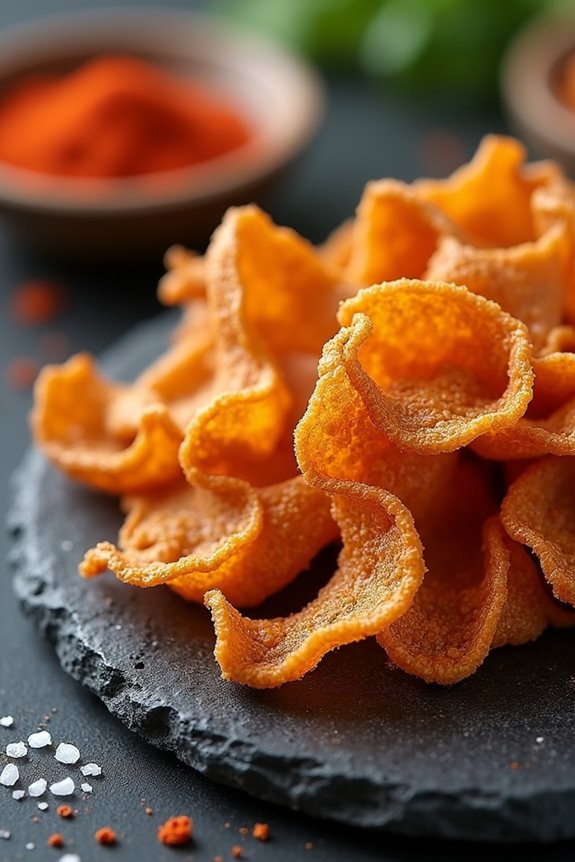
the pork rinds themselves might be totally gluten-free, but the seasonings can sneak gluten right in.
You’ve got to watch out for these sneaky culprits:
- Soy sauce blends – They’re hiding gluten in flavor coatings you can’t even see.
- Maltodextrin and thickeners – These taste-boosters often contain wheat derivatives without you knowing.
- Spice blend unknowns – Mystery ingredients in seasoning packets might contain barley or rye.
- Cross-contact during processing – Factories sometimes mix gluten-free items with gluten-containing ones.
That’s why checking labels matters so much for your gluten-free status. Look for products labeled gluten-free or certified with that trusted logo. Better Made Original Pork Rinds keep it simple with just fried pork skins and salt. When you’re choosing seasonings, you’re really choosing whether you stay safe or risk it.
Cross-Contamination: Hidden Gluten Risks During Production
Even though pork rinds start gluten-free, here’s where things get tricky. Cross-contamination during production can sneak gluten into your snack without you knowing. You’re dealing with shared equipment, overlapping production lines, and facilities handling multiple products simultaneously.
| Risk Source | What Happens | Your Action |
|---|---|---|
| Shared fryers | Gluten transfers from other foods | Check facility practices |
| Slicing equipment | Residue from wheat products lingers | Verify cleaning protocols |
| Packaging lines | Cross-contact during processing | Look for gluten-free labels |
Here’s the thing: manufacturers might process pork rinds near gluten-containing snacks on adjacent lines. Even tiny particles matter when you’re avoiding gluten. That’s why you shouldn’t assume all pork rinds are safe. You’ve got to actively seek products with explicit gluten-free certification and verify their facility follows strict gluten-control protocols. It’s worth the effort.
Reading Labels: How to Spot Hidden Gluten Sources
Now that you know cross-contamination’s a real threat, you’ve got to get smart about reading labels. You’re joining thousands of people who take control of their snack choices. Here’s what you’re looking for:
Now that you know cross-contamination’s a real threat, get smart about reading labels and take control of your snack choices.
- Explicit “gluten-free” statements on the front or back packaging
- Ingredient lists that mention wheat, barley, or rye anywhere
- Facility warnings like “processed in a facility with gluten”
- Sneaky seasonings that hide gluten in unexpected places
Most pork rinds are naturally gluten-free since they’re just pork skin. But here’s the thing: manufacturers sometimes add coatings, spices, or marinades that introduce gluten. You’ll want to flip that bag over and scan those tiny ingredients. Don’t rely on assumptions. Your gut health matters, and you’ve got this covered by staying vigilant.
Better Made Original: A Gluten-Free Pick
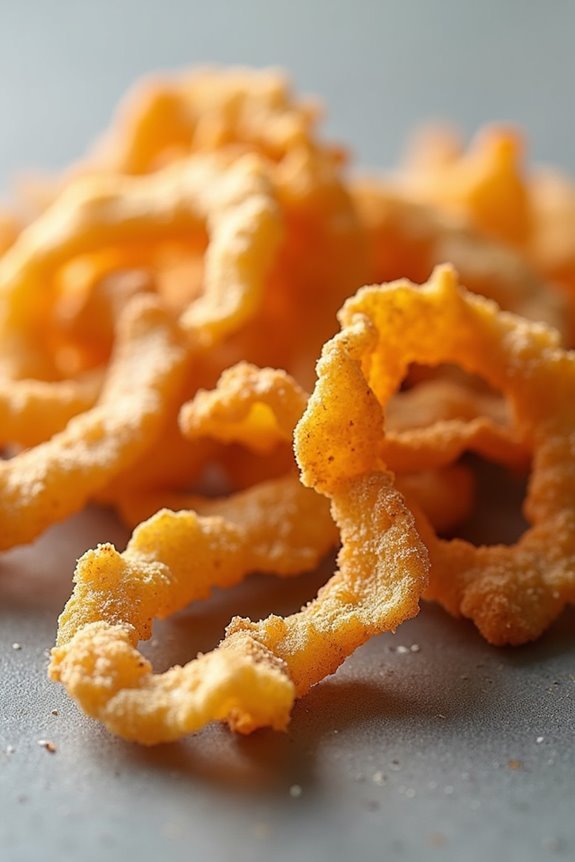
If you’ve been hunting for a pork rind brand you can actually trust, Better Made Original’s got your back. This gluten-free option keeps things refreshing simple with just fried pork skins and salt. You won’t find wheat, barley, or rye sneaking into your snack bag here.
| Feature | Details |
|---|---|
| Main Ingredients | Pork skins, salt |
| Gluten-Free | Yes, verified |
| Allergens Listed | None |
| Coatings | None added |
| Label Clarity | Simple, transparent |
What makes Better Made stand out? No sketchy coatings or mystery flavorings hiding gluten. The product page confirms their allergen-free status, which honestly feels like a relief when you’re tired of decoding labels. You’re joining tons of people who’ve ditched the guesswork and grabbed a bag they can feel confident about.
Comparing Pork Rinds to Other Gluten-Free Snacks
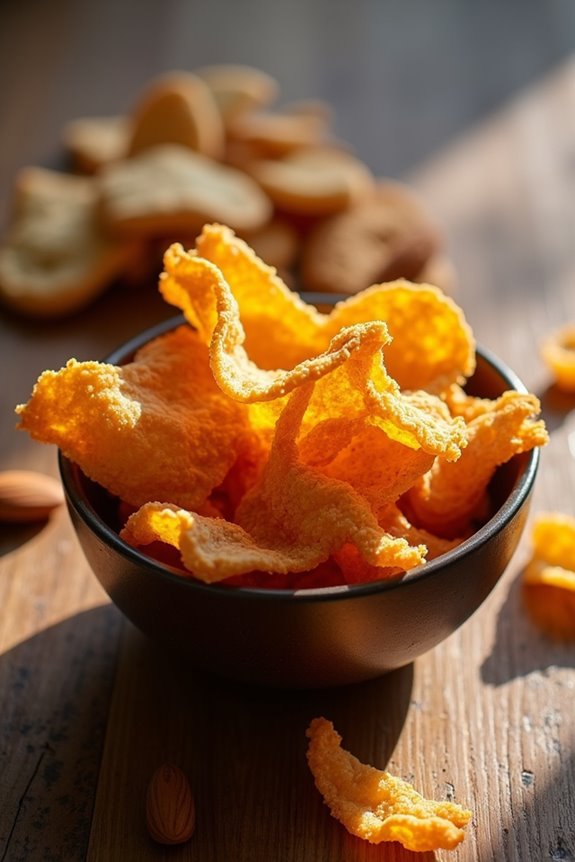
When you’re choosing between pork rinds and other gluten-free snacks, you’ll notice some real differences worth considering. Most gluten-free crackers or pretzels pack carbs and fillers, while pork rinds give you zero carbs and pure protein—making them way better for keto diets. Plus, you’re getting that satisfying crunch and savory flavor without worrying about hidden gluten in coatings or seasonings.
Nutritional Profile Comparison
Because you’re probably wondering how pork rinds stack up against your other go-to gluten-free options, let’s break down the numbers. A 14-gram serving gives you serious nutritional benefits that many competitors can’t match.
Here’s what makes pork rinds stand out:
- Zero carbs – You’re getting no sugar crashes or guilty feelings
- 7 grams of protein – That’s real muscle-building fuel for snacking
- Substantial fat content – Your body actually needs this for energy
- Way less processing – Just pork skin and salt, nothing sketchy
Compared to grain-based gluten-free snacks, pork rinds deliver protein without the carb load. Sure, they’re higher in sodium at 270 milligrams per serving. But you’re joining a community that values real, simple ingredients. That’s the trade-off worth celebrating.
Texture And Taste Advantages
Ever wonder why pork rinds feel so satisfying compared to other gluten-free snacks?
You’ll notice the difference immediately. Pork rinds gluten-free options give you that crispy crunch that rice flour crackers simply can’t match. While many gluten-free snacks turn chewy or dense, pork rinds stay light and airy. They’re nothing like the grainy texture of corn chips or the sometimes-bland rice cakes you’ve tried.
| Snack Type | Texture | Satisfaction Level |
|---|---|---|
| Pork Rinds | Crispy, airy crunch | High |
| Rice Crackers | Dense, sometimes grainy | Medium |
| Corn Chips | Chewy, heavy | Medium |
That satisfying crunch you crave? Pork rinds deliver it without the wheat-based heaviness. You’re getting pure, unapologetic crispiness in every bite. Plus, they disappear on your tongue instead of sitting around like other gluten-free options do. It’s honestly the texture that keeps people coming back.
Are Pork Rinds Safe for Celiac Disease?
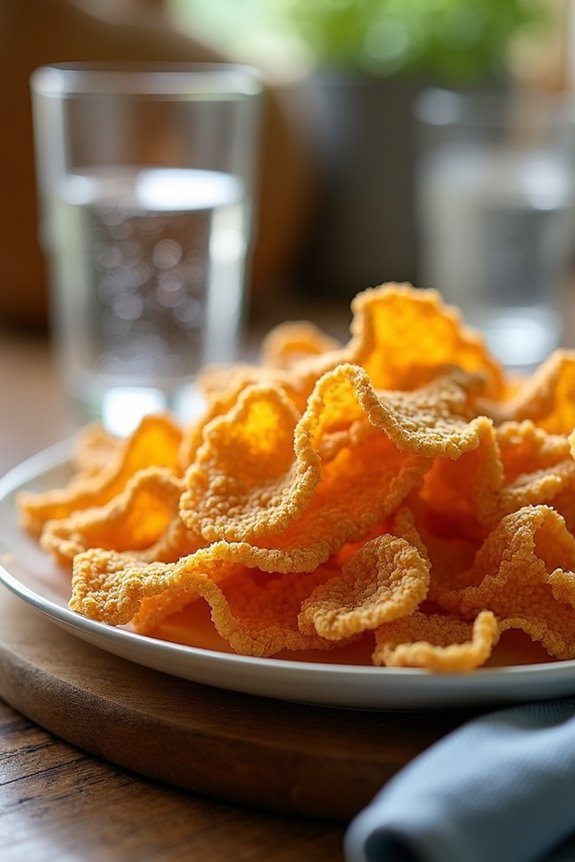
How’d you like a snack that’s inherently gluten-free and actually safe for celiac disease?
Discover a naturally gluten-free snack that’s genuinely safe for celiac disease sufferers.
You can confidently enjoy pork rinds if you’ve got celiac disease. Here’s what keeps you safe:
- Choose brands with explicit gluten-free certifications on packaging
- Read ingredient lists for sneaky gluten-containing flavorings
- Verify manufacturing doesn’t involve cross-contact with wheat products
- Stick with simple varieties like Better Made Original Pork Rinds
Plain pork rinds contain just fried pork skins and salt. That’s it. No hidden wheat, barley, or rye lurking around. Many flavored versions introduce seasonings that might contain gluten, though. Always check labels before you buy. When you grab certified gluten-free pork rinds, you’re joining thousands of people with celiac disease who snack worry-free. You belong in this community of smart snackers.
Bonus Nutritional Wins: Protein, Fat, and More
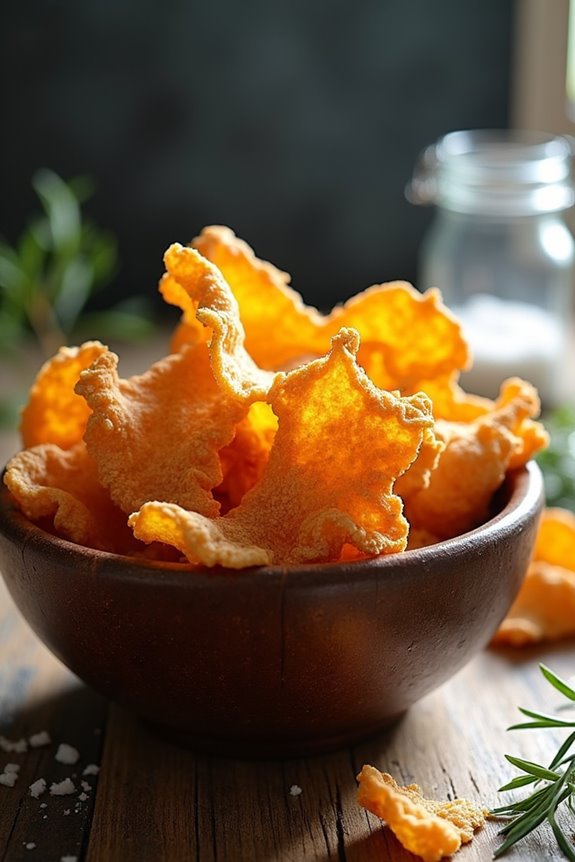
Beyond being gluten-free, pork rinds pack a serious nutritional punch that’ll surprise you. A typical 14-gram serving delivers about 7 grams of protein, which is pretty solid for a snack. You’re also getting roughly 9 grams of fat that keeps you satisfied between meals. This high-protein, high-fat combo makes pork rinds a legit option if you’re watching your carbs or need sustained energy. Unlike many gluten-free snacks that leave you hungry an hour later, these crispy treats actually stick with you. They’re not packed with fillers or weird additives either—just pork skin and salt doing their job. So when you’re grabbing a gluten-free snack, you’re not sacrificing nutrition for convenience. That’s a win worth celebrating.
Flavored Varieties: Which Seasonings Stay Gluten-Free
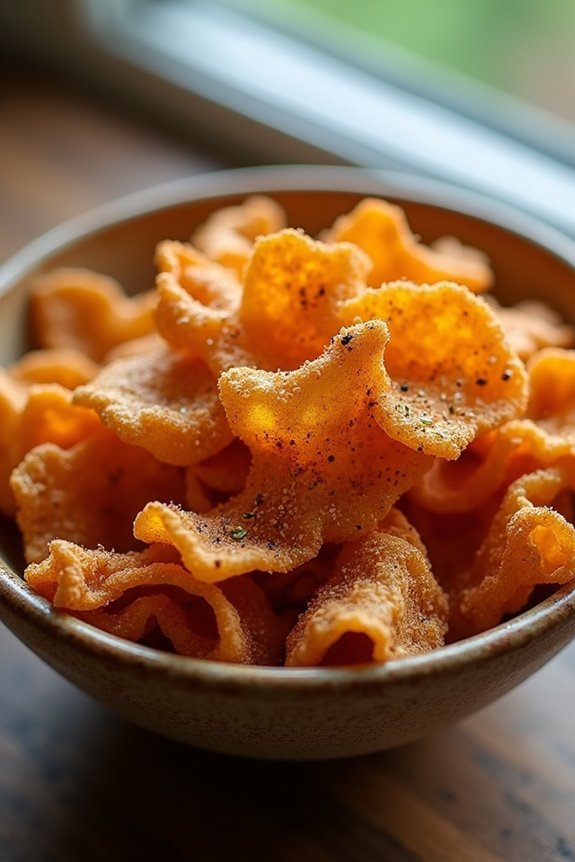
Want to kick up the flavor without losing that gluten-free guarantee?
Want to kick up the flavor without losing that gluten-free guarantee? Check those labels carefully for explicit certifications.
You’ve got options, friend. Most basic pork rinds stay gluten-free because they’re just fried pork skins and salt. But flavored varieties? That’s where you need to pay attention.
Here’s what to watch for:
- BBQ coatings often hide gluten in their seasoning blends
- Ranch flavors may contain hidden wheat derivatives
- Spicy varieties sometimes use thickeners with gluten
- Cheese powders can sneak in gluten-containing additives
Check those labels carefully. Look for explicit gluten-free certifications or packaging that clearly states “gluten-free.” Better Made Original Pork Rinds keeps it simple with just fried pork skins and salt—no surprises.
When you’re picking flavored options, ask yourself: does the label guarantee gluten-free status? That’s your safety net. You’ll feel confident knowing exactly what you’re eating.
Building a Gluten-Free Diet Around Pork Rinds
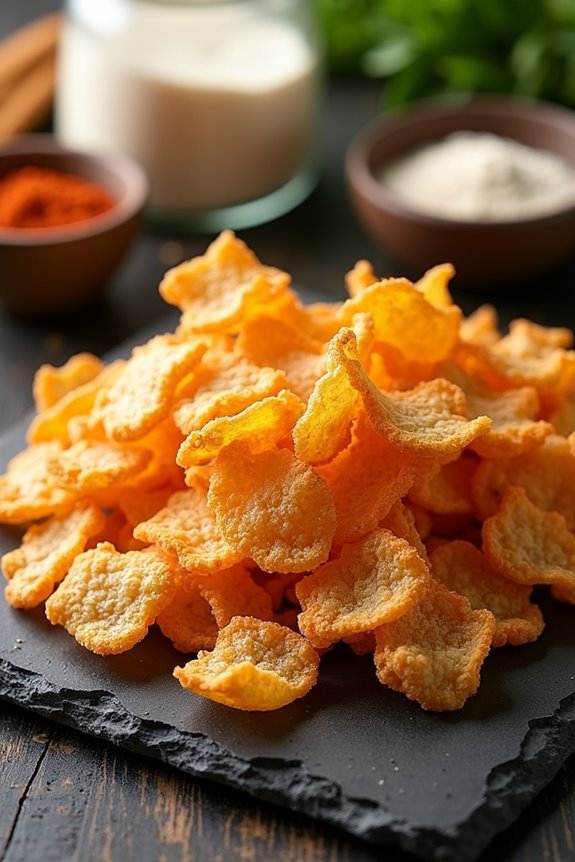
Now that you’ve got the flavor situation sorted, let’s talk about making pork rinds work in your actual gluten-free diet. You’re building something sustainable here, not just grabbing random snacks. Pork rinds fit perfectly because they’re zero-carb, protein-packed, and genuinely satisfying. Grab a handful when you need that crunch without derailing anything. They work great alongside cheese, veggies, or eaten solo during afternoon slumps. The key? Stock your pantry with verified gluten-free varieties like Better Made Original. Check those labels though—formulations change sometimes. You’re joining folks who’ve figured out that smart snacking keeps momentum going. Pork rinds aren’t just backup options; they’re legit pillars of your gluten-free rotation when chosen carefully.
Next Steps: Shopping for Certified Gluten-Free Pork Rinds
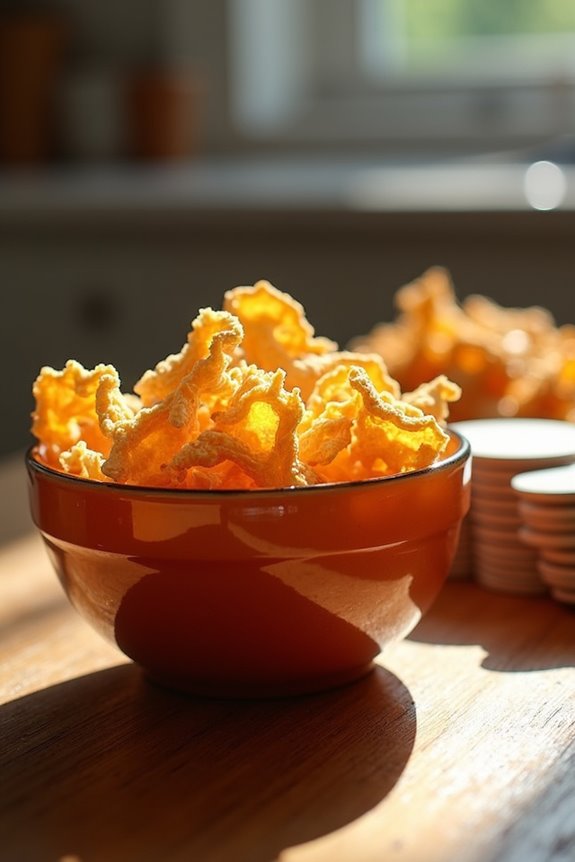
So you’re ready to stock up—smart move. You’re joining a community of people who’ve discovered that pork rinds fit perfectly into gluten-free living. Let’s make sure you’re grabbing the right bags.
When you’re shopping, check these four essentials:
- Look for “gluten-free” labels on packaging to feel confident in your choice
- Read ingredient lists carefully so you know exactly what you’re eating
- Stick with simple varieties like Better Made Original to avoid hidden gluten in flavorings
- Compare brands at your store to find what works best for your budget
Start with plain, salted options. They’re your safest bet. Once you’ve mastered the basics, you can explore flavored varieties—just verify each one. You’ve got this. Your snack drawer’s about to get way better.