
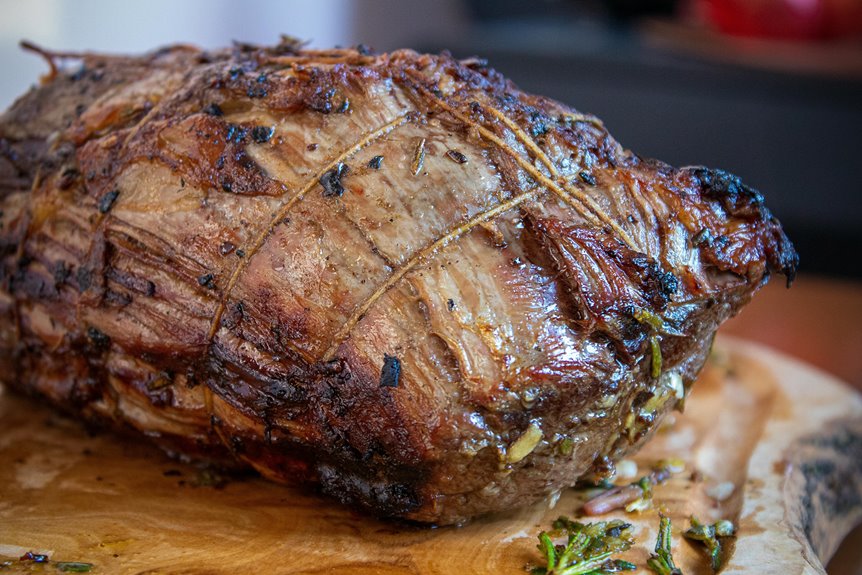
Eye of round is a lean, boneless roast from the cow’s back leg—basically your budget-friendly ticket to homemade roast beef. It’s super affordable at around $3.50 per pound, but here’s the catch: it’s tough and dries out fast because it’s got almost no fat. You’ll want to dry-brine it overnight, sear it hard at 450°F, then finish it low and slow at 325°F until you hit 125°F inside. Slice it thin against the grain, and you’ve got sandwich gold. Stick around to master the exact technique that transforms this lean cut.
What Is Eye of Round?
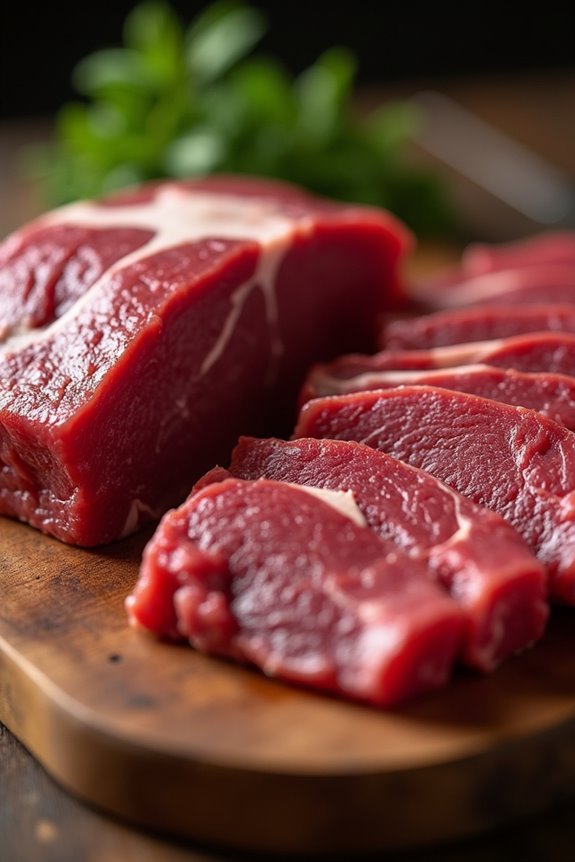
Ever wonder where budget-friendly roast beef actually comes from? It’s the eye of round, a boneless roast from your cow’s rear leg. You’ll love this cut because it’s incredibly lean with minimal fat, making it perfect for health-conscious cooking. Since it’s a round roast with no bones, you’re getting maximum meat for your money—ideal for sandwiches and roast beef platters.
Here’s what you need to know: this lean beef requires careful handling. It’s tougher than tenderloin, so proper technique matters. You’ll want a high-heat sear followed by controlled roasting or off-oven resting to keep things juicy. When it’s done, slice cross grain into thin 1/4 to 1/2 inch pieces for tenderness. Serve it medium-rare, and you’ll have restaurant-quality results at home.
Why Eye of Round Is Budget-Friendly and Versatile
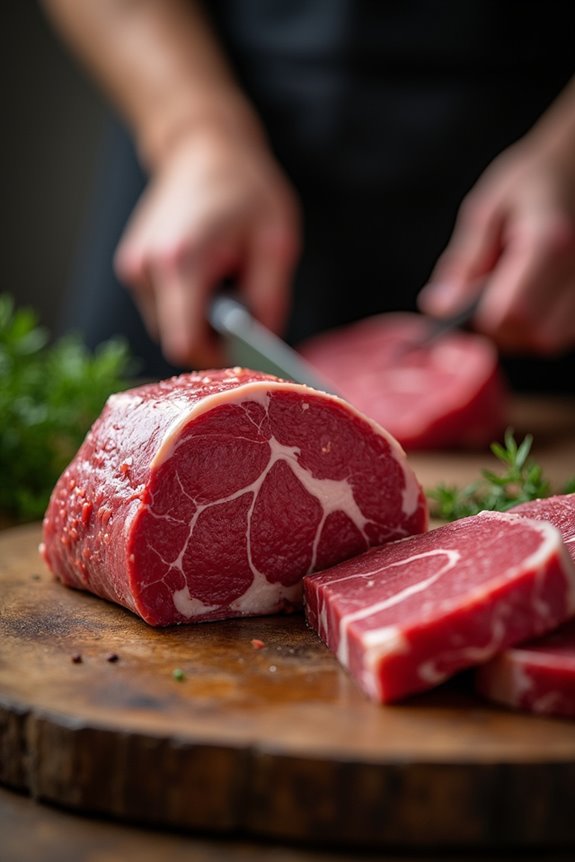
You’ll love how eye of round costs around $3.50 per pound, stretching your grocery budget further than pricier roasts. Since it’s boneless and yields minimal waste, you can slice it thin for sandwiches, French dips, or deli platters with hardly any leftovers going unused. The uniform shape makes portioning super easy, so you’re getting maximum usable meat without paying for bones or excess fat.
Cost Per Pound Comparison
Why’d eye of round become the go-to pick for budget-conscious cooks? The cost per pound difference speaks for itself. You’re looking at roughly $3.50 per pound for this lean beef cut—a serious win compared to chuck roast. Here’s what makes it genuinely valuable:
- Stretch your grocery budget without sacrificing quality protein for family dinners
- Skip the bones and maximize usable meat, giving you better value per purchase
- Cook smarter with quick, high-heat methods that preserve every penny’s worth
When you’re shopping the market, round roast options like top round and sirloin tip hover around similar prices. Yet eye of round consistently undercuts them. That affordable cuts advantage matters when you’re meal prepping for the week ahead. You’re getting lean, quality beef without emptying your wallet.
Versatile Serving Options
Once you’ve got that eye of round roasted to medium-rare, the real magic happens. You’ll slice across the grain and create tender, thin portions perfect for sandwiches. That lean cut becomes roast beef for sliders, subs, or French Dip sandwiches the next day. Honestly, leftovers are the best part of cooking eye of round. Cold slices transform into deli-style cuts for lunch boxes and platters. Your high-heat sear locked in moisture, so everything stays flavorful and budget-friendly. The boneless design means you’re maximizing every ounce of meat. No waste, maximum versatile serving options. Whether you’re feeding a crowd or stocking your fridge, this roast delivers satisfaction without breaking the bank.
Minimal Waste Yield
How’s this for a win-win: eye of round’s boneless structure means you’re actually eating what you’re paying for. You’ll notice zero wasted bone weight or excessive trimming losses. This lean beef delivers impressive yield from a typical 2–3 pound roast beef.
Here’s what makes this budget-friendly cut shine:
- Maximum usable meat – boneless design eliminates trimming waste
- Perfect portion control – consistent weight supports meal planning
- Versatile leftovers – thin-sliced sandwiches, French Dip, deli meats
The key? Precise cooking and proper resting maximize juiciness without squandering anything. You’re getting lean beef that respects your wallet while feeding your family well. That’s the belonging we all want at dinner time.
Why Eye of Round Needs Low-and-Slow Cooking
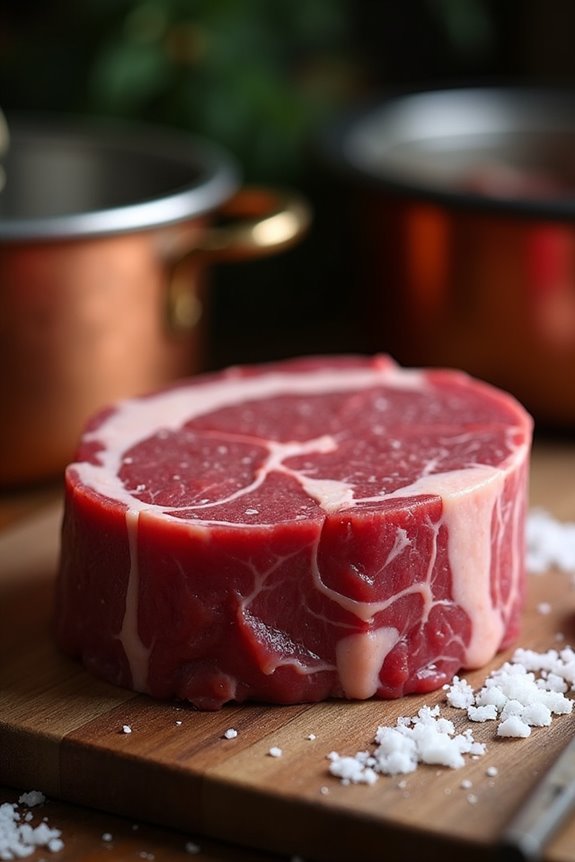
You’ll want to understand why eye of round demands special cooking attention. Since this cut’s lean structure lacks fat to insulate the meat, you’ve got to manage temperature carefully or you’ll end up with something tough and dry. That’s where low-and-slow cooking comes in—it gives those connective tissues time to break down while keeping your roast juicy inside.
Lean Meat Structure Matters
Why does eye of round demand such careful cooking? The answer lies in its lean meat structure. Unlike fattier cuts, this beef roast lacks intramuscular fat that keeps meat juicy during cooking.
Here’s what you’re up against:
- Minimal fat marbling means moisture escapes quickly during heat exposure
- Dense muscle fibers require precise technique to avoid toughness
- No built-in insurance if you overcook, even slightly
When you cook eye of round, you’re working without a safety net. That’s why high-heat searing followed by low-and-slow roasting works so well. You get a flavorful crust without drying the interior.
Target medium-rare (around 130°F center), then rest your beef roast for ten minutes. This resting period lets juices redistribute throughout.
Finally, slices across the grain break up those tough muscle fibers, making each bite tender.
Temperature Control Is Essential
The secret to keeping eye of round juicy? You’ve got to use a meat thermometer and watch that internal temperature closely. Since this lean beef has minimal fat, it dries out faster than you’d expect. Pull your roast from the oven when it hits 125–130°F for medium-rare doneness. Here’s the thing: carryover cooking adds another few degrees while it rests. You’ll want that resting period—it’s when the meat reabsorbs juices and becomes genuinely tender. Skip low temperature cooking, and you’ll end up with something tough and dry. Trust us, nobody wants that. A good instant-read thermometer becomes your best friend here. It prevents the guesswork that turns beautiful lean beef into regret. Temperature control really is everything with eye of round.
Ingredients You Need for Eye of Round
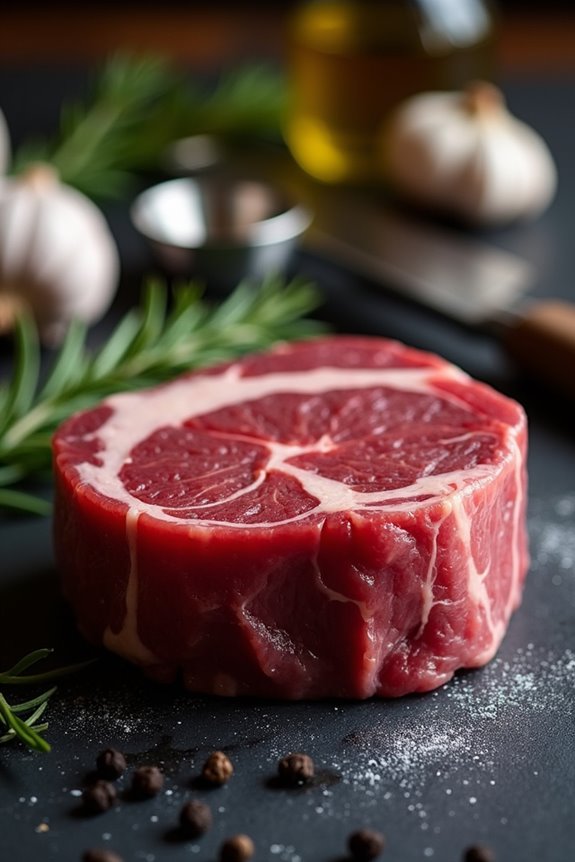
Getting an eye of round ready doesn’t require a fancy ingredient list. You’ll gather basics we all have sitting around. This lean cut responds beautifully to simple seasonings that let the beef shine through.
Eye of round doesn’t demand fancy ingredients—just basics you already have and simple seasonings that let the beef shine.
Here’s what you’ll want on hand:
- Olive oil – creates that gorgeous crust we’re after during the high-heat sear
- Kosher salt and freshly ground black pepper – the foundation of roast beef flavor
- Granulated garlic – adds depth without overpowering the meat
Optional herbs like rosemary or thyme work wonderfully if you’re feeling adventurous. The beauty of eye of round is its affordability, so you’re not investing heavily in premium cuts. Keep seasonings straightforward, then rely on proper technique—that high-heat sear and rest time—to deliver tenderness. You’ve got this.
Prep Your Eye of Round the Day Before
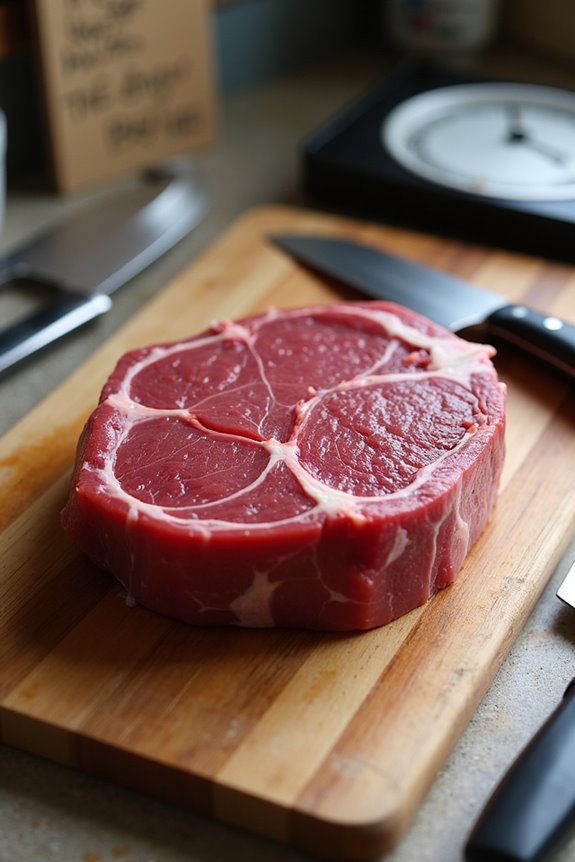
Now that you’ve got your seasonings ready, here’s the smart move: prep your roast the day before. Apply a dry brine or dry rub using coarse salt, pepper, granulated garlic, and herbs like rosemary or thyme. This simple step boosts tenderness and flavor depth significantly.
Place your eye of round in a bag with olive oil and your seasoning mixture. Chill it for 4–6 hours or overnight. This lets flavors really penetrate the meat, making slicing easier later.
On cooking day, remove your round roast from the fridge. Let it rest at room temperature for at least one hour. Even heating matters when you’re aiming for that perfect medium-rare center around 125°F.
You’ll sear it hot, then finish roasting in the oven. Your future self will thank you for this prep work.
Six Steps to Cook Eye of Round Perfectly
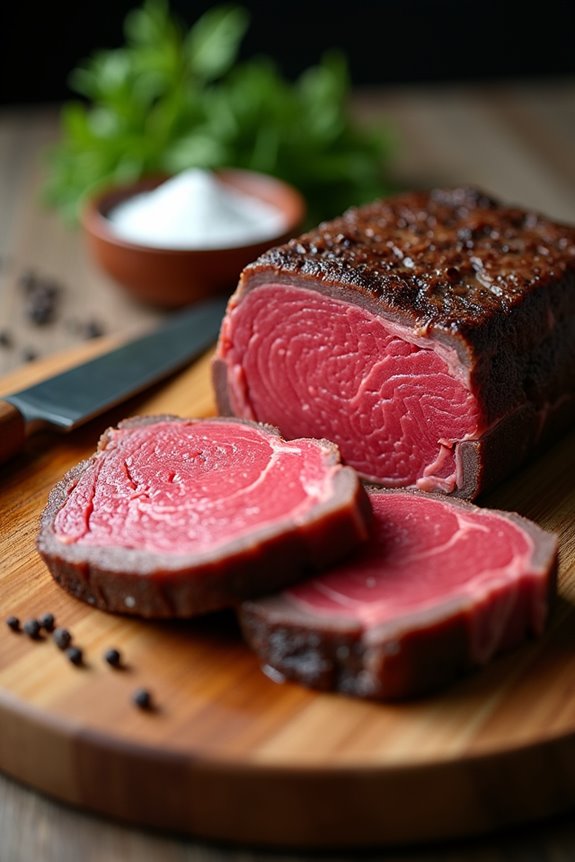
Now you’re ready to actually cook this thing, and here’s where the magic happens. You’ll start by slathering your roast with olive oil, then generously season it with kosher salt, granulated garlic, and black pepper before you sear it at 450°F for 20–25 minutes. After that initial sear, you’ll drop the temperature to 325°F and roast until the center hits 125°F, which typically takes 45–60 minutes for a 3-pound roast, then you’ll let it rest covered with foil for 20–30 minutes before slicing it thin across the grain.
Seasoning and Chilling Preparation
Why does seasoning matter so much for eye of round? This lean beef cut needs serious flavor help to shine. You’re going to slather your roast with olive oil first. Then rub it with salt, pepper, granulated garlic, and your favorite herbs.
Here’s what makes this step game-changing:
- Your seasoning penetrates deep during the 4–6 hour chill, transforming bland beef into something special
- The oil helps everything stick while the roast sits in a bag overnight
- You’ll taste the difference when you slice across grain later
Let that seasoned roast chill in your fridge. This isn’t wasted time—it’s when the magic happens. The seasonings work their way through the meat, making it tender and flavorful. When you’re ready to cook, you’ll notice how much better this preparation step makes your eye of round roast.
Searing and Temperature Reduction
Your seasoned roast has chilled overnight, and it’s finally showtime. Heat your oven to 450–500°F and sear that Eye of Round for 20–25 minutes until it develops a gorgeous brown crust. Don’t skip this step—you’re building flavor, not just cooking meat.
Once you’ve got that crust, reduce your oven to 325°F and slide the roast in to finish roasting. This temperature drop prevents overcooking this lean cut of beef. Here’s where your thermometer becomes your best friend. Check the internal temperature regularly, aiming for 125°F for medium-rare doneness.
When you hit that target, remove the roast immediately. Don’t rush the next phase—resting for 20–30 minutes lets residual heat finish cooking while juices redistribute. You’ll thank yourself later when slicing across the grain produces tender, perfect bites.
Resting and Slicing Technique
You’ve just pulled that beautiful roast from the oven—resist the urge to slice into it immediately. Your eye of round needs resting time to reabsorb those delicious juices.
Let it rest unwrapped on your cutting board for 20–30 minutes. During this rest period, residual heat finishes cooking while flavors settle in. Here’s what makes resting non-negotiable:
- Juices redistribute throughout the meat, keeping every slice tender and moist
- Carryover cooking brings your roast to perfect doneness without overcooking
- Texture improves dramatically when you patience through the wait
Once rested, use your thermometer to confirm doneness around 135–140°F. Now you’re ready to slice. Cut across the grain with a sharp knife, aiming for 1/4 to 1/2 inch thickness. Transfer those pan juices back into gravy. You’ve earned this perfectly cooked eye of round.
Why Temperature Control Makes Perfect Eye of Round
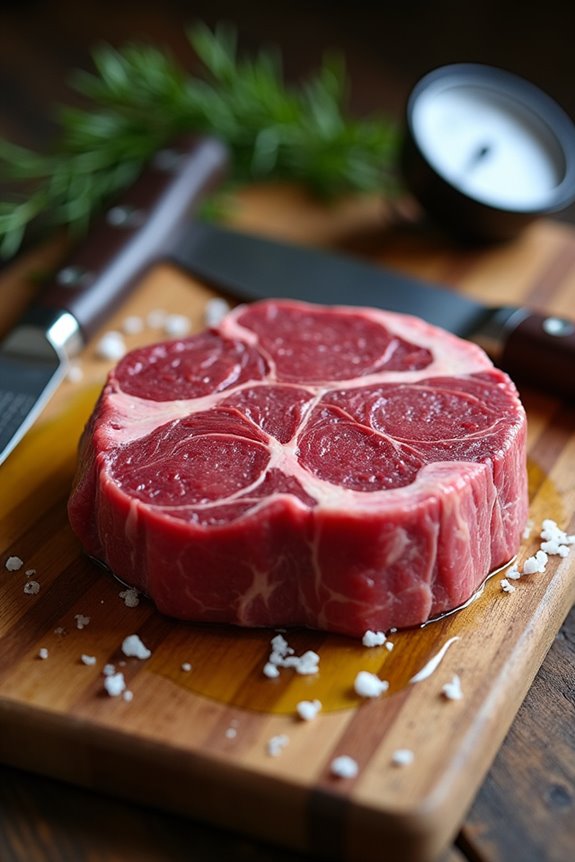
Because eye of round’s lean meat dries out faster than other cuts, nailing the temperature is absolutely everything. You’ll want to target an internal temperature of 125–130°F for medium-rare doneness. Here’s the thing: you’re not just cooking to that number and calling it done. You’ll pull it from the oven, then let residual heat finish the job during resting. That carryover cooking brings your center up to 135–140°F while redistributing juices throughout the meat. Use a probe thermometer to track progress without opening the oven door constantly. An oven thermometer helps too, since temperature variability between ovens throws off timing. This precision approach transforms eye of round from potentially tough and flavorless into genuinely tender and flavorful. You’re basically using science to outsmart this lean cut’s natural challenges.
Why Resting Changes Everything
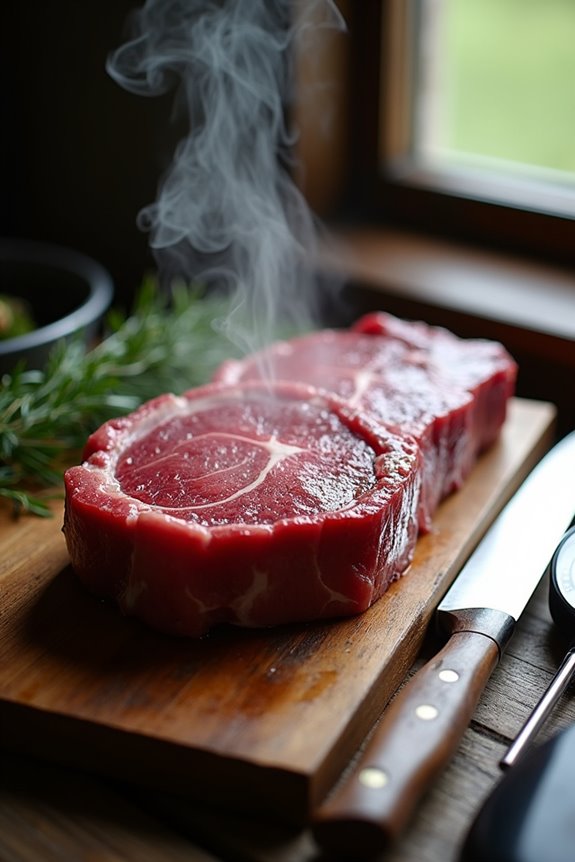
Ever wonder why restaurant roasts taste so much juicier than yours? They’re resting their eye of round properly, and you should too.
Resting transforms your lean beef completely. Here’s what happens:
Resting transforms your lean beef completely—juices redistribute, fibers relax, and temperature stabilizes for restaurant-quality results.
- Juices redistribute throughout the roast instead of pooling on your cutting board
- Protein fibers relax, making slicing across the grain effortless and tender
- Temperature stabilizes, ensuring even, flavorful slices from edge to center
After cooking, let your eye of round rest uncovered for five minutes. Then loosely cover it. This prevents surface moisture loss while your residual heat continues cooking slightly.
Those juices you’ve worked hard to preserve? They’re settling back into the center. Your temperature’s evening out. Your slices are becoming genuinely tender.
You’re not just waiting—you’re finishing strong. That’s restaurant-quality beef.
Slice Against the Grain for Tenderness
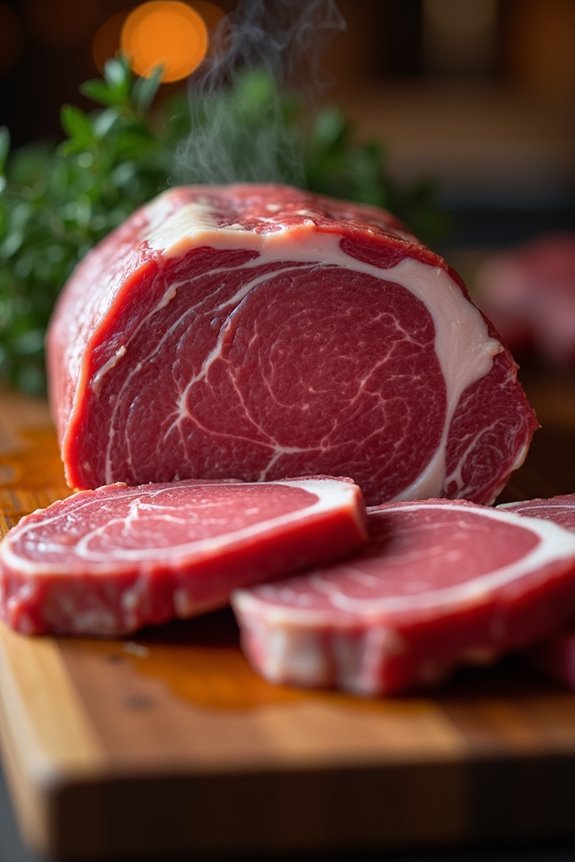
Here’s where the magic actually happens—your knife work. You’ve rested your roast beef, so now comes the cutting technique that makes all the difference. Slice against the grain, perpendicular to those muscle fibers running through your eye of round. This shortens them dramatically, making each bite genuinely tender instead of chewy.
| Slice Thickness | Grain Direction | Result |
|---|---|---|
| 1/4 to 1/2 inch | Against grain | Maximum tenderness |
| 1/2+ inch | With grain | Tougher texture |
| Too thin | Against grain | Dry pieces |
Grab your sharp knife and cut perpendicular cuts with confidence. Since lean beef lacks fat, thin slicing helps combat that firmer texture. You’re not just following technique here—you’re joining folks who’ve mastered roast beef preparation. Your effort transforms ordinary eye of round into something genuinely impressive.
Best Uses: Sandwiches, Sliders, and Leftovers
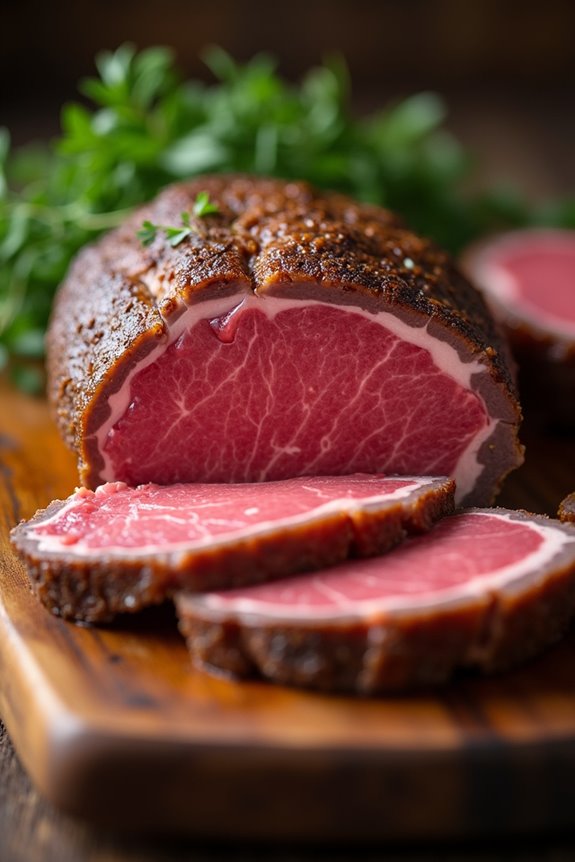
So you’ve nailed the roast—now what? Your perfectly cooked eye of round deserves a second life. This lean roast shines in sandwich applications when you slice it thin—think 1/8 to 1/4 inch thick. That’s where the magic happens.
Here’s where your leftovers become legendary:
- Deli-style slices stacked high on fresh bread with just the right amount of juices soaking through
- Sliders that actually taste impressive because you didn’t overcook the meat
- French Dip sandwiches where thin slicing lets that medium-rare tenderness shine through
The secret? Rest the roast before slicing. A dry-brine beforehand keeps your sandwich beef juicy and fork-tender. Your friends will wonder why restaurant sandwiches suddenly taste mediocre. You’ll know it’s because you mastered this budget-friendly cut.
Tools and Troubleshooting
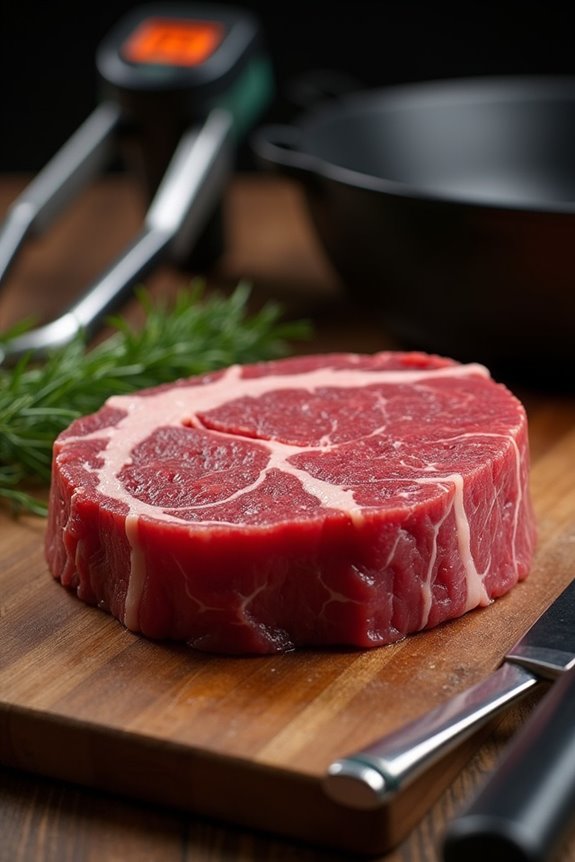
What’s the difference between a perfect eye of round and a dry, disappointing one? Your tools and technique.
Grab an instant-read thermometer—it’s your best friend here. You’ll hit your doneness target of 125–135°F without guessing. Use a sturdy jamb pan or roasting pan that distributes heat evenly during your high-heat sear and low-and-slow roast.
An instant-read thermometer is your best friend—hit 125–135°F perfectly with a sturdy roasting pan for even heat distribution.
Here’s the trick: don’t peek. Oven temperature control matters. Resist opening that door during the final hour. Your eye of round needs steady, uninterrupted heat.
After cooking, give it proper rest time. Let it sit 15–30 minutes so juices redistribute throughout. Then cut across the grain in thin slices—about a quarter inch works perfectly.
These steps transform tougher cuts into something genuinely delicious.