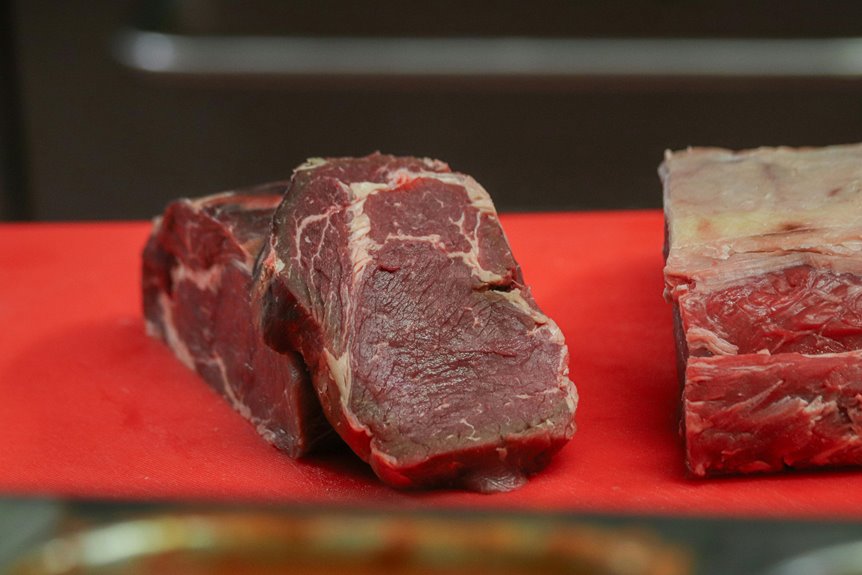
Beef knuckle’s a lean cut from the cow’s hind leg that’s tougher than it sounds—but you’ve got options. You can separate its four muscles, then grill thin cuts fast or braise whole roasts low and slow. The secret? Bold marinades with balsamic vinegar, garlic, and rosemary for at least two hours. A good sear creates that restaurant crust while keeping it juicy inside. Stick around to discover exactly how to nail each technique.
What Is Beef Knuckle and Where It Comes From
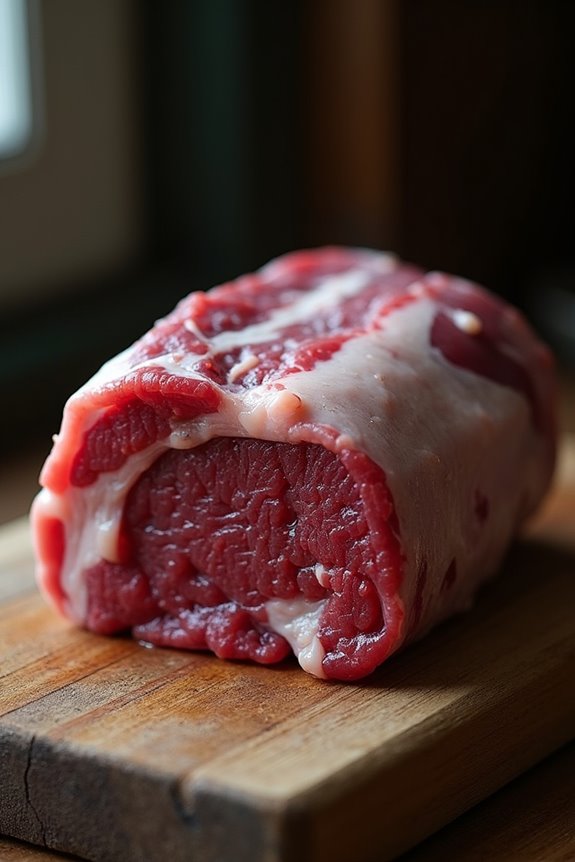
Ever wondered where that lean, versatile cut called beef knuckle actually comes from? You’ll find it in the round primal section, which is the cow’s hind leg area. This sub-primal cut sits right between tenderness and flavor, giving you something special. The knuckle contains four main muscles working together, each bringing its own characteristics to the table. When you get your hands on one, you’re looking at a substantial piece—usually weighing between 4 to 6.5 kilograms. That’s why butchers carefully separate these muscles for you. They’ll trim away fat and connective tissue, removing the outer cap and silver skin. What you end up with is beautifully lean meat that’s ready for steaks, roasts, or ground beef. Pretty practical, right?
The Four Main Muscles and How to Separate Them
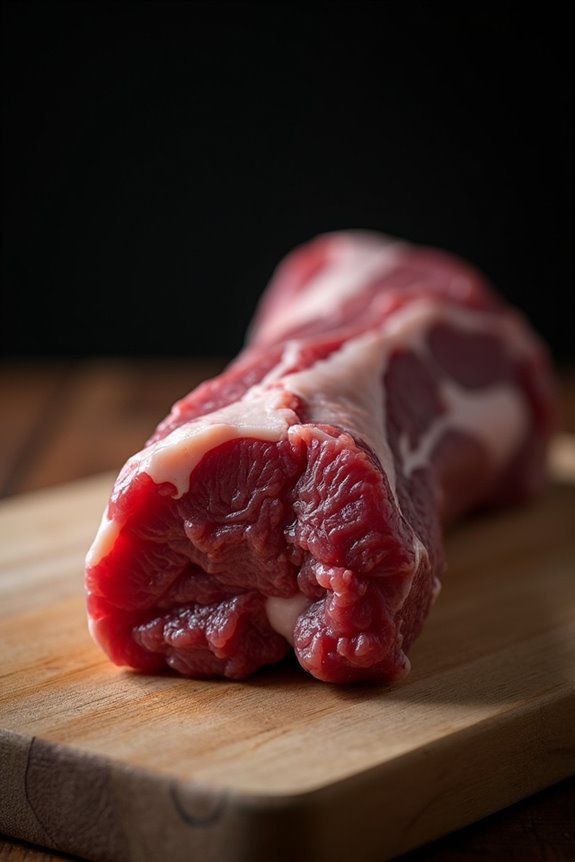
You’re looking at four distinct muscles that you’ll need to identify and separate carefully. Each muscle group—the rectus femoris, vastus lateralis, vastus intermedius, and vastus medialis—requires different trimming techniques and basic tools like a sharp boning knife. Once you know what you’re separating and why, you’ll handle the knuckle with way more confidence.
Identifying Each Muscle Group
The beef knuckle’s real magic happens when you break it down into its four distinct muscles. You’ll find them all nestled in the round, near the femur bone. The tip center (Rectus femoris) sits front and center. The tip side (Vastus lateralis) hangs on the outer edge. The tip bottom (Vastus intermedius) stays tucked underneath. Then there’s the wedge and bullet muscles—your lean powerhouses. Each one’s got its own personality, honestly. The wedge muscle rocks thin outer connective tissue but packs thick silverskin inside. The bullet muscle? That’s your overachiever—super tender and versatile for roasting or steaks. Once you’ve identified where each muscle sits, separating them becomes way easier. You’ll use a sharp knife and follow the natural seams between muscles. Trust us—learning these distinctions transforms your whole beef knuckle game.
Separation Techniques And Tools
Separating those four muscles isn’t as intimidating as it sounds, honestly. You’ll need a sharp knife—really sharp—and patience to master this skill. Start by locating the femur bone and work your way around it carefully. You’re separating the tip center, tip side, and tip bottom from each other, which takes practice but becomes easier each time. Use deliberate, controlled cuts along the natural seams where muscles meet. Trim away the silver skin and excess connective tissue as you go. Keep your knife blade angled low against the muscle to avoid waste. The key is respecting the natural muscle separations rather than forcing cuts through them. Take your time, stay focused, and you’ll yield beautiful, distinct cuts worth the effort.
Trim the Fat and Silver Skin to Maximize Usable Meat
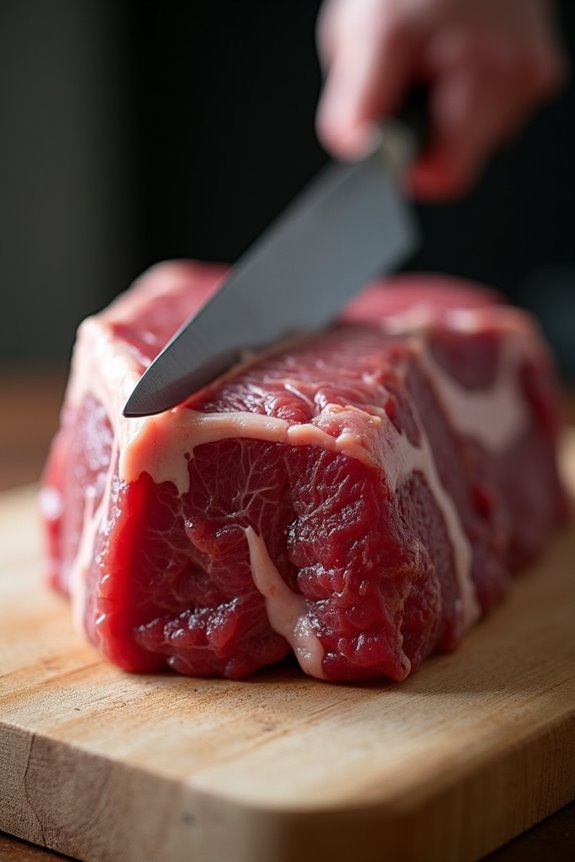
Once you’ve separated your beef knuckle muscles, you’ll want to tackle the outer connective tissue and silver skin that’s clinging to each piece. You’re basically removing the stuff that’ll make your final dish chewy, so grab a sharp boning knife and work along the muscle grain. This step takes patience, but it’ll seriously boost how much quality meat you’ve got to work with.
Removing Outer Connective Tissue
Why does beef knuckle have so much tough, chewy stuff on the outside?
That outer layer is mainly dry connective tissue that nobody wants to eat. You’ve gotta remove it first to expose the beautiful red meat underneath. This simple step makes a huge difference in your final dish.
| Step | What You’ll Find |
|---|---|
| Remove outer cap | Dry connective tissue |
| Expose red meat | Prime cooking material |
| Trim silver skin | Improves texture significantly |
Use a sharp knife and peel away that tough exterior layer. You’ll immediately see more vibrant red meat ready for cooking. Don’t worry about removing too much—that connective tissue’s basically useless anyway. Once you’ve stripped it off, you’re ready to separate those individual muscles and really maximize what you’re working with.
Separating Muscles For Efficiency
Here’s where the real magic happens—your beef knuckle’s actually made up of four separate muscles just waiting to be freed. You’ve got the Rectus femoris, Vastus intermedius, Vastus lateralis, and Vastus medialis all packed together. Separating these knuckle muscles is your ticket to maximum usable lean meat and way less waste.
Start by splitting them along their natural seams. You’ll notice thin silverskin lines marking where each muscle wants to separate. Work your knife along these guides—they’re basically nature’s instruction manual. The bullet muscle splits into two pieces: keep the thicker part for tender roasts, and use the thinner section for beef strips. The wedge muscle works great for dicing into stews or slicing for minute steaks. This strategic separation transforms your knuckle into versatile cuts tailored for different cooking methods.
Quick or Slow: Which Cooking Method for Your Cut
The real question isn’t whether beef knuckle’s tough or tender—it’s what you’re actually cooking. You’ve got two paths here, and they depend on your cut.
The real question isn’t whether beef knuckle is tough or tender—it’s what you’re actually cooking and how you prepare it.
For knuckle center cuts, you’ll want quick methods. Grill or pan-sear those steaks for about 4–5 minutes per side. Aim for medium-rare to keep things tender. It’s faster and honestly pretty satisfying.
Whole roasts? That’s a different story. Braise them low and slow around 160°C for several hours. The connective tissue breaks down beautifully this way.
Here’s the hack: slice your knuckle into stir-fry strips or steaks before cooking. You’re speeding things up dramatically. If you want even better results, try a Jaccard tenderiser or marinate beforehand. You’ll unlock tenderness you didn’t know was possible.
Sear Thin Cuts for Restaurant-Quality Steaks and Stir-Fry
Slicing your beef knuckle thin is where the magic actually happens. You’ll transform tough cuts into tender, restaurant-quality bites that cook in minutes. Split the bullet muscle along its silverskin to get two different pieces. The thinner section’s perfect for fast-cooking slices or stir-fry strips. The thicker piece? Jaccard tenderize it first for extra tenderness.
Here’s your searing game plan: bring those knuckle cuts to room temperature and pat them completely dry. Season generously, then sear hard in a hot pan for 4–5 minutes per side. You’re aiming for medium-rare, where the meat stays juicy and holds together beautifully.
That’s the secret right there. Thin slicing plus proper searing equals restaurant results at home.
Braise the Wedge and Bullet for Deep Flavor and Tenderness
While searing gives you quick, gorgeous results, braising is where beef knuckle really shines. You’ll want to separate your wedge and bullet muscles first. This move lets each piece cook exactly how it deserves to be cooked.
Braising is where beef knuckle truly shines—separate your wedge and bullet muscles for perfectly cooked results.
Trim away that thick silverskin and connective tissue—trust us, you’ll notice the difference. Then braise them low and slow in liquid like wine or broth. This method transforms tougher cuts into something incredibly tender and flavorful.
A round roast benefits hugely from this approach. The long, moist cooking breaks down all those tough fibers. You’re basically letting time do the heavy lifting here.
Plan for several hours of braising. Your kitchen’ll smell amazing, and you’ll get restaurant-quality results that’ll impress everyone at your table.
Bold Marinades and Seasonings for Lean Beef Knuckle
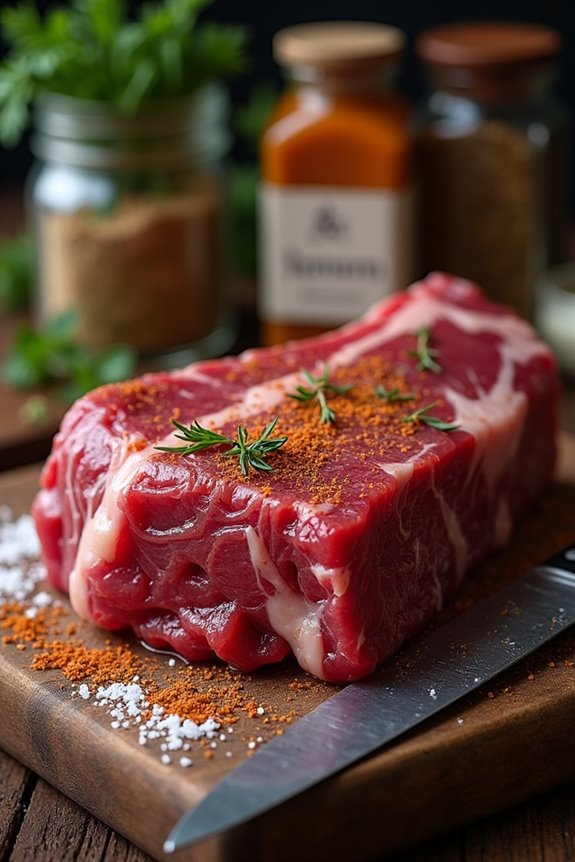
How do you make lean beef knuckle actually taste amazing? You’ve got to embrace bold marinades that really penetrate those lean fibers. Mix balsamic vinegar or wine with garlic, black pepper, and rosemary for a classic approach. Add olive oil to your marinade—it prevents the surface from drying out when you sear those bullet and wedge muscles afterward. Prefer Asian flavors? Combine soy sauce or miso with fresh ginger and scallions instead. You’ll keep that natural beefiness without overwhelming it. Marinate for 2–4 hours minimum, though overnight delivers maximum tenderness. Don’t skip dry rubs either. Paprika, cumin, black pepper, and a touch of sugar create an amazing crust when grilled or pan-seared. You’re building flavor, not masking it.