You can’t trust your eyes—grab a digital meat thermometer instead. Insert it into the thickest part of your chop, avoiding the bone, and cook until it hits 145°F. That’s it. Pink color doesn’t mean it’s undercooked; myoglobin does weird things with heat. Rest your chop for three minutes after pulling it off heat, and you’ll lock in those juices. Skip the guesswork, and you’ll nail perfectly cooked pork every time. Want to know why thermometers beat the eye test?
Use a Meat Thermometer: It’s the Only Reliable Method
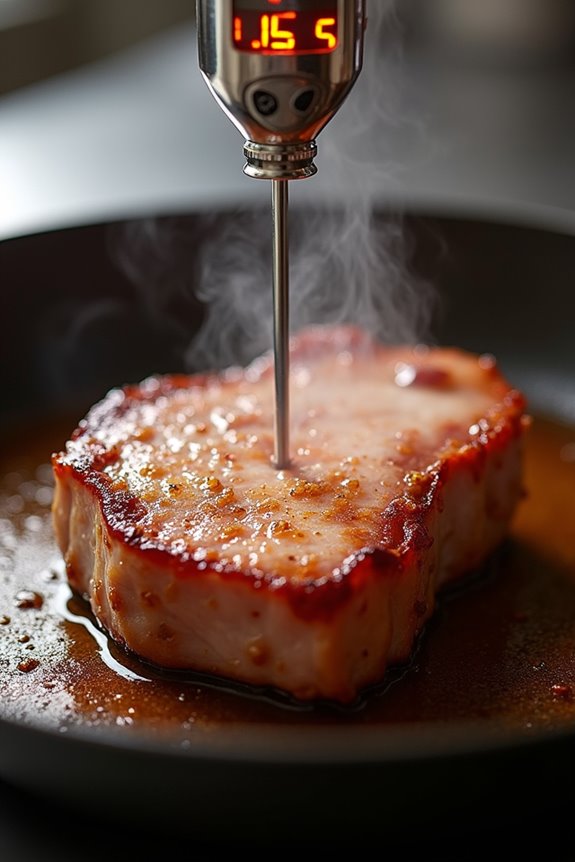
Want to know the foolproof way to cook perfect pork chops every time? Use a meat thermometer—seriously, it’s your best friend in the kitchen. Skip the guessing game of cutting into your chop or checking the color. A digital thermometer gives you the exact internal temperature you need.
Insert it into the thickest part, away from bone or fat. You’re aiming for 145°F (63°C), then let your chop rest for three minutes. That’s it. You’ll join the club of people who never overcook pork again.
For thinner chops under ¾ inch, test through the side instead. This ensures your thermometer hits the thickest spot accurately. Trust us—once you start using one, you’ll never go back to old methods.
Step-by-Step: How to Check Pork Chop Doneness With a Thermometer
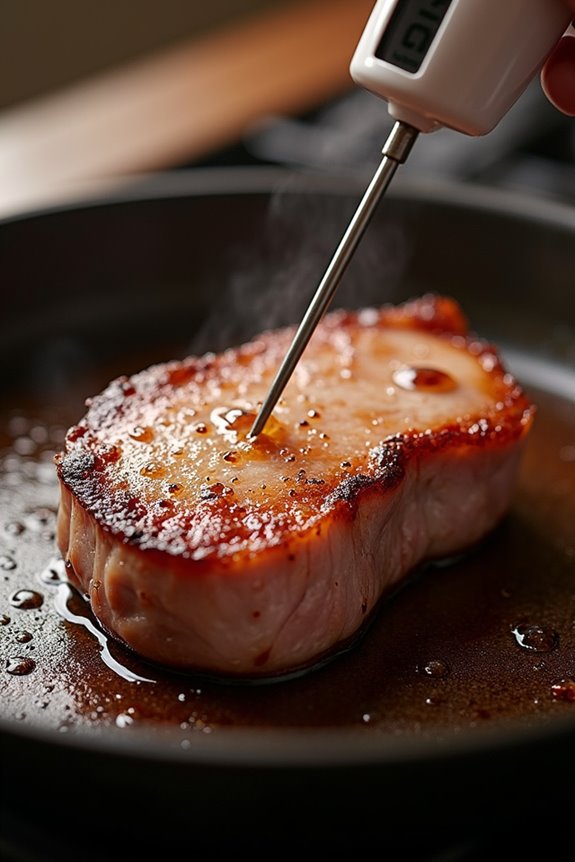
Now let’s walk through the actual process—it’s simpler than you’d think. First, insert your meat thermometer into the thickest part of your pork chop, steering clear of any bone. For thinner chops under ¾ inch, poke the thermometer through the side to hit the center accurately. You’re aiming for an internal temperature of 145°F—that’s your magic number for whole cuts. Here’s the thing: you’ll probably see some pink, and that’s totally fine. It doesn’t mean undercooked. Once your thermometer hits 145°F, you’re done cooking. Now comes the important part nobody skips: let that chop rest for three minutes minimum. This resting period lets the juices redistribute throughout the meat, making every bite juicier and more flavorful. You’ve got this.
Pork Chop Doneness at 145°F: What Safe Really Looks Like
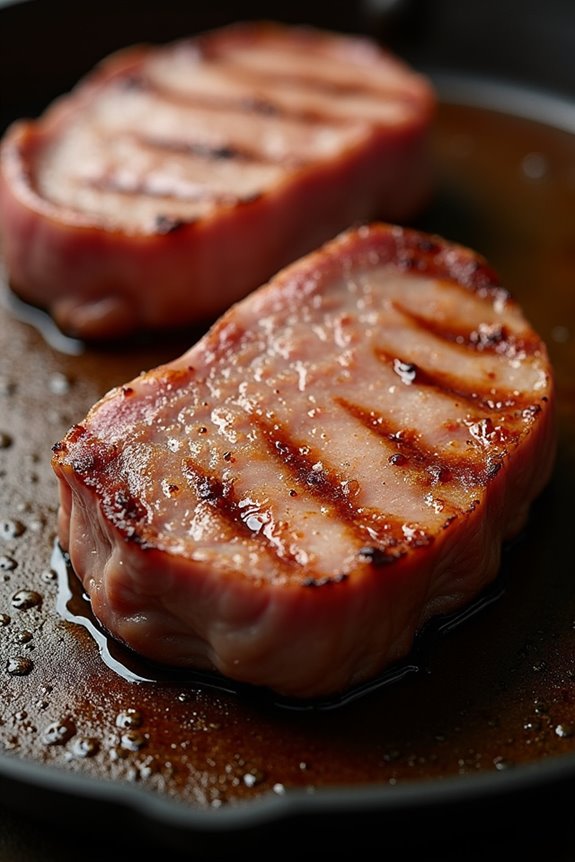
Color alone can’t tell you if meat’s done. You might see pink in the center and worry you’ve messed up. But case-in-point—that pink doesn’t mean unsafe.
When your meat thermometer reads 145°F, your pork chop is fully cooked and safe to eat. That’s the official USDA and FDA guideline. The pink color you’re seeing? It’s just how the meat looks at this temperature. It doesn’t indicate anything dangerous.
After hitting 145°F, let your chop rest for at least three minutes. This resting period redistributes the juices throughout the meat. You’ll get a juicier, more tender result.
Why You Should Rest Your Pork Chops for 3 Minutes
So you’ve hit that magic 145°F mark—congrats, you’re almost there. Now comes the secret that separates good pork chops from great ones: resting.
You’ve hit 145°F—now comes the secret separating good pork chops from great ones: resting.
When you rest your pork chops for just 3 minutes, something pretty cool happens inside. The heat redistributes evenly, and all those flavorful juices settle back into the meat instead of running onto your plate. You’re basically locking in the good stuff.
Think of it like this: cutting into a hot pork chop immediately is like opening a dam. Those juices flood out, leaving you with drier meat. But wait 3 minutes? You’ve given everything time to stabilize.
Your pork chops will taste noticeably juicier and more flavorful. That small patience investment pays off big time. Trust us on this one—it’s the move that’ll make everyone ask for your recipe.
Pink Pork Chops Are Safe at 145°F: Here’s Why
There’s a big misconception hanging around most kitchens: pink means undercooked. You’ve probably thrown out perfectly good pork chops because of it. Here’s the truth: pink pork chops are totally safe when they hit 145°F internally.
Your thermometer is your best friend here. Insert it into the thickest part of the chop, and once you see 145°F, you’re golden. That slight pink color? It doesn’t mean anything’s wrong. It’s just how pork looks at that temperature.
The USDA and FDA both confirm 145°F is safe. Color alone can’t tell you doneness—your thermometer can. So trust the numbers, not what your eyes see. You’ll get juicier, more delicious chops this way. Your family will actually enjoy dinner instead of eating dried-out meat.
Understanding Myoglobin: What Causes Color Variation in Pork?
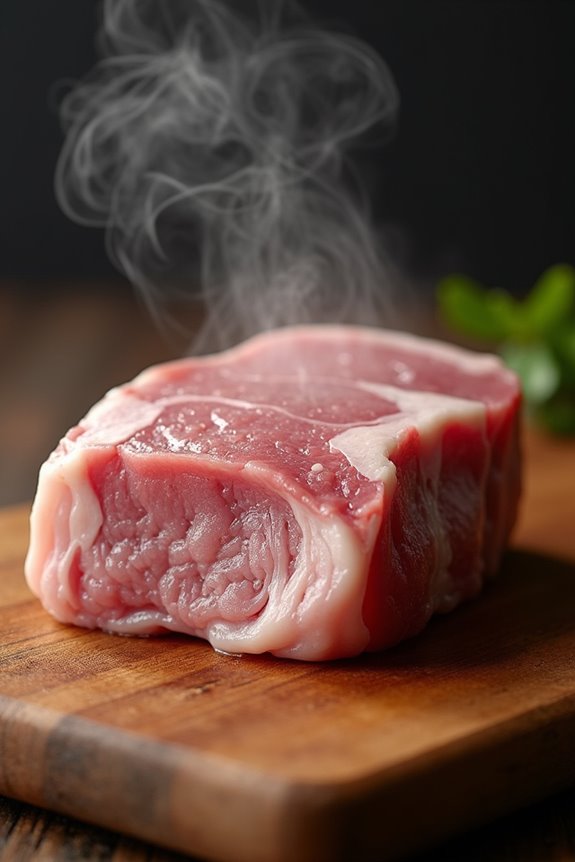
Now that you know 145°F is your magic number, you’re probably wondering why pork chops look so different at that temperature.
The answer? Myoglobin, the pigment that makes meat its signature color. Here’s what’s happening inside your chop:
- Raw pork appears purplish-pink due to anaerobic conditions in the center
- As cooking temperature rises, myoglobin changes form and shifts colors
- Ground pork shows color changes faster than whole chops
- Muscle pH affects how quickly pink fades during cooking
Your chop’s color depends on which myoglobin form dominates. Higher pH meat stays pinker longer, while lower pH meat lightens quickly. That’s why two chops cooked identically can look completely different. Pretty wild, right? This is exactly why thermometers beat eyeballing—color’s honestly unreliable.
Why Color Alone Misleads You When Cooking Pork Chops
You might think a pork chop’s pink center means it’s undercooked, but that’s where myoglobin tricks you. Even at the safe 145°F temperature, your chop can still look pink because of how the protein reacts to heat. That’s why you can’t trust your eyes—you’ve got to grab a meat thermometer and actually check the temperature instead.
Myoglobin And Color Changes
Because pork’s color shifts dramatically as it cooks, it’s easy to assume that pink means undercooked and brown means done—but you’d be wrong. Here’s what’s actually happening inside your chop:
The culprit is myoglobin, the pigment responsible for those color changes. You’ll notice:
- Raw meat appears red due to deoxymyoglobin (oxygen-free myoglobin)
- Heat transforms it pink when oxymyoglobin forms at lower temperatures
- Further cooking turns it tan as metmyoglobin develops
- Return-to-pink can happen even at safe temperatures with certain pork types
Your pork chop’s pH and processing method affect how these color shifts happen. PSE meat browns faster and lighter. Ground pork especially misleads you with premature browning.
The bottom line? Color alone won’t tell you if your chop’s actually done cooking. That’s why thermometers exist—they’re your honest friend here.
Temperature Over Visual Cues
While that pink center might make you nervous, here’s the truth: a meat thermometer’s the only thing you should trust. Color can seriously trick you. Your pork chop might look totally done on the outside while staying slightly pink inside—and that’s perfectly safe. Here’s why: myoglobin in the meat doesn’t always turn brown when it’s fully cooked. Different factors like pH and packaging mess with how your chop looks.
Common Mistake: Cooking Pork Chops Past 160°F
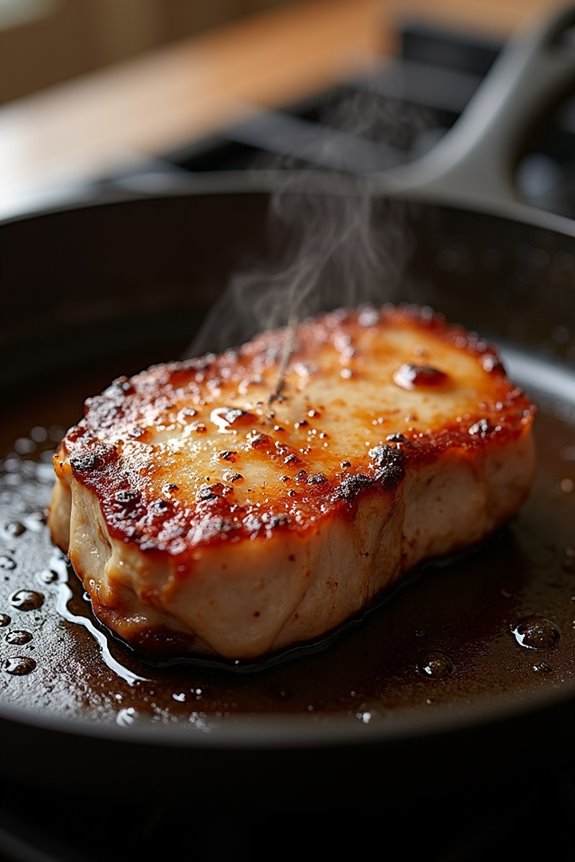
You’ve probably heard that pork needs to hit 160°F, but here’s the thing—that’s actually overkill and works against you. Cooking your chops past 160°F dries them out, making them tough and bland, which means you’re wasting good meat. Stick to 145°F with a 3-minute rest instead, and you’ll get juicy, tender chops that actually taste great.
Overcooking Dries Out Meat
One of the biggest pork chop mistakes happens when you push the internal temperature past 160°F. Here’s what goes wrong:
- Moisture evaporates from the meat’s fibers
- Proteins tighten up and squeeze out juices
- Texture becomes tough and chewy
- Flavor becomes bland and flat
You’ve probably experienced this yourself. That dry, disappointing chop? Overcooking caused it. A meat thermometer is your best friend here. Check the thickest part away from bone for accurate readings.
The sweet spot sits between 145–160°F. At 145°F with a 3-minute rest, your chop stays juicy and tender. Yes, it might look slightly pink inside. That’s completely safe and honestly delicious.
Skip the guesswork. Use your thermometer every time. Your taste buds will thank you for keeping things moist and flavorful.
Safe Temperature Prevents Waste
Why do so many perfectly good pork chops end up in the trash? You’re probably cooking them too hot. When you push past 160°F, you’re wasting meat and money. Your safe internal temperature is 145°F with a 3-minute rest. That’s it. Use a meat thermometer in the thickest part—it’s your best friend here.
| Temperature | Result | Outcome |
|---|---|---|
| 145°F | Slightly pink, juicy | Perfect |
| 150-160°F | Tender, moist | Great choice |
| 160°F+ | Dry, pale, tough | Wasted chop |
Here’s the thing: those overcooked chops don’t just taste worse. You’re literally throwing away food and cash. A meat thermometer takes the guesswork out. Rest your chops three minutes after cooking. You’ll save money and actually enjoy your dinner.
Your Thermometer and Eyes Disagree? Here’s Why?
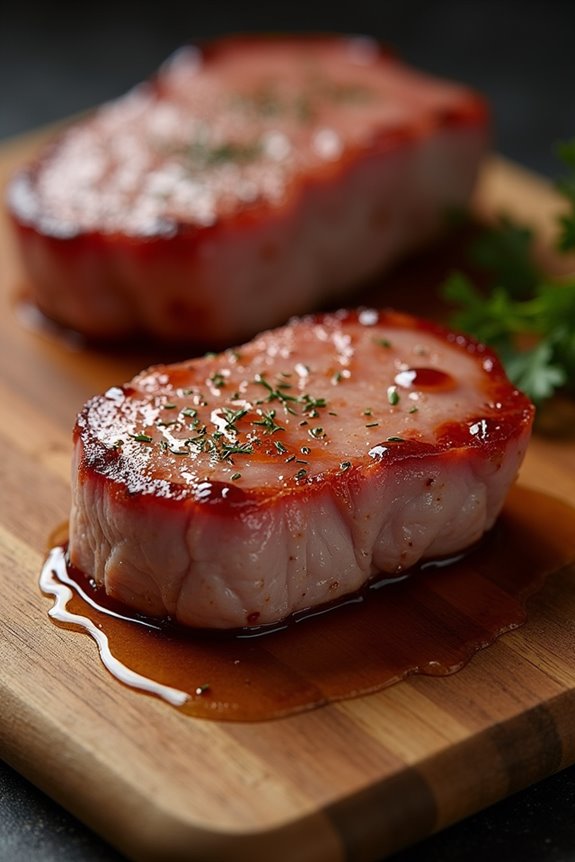
Ever pulled a pork chop off the heat only to find your thermometer says 145°F while the meat still looks pink inside? Don’t panic—you’re not alone in this confusion!
Here’s why your eyes and thermometer disagree:
- Different pork types react differently to heat and retain pink color longer
- Myoglobin, the protein giving meat its color, breaks down at different rates
- PSE or DFD meat appears lighter or darker at identical temperatures
- Juices running clear don’t always match what you’re seeing visually
Your thermometer tells the real story here. That pink hue at 145°F is totally safe after resting three minutes. Trust your meat thermometer over what you see. Your eyes can deceive you, but temperature never lies when you’re measuring at the thickest part.
Your First Step: Get a Calibrated Meat Thermometer
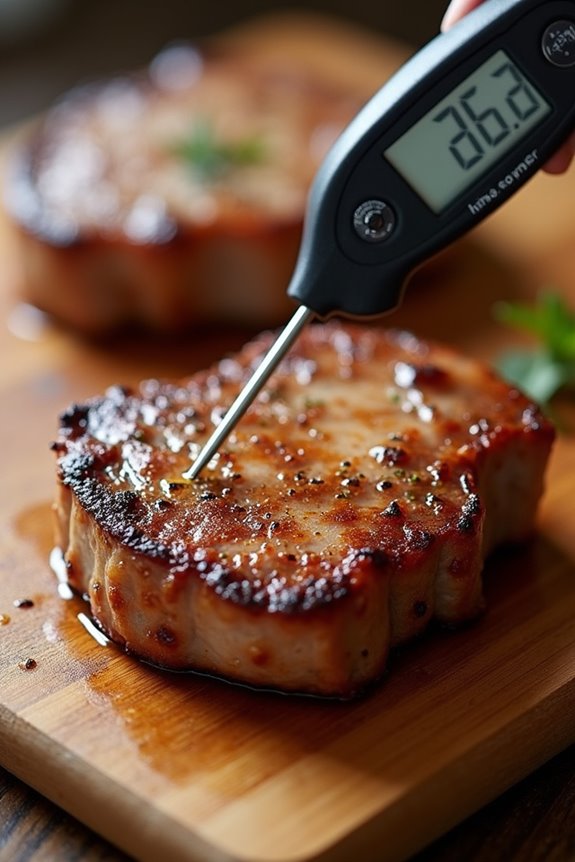
How’d you know if your pork chop’s really done without guessing?
Grab a calibrated meat thermometer—seriously, this is your best friend in the kitchen. You’ll want to check the internal temperature in the thickest part of the chop, steering clear of the bone. That’s where the real answer lives.
A reliable meat thermometer takes the guesswork out of cooking. No more cutting into your chop and ruining that beautiful crust. Instead, you’ll get an exact reading that tells you everything.
Make sure your thermometer’s calibrated before you start. If your chop’s thinner than three-quarters inch, test it from the side to hit the center accurately. Trust the numbers, not your gut feeling. That’s how you’ll nail perfectly cooked pork every single time.