
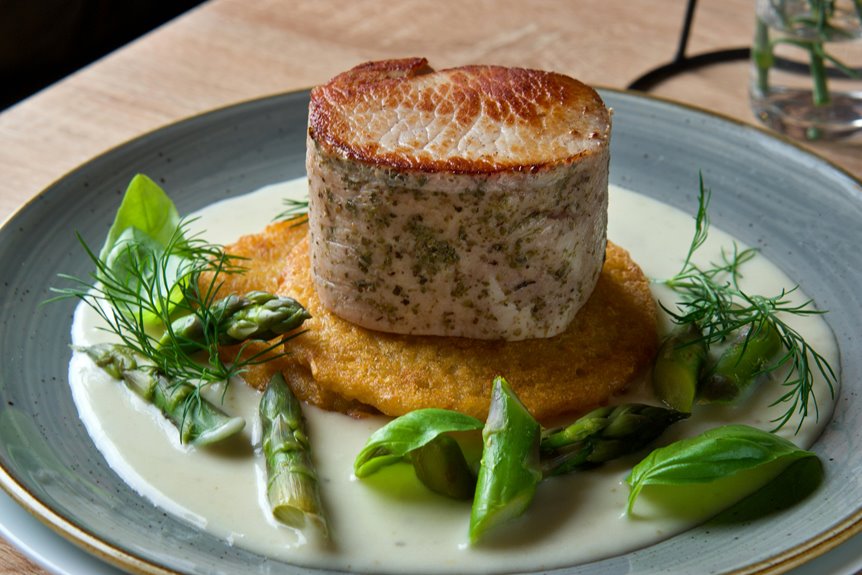
Yeah, you can make pulled pork with pork loin, but here’s the thing—it’s way leaner than shoulder, so it’ll dry out if you’re not careful. You’ll need plenty of moisture, like broth and sauce, to keep it tender while it cooks. Use your slow cooker on high for 4–6 hours or low for 8–10 hours, and shred it right in the cooking liquid. The key is keeping that meat bathed in juices the whole time. There’s definitely a technique to nailing this.
Can You Actually Make Pulled Pork With Pork Loin?
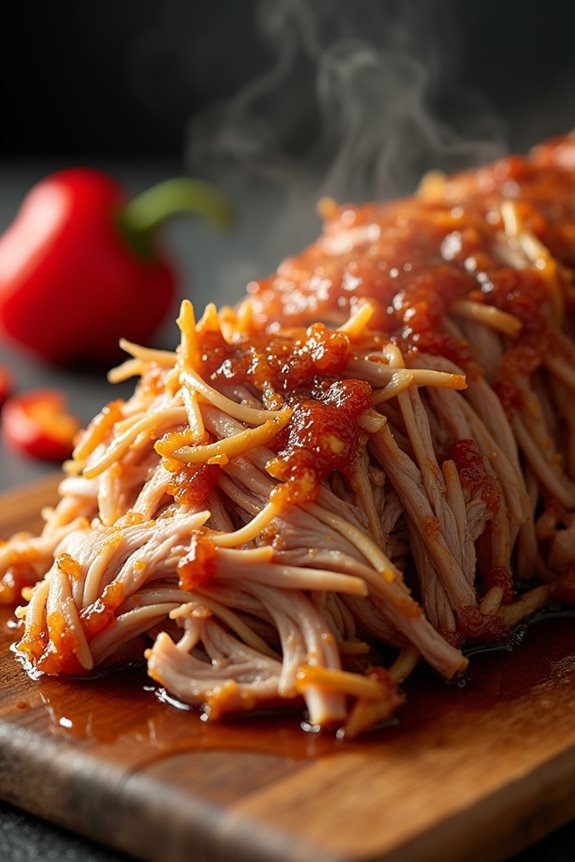
Why not use pork loin for pulled pork? You absolutely can, and we’ve got the insider scoop. Traditional pulled pork uses pork shoulder because it’s fattier and more forgiving. But pork loin? It’s leaner, which means you’ll need extra moisture to keep it tender. Your slow cooker becomes your best friend here. Cook that loin on high for 4–6 hours or low for 8–10 hours until it shreds easily. The key is using plenty of sauce or broth throughout the process. After shredding, return the meat to the slow cooker and simmer it briefly in the sauce. This keeps everything moist and delicious. Season generously with a spice rub beforehand. Sure, it’s different from traditional methods, but it works when you’re intentional about moisture management.
How Pork Loin Differs From Pork Shoulder (and Why It Matters)
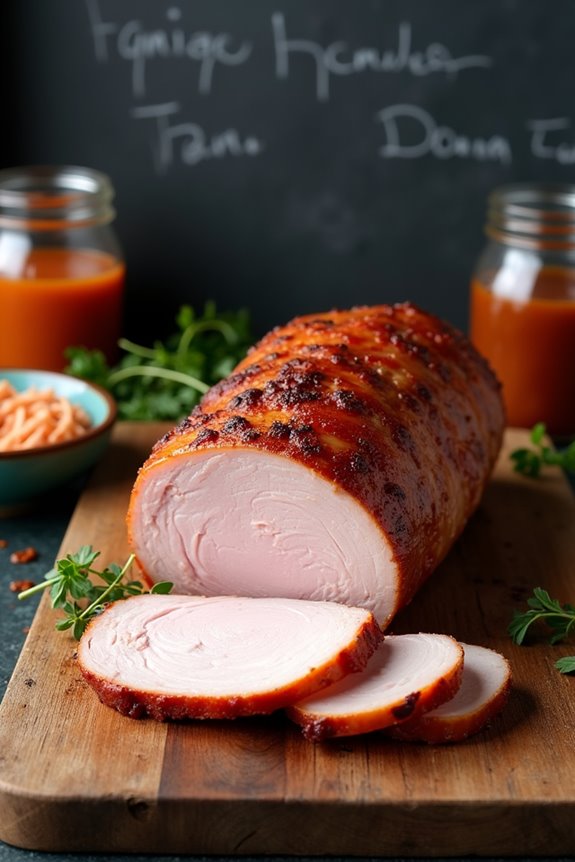
You’ll notice pork loin’s got way less fat and marbling than shoulder, which changes everything about how it cooks. Because loin’s leaner, it’ll cook faster and needs more moisture to stay tender—otherwise you’re looking at dry, chewy results. That’s why understanding these differences matters: you can’t just swap loin for shoulder and expect the same juicy pulled pork without adjusting your technique.
Fat Content And Marbling
it’s fundamentally leaner than pork shoulder, and that changes everything about how you’ll cook it. You’re working with minimal marbling—those fat lines running through the meat that keep things juicy. Your pork loin fat content is significantly lower, which means less self-basting during cooking. Without that protective fat layer, moisture escapes quickly, leaving you with tough, dry shreds instead of tender, pull-apart perfection.
That’s why sauce-based braising becomes your best friend here. You’ll need generous amounts of liquid to compensate for the loin’s limited marbling. Think broth, apple juice, or sauce—these additions prevent dryness and actually improve tenderness. The moisture keeps fibers supple while breaking down connective tissue. Basically, what shoulder does naturally through fat, you’re deliberately providing through liquid. It’s a trade-off you can absolutely master.
Texture And Fiber Structure
Since pork loin’s got a firmer, denser fiber structure than shoulder, it behaves totally differently during cooking. You’ll notice the connective tissue is way less interlaced, which means less natural breakdown happening as it cooks. This actually matters a lot for your pulled pork texture.
When you shred pork loin, you get lighter, leaner strands instead of the juicy, fibrous shreds shoulder gives you. The uniform fibers hold together better, which sounds good until you realize they’re less forgiving during cooking.
Here’s the thing: moisture management becomes your best friend. Without that marbling fat rendering down, you need careful timing and plenty of surrounding liquid. Otherwise, you’re dealing with chewiness instead of that tender, pull-apart magic we’re after.
Cooking Time And Temperature
How does pork loin’s cooking timeline actually stack up against shoulder? You’ll notice significant differences that affect your whole process.
| Method | Pork Loin | Pork Shoulder |
|---|---|---|
| Low Setting | 6–8 hours | 8–10 hours |
| High Setting | 4–6 hours | 5–7 hours |
| Connective Tissue | Minimal | Extensive |
| Fat Content | Very lean | Higher fat |
| Moisture Risk | High | Low |
Pork loin cooking time runs shorter because it’s leaner with less connective tissue to break down. You’ll want low and slow temperatures to prevent drying out your meat. The key? Don’t skip the braising liquid—it’s your safety net for pulled pork moisture. Slow cooker temperatures between 190–210°F work best for lean pork loin shredding. Check internal temp at 190°F, then rest fifteen minutes before shredding directly in the pot to preserve all those precious juices.
Why Pulled Pork From Pork Loin Dries Out (and How to Prevent It)
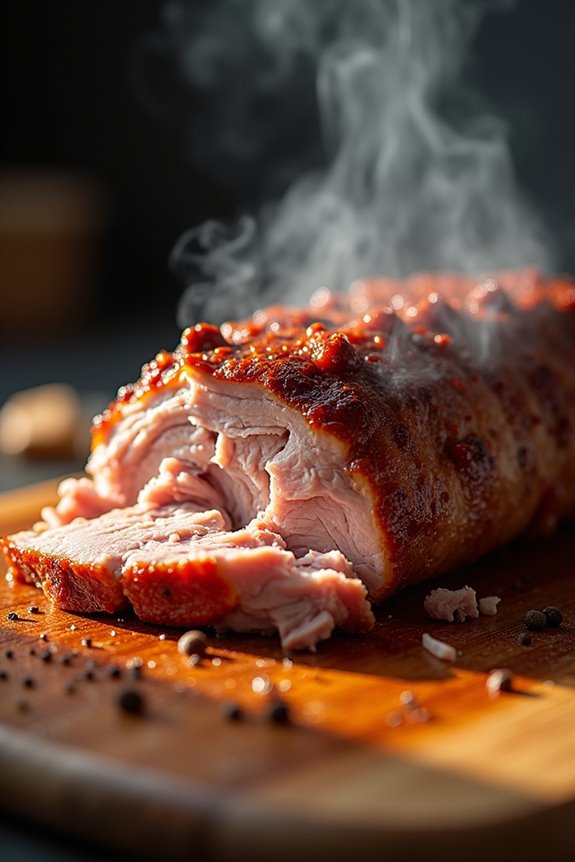
Why does pork loin tend to dry out when you’re slow cooking it? Unlike pork shoulder, loin lacks fat and connective tissue that naturally preserve moisture. You’re basically working with a lean cut that needs serious help.
Pork loin lacks the fat and connective tissue of shoulder, making it prone to drying out during slow cooking.
Here’s what we recommend: cook your loin covered in thick, flavorful sauce throughout. This sauce acts like a moisture shield, keeping everything juicy. Cut the loin into quarters for even cooking and fewer dry edges.
Add one large onion to your slow cooker—it’ll baste the meat beautifully. After cooking, rest the loin before shredding it directly in the cooking juices. Better yet, return your shredded meat back into that sauce immediately.
These steps tackle pork loin dryness head-on and keep your pulled pork tender and delicious.
Avoid These 5 Common Mistakes Before You Cook
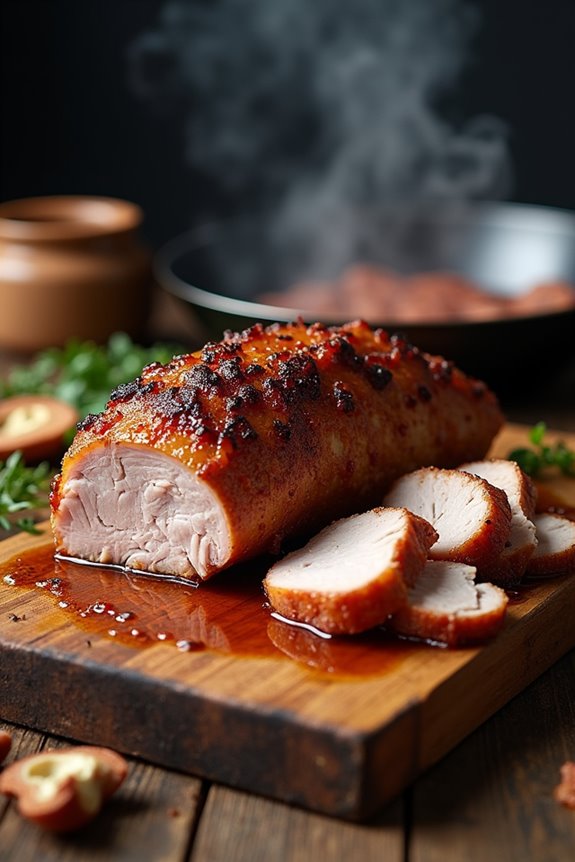
You’ll run into trouble if you cook your pork loin past 190°F internal temperature, which dries out the meat fast. Don’t skimp on liquid either—you’ll want at least one cup of broth or sauce in your slow cooker from start to finish. Keep that pork submerged and moist, or you’ll end up with shredded jerky instead of tender pulled pork.
Overcooking Dries The Meat
Since pork loin is inherently lean and lacks the fat and connective tissue of fattier cuts, it’ll dry out faster than you’d expect. Overcooking is your biggest enemy here, and we’ve all been there.
The key is monitoring your slow cooker cooking time closely. You’re fighting against pork loin dryness by keeping moisture around the meat constantly. Here’s what works:
| Cooking Method | Time | Result |
|---|---|---|
| High Heat | 4–6 hours | Faster, needs watching |
| Low Heat | 8–10 hours | Gentler, more forgiving |
| With Broth | Any time | Extra moisture protection |
Rest your meat for ten minutes after cooking. This step locks in juices before shredding. If you do overcook it, don’t panic—add sauce and simmer the shredded pulled pork briefly to rehydrate and rescue dinner.
Insufficient Liquid Causes Dryness
While monitoring your cooking time helps prevent overcooking, there’s another culprit lurking in your slow cooker: not enough liquid.
Pork loin lacks the internal fat that keeps meat juicy during cooking. Without adequate pulled pork moisture, you’ll end up with disappointing, chewy results. Here’s the thing: your slow cooker sauce isn’t just for flavor—it’s essential protection against pork loin dryness.
Add one large onion for moisture and flavor. Use enough broth or BBQ sauce to keep your meat well-coated throughout cooking. When you’re shredding in juices at the end, that liquid gold gets reabsorbed into the meat. If your pulled pork still feels dry after shredding, simmer the slow cooker sauce to thicken it, then mix everything back together. Your future self will thank you.
Slow Cooker Method: Cook Time and Temperature
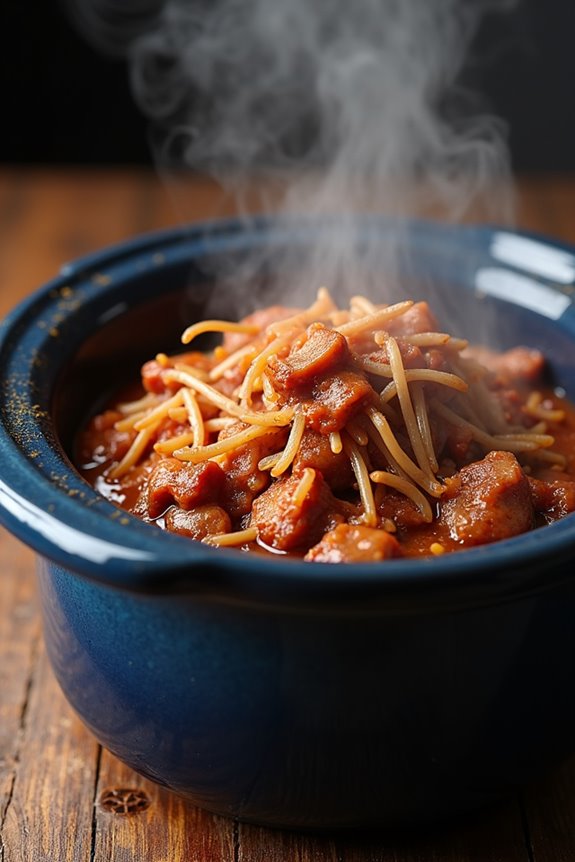
Set your slow cooker to high for 4–6 hours, or low for 8–10 hours. The choice depends on how tender you want your pork loin. High heat works faster, while low heat gives you more forgiving, fall-apart results.
Once your cook time’s done, you’re ready to shred. You can shred the meat directly in the slow cooker with all those delicious juices. This keeps everything moist and flavorful.
After shredding, here’s the magic part: return your meat to the cooking liquid and simmer briefly with BBQ sauce. This melding of flavors transforms your pulled pork into something special.
Pro tip: rub your pork loin with a spice blend before cooking. Add onions too. These small touches make a real difference in your final dish.
Trim, Season, and Size Your Pork Loin
Want to know why pork loin needs a little prep work? You’ll want to trim any excess fat from the surface first. This helps your seasoning stick better and cooks more evenly. Next, season generously with your favorite rub—salt, pepper, and paprika work great together. Don’t be shy here; seasoning makes pulled pork taste amazing.
Now for sizing, which really matters. Cut your pork loin into quarters before slow cooking. This isn’t just busy work—smaller pieces cook more evenly and shred way easier afterward. You’re aiming for 4–6 pounds total for a standard slow cooker batch.
Quartering prevents those dry, tough spots that make pulled pork disappointing. Your future self will thank you when everything shreds beautifully and absorbs sauce perfectly.
Make Pulled Pork in the Slow Cooker: Step-by-Step
You’ll start by placing your seasoned pork loin in the slow cooker, rubbing both sides with your spice blend. Then you’ll set the temperature—high for 4–6 hours or low for 8 hours—depending on how much time you’ve got. Once it’s cooked through, you’ll shred the meat right in the crock pot with those delicious juices, then mix everything back together before serving.
Preparing Your Pork Loin
How’d you like to transform that pork loin into shredded perfection? You’re about to join the crowd making amazing pulled pork at home.
Start by placing your pork loin in the slow cooker. Then grab your BBQ spice mix and get both sides coated evenly. Press it in really well—this is where flavor happens.
Here’s what makes this work:
- Your pork loin becomes incredibly tender in just hours
- The slow cooker does the heavy lifting while you relax
- Shredded pork soaks up all those delicious juices
- You’ll impress everyone with restaurant-quality results
- Less cleanup means more time enjoying meals together
Next, mix your broth, vinegar, and tomato paste together. Pour this liquid over your seasoned loin. You’re setting yourself up for success—that moisture keeps everything perfect throughout cooking.
Cooking Time And Temperature
Now comes the part where your slow cooker becomes your best kitchen friend. You’ll cook your pork loin on high for 4–6 hours or low for 8–10 hours. The key? Cook until the meat shreds easily with a fork.
| Setting | Time | Best For |
|---|---|---|
| High | 4–6 hours | Faster cooking |
| Low | 8–10 hours | Tender results |
Since pork loin is lean, you’ll want to keep that moisture going strong. Add onions, stock, or thick sauce to prevent dryness during cooking. Once you’re done, let your shredded pork rest briefly to reabsorb all those delicious juices. Then mix everything back together with your sauce. Your pulled pork will stay moist and flavorful—exactly what you’re after.
Shredding And Serving Methods
Once your pork’s fall-apart tender and the kitchen smells incredible, it’s time to shred.
You’ll want to shred the meat right in your slow cooker with all those delicious juices. This keeps everything moist and flavorful. Here’s what makes the final steps so satisfying:
- Shredding directly in the crock pot locks in moisture and flavor
- Mixing shredded pork back into sauce creates that signature pulled texture
- Tasting and adjusting seasonings makes it uniquely yours
- Adding extra barbecue sauce gives you control over sweetness
- Simmering briefly to thicken creates restaurant-quality consistency
After shredding your pork loin, taste everything. Add more salt, pepper, or garlic powder as needed. Your serving method matters too. Pile your shredded pork onto buns, serve over rice, or top nachos. That slow cooker magic transforms a simple pork loin into something your friends will actually request again.
Alternative Cooking Methods: Oven and Instant Pot
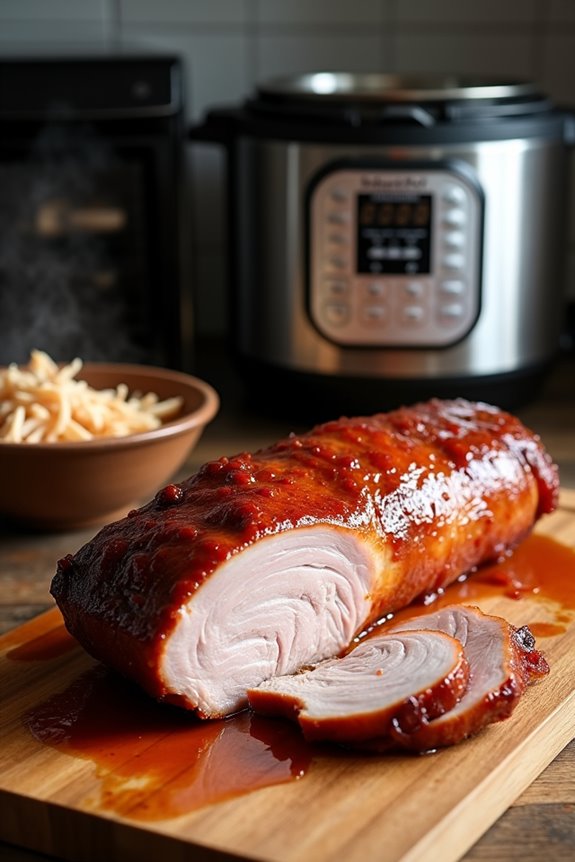
What if your slow cooker’s broken or you’re just tired of waiting? You’ve got options with your pork loin.
The oven method’s straightforward. Season your pork loin quarters, layer them with onions and sauce, then cover tightly. You’re looking at two to three hours in the oven. It’s honestly pretty hands-off.
The Instant Pot gets you there faster. You’ll use 1/2 cup BBQ sauce and adjust your stock to keep everything moist. This matters because pork loin’s lean—it’ll dry out without enough liquid.
Both methods follow the same finishing rule: cook your meat to 145–160°F, rest it, then shred. Simmer that cooking liquid down to thicken it before mixing everything back together. Taste and adjust with salt, pepper, or garlic powder. You’ve got this.
Is Your Pork Loin Done? Doneness Checks Explained
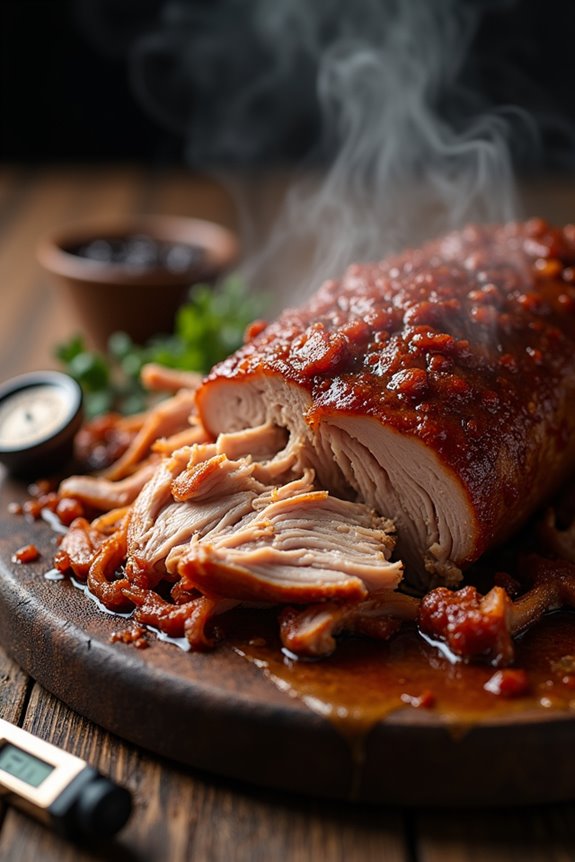
So how do you know when your pork loin’s actually ready to shred? You’ll want to check your pork loin doneness using these reliable methods:
- Use a meat thermometer—it’s your best friend for safe doneness guidelines
- Aim for 145–160°F internal temperature—this ensures food safety and tenderness
- Check multiple spots—thickest parts cook slower than edges
- Look for easy shredding—meat should pull apart with minimal effort
- Trust the rest period—letting it sit locks in moisture before shredding
Once you’ve hit that target temperature, don’t skip resting. This essential step helps your pulled pork consistency stay moist instead of dry. Let it rest for five to ten minutes, then shred it right in the pot with those delicious juices. Your meat’ll thank you by staying tender and flavorful when you serve it up.
Shred Without Drying Out: Technique and Timing
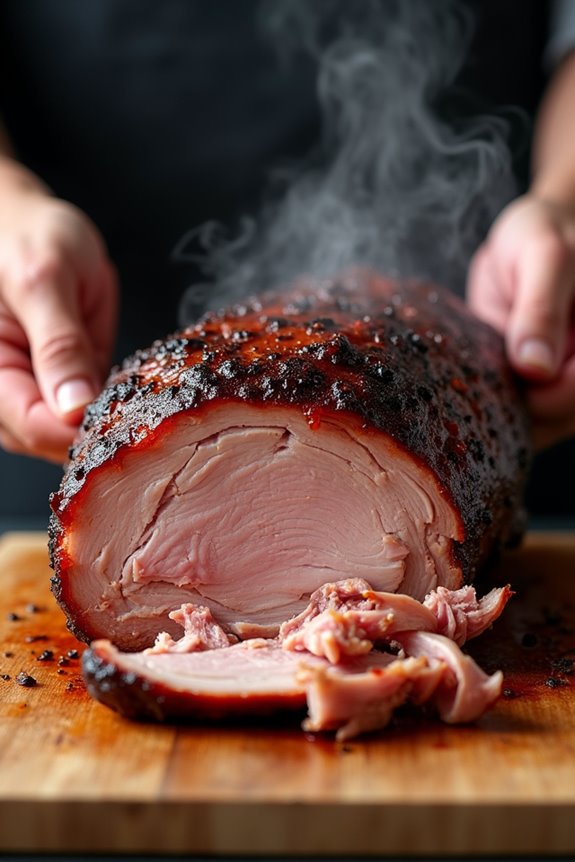
The key to pulling pork loin without ending up with dry, stringy meat is timing and technique. You’ll want to shred your meat directly in the slow cooker while it’s still sitting in those precious juices. Don’t pull it out and let it cool on a cutting board—that’s when dryness sneaks in.
Here’s what works: shred the pork loin right there in the sauce, then let it rest for a few minutes while soaking up all that moisture. This resting period is your secret weapon against chewiness. Make sure you’ve got enough sauce coating everything—it’s your insurance policy against dry, disappointing results. The sauce protects your shredded meat and keeps every bite tender and flavorful.
Freeze and Reheat Without Losing Moisture
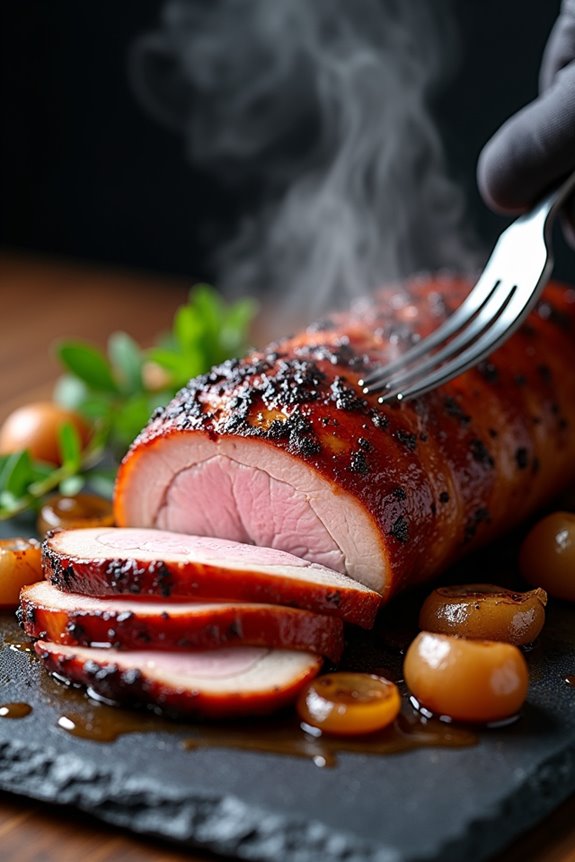
Because pulled pork loin freezes beautifully, you’ll want to make extra when you’ve got the slow cooker going. Freezing portions in airtight containers keeps them fresh for up to six months. Here’s how you’ll protect that moisture you worked hard to preserve:
Pulled pork loin freezes beautifully for up to six months in airtight containers—make extra when your slow cooker is running.
- Return shredded pork to its sauce before freezing for built-in moisture protection
- Add a splash of broth when reheating to prevent drying out completely
- Thaw overnight in your fridge instead of rushing the process
- Reheat gently over low heat, never scorching your meat
- Store refrigerated leftovers for three to four days maximum
When reheating, that broth becomes your secret weapon. It keeps your shredded pork tender and delicious, just like it was fresh. You’ve earned those leftovers—make them count.
Best Side Dishes and Serving Ideas
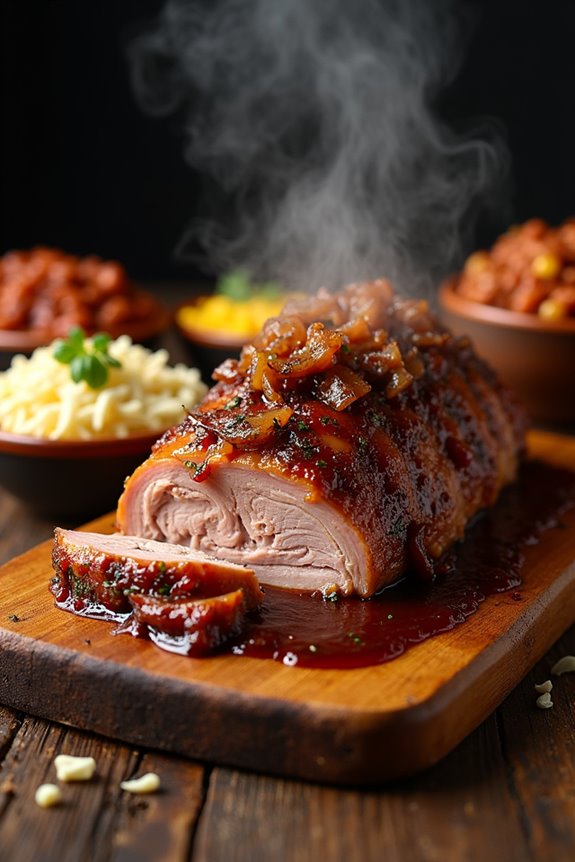
| Side Dish | Why It Works | Serving Size |
|---|---|---|
| Creamy coleslaw | Cuts through sauce richness | ½ cup per plate |
| Corn casserole | Adds sweetness and moisture | 1 cup serving |
| Buttered dinner rolls | Perfect for sandwiches | 2 rolls |
| Baked beans | Hearty and filling | ¾ cup per person |
Coleslaw’s crunch keeps things interesting, while corn casserole adds comfort. Don’t skip the rolls—they’re essential for proper pulled pork loin serving. Mix your tender, saucy meat right onto those buns, pile on coleslaw, and you’ve got yourself a meal that’ll make everyone at your table happy.