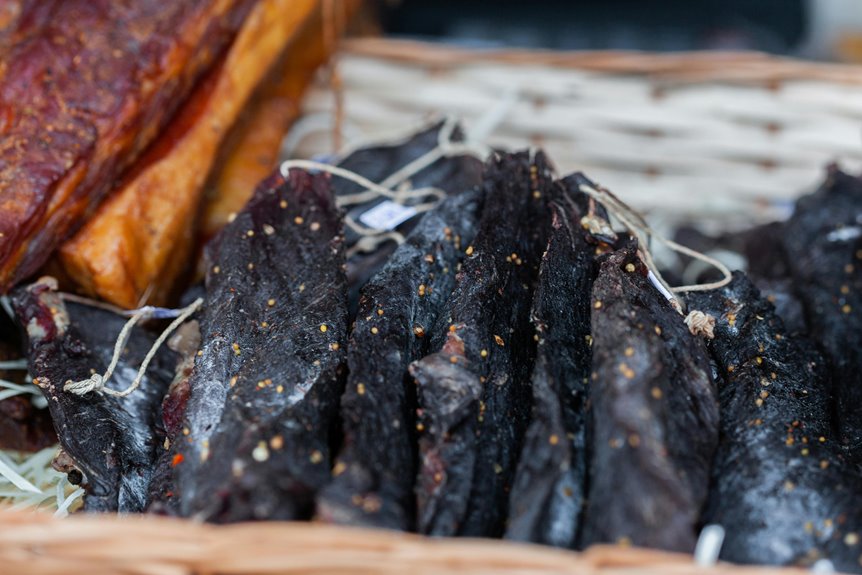
Yes, beef jerky goes bad, but way slower than fresh meat—that’s the whole point of drying it out. Unopened packages last six to twelve months in a cool, dry spot. Once you open it, though, you’ve got three to seven days before it spoils. Watch for mold, off odors, or weird texture changes. Moisture, heat, and oxygen are your enemies here. Store it right, and you’ll catch all the details on keeping yours fresh longer.
Does Beef Jerky Actually Expire?
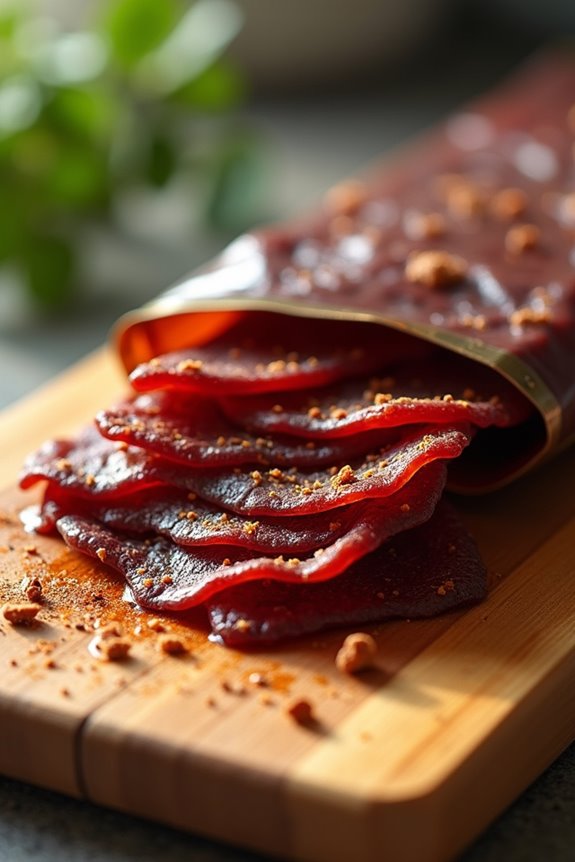
Once you open it, eat it within 3 to 7 days for best results. Watch for spoilage indicators like foul smells, visible mold, or weird texture changes. Proper vacuum sealing extends shelf life considerably. Homemade jerky’s different though—it needs refrigeration or freezing because it lacks commercial preservatives. Store-bought stuff handles shelf time better. Trust your senses more than dates.
How Long Does Unopened Beef Jerky Last?
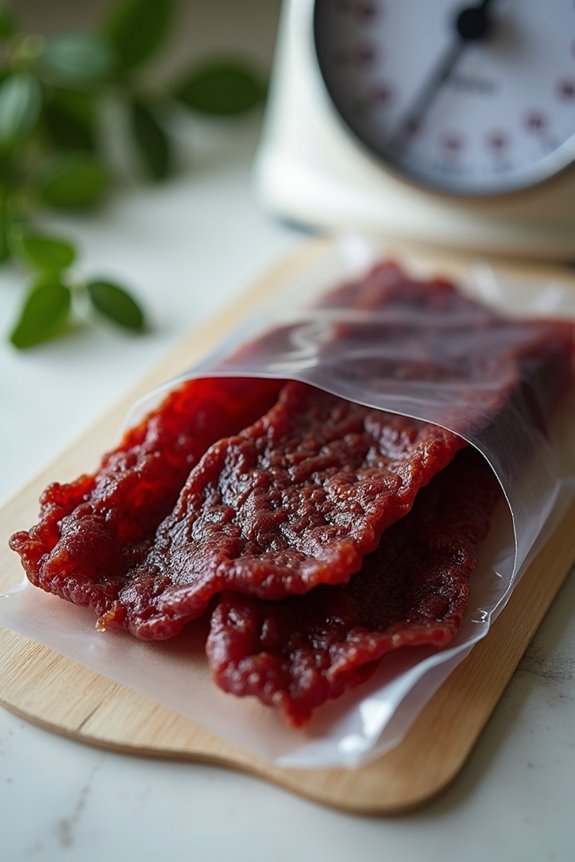
When you grab that unopened package of beef jerky from your pantry, you’re looking at a solid 6–12 months of shelf life if you’ve kept it in a cool, dry spot. That vacuum seal is your best friend here—it locks out air and moisture, which means your jerky stays fresher longer than once you crack it open. Don’t stress too much about the “best by” date either, because that’s really about quality, not whether your snack’s actually gone bad.
Vacuum-Sealed Storage Benefits
How long can you really keep that unopened beef jerky sitting in your pantry? You’ve got about 12 months, honestly. That vacuum seal is doing serious work for you. It keeps air exposure minimal, which means oxidation slows way down. Less air also prevents moisture from sneaking in and ruining your snack stash.
The best part? You don’t need to stress about the best-by date too much. That label’s really about quality and flavor, not immediate danger. Your unopened jerky stays safe for roughly a year if you store it in a cool, dry place.
Keep it away from sunlight and heat, and you’re golden. That vacuum seal basically puts your jerky into flavor-preservation mode. Pretty solid shelf life for a pantry staple, right?
Best-By Date Guidance
That date printed on your beef jerky package? It’s not actually a safety deadline. Instead, it indicates when your jerky tastes its absolute best—the peak flavor zone. Here’s the thing: unopened, vacuum-sealed jerky stays safe way longer than that date suggests, sometimes up to a year from packaging.
You’re basically working with storage duration as your real guide. Keep track of when you bought it and store it properly in a cool, dry spot. The best-by date gives you a helpful reference point, but don’t toss perfectly good jerky just because that date passed.
Instead, watch for actual spoilage signs. Check for off-odors, visible mold, or weird texture changes. Your nose and eyes are honestly better judges than any printed date ever will be.
Pantry Temperature Considerations
Since your pantry’s conditions matter way more than any printed date, let’s talk storage reality. Your beef jerky storage success depends heavily on pantry temperature. Ideally, you’ll want to keep it between 50–70°F for maximum shelf life. Heat is basically jerky’s worst enemy—it speeds up degradation and can compromise quality faster than you’d expect.
Most of us don’t have perfectly climate-controlled spaces, and that’s okay. Just avoid storing jerky near your stove, oven, or sunny windows. A cool, dark cabinet works great. If your kitchen gets genuinely hot during summer months, consider moving your unopened packages to a basement or closet.
Consistent pantry temperature matters more than perfection. Steady, cool conditions keep your beef jerky fresh longer. That’s honestly the secret.
What Happens to Beef Jerky After You Open It?
Once you tear open that package, you’re basically starting a countdown clock. Your beef jerky’s enemy? Air and moisture. The moment oxygen hits that meat, degradation kicks in. You’ve got about three to seven days before quality takes a nosedive.
Here’s what we recommend:
- Refrigerate immediately after opening to slow spoilage and keep flavors locked in
- Seal it tight using airtight containers or resealable bags to minimize air exposure
- Watch for red flags like off odors, visible mold, or suspicious softness that signals time’s up
Homemade jerky needs extra attention since it lacks commercial preservatives. Store-bought varieties last longer, but they’re not invincible either. Toss anything questionable—food poisoning isn’t worth the risk. Trust your senses; they’ll tell you when jerky’s done its job.
Signs Your Beef Jerky Has Gone Bad
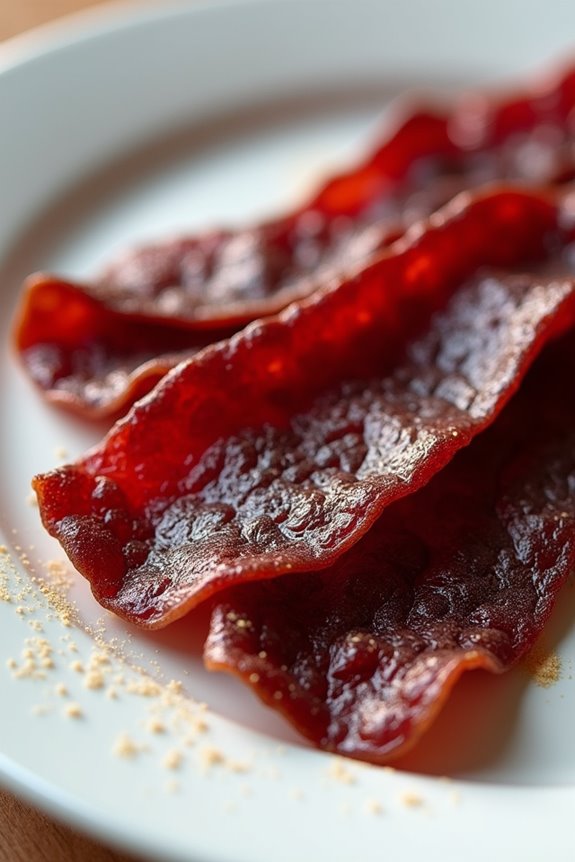
You’ll want to watch for visual red flags like white or black spots, patches of hair, or suspicious moisture on your jerky. Your nose is your best friend here—if you catch a strong, off-putting smell after opening, that’s your sign to toss it. Pay attention to texture too, because jerky that’s gone rock-hard or gotten oddly soft usually means it’s time to say goodbye.
Visual Spoilage Indicators
How can you tell if your beef jerky’s actually gone bad? Trust your senses—they’re your best friends here.
Look for visible mold or white and black spots on the surface. These fuzzy invaders mean it’s time to toss it. Discoloration that looks off or unnatural is another red flag you shouldn’t ignore.
Check for these warning signs:
- Mold growth anywhere on the jerky signals spoilage
- Odor changes like foul or sour smells mean it’s unsafe
- Texture shifts where it’s unusually soft or rock-hard
If your jerky smells funky or sour, that odor is telling you something important. Don’t second-guess yourself here. Your nose knows what’s up. When in doubt, throw it out—your stomach will thank you later.
Odor And Texture Changes
Bad odors are your jerky’s way of waving a red flag right in your face. A foul smell means spoilage, and you should toss it immediately. Don’t taste it—trust your nose instead.
| Sign | What It Means |
|---|---|
| Sour or rancid odor | Definite spoilage |
| Excessively hard texture | Gone bad |
| Soft and moist feel | Moisture damage |
| Off smell + odd texture | Discard immediately |
Texture changes signal spoilage too. Your jerky should feel dry and chewy, not unusually soft or rock-hard. Moisture retention means bacteria’s having a party in there. When odor, appearance, or texture seem off, you’ve got your answer. We all want that satisfying chew, but not when spoilage’s involved. Trust these signs—your stomach will thank you.
How Moisture, Heat, and Oxygen Speed Up Spoilage
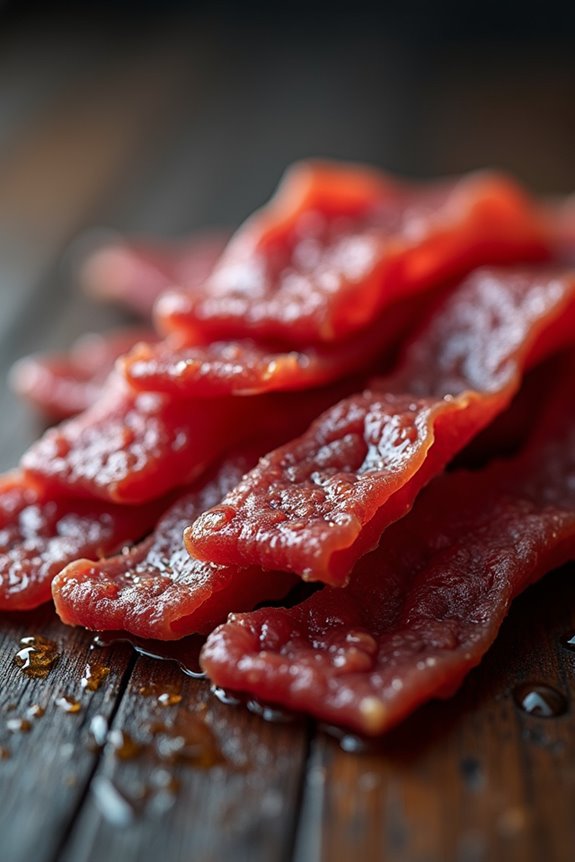
Ever wonder why your beef jerky goes bad faster in summer than winter? Three enemies work together to spoil your snacks: moisture, heat, and oxygen.
Three enemies—moisture, heat, and oxygen—team up to spoil your beef jerky faster in summer than winter.
When you expose jerky to moisture, bacteria and mold grow quickly. Heat degrades the proteins and fats, changing the taste and texture. Oxygen causes oxidation, making your jerky dry and stale. Here’s the tricky part—these three factors don’t just damage your jerky separately. They team up and create a spoilage speedway.
What you should know:
- Improper packaging lets air and moisture sneak in, ruining freshness faster
- Summer heat combined with humidity creates the perfect spoilage storm
- Opened containers facing these three factors deteriorate within days, not weeks
Keep your jerky in cool, dark, airtight containers. You’ll extend shelf life and actually enjoy every bite.
The Right Way to Store Unopened Jerky
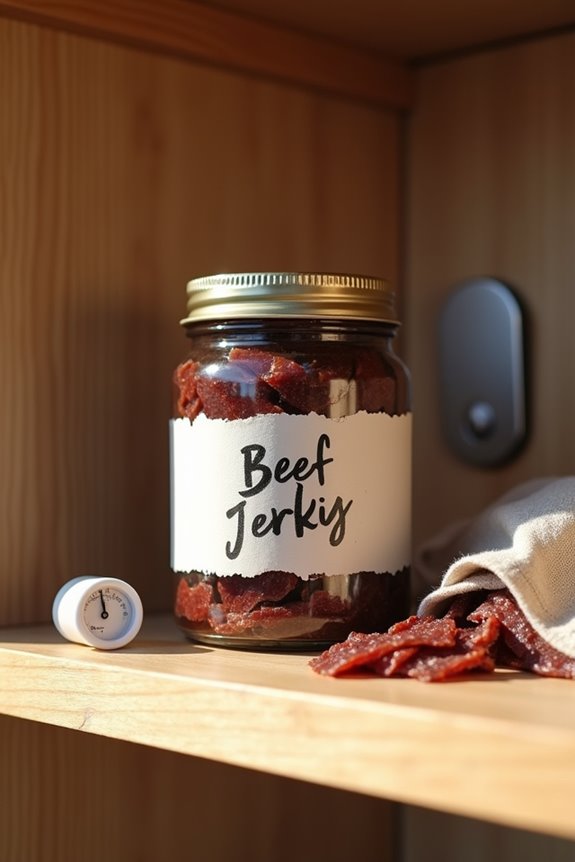
You’ll want to keep your unopened jerky in a cool, dry place away from direct sunlight and heat. Vacuum-sealed packages are your best friend here, since they lock out air and moisture that’d otherwise speed up spoilage. Store it in a pantry or cupboard rather than by a window, and you’ll easily stretch that 12-month shelf life.
Vacuum Sealing Maintains Freshness
How’s your beef jerky looking in the pantry right now?
Vacuum sealing is genuinely your best friend for keeping unopened jerky fresh. When you minimize air exposure, you’re basically hitting pause on spoilage. That vacuum-sealed bag you’ve got? It’ll keep your jerky good for about 12 months at room temperature.
Here’s what makes vacuum sealing so effective:
- Reduces oxygen that causes deterioration and flavor loss
- Keeps moisture out, preventing bacteria growth and staleness
- Maintains that fresh taste you loved from day one
Once you open it though, that sealed advantage disappears fast. You’ll want to refrigerate it or eat it quickly. If you transfer leftovers to an airtight container, you’re still protecting quality. Think of it as extending that fresh experience a little longer.
Cool, Dry Storage Locations
Now that you’ve got your vacuum-sealed jerky, where you put it matters just as much. Your pantry is your best friend here. Find a cool, dry spot away from direct sunlight and heat sources. Think the back of a cabinet, not above your stove. Moisture is the enemy of unopened jerky, so avoid damp areas like bathrooms. A pantry that stays around 60-70°F is perfect. Store your unopened packages on a shelf where they won’t get bumped around. This simple setup helps prevent air from sneaking in and keeps your jerky’s texture and flavor locked down for about 12 months. You’re basically creating the ideal environment for your jerky to stay fresh. Smart storage means you’ll actually enjoy every bite when you finally crack that package open.
How to Keep Opened Jerky Fresh Longer
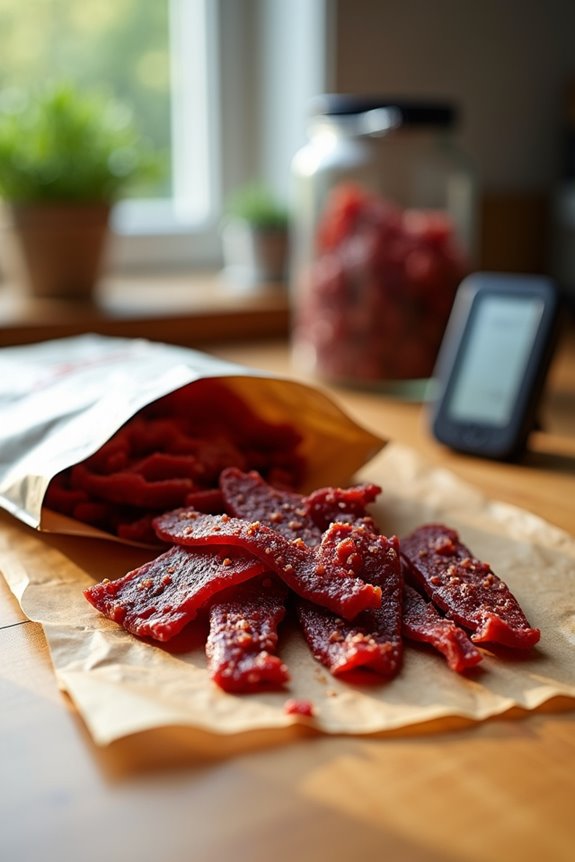
What’s the biggest threat to your opened beef jerky? Air exposure and moisture. You’ll want to act fast to keep your jerky fresh.
Air exposure and moisture are your opened beef jerky’s worst enemies—act fast to preserve freshness and flavor.
Here’s how you can extend freshness:
- Use airtight containers or resealable bags – Transfer your opened jerky immediately to minimize air contact and prevent staleness.
- Choose refrigeration when possible – Cold temperatures slow down spoilage and mold growth considerably.
- Try vacuum-sealing for maximum protection – This method extends shelf life substantially, though texture may shift over time.
Store your jerky in cool, dry places away from heat and humidity. Keep it in the original resealable bag if it seals well, or grab an airtight container from your kitchen. Within three to seven days of opening, you’ll want to finish it for best quality. Trust us—fresh jerky tastes way better than questionable jerky.
Should You Refrigerate or Freeze Beef Jerky?
So you’ve torn open a bag of jerky—now comes the storage question. Here’s the truth: refrigeration’s your best friend for opened jerky. Stick it in the fridge, and you’ll keep it fresh for three to seven days. That’s solid shelf life without any fuss.
Now, freezing? We’d skip it. Sure, you *can* freeze jerky, but it’ll mess with the texture and flavor. Not worth it, honestly.
Here’s what really matters: once you open that bag, air and moisture become your enemies. Refrigeration slows down spoilage way better than leaving it on your counter. If you somehow freeze it anyway, thaw it slowly in the fridge before eating. That keeps things safe and tasty.
Just refrigerate opened jerky. Your taste buds will thank you.
Homemade vs. Store-Bought: Why Shelf Life Differs
The storage rules we just covered? They work differently for homemade versus store-bought jerky. Store-bought jerky lasts 6 to 12 months unopened because factories use commercial preservatives and standardized processing. Your homemade batch? It’s shorter-lived, typically lasting only a week in the fridge.
Here’s why the difference matters:
- Dehydration quality – Factory equipment removes moisture uniformly, while home dehydrators sometimes miss spots that invite spoilage
- Sealable storage – Vacuum-sealed commercial packages beat ziplock bags at keeping oxygen and humidity out
- Processing consistency – Professional jerky gets tested and monitored; yours depends on your technique
Improper dehydration accelerates spoilage faster than you’d expect. Once opened, store-bought jerky stays fresh 3 to 7 days. Your homemade version needs refrigeration immediately. Both benefit from cool, dry spots, but factory shelf life simply wins here.
Why Beef Quality Affects Shelf Life
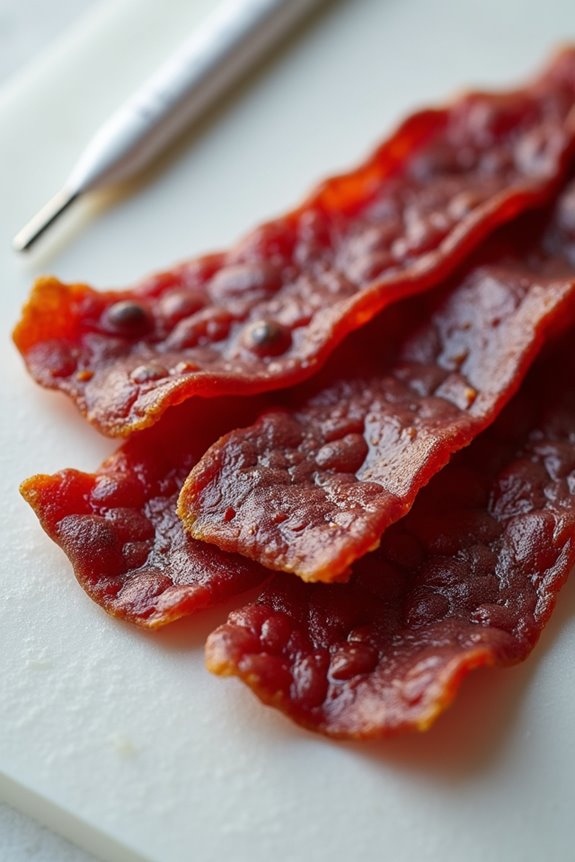
Ever notice how some jerky stays delicious for weeks while others gets sketchy after days? That’s beef quality doing the heavy lifting behind the scenes.
Premium lean beef holds moisture better than lower-grade cuts. When you choose quality beef, you’re getting consistent fat content. This consistency matters for storage conditions and how long your jerky actually lasts.
| Beef Quality | Moisture Retained | Spoilage Speed | Shelf Life |
|---|---|---|---|
| Premium 100% Lean | Low | Slow | 2-3 months |
| Standard Grade | Medium | Moderate | 4-6 weeks |
| Lower Quality | High | Fast | 1-2 weeks |
Higher-quality beef means fewer variables working against you. You’ll notice flavor and texture staying fresher longer. Your storage conditions work better when beef quality’s already optimized. That’s the jerky difference you’re actually tasting.
Beef Jerky Storage Mistakes That Speed Up Spoilage
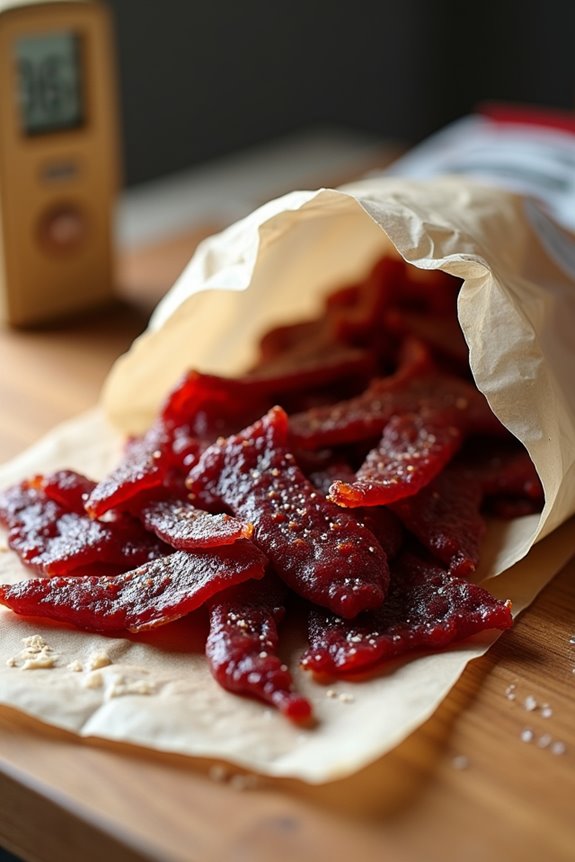
What’s really killing your jerky before you even open it? You’re probably making storage mistakes that nobody talks about.
Here’s what’s actually happening to your snacks:
- Air exposure ruins jerky faster than you’d think. Non-vacuum sealed bags let oxidation and moisture wreck the texture and flavor within days.
- Moisture exposure accelerates mold growth dramatically. Damaged packaging or missing silica gel packets invite humidity in, causing spoilage way faster than commercial jerky lasts.
- Airtight storage is your hidden weapon. Sealed, dry containers keep your jerky fresh significantly longer than warm kitchen counters ever could.
Stop storing opened jerky without refrigeration. Warm conditions speed mold growth instantly. Damp sealed containers? They’re basically spoilage factories. You’ve got this—just keep things dry, sealed, and cool.
When in Doubt, Throw Out Your Jerky
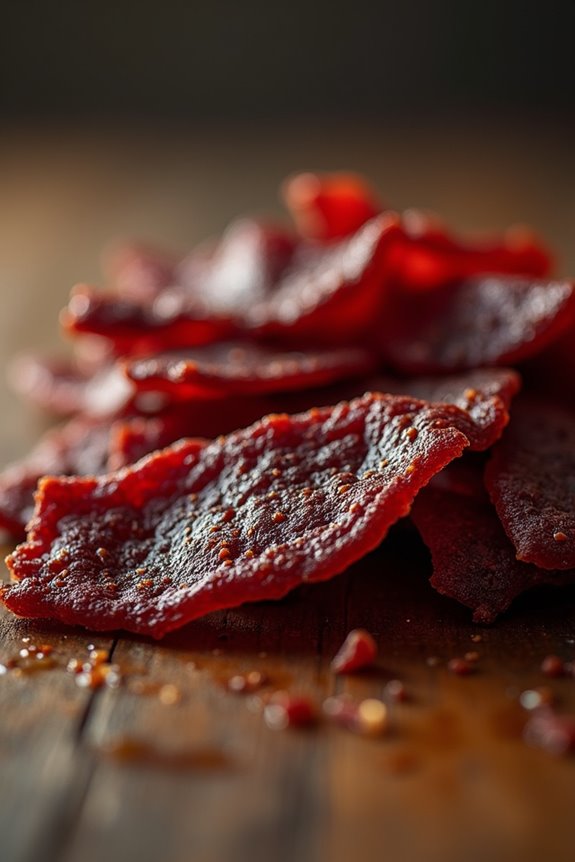
Got a pack of jerky that’s been sitting around? Here’s the thing: you’ve got to trust your gut. When you’re not sure if your jerky’s still safe, the smartest move is to discard it. Seriously, it’s not worth the risk.
| Warning Sign | What It Means |
|---|---|
| Visible mold | Definite spoilage, toss it |
| Soft or moist texture | Gone bad, throw it out |
| Foul or off odor | Don’t eat it, discard |
| Unusual colors | Spoilage has set in |
You’ve probably heard this before: when in doubt, throw it out. That’s solid advice. Damaged packaging, damp storage spots, or anything that feels off? Those’re all reasons to let it go. Your health matters way more than saving a few bucks on jerky. Trust yourself.