Yeah, you can totally cook beef steak straight from frozen—and it actually works better than thawing first. Grab a thick cut (1 to 1.5 inches), sear it hard in cast iron to build a crust, then finish it gently in a 275°F oven. Your frozen steak cooks more evenly because heat rises slowly from the outside in, preventing that overcooked-edges problem. Use a meat thermometer, aim for 140°F for medium-rare, then rest it a few minutes. Stick around to learn exactly how to nail the timing and seasoning.
Yes, You Can Cook Frozen Steak: And Here’s Why It Works
Why wait for your steak to thaw when you can cook it straight from the freezer? You absolutely can, and honestly, it works surprisingly well. Here’s the deal: a frozen steak develops a delicious crust when you sear it properly. That crust locks in flavor and keeps things juicy inside. The secret? Use thicker cuts, around 1 to 1.5 inches. They’re way more forgiving than thin steaks. You’re less likely to overcook the inside while getting that perfect brown exterior. Think of it like this: searing creates a protective barrier. Then you finish cooking with gentler heat. Your frozen steak can actually turn out just as tasty as a thawed one. No special equipment needed—just a solid technique and a bit of patience.
Frozen Steak Cooks More Evenly Than Thawed
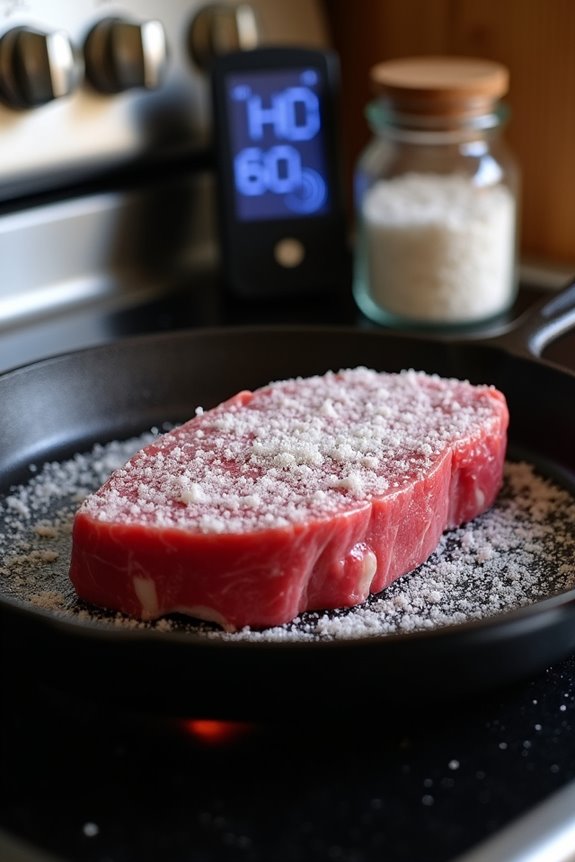
frozen steak actually cooks more evenly than thawed steak. When you start from the frozen state, the internal temperature rises gradually and steadily. This means you’re less likely to overcook those outer layers while waiting for the center to catch up.
You’ll want to use thicker cuts—around 1 to 1.5 inches works great. Try searing your steak on high heat first, then finish it on indirect heat or in a low oven. This two-zone approach distributes heat more uniformly throughout the meat.
Here’s the real payoff: use a meat thermometer to guide your timing. After cooking, let your steak rest so the juices redistribute evenly. You’ll end up with a more tender, juicier result than you’d expect from frozen.
Choose Thick Cuts for Frozen Steak
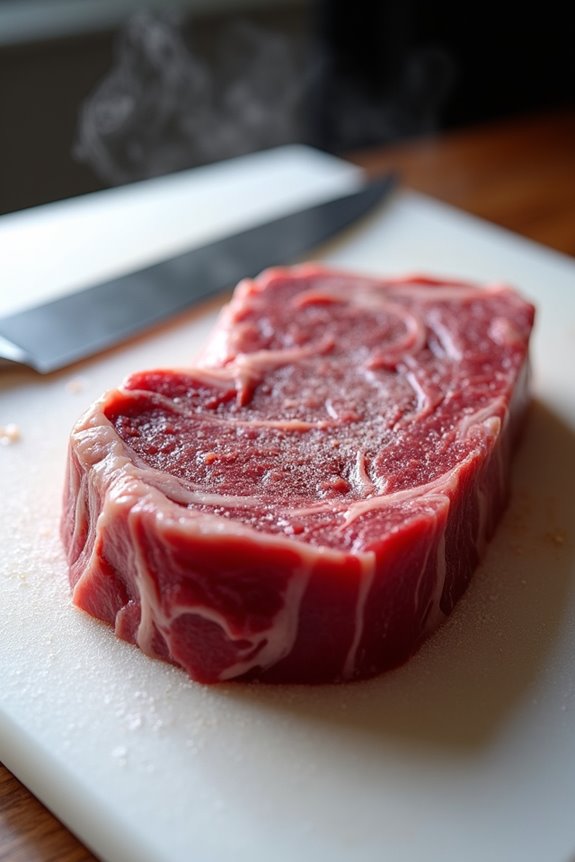
How thick should your steak actually be? Here’s the thing: you’ll want thick cuts for frozen cooking. We’re talking 1 to 1.5 inches minimum. Why? Because thicker steaks are genuinely a game-changer for frozen-to-cook methods.
Here’s what thick cuts do for you:
Thick cuts cook evenly, retain moisture better, and let you sear hard first then finish gently without overcooking inside.
- They cook evenly from edge to center without drying out the exterior
- They retain moisture better during the frozen transition, keeping things juicy
- They let you sear hard first, then finish gently without overcooking inside
You’ve got solid options here too. Porterhouse, ribeye, and T-bone steaks all work wonderfully. Their size and marbling handle the frozen-cooking process like champs. Thinner steaks? They’ll overcook on the outside before the inside thaws properly. Trust us—going thick makes this whole process easier and tastier.
Cast Iron and Oven: The Easiest Method
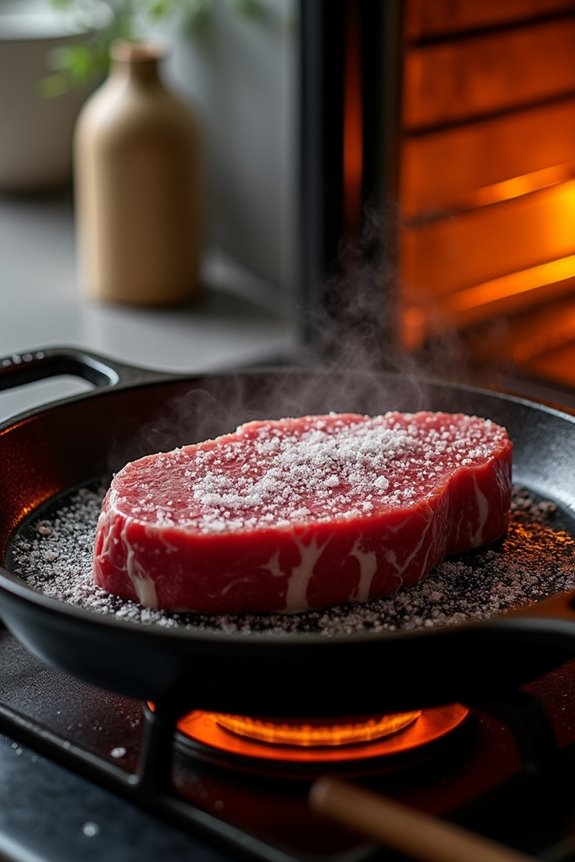
You’ll want to start with a screaming-hot cast iron skillet, searing your frozen steak for several minutes per side to lock in that delicious crust. Then you’ll transfer the whole pan to your oven set at 275°F, letting it finish cooking for about 35–45 minutes while you use a meat thermometer to nail that perfect 140°F for medium-rare. Finally, you’ll rest your steak for a few minutes before serving, giving those juices time to redistribute and making every bite way more tender and flavorful.
Searing And Oven Finishing
When you’ve got a frozen steak and a cast iron skillet, you’re basically already done—the hard part’s behind you. Here’s your straightforward game plan:
- Sear your frozen steak over high heat for 4–5 minutes per side, creating that gorgeous deep crust
- Rotate 90 degrees and sear again for another 4–5 minutes to nail those cross-hatch marks
- Transfer to a 275°F oven for 35–45 minutes until your thermometer hits 140°F
The beauty? You’re not fussing with thawing overnight. Your cast iron does the heavy lifting by locking in flavor while the oven finishes cooking gently inside. Grab a thermometer—it’s your best friend here. Once you hit target temperature, rest that steak for 2–3 minutes. The juices redistribute, and you’ll slice into perfectly cooked meat every single time.
Temperature Control And Timing
The real magic happens when you stop fighting the frozen state and work with it instead. You’ll want a reliable meat thermometer—your best friend here. Sear that frozen steak hard on cast iron for a killer crust. Then slide it into a 275°F oven and let time do the work. You’re aiming for an internal temperature of about 140°F for that perfect rare-to-medium-rare sweet spot. This temperature control method takes roughly 35–45 minutes in the oven phase. The slower thaw actually helps you nail even doneness throughout. After cooking, rest your steak for 2–3 minutes. Those few minutes let juices redistribute, making every bite taste incredible. You’ve got this.
Grill Frozen Steak Direct, Finish Indirect Heat
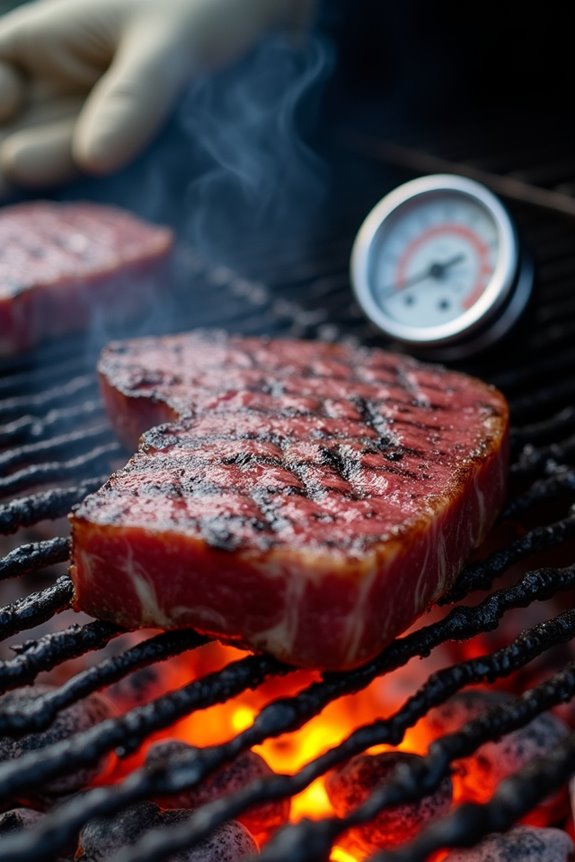
Two-zone grilling is basically your covert tool for frozen steak success. You’re setting yourself up for restaurant-quality results by using this method.
Here’s your game plan:
- Sear your frozen steak on direct, high-heat side for 10–14 minutes total
- Move it to the indirect, lower-heat zone to finish cooking through
- Pull it at 5°F below target (like 125°F for 130°F final) due to carryover cooking
Season generously with salt and pepper before grilling. The seasoning sticks better as your steak thaws. Use an instant-read thermometer to nail your doneness—no guessing needed.
Rest your steak after removing it from heat. This redistributes juices throughout, making it juicy and tender. You’re basically creating roast beef-level tenderness on the grill. That’s the move that separates good steaks from great ones.
Reverse Sear Frozen Steak for Even Doneness
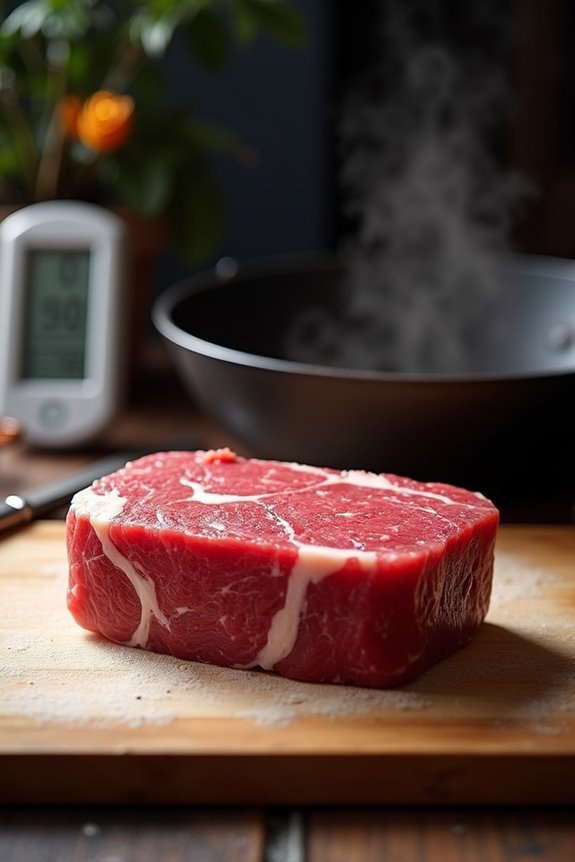
If you’ve mastered the two-zone grill method, you’re ready for an even more reliable approach. The reverse sear technique delivers exceptional results with frozen steak cooking. You’ll start with a hot cast iron pan to build that gorgeous crust. Then you’ll transfer your steak to a 275°F oven for 35–45 minutes.
| Step | Temperature | Time |
|---|---|---|
| Sear | High heat | 3–4 minutes per side |
| Oven | 275°F (130°C) | 35–45 minutes |
| Rest | Room temp | 2–3 minutes |
Use a meat thermometer to hit 140°F for rare to medium-rare doneness. This method gives you an evenly cooked interior with a perfectly browned exterior. You’ll rest your steak briefly afterward, letting juices redistribute beautifully throughout. It’s honestly the most foolproof way to cook frozen steaks.
Which Method Should You Choose?
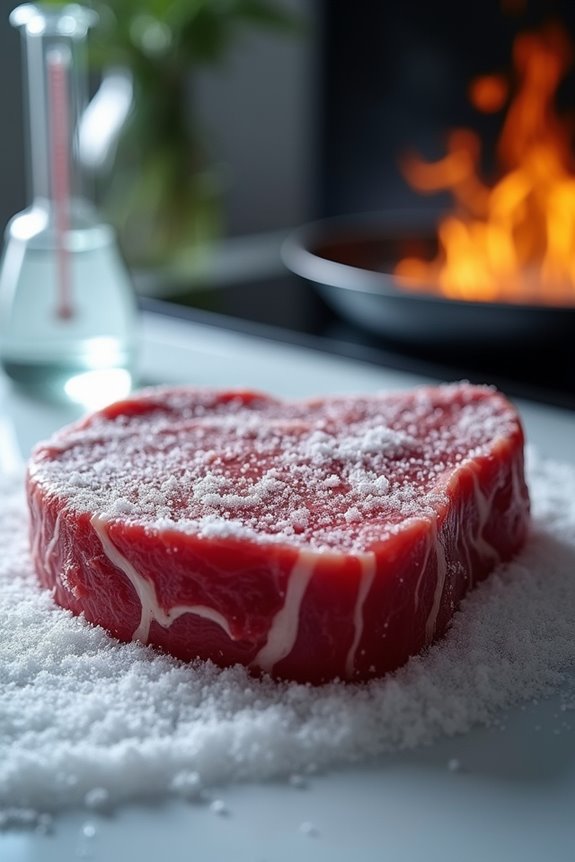
How do you know which frozen steak technique works best for your kitchen?
You’ve got solid frozen steak cooking methods at your fingertips now. Here’s what matters when deciding your approach:
- Your equipment – Got an oven? Try reverse sear. Have a grill? Direct heat works great.
- Your timeline – Need speed? Hot pan searing finishes faster. Want precision? Low-and-slow oven time wins.
- Your comfort level – Thermometers make anyone confident. Skip the guesswork.
Pick thicker cuts (1 to 1.5 inches) regardless of method. They’ll stay juicier while cooking through. Monitor that internal temperature, pulling 5°F early for carryover cooking. Then rest your steak 2–3 minutes.
Honestly? You can’t mess up too badly with either approach. Start with what feels natural for your kitchen setup. You’ve got this.
Avoid These Five Common Frozen-Steak Mistakes
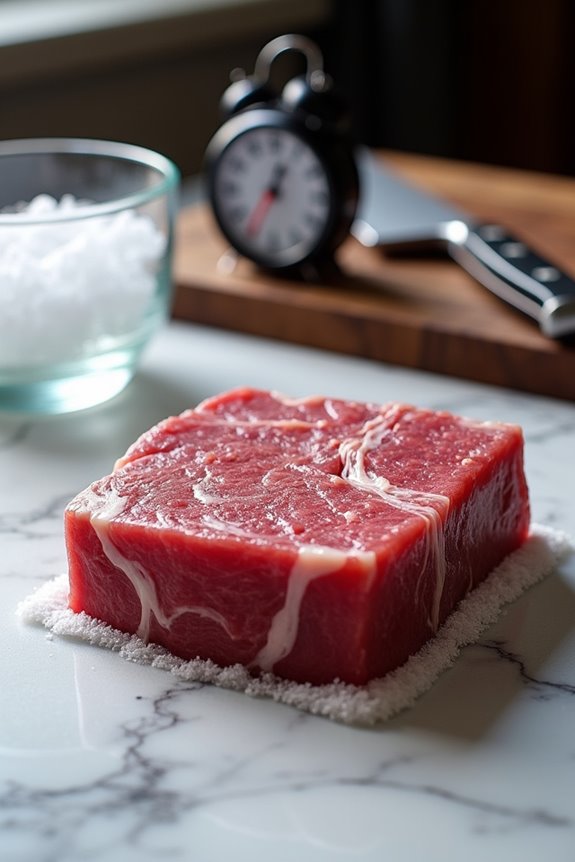
Even the best frozen steak technique falls apart when you make these five common mistakes.
Even the best frozen steak technique falls apart when you make these five common mistakes.
First, you’ll under-season if you skip the salt-and-pepper crust during your initial sear. Frozen steak preparation demands aggressive seasoning since the cold surface resists it.
Second, don’t skip your thermometer—internal temps rise slower, and overcooking happens fast without monitoring.
Third, crowding your pan traps moisture and kills that golden crust you’re after. Cook one or two steaks with plenty of breathing room.
Fourth, don’t expect your steak to thaw visibly while searing. Maintain high heat throughout, then finish with indirect heat.
Finally, resting matters more than you’d think. Those five minutes let juices redistribute, making your steak genuinely tender and juicy instead of disappointingly dry.
Check Internal Temp to Avoid a Frozen Center
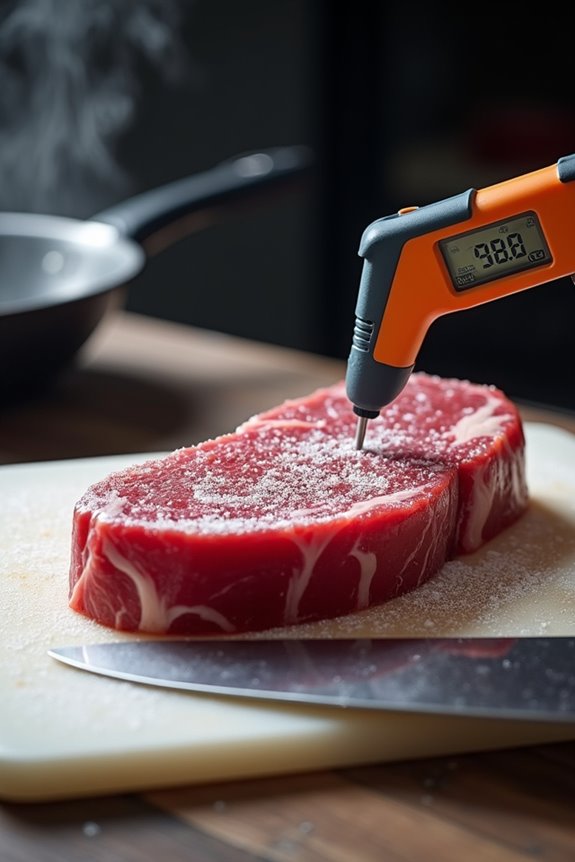
You’ll want to grab an instant-read thermometer and check the thickest part of your steak regularly. Aim for about 5°F below your target doneness—so around 120°F for medium-rare—then let it rest and finish cooking. This simple habit stops you from ending up with a cold, icy center while the outside’s already overdone.
Thermometer Placement Matters
Because frozen steaks cook unevenly, your thermometer becomes your best friend in the kitchen. Thermometer placement matters more than you’d think when cooking from frozen.
Here’s what you need to do:
- Insert the thermometer into the thickest part of your steak
- Avoid bones and fat pockets that skew your reading
- Check the temperature before your final cooking stage
You’re aiming for accuracy, not guessing. A frozen steak’s center warms slower than the edges, so reading the thickest section tells you what’s really happening inside.
Position your thermometer horizontally through the meat’s center for the most reliable measurement. This prevents hitting bone or fat, which gives false readings.
Once you nail thermometer placement, you’ll confidently cook frozen steaks to perfection every time. You’ve got this.
Target Temperature Guidelines
What’s the magic number when you’re cooking a frozen steak? Your internal temperature target. You’ll want to pull that steak off heat about 5°F below your goal. Why? Residual heat keeps cooking it while it rests.
Here’s what you’re aiming for: Rare hits 115–120°F, Medium-Rare lands at 120–125°F, Medium sits around 130–135°F, Medium-Well reaches 140–145°F, and Well Done goes 150°F and beyond.
Frozen steaks need extra attention because that thickest part takes longest to cook through. Check your internal temperature frequently—especially with steaks thicker than an inch. You’ll avoid that disappointing frozen center everyone dreads. Then rest your steak 2–3 minutes. This lets juices redistribute and temperature climb naturally to your target without overcooking the middle.
Season After Thawing Begins for Better Adhesion
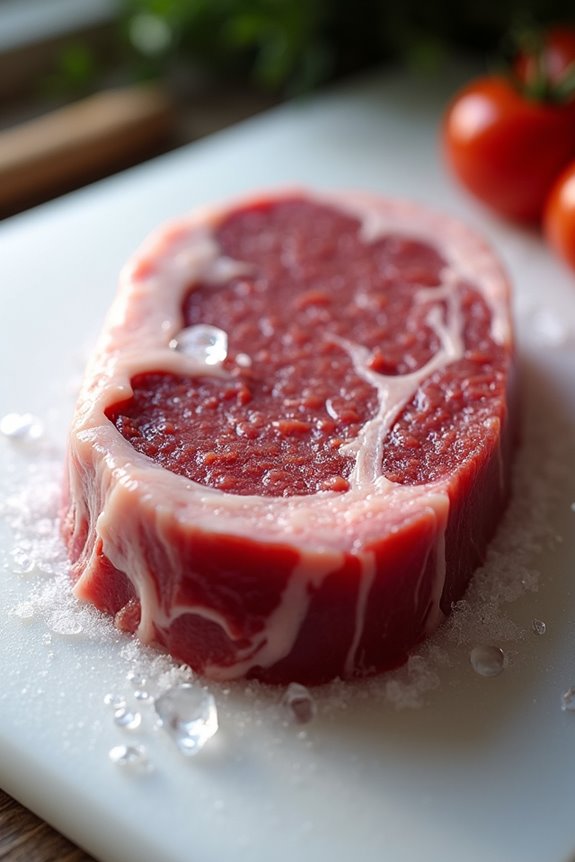
seasonings stick way better once thawing starts. As your steak begins warming up, moisture naturally migrates to the surface. That’s when salt and pepper actually grip the meat instead of sliding around on ice.
Try this three-stage seasoning approach:
- Apply light seasoning before thawing begins
- Pat the surface dry once partially thawed
- Add your full seasoning blend after drying
The frozen surface repels seasonings like water off a duck’s back. But once you’ve got that slight thaw happening? You’re golden. Pat away that surface moisture, and you’re ready for your complete seasoning application. Your crust’ll be way more flavorful and even. This simple timing shift transforms your results dramatically.
Rest, Slice, and Maximize Juiciness
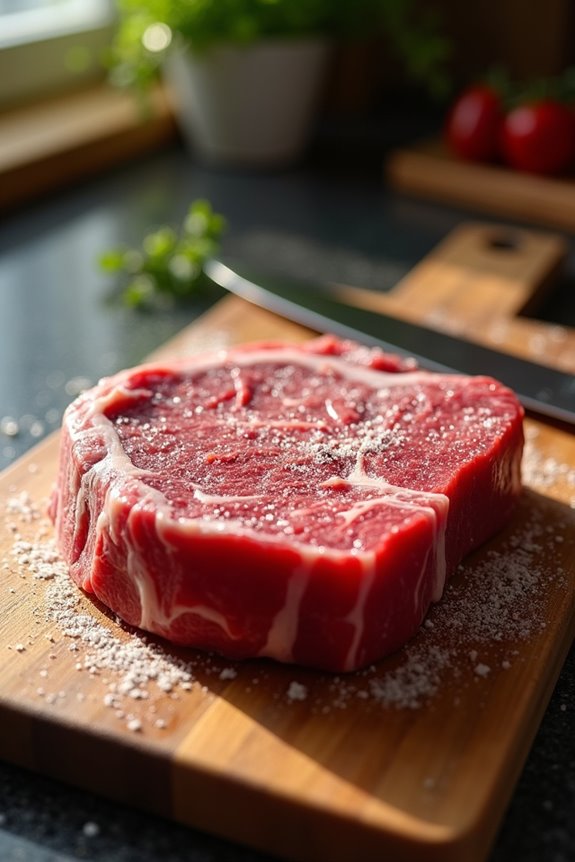
You’ll want to let your frozen steak rest for 2–3 minutes after cooking. This brief pause lets the juices redistribute throughout the meat, making it genuinely juicier when you slice into it. Once you cut in, you’ll see a warm, evenly cooked center that’ll prove the inside isn’t cold—plus, you can use those pan drippings to add even more moisture back in.
Why Resting Matters Most
- Redistribute juices throughout the meat instead of pooling on your plate
- Continue rising in temperature so you pull it 5°F below your target to prevent overcooking
- Set and rehydrate the crust for better texture when you slice
When you skip resting, you’re basically inviting all those flavorful juices to escape. Slice too early and you’ll get a dry edge with a wetter center—nobody wants that. Wait it out, and you’ll notice noticeably higher juiciness and tenderness. That’s the belonging moment: you’ve mastered steak.
Slicing Technique for Tenderness
Now that your steak’s had time to relax and those juices have settled back in, it’s time to slice it properly—and yes, there’s definitely a right way.
You’ll want to slice across the grain. This breaks up muscle fibers, making each bite feel more tender. After your 2–3 minute resting period, grab a sharp knife and cut at a slight angle. This technique maximizes tenderness while keeping everything juicy.
| Slicing Step | Why It Matters | Your Result |
|---|---|---|
| Wait after resting | Juices redistribute evenly | Juicier bites throughout |
| Slice across grain | Breaks muscle fibers | More tender texture |
| Use sharp knife | Clean cuts happen | Better juice retention |
| Cut at angle | Shows doneness beautifully | Impressive presentation |
| Serve immediately | Heat stays optimal | Perfect eating experience |
The difference between sloppy and stellar is really just knowing this one move.
Preserving Juices During Service
What’s the point of cooking a perfect steak if all those delicious juices run out onto your plate?
You’ve got this. Here’s how to keep that juiciness locked in:
- Rest your frozen-to-cook steak for 2–3 minutes after cooking
- Slice only after resting, never during the cooking process
- Finish on indirect heat or in a lower oven to prevent overcooking
That resting period matters more than you’d think. While your steak sits, residual heat redistributes the juices throughout. This simple step prevents moisture from escaping the moment you cut in.
When you do slice, you’re preserving interior moisture that’d otherwise vanish fast. Frozen-to-cook methods actually deliver higher juiciness than thawed steaks when you follow these steps. You’ll notice the difference immediately—tender, juicy bites every single time.
Fix Uneven Doneness and Weak Crusts
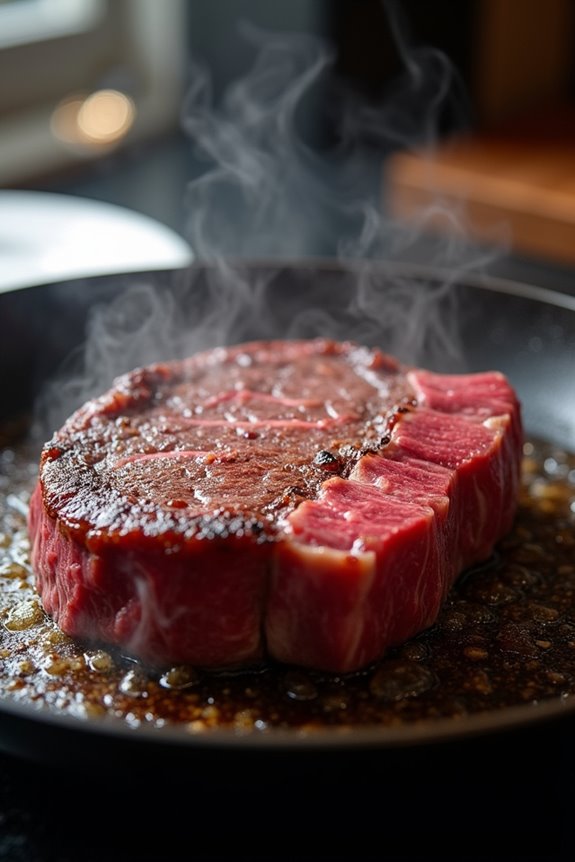
cooking frozen steak straight through isn’t going to cut it.
You’ll end up with a weak crust and an undercooked center—nobody wants that. Instead, use a two-zone setup. Start with a hot direct-heat sear to build that golden crust you’re craving. Then move to indirect heat to finish cooking through evenly.
Thicker cuts (1–1.5 inches) especially benefit from this approach. The longer indirect phase prevents your center from staying raw while your outside burns.
Here’s your steak temp strategy: cook to about 5 degrees below your target doneness. Carryover cooking will push it the rest of the way during your 2–3 minute rest. This resting period also redistributes juices, giving you a better crust and juicier results overall.