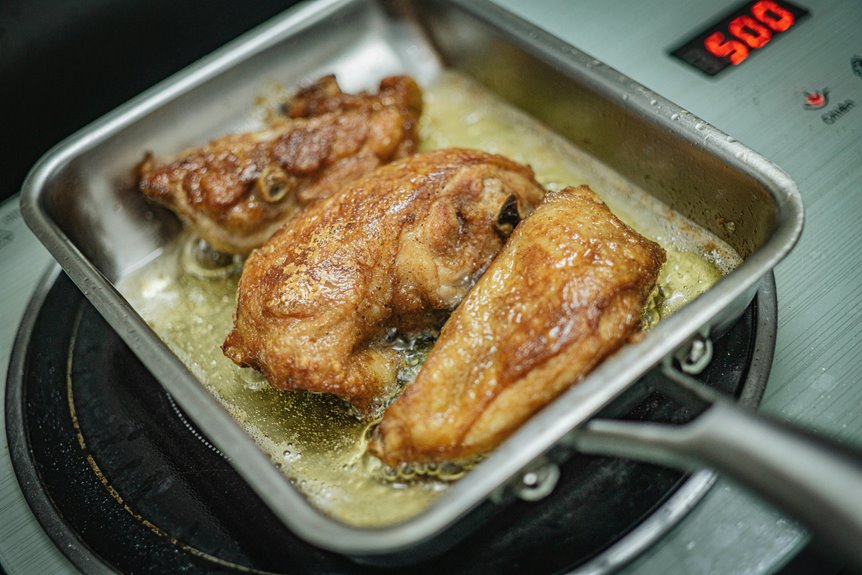
Yeah, you can totally fry chicken in extra virgin olive oil—it’s actually better than neutral oils. Heat your oil to 325–350°F in a heavy pan, dry your chicken completely first, then dredge it in seasoned flour with cornstarch. Fry cutlets 3–4 minutes per side until they hit 165°F, then drain on a wire rack. The monounsaturated fats and antioxidants keep the oil stable while giving you a crispier, more flavorful crust. Want the real secrets to perfect results? There’s more to know about timing and technique.
Yes, You Can Fry Chicken in Extra Virgin Olive Oil
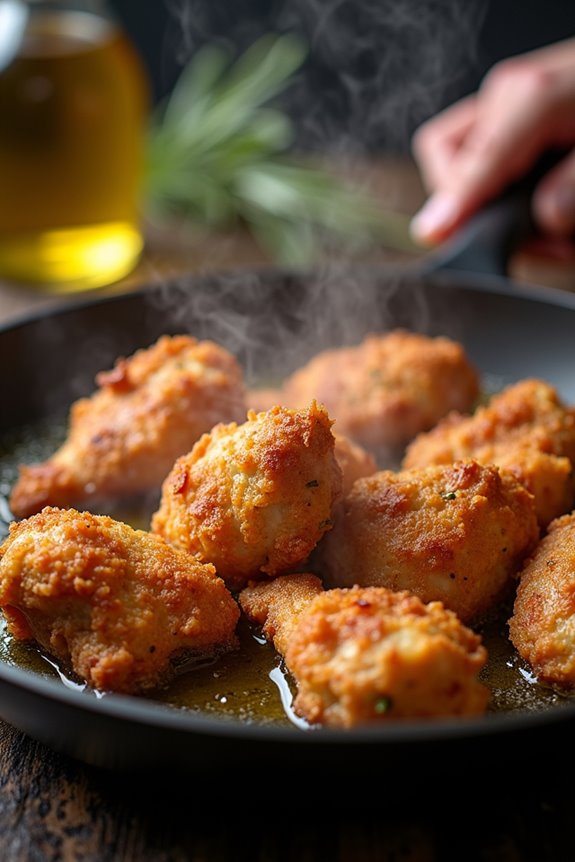
Why wouldn’t you fry chicken in extra virgin olive oil? You absolutely can, and honestly, you should consider it.
Extra virgin olive oil works great for frying chicken. The USDA actually recommends it for deep frying. You’re not breaking any cooking rules here—you’re actually joining a smarter group of home cooks.
Extra virgin olive oil works great for frying chicken—the USDA recommends it, and you’re joining smarter home cooks.
Here’s the thing: extra virgin olive oil isn’t just neutral fat. It brings real flavor to your chicken. Those polyphenols and monounsaturated fats create a crisp crust while enhancing the chicken’s taste. You’ll notice the difference immediately.
The best part? You can reuse extra virgin olive oil two to three times after straining and storing it properly. That makes it economical too.
You’ve got permission to fry chicken this way confidently.
Why Extra Virgin Olive Oil Outperforms Neutral Oils
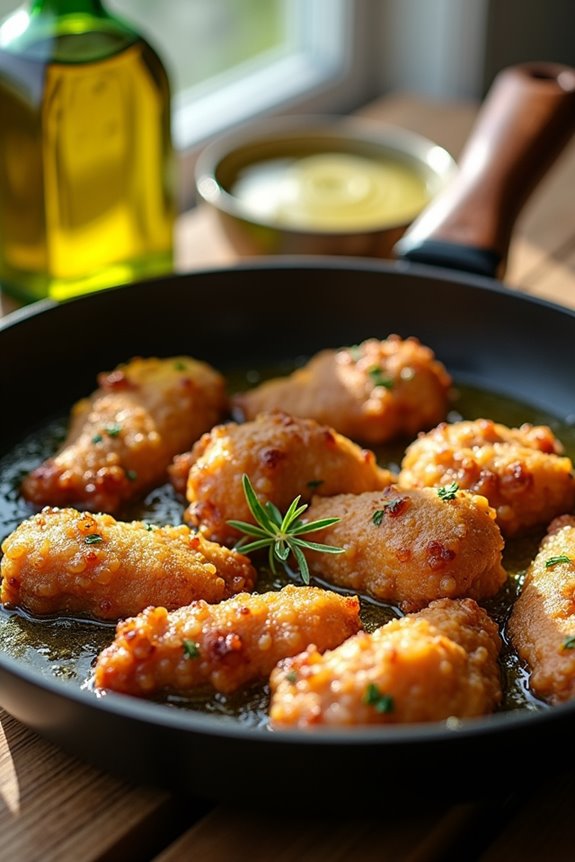
When you fry chicken in extra virgin olive oil, you’re actually getting fruit juice working for you. Unlike neutral oils that just sit there doing their job, EVOO brings real flavor plus monounsaturated fats that handle heat better than you’d think. You’re also getting polyphenols and antioxidants that stick around during frying, giving you a crispier crust and keeping things more stable in the pan.
Flavor Fruit Juice Advantage
There’s something almost magical about what extra virgin olive oil does to fried chicken.
You’re not just cooking with oil—you’re seasoning with liquid gold. Unlike neutral oils, olive oil brings actual flavor to your bird. Think of it as fruit juice coating your chicken from the outside in.
Here’s what you’re really getting:
- A subtle richness that makes your crust taste more interesting
- Polyphenols and antioxidants that stabilize during frying
- Flavor depth that refined oils simply can’t match
Your neutral oil? It’s basically invisible. Your olive oil? It whispers sophistication into every bite. The monounsaturated fats also give you a healthier option without sacrificing crispiness.
You’ll notice the difference immediately. That golden exterior tastes better. Your chicken feels special because it is. That’s the real advantage olive oil brings to your kitchen.
Monounsaturated Fat Profile
Extra virgin olive oil’s got something most neutral oils don’t: a fat structure that actually holds up under heat. You’re working with monounsaturated fats, which resist breaking down during frying way better than polyunsaturated alternatives.
| Fat Type | Stability | Reusability |
|---|---|---|
| Monounsaturated | High | Better |
| Polyunsaturated | Lower | Limited |
| Saturated | Highest | Good |
Here’s why this matters for your fried chicken: monounsaturated fats create fewer harmful byproducts when heated. You’ll also get antioxidants and polyphenols that stick around throughout cooking, protecting your oil’s integrity.
Unlike neutral oils that degrade quickly, EVOO actually lasts longer when you strain and store it properly. You’re not just frying chicken; you’re doing it with an oil that genuinely protects itself and your food.
Polyphenols And Antioxidant Content
Here’s what you’re getting with EVOO:
- Antioxidant shields that fight oxidative breakdown under high heat
- Flavor protection that keeps your chicken tasting rich and fruity, not stale
- Stability boost from compounds refined seed oils lost during processing
When you heat neutral oils, they degrade faster because they’ve got minimal antioxidant defense. Your EVOO’s polyphenols actively inhibit that degradation process. You’re essentially frying with an oil that resists breaking down better than those refined alternatives. That’s the real advantage—not just taste, but actual chemical resilience.
Oil Stability Under Heat: What the Science Shows
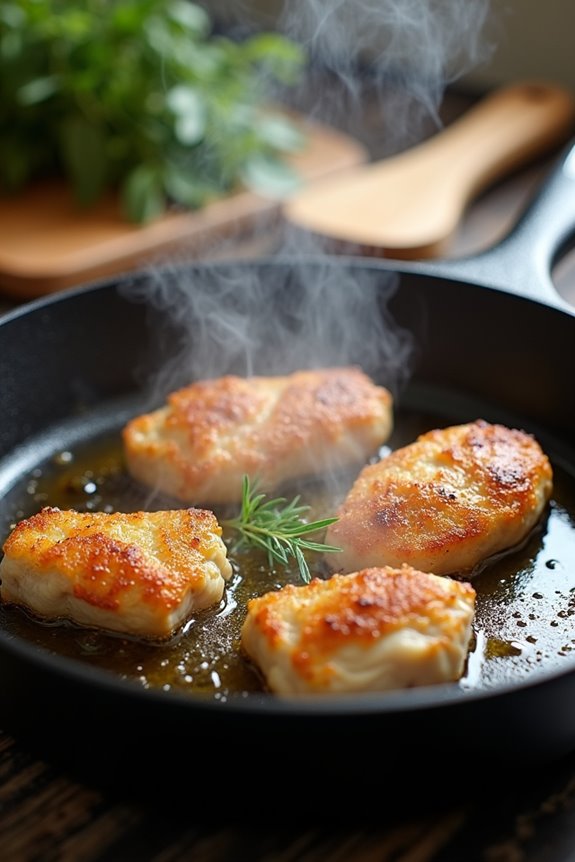
When you heat EVOO, you’re working with a fat that’s naturally built to handle it. The oleic acid and antioxidants in quality virgin oil slow down oxidation, which means you’ve got more stability than you’d expect. Your refinement level matters too—less processed EVOO keeps more protective antioxidants that help it stand up to frying temperatures around 325–350°F.
Fatty Acid Composition Matters
- Oleic acid dominates – this monounsaturated fat resists breakdown during heat better than unstable polyunsaturated alternatives
- Natural antioxidants protect – extra virgin varieties keep protective compounds that prevent rancidity and harmful byproducts
- Balanced fatty acid profile – you get flavor *and* integrity without excessive oxidation risk
Think of it like this: you’re not just buying oil; you’re buying built-in heat protection. Extra virgin olive oil’s antioxidant content acts as a bodyguard against breakdown. That’s why moderate frying temperatures around 325–350°F work beautifully with quality EVOO. You’re choosing the smarter oil.
Antioxidants Enhance Heat Tolerance
Extra virgin olive oil’s real superpower isn’t just its flavor—it’s the antioxidants packed inside. These natural compounds work like bodyguards for your oil during frying. When you heat EVOO, its antioxidants actively fight off oxidation, which would normally break down the oil and create off-flavors. This is why EVOO handles chicken-frying temperatures around 325–350°F better than you’d expect. The antioxidants help prevent those harmful byproducts that form when oils degrade repeatedly. You’re essentially getting protection built right into the bottle. That’s genuinely helpful because it means you can reuse your frying oil safely within recommended limits. Pretty cool, right? Your fried chicken benefits from this stability too, staying crispy without picking up that stale-oil taste.
Refinement Level Impacts Stability
not all olive oils handle heat the same way. When you’re choosing oil for frying chicken, refinement level makes a real difference in how well it performs.
Extra virgin olive oil retains way more protective polyphenols and antioxidants than refined versions. This matters because:
- Extra virgin varieties preserve their antioxidants, which shield the oil during heating
- Refined olive oils lose these protective compounds during processing, reducing heat tolerance
- Higher antioxidant content directly extends your oil’s stability at frying temperatures
Think of it like this: extra virgin is the premium choice for frying. Its natural defenses work harder to protect against breakdown. You’re basically getting built-in insurance against rancidity. Refined oils lack this protection, so they deteriorate faster when heated. For frying fried chicken successfully, choosing extra virgin gives you better results and quality.
Selecting Frying Olive Oil: Grade and Freshness
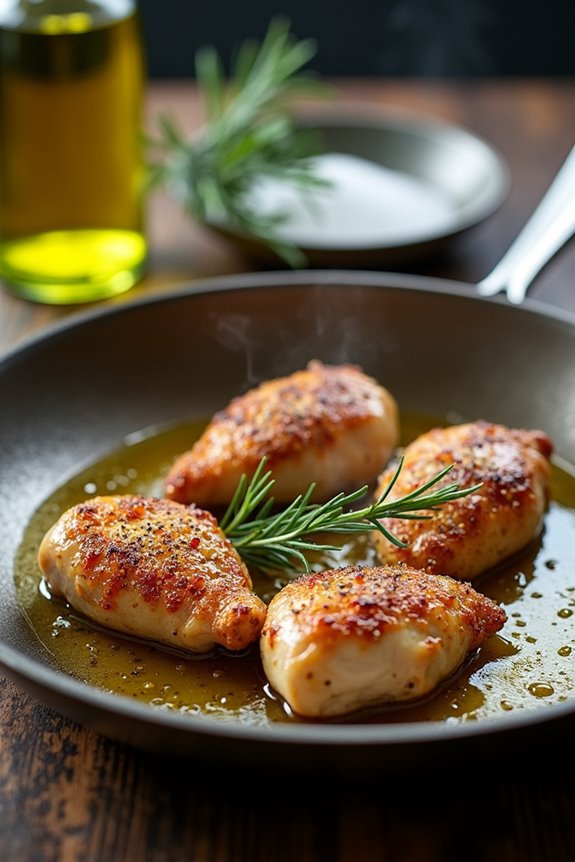
Which olive oil should you actually grab from your pantry?
You’ll want extra virgin olive oil that’s fresh and recently bottled. Check the harvest date on the label—oils from the current year work best. Older bottles lose their antioxidant protection, which means they break down faster under heat.
Fresh extra virgin olive oil with a recent harvest date breaks down slower under heat and maintains better antioxidant protection.
Fresh EVOO gives you better stability and flavor when frying chicken. You’re looking for oils bottled within the last year, ideally in dark glass bottles that protect against light damage.
Skip oils sitting on shelves for years. That degraded oil won’t protect your food as well and tastes flat. Your chicken deserves better.
Quality matters here. A mid-range extra virgin olive oil beats a cheap, aged bottle every time. You’re investing in both taste and performance.
The Dry Dredge: Why Moisture Is the Enemy
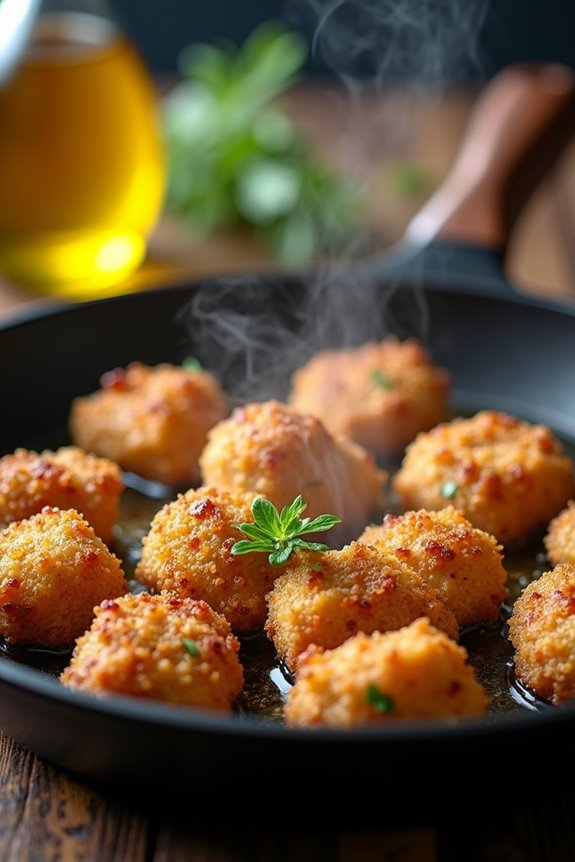
Why’s your chicken turning out greasy and soggy instead of crispy and golden? The culprit’s probably hiding right on your bird’s surface: moisture. Here’s why drying matters before you dredge:
- Moisture creates steam during frying, which blocks that golden crust you’re after
- Wet chicken causes flour to clump, so your seasoning won’t stick evenly
- Dampness turns flour into paste, making your olive oil work overtime absorbing liquid instead of crisping
Pat your chicken completely dry with paper towels before dredging. The Calabrian technique swears by this step because dry surfaces plus hot olive oil equals crispy exteriors. You’re not skipping this—it’s the difference between restaurant-quality fried chicken and disappointing takeout. Trust us: that extra minute of drying transforms everything.
Oil Temperature and Pan Setup
You’ll want to heat your olive oil to 325°F to 350°F—hot enough for crispy chicken, but not so hot that the oil breaks down. Use a heavy pan or Dutch oven with about 1/2 inch of oil, which gives you way better temperature control than shallow frying. Get that oil shimmering before you add your chicken, and you’re already halfway to crispy, golden success.
Ideal Temperature Range
Getting the temperature just right is honestly where the magic happens. You’re aiming for that sweet spot with olive oil. Here’s what makes the difference:
- 325°F to 350°F (163°C to 177°C) keeps your oil stable while cooking chicken thoroughly
- Heat about 1/2 inch of olive oil in a heavy pan or Dutch oven for even browning
- Monitor constantly with a reliable thermometer to maintain steady heat
Why does this matter? Too hot, and you’ll burn the outside while leaving the inside raw. Too cool, and your chicken absorbs excess oil, getting greasy and soggy. That middle ground? That’s where you get golden, crispy skin with juicy meat inside. Your thermometer becomes your best friend here. Seriously, don’t skip it.
Pan Selection And Preparation
What makes the difference between crispy-skinned chicken and a greasy disappointment? Your pan choice and setup. You’ll want a heavy pan—cast iron or stainless steel work great—that holds heat like a champ. Pour in about 1/2 inch of extra virgin olive oil, which gives you enough depth for proper frying without wasteful overflow.
Before you add chicken, heat that olive oil to a shimmering 325–350°F. Use a thermometer because guessing gets messy. This temperature sweet spot lets you build that golden crust fast while keeping oil from soaking into your coating.
Here’s the real game-changer: don’t crowd your pan. Frying in batches keeps your oil temperature steady and prevents that dreaded soggy texture. Think of it like respecting everyone’s personal space at a party—better results all around.
Frying Chicken by Cut: Timing and Temperature Checks
Timing’s everything when you’re frying chicken in olive oil—different cuts need different amounts of time. You’re basically racing against the clock to get golden, crispy chicken without drying it out.
Here’s what you’re working with:
- Cutlets and tenders: Fry 3–4 minutes per side until they hit 165°F internally
- Boneless thighs: Need 5–6 minutes per side to reach 170°F for tenderness
- Bone-in pieces: Take 10–12 minutes per side to cook through to 165°F
Use your extra virgin olive oil at 325°F to 350°F—this sweet spot prevents oil breakdown while cooking everything evenly. Always use a meat thermometer to check doneness; guessing leads to undercooked centers or rubber-like edges. Once done, transfer your chicken to a wire rack over paper towels. This drains excess oil and lets it finish cooking without getting soggy.
Building Your Dredge Mixture: Seasoning Strategy
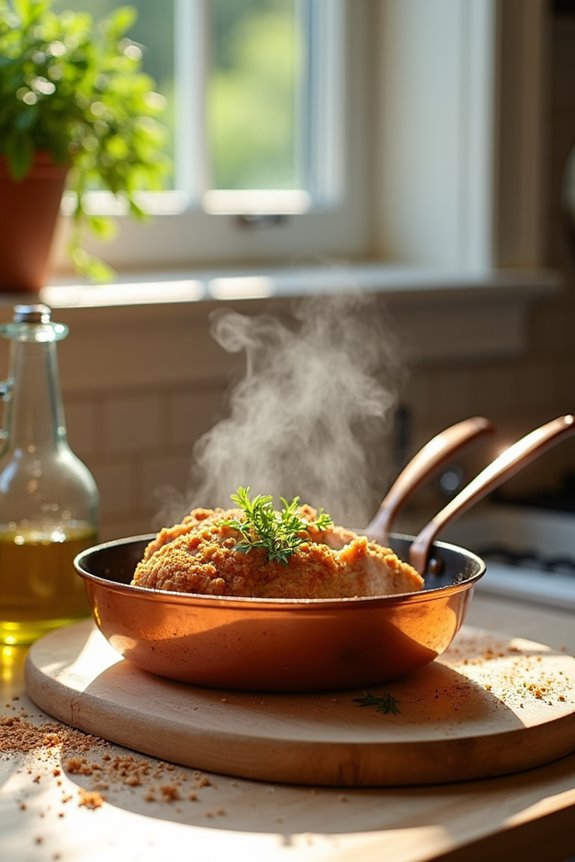
How do you get that crispy, golden crust that actually sticks to your chicken?
Your dredge mixture is where the magic happens. Mix 2 cups flour with 2 tablespoons cornstarch and your garlic seasoning together. Add salt and pepper, making sure everything’s evenly distributed—no clumpy spots allowed.
Here’s the real secret: season your chicken first with quality salt like Fleur de Sel. Let it sit for 30 minutes at room temperature. This helps your coating actually grip the meat instead of sliding off.
After your buttermilk dip, press that dredge mixture on firmly. Then rest it on a wire rack for 15 minutes before frying. When you use extra virgin olive oil, this proper breading technique becomes even more important. You’ll get that restaurant-quality crust every single time.
Crispy Results: When Your Chicken Is Done
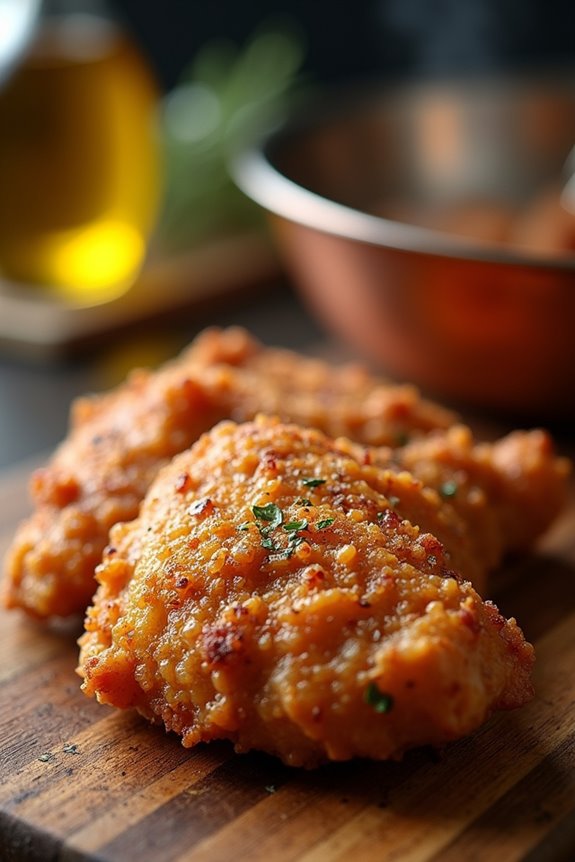
You’ll know your chicken’s ready when it hits that golden-brown sweet spot. That beautiful color tells you the olive oil did its job right. Here’s what you’re looking for:
- Internal temperature of 165–170°F using a meat thermometer (no guessing games)
- Golden-brown exterior that crackles when you bite into it
- Juices running clear when you pierce the thickest part
Don’t skip the resting step—it’s your secret weapon. Transfer your chicken to a wire rack immediately after frying. This drains excess olive oil and keeps that crispy crust from getting soggy. Give it a few minutes before serving. You’ve earned perfectly fried chicken that stays crispy, not greasy. That’s the win you’re after.
Safety and Stability: Debunking the EVOO Smoke Point Myth
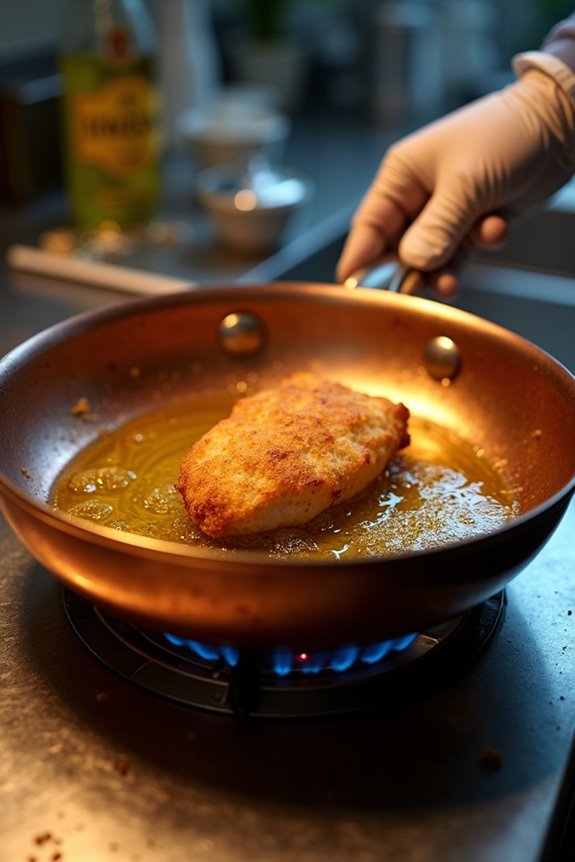
Ever heard that extra virgin olive oil’s too delicate for frying? That’s actually a myth you can ignore. The smoke point isn’t everything when it comes to stability. What really matters is extra virgin olive oil’s antioxidant content and monounsaturated fats. These components help it resist breaking down during cooking.
You’re not alone if you’ve worried about using it for fried chicken. The USDA FSIS actually recommends olive oil for deep frying, which should ease your concerns. Frying at 325–350°F works great with extra virgin olive oil and creates that crispy crust you’re after.
Here’s the practical part: you can even reuse it. Just strain out the crumbs, let it cool completely, and store it in a glass container. You’re doing it right.
Getting More From Your Oil: Straining and Reuse
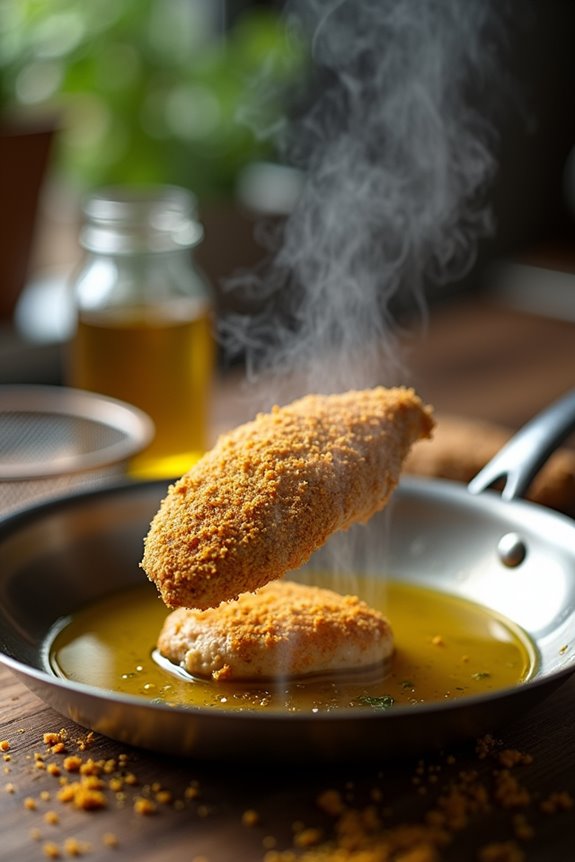
Want to squeeze every last drop of value from your olive oil? You’re joining smart cooks who stretch their frying budget without compromising quality.
Here’s how you maximize your oil investment:
- Strain immediately after cooling using a fine-mesh sieve or cheesecloth to remove food particles
- Store properly in a glass jar in a cool, dark place between uses
- Monitor quality by checking for rancid smells, foaming, or excessive darkening
You can reuse olive oil 2–3 times for frying, but strain between each use. Just know that reused oil gradually loses some fruity notes and crisping power. After a few uses, flavors shift noticeably.
For safety, discard oil showing rancid smell or excessive smoke. This approach keeps your fried chicken crispy while being budget-conscious and responsible.
The Truth About Olive Oil Flavor in Fried Chicken
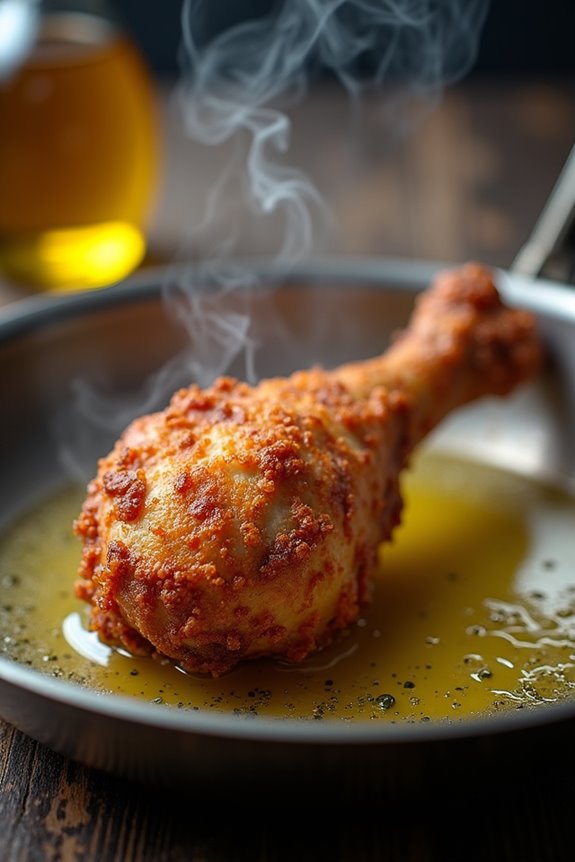
Now that you’ve got your oil budget sorted, let’s tackle the big myth everyone believes about olive oil flavor. Here’s the truth: your crust and seasonings totally dominate the taste experience. The olive oil flavor? It takes a backseat, honestly. Your chicken tastes like chicken and spices, not like you dunked it in a salad dressing. The oil itself contributes something different—it helps create that golden, crispy exterior we’re all chasing. Think of it like this: the oil’s doing the heavy lifting on texture and color, while your seasoning blend steals the show flavor-wise. You’re not sacrificing taste by choosing olive oil. You’re actually gaining a better crust and keeping your chicken juicy inside. That’s the real win here.