You can deep fry frozen wings, but honestly? Thawing them first is totally worth it. Frozen wings take about 15 minutes and give unpredictable results because they drop your oil temperature fast. Thawed wings cook in just 6–8 minutes at 375°F and get way crispier with better seasoning absorption. Pat them dry before frying, use peanut oil, and you’ll nail it. Stick around to discover the specific thawing methods that’ll save you time and frustration.
Can You Deep Fry Frozen Chicken Wings?
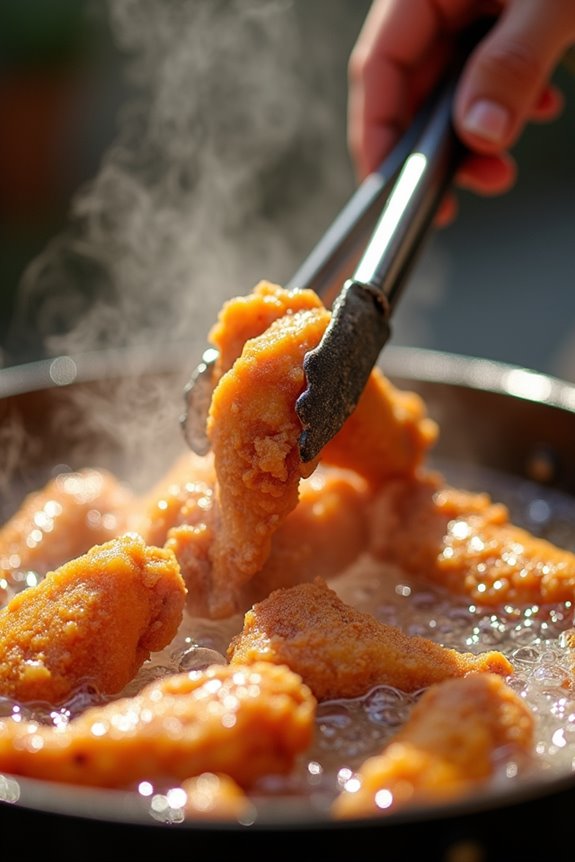
Yes, you can absolutely deep fry frozen chicken wings straight from the freezer. You’ll want to heat your oil to 375°F and maintain that temperature throughout cooking. Frozen wings typically take 15 minutes, while smaller ones need about 10–12 minutes.
Here’s the thing—fry in small batches of 3–5 wings to keep your oil temperature steady. This ensures even cooking and prevents that soggy texture we all hate. Use vegetable or peanut oil with about 3 inches of depth in your fryer.
A thermometer’s your best friend here. Check that the thickest part reaches 165°F for food safety. After draining on a rack, add your sauce for maximum flavor and glaze. You’ve got this!
Why Thawing Frozen Wings Matters for Deep Frying
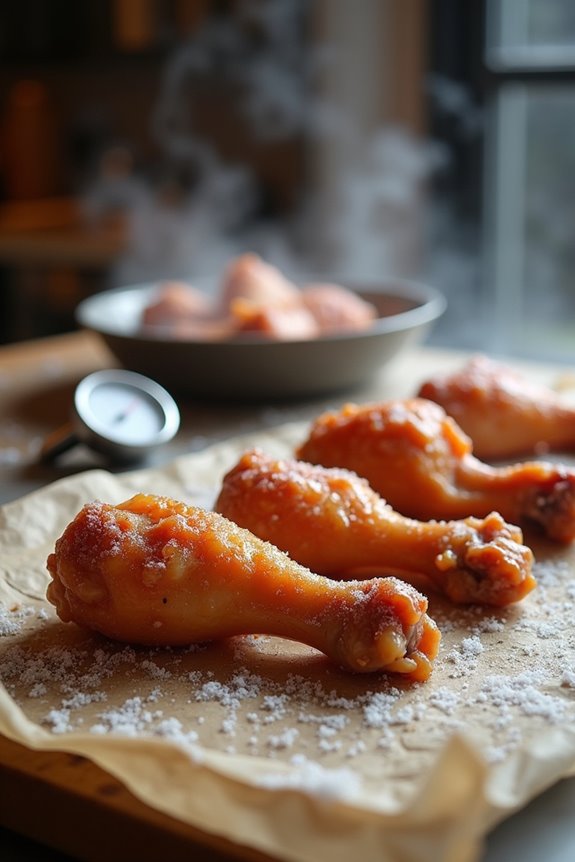
What’s the real difference between thawing and frying straight from frozen? Honestly, it comes down to consistency and flavor absorption. When you thaw fried wings beforehand, you’re setting yourself up for success in several ways:
- Even cooking – Thawed wings cook uniformly, preventing cold centers and overcooked edges
- Better seasoning – Your marinades and dry rubs actually penetrate the meat properly
- Crispier skin – You’ll achieve that golden, satisfying texture frozen wings struggle to deliver
Thawing overnight in your refrigerator works best, though warm water takes just 1–2 hours. Yes, you can fry frozen wings, but you’re gambling with longer cook times and unpredictable texture. Skip the frustration and thaw first. Your taste buds—and your dinner guests—will thank you.
How to Thaw Frozen Wings Safely and Quickly
Ready to get those wings thawed without drama? You’ve got solid options that work for your schedule.
| Thawing Method | Time Required | Best For |
|---|---|---|
| Refrigerator | Overnight (8-12 hours) | Planning ahead |
| Microwave | 30-45 minutes | Quick decisions |
| Cold water (sealed bag) | 1-2 hours | Last-minute cooks |
| Frying frozen | N/A | Impatient folks |
The refrigerator method’s your safest bet—wings thaw evenly while staying food-safe. Microwave defrost works when you’re short on time. Want even faster results? Seal wings in a bag and submerge them in cold water for one to two hours.
After thawing, pat everything dry. Moisture prevents proper seasoning absorption and affects your oil temperature control while frying.
Best Oils for Deep Frying Chicken Wings
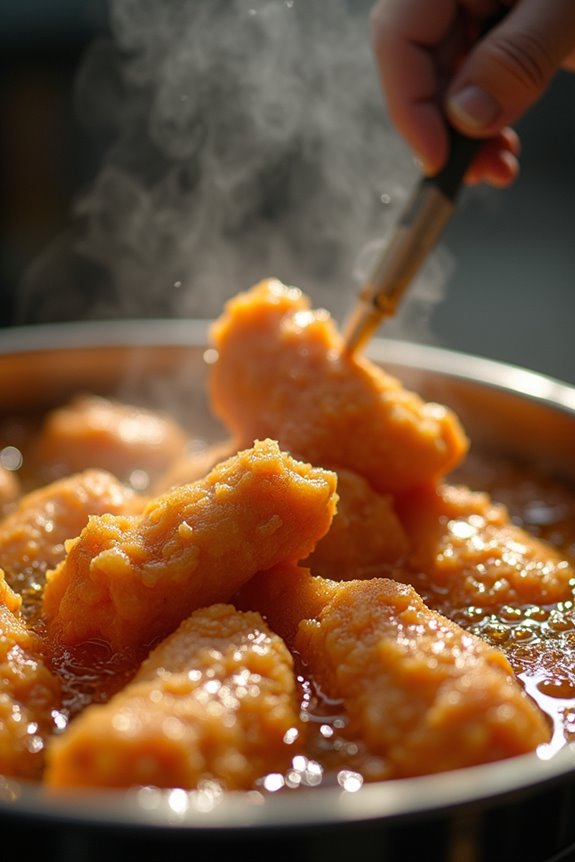
You’ll want to grab vegetable or peanut oil since they’ve got high smoke points that won’t break down when things get hot. These oils keep their cool at 375°F, which is exactly where you need your oil temp to stay for crispy wings that cook safely all the way through. Picking the right oil basically means you’re setting yourself up for success before you even drop those wings in the fryer.
Oil Selection and Smoke Points
When it comes to deep frying frozen chicken wings, picking the right oil makes all the difference.
You’ll want to choose oils with high smoke points that won’t break down at 375°F (190°C). Here’s what actually works:
- Peanut oil – delivers great flavor and handles heat like a champ
- Vegetable oil – neutral taste that lets your seasonings shine through
- Avoid olive oil – it’ll smoke and ruin everything
Peanut oil’s your MVP here because it maintains stability while frying. Vegetable oil works perfectly too if you’re seasoning those wings heavily anyway. The key? Both oils keep their integrity at frying temperature, preventing off-flavors that wreck your meal.
Skip low smoke point oils entirely. They literally fall apart under heat, creating safety issues and nasty tastes. Stick with high smoke point options, and you’re golden.
Temperature Control and Safety
Picking the right oil’s only half the battle—now you’ve got to manage the heat itself. You’ll want to preheat your oil gradually to 375°F (190°C), using a digital thermometer to keep tabs on it. Trust me, eyeballing it never works out well. Small batches of 3–5 wings help maintain that essential oil temperature, preventing the dreaded temperature drops that make wings soggy instead of crispy. When you fry frozen wings at 375°F, you’re looking at 12–15 minutes depending on size. The real safety win? Making sure those wings hit 165°F internally. After frying, drain them properly on wire racks and dispose of used oil safely. You’re protecting your kitchen and your dinner.
Deep Frying Equipment You’ll Need
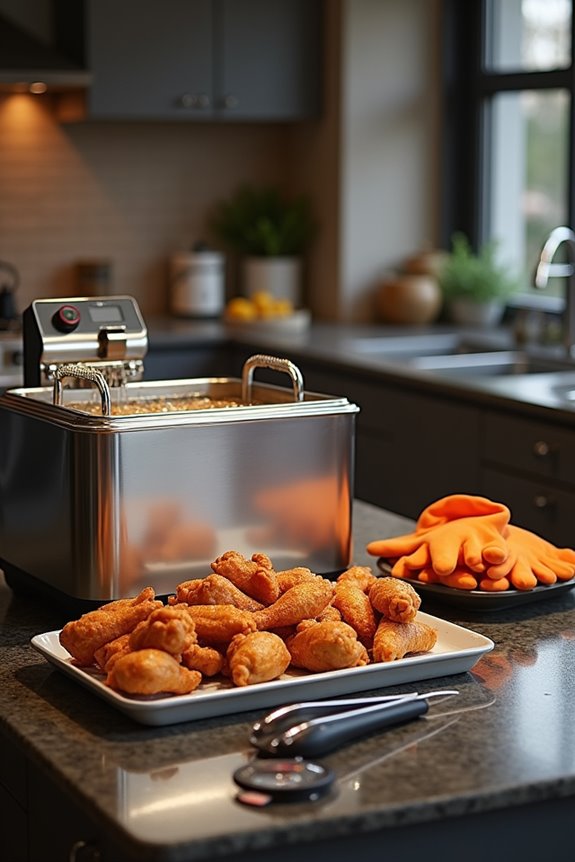
You’ll need a deep cast iron pot or dedicated deep fryer to get started properly. Grab a digital thermometer to keep that 375°F oil temperature steady, plus a slotted spoon for safe handling. Don’t forget safety gear like an apron and oven mitts, because hot oil deserves your respect.
Essential Tools And Equipment
Deep frying frozen chicken wings requires a few key pieces of equipment.
You’ll want to gather these essentials before you start:
- A deep pot or dedicated deep fryer – Cast iron pots work great for consistent heat and safety when you’re handling hot oil.
- A reliable thermometer – You’ll need one to maintain that essential 375°F oil temperature throughout cooking.
- A slotted spoon or spider strainer – These tools let you safely lower wings into the oil and fish them out when they’re golden.
Don’t forget paper towels or an oven rack for draining your wings afterward. They’ll stay crispier that way. Food-grade gloves protect your hands too, which honestly beats dealing with oil splatter on your skin. Having everything ready makes the whole process smoother and way less stressful.
Oil Container And Heating Apparatus
Now that you’ve got your tools lined up, let’s talk about what holds the oil itself. You’ll need a deep pot or dedicated deep fryer with plenty of space. We’re talking 3–5 inches of oil minimum for those wings to swim freely.
Your oil temperature is everything, so grab vegetable or peanut oil. Both have high smoke points and won’t mess with your wing flavor. You’ll also want a reliable digital thermometer to keep that oil temperature steady at 375°F (190°C).
A dedicated deep fryer makes life easier, honestly. It maintains consistent heat and takes the guesswork out of temperature control. But honestly? A heavy-bottomed pot works just fine too. Just keep your thermometer handy and you’re golden.
Safety Gear And Accessories
When hot oil’s bubbling away, protecting yourself matters way more than you’d think. You’re joining a community of home cooks who’ve mastered safe frying techniques. Here’s what you’ll actually need:
- Food-grade gloves to shield your hands from splashes
- A digital thermometer for accurate oil temperature checks
- A slotted strainer spoon to safely remove wings
These tools aren’t optional—they’re your safety net. Your digital thermometer keeps oil at exactly 375°F (190°C), preventing dangerous temperature swings. That slotted strainer spoon lets you fish out wings without splattering hot oil everywhere. Food-grade gloves give you confidence when handling hot batches.
Paper towels for draining complete your setup. Position them near your cooking station so you’re never fumbling around hot oil. You’ve got this—just stay prepared and focused.
Preparing Your Wings for the Fryer
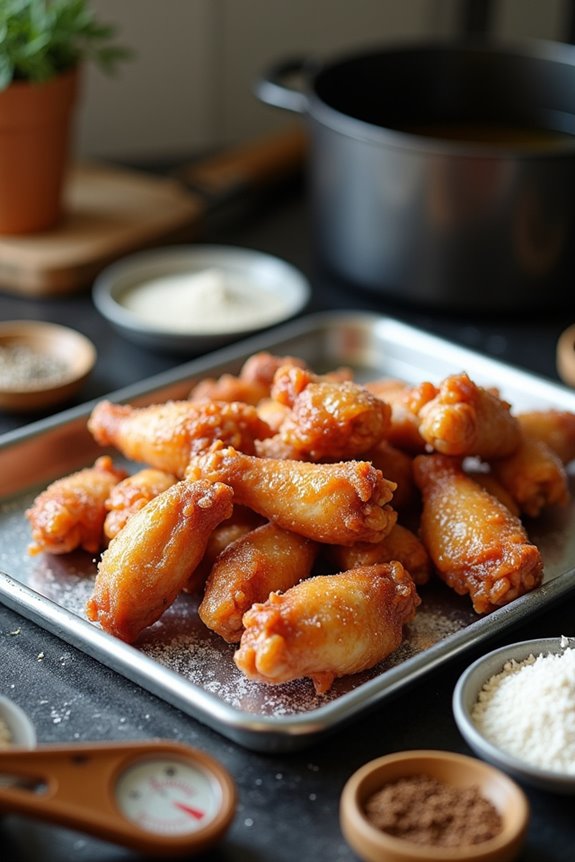
Before you toss those wings into hot oil, you’ve got a choice to make. You can fry frozen wings straight from the freezer, but thawing them first really helps. Pop them in your fridge overnight, or use warm water for a quick thaw. Thawed wings cook more evenly and soak up seasoning better.
Thaw your wings in the fridge overnight for even cooking and better seasoning absorption—it really makes a difference.
Next, pat your wings dry with paper towels. Moisture is the enemy of crispiness. Separate them into small batches so you don’t overcrowd your fryer.
Check your oil temperature before adding anything. You’ll want 375°F exactly. Use a thermometer to be sure. Frozen wings need about 15 minutes of frying time. Thawed ones cook faster, around 12 minutes.
You’ve got this—just stay organized and patient.
The Right Temperature and How Long to Fry
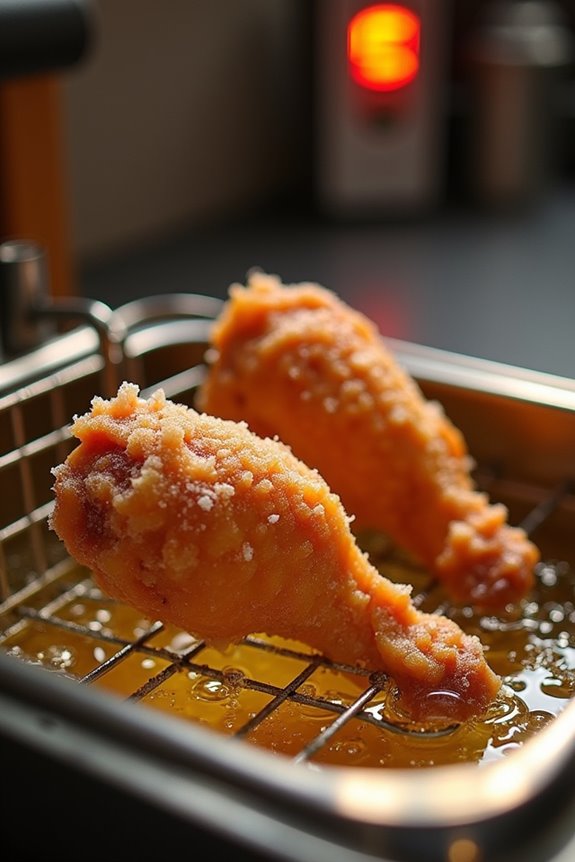
Getting the temperature right is what separates crispy wings from soggy disappointment. You’ll want to maintain your oil at 375°F (190°C) for frozen wings. Here’s what you need to know:
- Frozen wings need about 15 minutes total, while smaller ones cook in 10–12 minutes
- Thawed wings fry faster at just 6–8 minutes per batch
- Fry small portions of 3–5 wings together to keep your oil temperature steady
The key is consistency. Don’t overcrowd your fryer, or you’ll drop that oil temperature and end up with greasy wings. Always check that the thickest part reaches 165°F (75°C) with a digital thermometer. Your fry time depends on wing size, so bigger wings might need a few extra minutes. You’ve got this!
Frozen or Thawed? What Changes in the Fryer
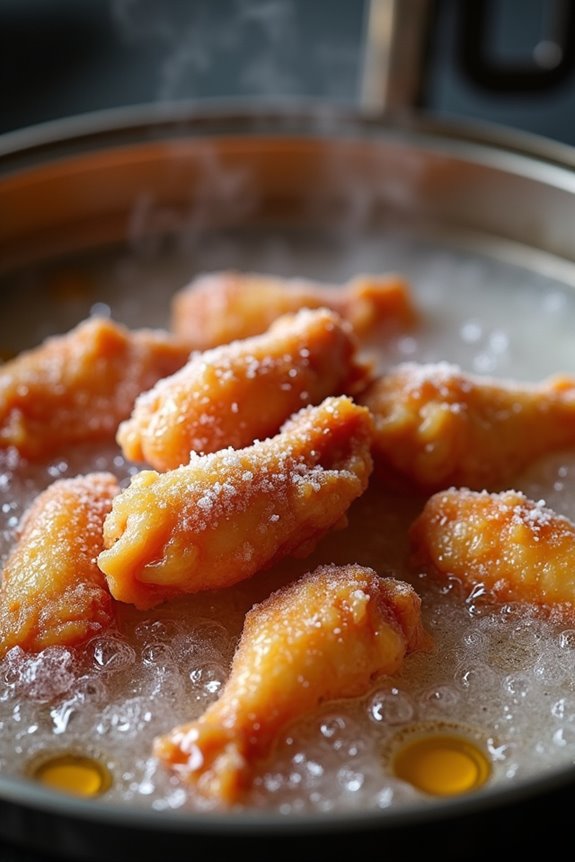
Should you thaw your wings first, or just toss them straight from the freezer? Honestly, thawing makes a real difference. Thawed wings cook evenly in about 6–8 minutes at 375°F. Frozen wings? They’ll need around 15 minutes, and you’re basically guessing when they’re actually done inside.
Here’s the thing: when you deep fry frozen wings, surface ice messes with browning. You’ll get less crispy exterior, more pale spots. Thawing in your fridge overnight or quickly in warm water solves this problem.
The deep fry temperature stays the same either way—375°F—but frozen wings demand patience and attention. Your oil temperature drops faster when you add cold wings, so monitor it closely. Thawed wings keep your oil temperature stable, giving you that perfect golden crunch we’re all after.
Getting Wings Crispy and Golden: Temperature and Technique
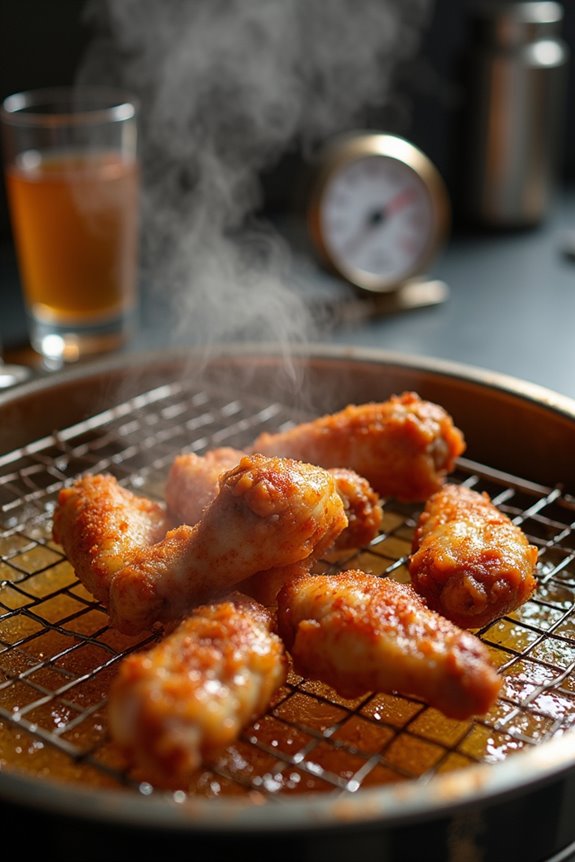
Now that you’ve got your wings prepped, the magic happens in the oil. You’re aiming for 375°F (190°C)—this temperature hits that sweet spot between crispy skin and fully cooked meat. Here’s your winning game plan:
- Maintain consistent oil temperature by frying in batches
- Fry frozen wings for 15 minutes per batch
- Check internal temperature reaches 165°F (74°C)
Don’t overcrowd your pot—wings need space to crisp up properly. Use a slotted spoon to gently lower them in. This prevents splashing and keeps your oil temperature steady.
If you thawed your wings first, you’ll cut frying time down to just 6–8 minutes. Either way, drain them on an oven rack immediately. Then sauce them fast while they’re still hot. That’s how you get that perfect glaze sticking around instead of sliding off.
Drain and Sauce While Hot for Best Taste
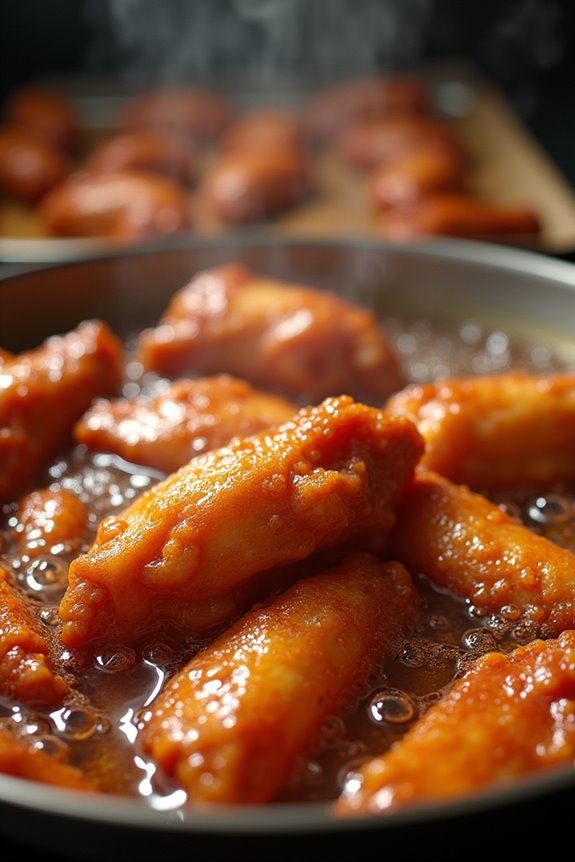
The real secret to restaurant-quality wings? Timing and technique. Right after frying, you’ll drain your wings on an oven rack positioned over a pan. This step removes excess oil, giving you that crispy exterior you’re after. The glaze sticks better too.
Don’t wait around here—sauce those wings immediately while they’re still hot. The heat helps the coating absorb evenly, maximizing flavor throughout. You’ll want enough sauce to thoroughly coat each wing. Undersaucing leaves dry spots and uneven taste, which nobody wants.
Choose a sauce that clings well, like thick, sticky glazes or butter-based options. They’ll coat your wings beautifully and stay put.
Choosing Between Deep Frying and Air Frying
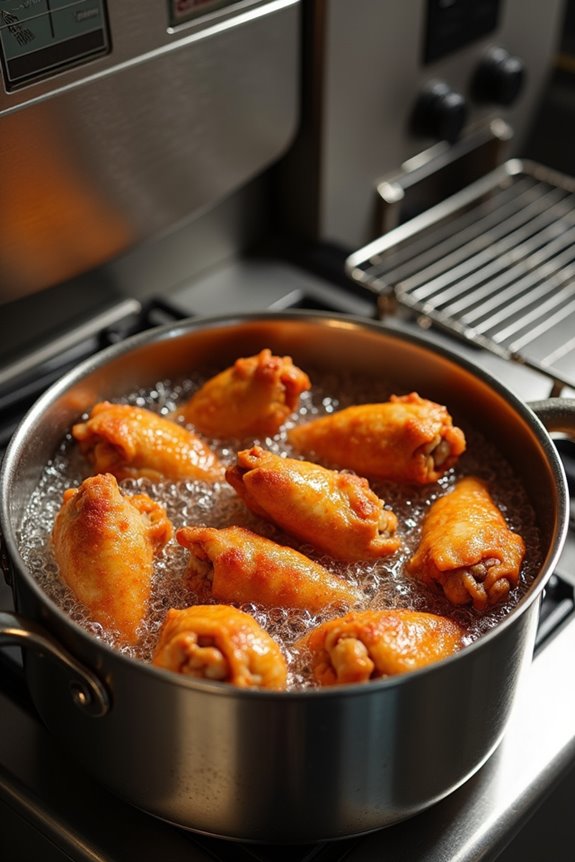
Once you’ve got your wings sauced and crispy, you’ll probably wonder if there’s an easier way next time. Here’s the thing: you’ve got options beyond deep-frying frozen wings.
Consider these alternatives:
- Air frying at 375°F (190°C) for 7–8 minutes gives you crispiness with way less oil.
- Deep-frying still wins for that authentic, golden texture that satisfies cravings.
- Air frying saves cleanup time and reduces splatter stress in your kitchen.
Deep-frying takes about 15 minutes for frozen wings, while air frying’s faster. Both methods work great, honestly. Deep-frying delivers that restaurant-quality crunch you’re after. Air frying feels less intimidating and messier-free. Pick what fits your vibe and kitchen setup. Either way, you’re winning with perfectly cooked wings.
Brand Comparisons: Walmart vs. Whole Foods Frozen Wings
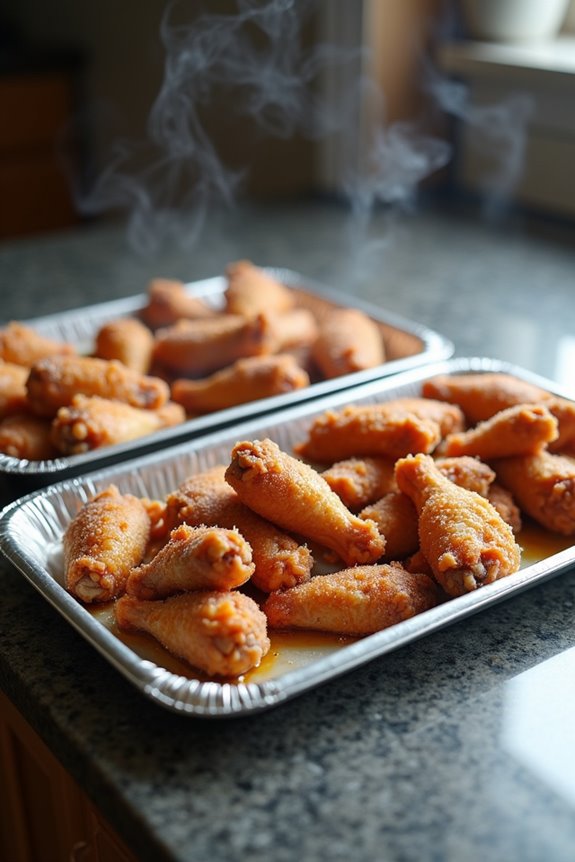
Where should you actually shop for frozen wings? You’ve got solid options with Walmart and Whole Foods, but they’re pretty different.
Walmart wings deliver meatier, juicier results with less noticeable ice glaze. You’ll get more substance in each bite. Whole Foods wings are smaller and pricier, offering less meat overall.
Here’s the thing: both brands benefit from thawing in water before frying. Thawing helps them cook more evenly than frozen wings would. Freezing can mess with texture, so you’ll notice better results after proper thawing.
Walmart wings absorb glaze better and give you that robust bite you’re craving. Whole Foods wings need longer cooking time because they’re smaller.
Want value and satisfaction? Walmart’s your move. Prefer premium quality? Whole Foods delivers, even if your wallet takes a hit.
Avoid These Common Mistakes
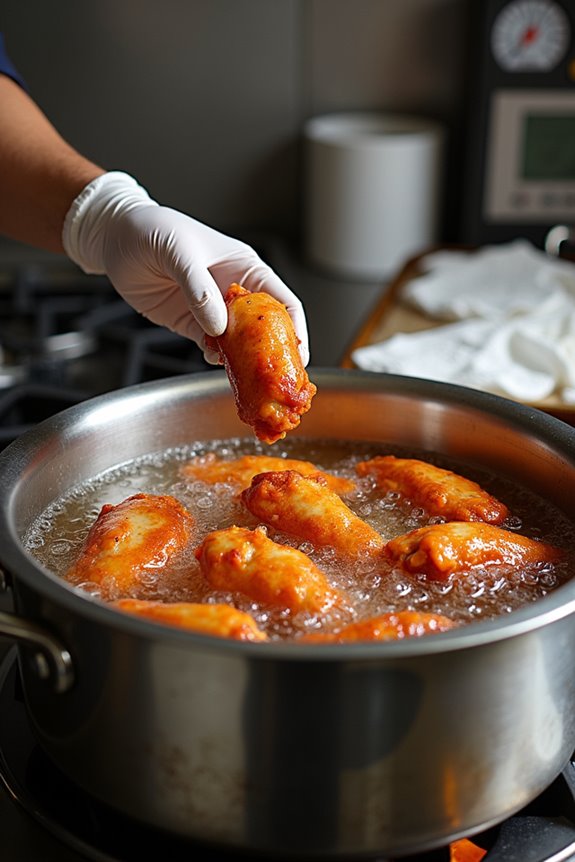
When you skip thawing and toss frozen wings straight into 375°F oil, you’re basically asking for temperature chaos and unevenly cooked meat. You’ve also gotta watch that oil thermometer like a hawk, because letting it drop below 350°F turns your crispy dreams into greasy, soggy disappointment. These two mistakes—rushing the thaw and ignoring temperature control—are what separate restaurant-quality wings from the sad, rubbery kind you’ll regret making.
Skipping Proper Thawing
Because you’re eager to get dinner on the table, you might skip thawing those frozen wings entirely—but that’s where things get tricky. Skipping proper thawing creates real problems you’ll notice immediately.
Here’s what happens when you fry frozen wings without thawing:
- Uneven cooking – Frozen centers take forever reaching 165°F while outer layers burn or overcook badly.
- Oil splattering – Moisture from icy wings causes dangerous splashing and requires tiny batches to maintain temperature.
- Lost crispiness – Excess moisture creates foaming oil, preventing that golden-brown texture you’re after.
Plus, your seasoning won’t stick evenly to frozen surfaces. You’ll end up with patchy, disappointing flavor throughout your batch. Taking time to thaw properly—even using refrigerator thawing overnight—saves you headaches and delivers better results every single time.
Neglecting Oil Temperature Control
You’ve probably noticed that oil temperature makes or breaks your deep frying success. When you’re frying frozen wings, neglecting oil temperature control is a rookie mistake that’ll derail your whole batch.
Here’s the thing: you need to keep your oil steady at 375°F (190°C). If you drop below 350°F, your wings absorb grease instead of crisping up. Too hot above 390°F, and you’ll burn the outside while the inside stays cold.
Use a digital thermometer—seriously, it’s your best friend here. Check the temperature before adding wings and between batches. When you toss in frozen wings without monitoring, the oil temperature plummets fast. This temperature swing creates soggy, undercooked centers.
Fry in small batches: just 3–5 wings at a time. This keeps your oil stable and consistent. Trust me, this simple habit changes everything.
How to Store and Reheat Wings Without Losing Crispiness
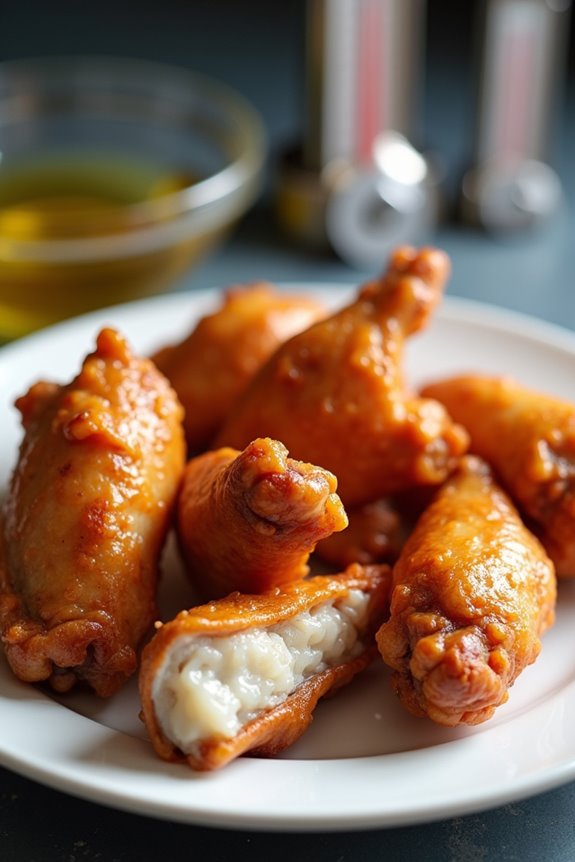
Ever wonder why leftover wings turn soggy and sad? You’re not alone! Keeping wings crispy takes strategy, but you’ve got this.
Store your wings properly first:
- Keep them in your fridge’s coldest spot (34–40°F) for 1–2 days maximum
- Freeze extras for longer storage without texture loss
- Thaw frozen wings overnight in the fridge before reheating
Here’s the reheating-crispiness secret: skip the microwave completely. Instead, use your oven or air fryer at 375–400°F. Your frozen wings need about 15–20 minutes to reheat and re-crisp properly.
The real pro move? Never overcrowd your cooking space. Small batches mean better air circulation, which keeps wings crispy instead of disappointing. Your future self will thank you when you bite into perfectly textured wings again.