
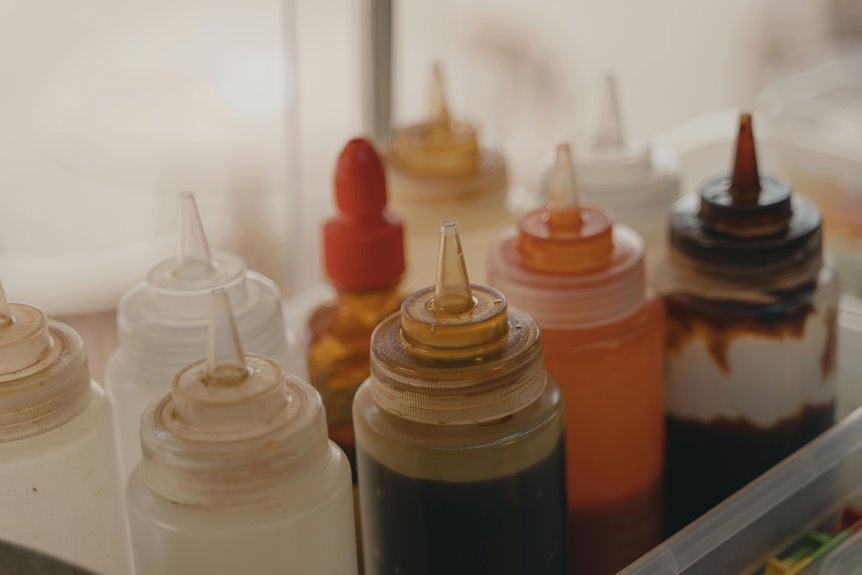
Yeah, BBQ sauce can definitely go bad without warning. Opened bottles last about four to six months in the fridge, but mayo-based versions spoil faster than tangy, acidic ones. Your best defense? Trust your nose and eyes—look for mold, weird colors, or off smells. Don’t taste to test; that’s risky. When in doubt, toss it out. Stick around to discover exactly what spoilage looks like and how to store your sauce properly.
Does BBQ Sauce Really Go Bad?
Yes, BBQ sauce can absolutely go bad—even though it might seem like it’d last forever. Here’s the thing: unopened bottles sit safely on your shelf for quite a while. But once you crack that cap open, spoilage becomes real. You’ve got several months in the fridge before quality takes a nosedive. Watch for mold, strange smells, weird texture changes, or color shifts. These are your red flags. Different sauces have different shelf lives too. Texas-style and ketchup-based sauces? They’re safer longer because they’re acidic and sugar-rich. Mayo-based versions? They’ll spoil faster, especially if left unrefrigerated. When doubt creeps in, toss it. Your taste buds and stomach will thank you for playing it safe.
How to Tell If Your BBQ Sauce Has Gone Bad
So you know BBQ sauce can go bad, but how do you actually spot it? Start by checking the surface for mold or weird discoloration. Next, look for separation that won’t remix back together. Those are your red flags.
Check BBQ sauce surfaces for mold and discoloration. Separation that won’t remix back together? Those are your red flags.
Pay attention to texture changes too. Thick clumps or watery thinning means trouble. Give it a smell—if it’s off or sour, that’s different from normal BBQ sauce aroma, trust your nose.
Here’s the thing: don’t rely on taste to judge safety. A spoiled sauce can taste fine while being unsafe to eat. If it’s been sitting out at room temperature too long, toss it. Same goes for unopential bottles with excessive fizzing.
When in doubt, just throw it away. Opening a fresh bottle beats risking foodborne illness.
Mold, Off-Odors, and Texture Changes That Signal Spoilage
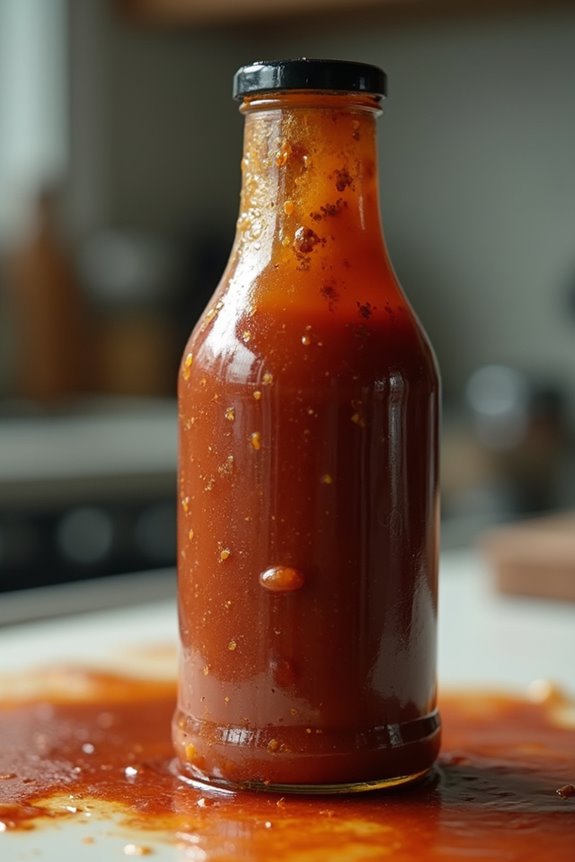
You’ll want to watch for three main red flags: visible mold, funky smells, and weird texture changes. If you spot any fuzzy growth, notice sour or off odors, or find your sauce has gotten lumpy or separated, that’s your cue to toss it. Trust your eyes and nose first—they’re your best defense against spoiled sauce.
Visual Signs Of Spoilage
How can you tell when your BBQ sauce has gone bad? Look for visible mold—fuzzy patches mean it’s time to toss it. You’ll also want to notice any off odors. Sour, rancid, or weird chemical smells signal trouble ahead.
Check the texture too. If your sauce won’t remix after separation or looks lumpy and curdled, that’s a red flag. Color changes matter as well. Unusual darkening or dullness outside the sauce’s normal range suggests spoilage.
Here’s the thing: don’t taste-test if you spot multiple warning signs. Finding mold plus an off odor? Discard the bottle immediately. Your stomach will thank you for playing it safe. Trust your senses—they’re pretty reliable guides.
Smell And Texture Indicators
When it comes to spotting spoiled BBQ sauce, your nose and fingers are your best friends. You’ll want to trust these senses before anything else happens.
| Smell Indicators | What It Means |
|---|---|
| Sour or vinegary odor | Fermentation or bacterial growth |
| Rancid, musty smell | Fat oxidation or mold presence |
| Sharp, unpleasant scent | Definite spoilage—discard immediately |
Texture changes are equally important warning signs you shouldn’t ignore. If your sauce suddenly thickens unnaturally or separates without mixing back together, that’s trouble. Curdling or unusual graininess means it’s time to toss the bottle.
Here’s the thing: don’t taste-test suspicious sauce. Your nose catches spoilage way before your mouth does. When smell indicators or texture changes seem off, just throw it away. Better safe than sorry with food safety.
Invisible Threats: What Your Eyes Can’t Catch
Here’s the thing—Imagine this: you’ve got a bottle of BBQ sauce sitting in your pantry. It looks totally fine, right? Here’s the thing—your eyes can’t catch everything. Some spoilage signs hide invisibly inside that bottle, waiting to ruin your meal or worse, your stomach.
Bacteria and mold can grow without changing how the sauce looks or smells. Mayo-based or animal fat sauces are sneaky culprits; they spoil faster than you’d expect, especially if left out too long. Even high-acid sauces aren’t foolproof.
That’s why sensory cues matter so much. You’ve got to trust your gut feeling, not just your eyesight. When something feels off—even slightly—don’t ignore it. Foodborne illness isn’t worth the risk. When doubt creeps in, toss it out. Your future self will thank you.
How Long Does Opened BBQ Sauce Actually Last?
You’ve probably wondered how long that opened BBQ sauce bottle actually lasts in your fridge. The truth is, you’ve got about six months before quality takes a nosedive, though homemade versions only stick around for one to two weeks. You’ll want to know the sneaky signs of spoilage and whether freezing could be your covert advantage for keeping sauce longer.
Refrigerator Storage Duration
The mystery of that half-empty BBQ sauce bottle in your fridge doesn’t have to stay unsolved. You’ve got about four to six months before your BBQ sauce shelf life really starts declining. Here’s the thing: quality gradually fades over time, but you’re not necessarily dealing with danger—just less delicious sauce.
Store your bottle in the coldest part of your fridge and keep that cap tight. This slows down spoilage significantly. Check the printed date occasionally, but don’t rely on it completely. Your senses are honestly your best tool here.
Notice any weird smells, strange thickness, or watery separation? That’s your signal to toss it. Visible mold means it’s definitely done. When in doubt, replacing it beats the risk of ruined meals or worse.
Signs Of Spoilage
Knowing when your sauce is still good matters way more than watching the calendar. You’ve got reliable visual clues that tell you everything you need to know.
| Red Flag | What It Means |
|---|---|
| Mold or fuzzy spots | Toss it immediately—don’t taste it |
| Unusual color changes | Spoilage has likely started |
| Separation that won’t remix | The sauce has broken down |
Watch for texture change too. If your sauce becomes unusually thick or watery, that’s your sign. Off smells are another giveaway—trust your nose on this one.
Here’s the thing: don’t taste-test suspicious sauce. Off flavors show up even when other signs are subtle. Store yours tightly sealed in your fridge’s coldest spot, use clean utensils always, and you’ll keep it fresh longer. You’ve got this!
Freezing For Extended Life
Want your BBQ sauce to stick around way longer than four to six months? Freezing is your secret weapon for extending shelf-life significantly.
Here’s how you can make it work:
- Pour into freezer-safe containers and leave a little headspace for expansion
- Label everything with the opening date or freezing date so you don’t forget
- Thaw overnight in the fridge when you’re ready to use it
Keep in mind that freezing changes things slightly. Your sauce’s texture and heat might shift after thawing, so give it a good stir. Some sauces stay usable for months this way. It’s honestly the best move if you’ve got extra bottles sitting around. Just remember to always remix after thawing to get everything back together.
Why Homemade and Store-Bought Sauces Spoil at Different Rates
Because homemade and store-bought BBQ sauces have different ingredients, they age at completely different speeds. Your homemade batch spoils faster because it lacks preservatives that commercial brands rely on. Store-bought sauces sit safely for months, while yours lasts maybe one or two weeks in the fridge.
Here’s why: sugar and acidity naturally extend shelf life, but homemade recipes often skip heavy preservatives. Mayo-based or dairy-containing sauces? They’ll spoil even quicker than tomato-based versions.
Watch for spoilage signals on both types. Mold, funky smells, weird texture changes, or separation that won’t remix means toss it immediately. When in doubt, throw it out. Your stomach will thank you for playing it safe with proper storage and honest assessment.
Does Dairy or Animal Fat Make BBQ Sauce Spoil Faster?
Why do some BBQ sauces seem to go bad overnight while others last weeks? The answer often comes down to what’s hiding in your bottle.
Dairy and animal fat are the real troublemakers when it comes to spoilage:
- Dairy-based sauces spoil quickly because bacteria love milk products, especially when they sit out or get stored wrong
- Animal fat in sauces creates an environment where spoilage organisms thrive, particularly in mixed or poorly preserved recipes
- Mayo-based varieties are especially risky at room temperature compared to vinegar-forward options
Here’s the thing: high acidity and sugar help preserve sauce, but they can’t save you from dairy or fat problems. If your sauce smells off, looks weird, or shows mold, toss it immediately. Don’t taste-test questionable sauces—that’s how foodborne illness happens. When in doubt, throw it out.
Acidic Sauces vs. Mayonnaise-Based: Which Type Spoils Faster?
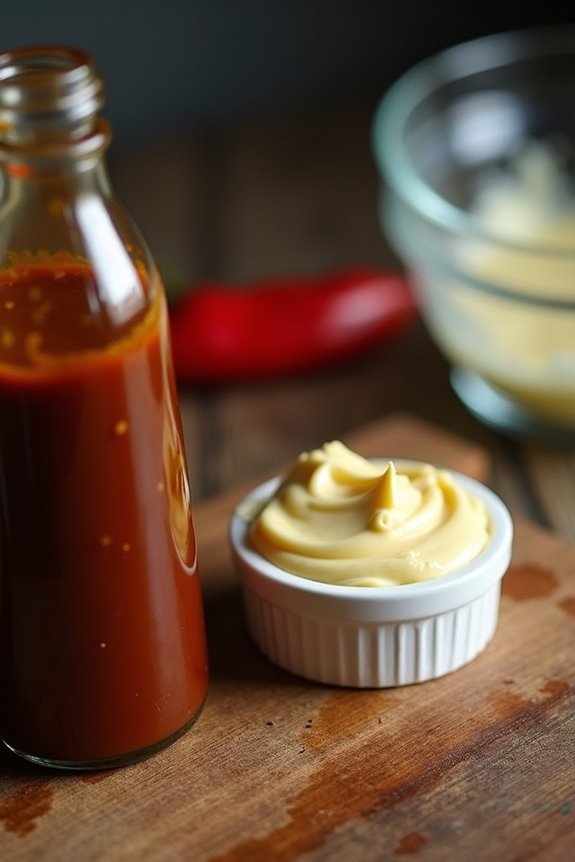
If you’ve ever wondered why your fancy mayo-based BBQ sauce goes bad faster than your basic ketchup bottle, the answer’s pretty straightforward. Acidic sauces have a pH around 4.3 or lower, which naturally preserves them longer. Your mayonnaise-based BBQ sauce? It’s basically a bacterial welcome mat. The fat and dairy components create an environment where bacteria thrive, especially after sitting out. Ketchup-based sauces, loaded with sugar and acid, stay shelf-stable way longer. You can refrigerate an acidic sauce for months without worrying much. But that creamy mayonnaise-based version demands serious caution. Any odd smell, color shift, or separation means tossing it immediately. The difference comes down to chemistry, not just flavor.
The Overnight Counter Test: Is Your Sauce Still Safe?
When you leave BBQ sauce on the counter overnight, what it’s made from really matters most. Texas-style ketchup-based sauces with their acidic kick (around pH 4.3 or lower) can handle the temperature swing better than creamy mayo-based versions. That said, temperature and time still team up against you, so checking for off smells, mold, or weird texture changes is your best move before deciding whether to keep or toss it.
Ingredient Composition Matters Most
what it’s made of basically determines whether you’re playing it safe or playing with food poisoning.
Your sauce’s ingredients are your best clue. Check what’s in there:
- Acidic bases like ketchup (pH around 4.3) actually work in your favor, creating an environment where bad stuff struggles to grow
- High sugar content acts as a natural preservative, making the sauce tougher for pathogens to survive in
- Dairy or animal fat ingredients flip the script entirely—these make your sauce way riskier after sitting out
Texas-style sauces with acidic foundations? They’re your friends. But if you spot dairy or mayo anywhere on that label, you’re better off ditching it. Honestly, when in doubt, just toss it. Your stomach will thank you.
Temperature and Time Factors
So you left your BBQ sauce on the counter overnight—now what? Don’t panic yet. Temperature and time matter hugely for your sauce’s shelf life. Mayo-based or dairy sauces spoil faster at room temperature. Ketchup-based varieties are more forgiving, but they’re still not guaranteed safe after sitting out all night.
Here’s your action plan: inspect the bottle carefully. Smell it first. Look for off odors, weird texture, mold, or separation. Any red flags? Toss it. Trust your senses here—they’re your best defense against spoilage.
Temperature Swings That Speed Up Spoilage
Ever notice condensation inside a BBQ sauce bottle after you’ve moved it between the fridge and your counter?
That moisture isn’t just annoying—it’s actually speeding up spoilage. Temperature swings create the perfect storm for your sauce’s shelf life. Here’s what’s happening:
- Condensation builds up inside bottles when warm air meets cold glass, trapping moisture that feeds bacteria growth
- Fats and emulsions separate during cold-to-warm transitions, changing texture and signaling hidden spoilage faster
- Pantry storage near stoves cuts your opened sauce’s fridge life from six months down to just weeks
Repeatedly leaving BBQ sauce out beyond two hours—even acidic, tomato-based varieties—increases bacterial risk significantly. You’re basically rolling the dice with each temperature swing.
Keep your sauce consistently refrigerated and minimize counter time. Your taste buds (and stomach) will thank you.
Freezing BBQ Sauce to Extend Its Shelf Life
You can freeze BBQ sauce for several months by using small, airtight containers that minimize air exposure and freezer burn. When you’re ready to use it, thaw your sauce overnight in the fridge and give it a good stir since freezing sometimes causes separation. Just remember not to refreeze after thawing, and plan to use thawed sauce within one to two months for the best flavor.
Freezing Methods And Techniques
When you’re staring at a half-full bottle of BBQ sauce that’ll probably go bad before you use it, freezing is your hidden asset. You’ve got solid storage options that’ll keep your sauce fresh for months.
Here’s what works best:
- Use smaller, airtight containers to minimize air exposure and prevent freezer burn on your sauce
- Label everything with dates so you’ll actually remember when you froze that batch
- Thaw overnight in the refrigerator, then stir thoroughly to restore the original texture
The key’s choosing the right container size. Smaller portions thaw faster and let you grab exactly what you need. Most store-bought varieties freeze beautifully, though homemade sauces sometimes separate slightly. Either way, you’re buying yourself serious time before spoilage becomes a real concern.
Thawing And Reuse Best Practices
Properly thawing your frozen BBQ sauce is where the real marvel happens. You’ll want to move your container from the freezer to the refrigerator the night before you need it. This slow thaw keeps your sauce safe and prevents texture breakdown.
Once thawed, give your sauce a good stir to recombine any separated ingredients. You’ve got about 1–2 months to use it for peak flavor, so mark your storage container with the date you opened or prepared it originally.
Before using, check for off smells, mold, or weird separation that won’t mix back in. If something seems off, toss it. Trust your instincts—you know what good BBQ sauce should smell like. Properly handled thawed sauce tastes just as amazing as fresh.
Shelf Life Extension Timeline
How long can BBQ sauce actually last in your freezer? You’re looking at several months of extended shelf life. Here’s what you need to know:
- Tomato and vinegar-based sauces freeze beautifully and maintain quality longer than mayo-based varieties
- Plan for optimal flavor within one to two months of opening, even after freezing
- Label your containers with opening dates to stay organized and avoid mystery sauces
Freezing works because it basically puts your sauce into hibernation. Mayo-based sauces can separate or change texture when thawed, so stick with vinegar and tomato options when possible. Thaw overnight in your fridge before using. This approach gives you way more flexibility with your BBQ sauce shelf life than refrigeration alone ever could.
How to Tell If BBQ Sauce Has Gone Bad Without an Expiration Date
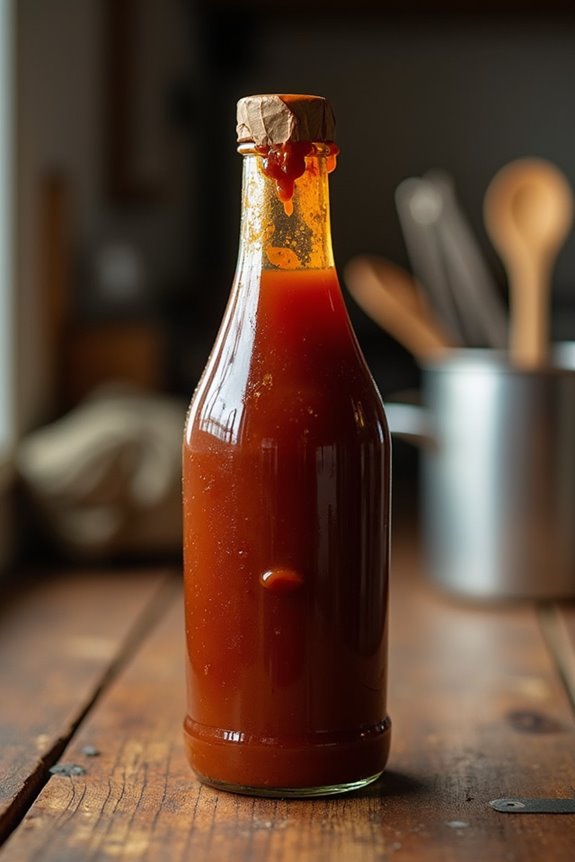
Ever opened your fridge only to wonder if that bottle of BBQ sauce is still good? You’re not alone. Without an expiration date staring you down, checking for spoilage becomes your job.
Start by trusting your nose. A strong, sour odor means it’s time to toss it. Next, look closely for visible mold or unusual discoloration—these are your red flags.
Check the texture too. Does it look thicker, clumpy, or weirdly separated? That’s not normal. If it won’t remix smoothly, something’s off.
Here’s the thing: don’t taste it to test. Spoiled sauce can taste bad before you see obvious signs. When in doubt, throw it out. Your stomach will thank you later.
Can Old BBQ Sauce Make You Sick? Understanding Risk vs. Best-By Dates
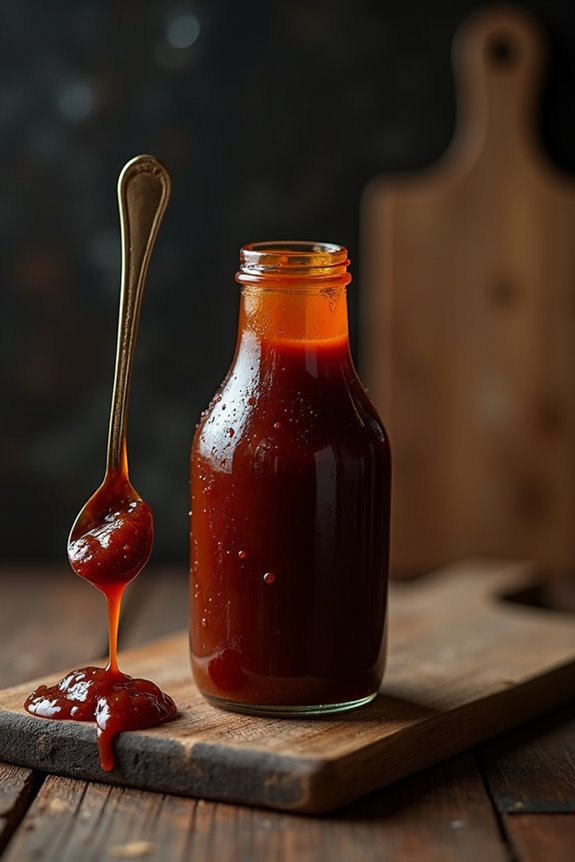
So can you actually get sick from old BBQ sauce? Yeah, you can—but it’s not guaranteed. Once you’ve opened that bottle, spoilage becomes a real concern. Here’s what matters:
Can you get sick from old BBQ sauce? Yeah—spoilage is a real concern once you’ve opened that bottle.
- Storage conditions: Room temperature overnight? That’s risky. Your fridge is your friend for opened bottles.
- Sauce type: High-acid, sugar-packed Texas-style sauces are safer longer. Mayo-based ones? They spoil faster and hit harder.
- Visual and taste clues: Mold, weird smells, or sour flavors mean it’s time to toss it.
Store-bought sauces last months after opening if refrigerated. Homemade versions? Only 1–2 weeks tops. When in doubt, throw it out. Food poisoning isn’t worth the risk, and replacing a bottle costs way less than a hospital visit.
Label It, Date It, Use It: Reuse Sauce Safely
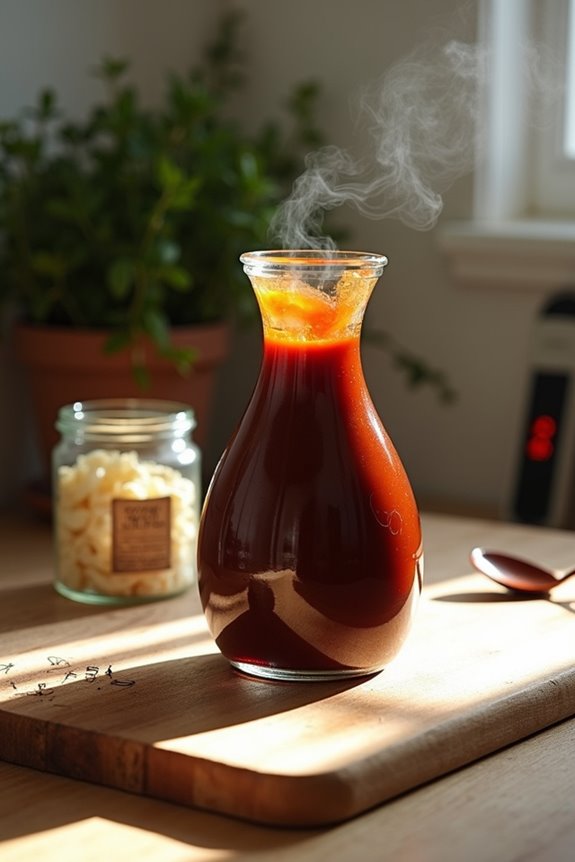
If you’re the type who buys BBQ sauce and forgets about it for months, you’re not alone. Here’s how to stay on top of things: Label your opened bottles with the date you cracked them open. Unopened sauce lasts way longer on shelves, but once you open it, that clock starts ticking. Homemade versions need attention within 1–2 weeks in the fridge. Store-bought sauces? They’ll hang around several months thanks to preservatives. Keep everything in the coldest fridge spot, not the door. Wipe rims clean after use and seal bottles tight. Freezing extends life even further—just thaw in the fridge when you need it. Trust your nose and eyes over dates. If something smells weird or looks off, toss it.
When in Doubt, Throw It Out: Your Final Safety Checklist
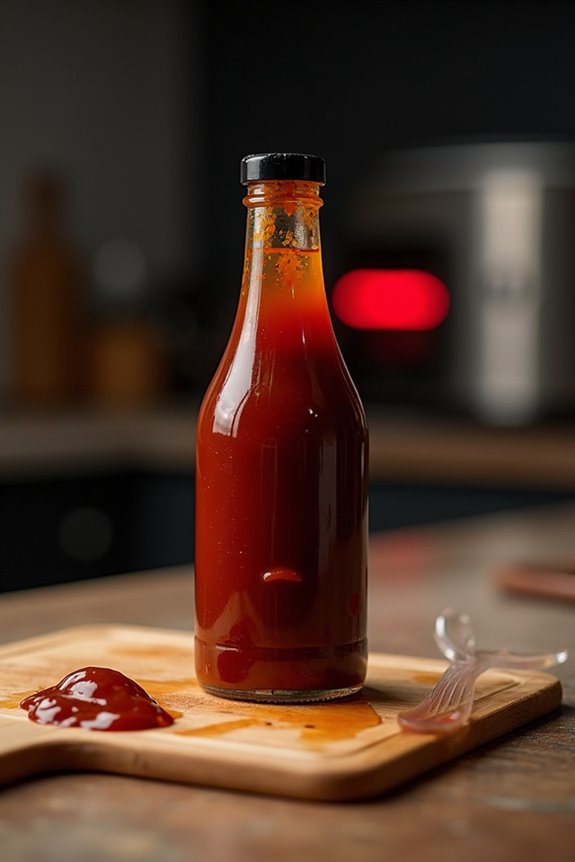
You’ve labeled your bottles, kept them cold, and stayed vigilant—but sometimes doubt creeps in anyway. That’s when your gut feeling matters most. Trust your instincts about safety and storage, because foodborne illness isn’t worth the risk.
Before you use that questionable bottle, check for these red flags:
- Mold, unusual colors, or separation on the surface means it’s done
- Off smells or sour odors signal spoilage—never taste to test
- Thickening or watery texture after months in storage suggests it’s time to go
Here’s the thing: throwing out a $3 bottle beats risking serious illness. If you’ve stored it properly but still feel unsure after several months, just toss it. Your health comes first, and that peace of mind? Totally worth it.