
Shrimp’s your safest bet because it’s naturally gluten-free—no sneaky grains hiding inside. Plain frozen shrimp has zero additives or gluten concerns, giving you 20-24 grams of protein per 3-ounce serving without the worry. The catch? Watch out for breaded options, marinades, and cross-contamination in your kitchen. Stick with certified gluten-free labels, use dedicated utensils, and pick simple seasonings like garlic and lemon. You’ll unlock even more ways to make shrimp your reliable weekly protein.
Shrimp Is Naturally Gluten-Free and Minimally Processed
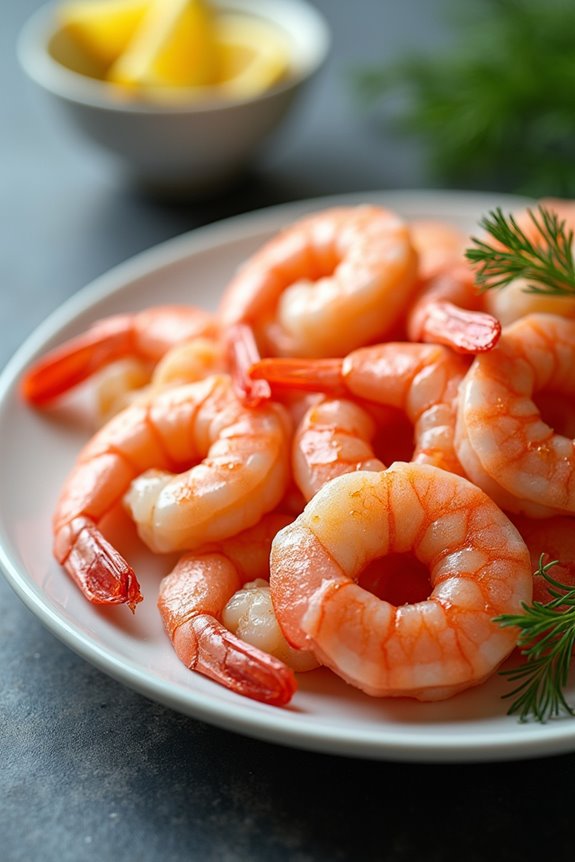
Why’s shrimp such a reliable choice for gluten-free eating? It is inherently gluten-free, containing zero gluten-containing grains in its basic form. You’re looking at one of nature’s simplest proteins here.
What really sets shrimp apart is that it’s minimally processed compared to many other foods. Fresh shrimp doesn’t undergo complicated manufacturing steps that introduce cross-contact risks. When you grab plain frozen shrimp from your grocery store, you’re getting pure shrimp without additives or hidden gluten.
The best part? You don’t need special labeling detective work. Pure shrimp requires no gluten content warnings because there simply isn’t any. Just stick with plain varieties—skip the breaded or marinated options. By choosing unadorned shrimp, you’re joining the gluten-free community with confidence and ease.
Why Shrimp Fits Your Gluten-Free Diet
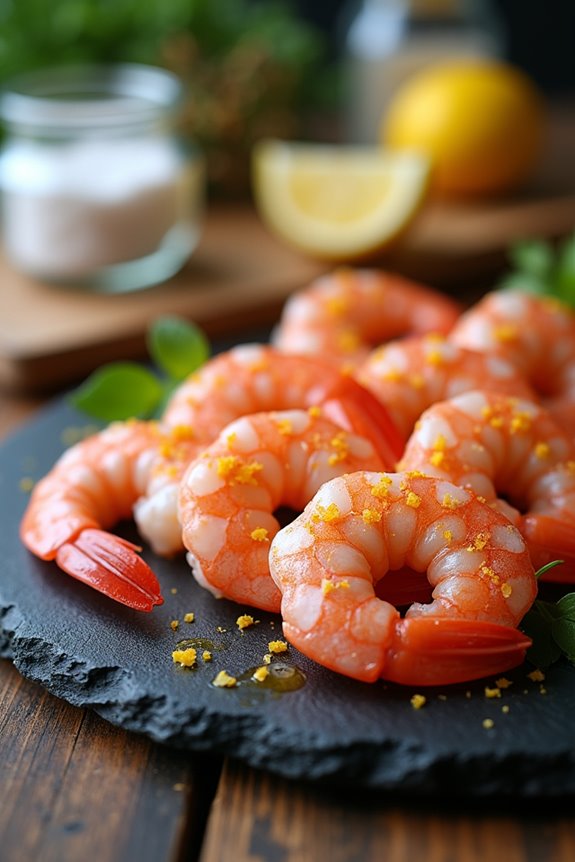
When you’re eating gluten-free, you’ve got to know what’s actually safe on your plate. Shrimp gives you solid protein without any hidden gluten tricks—but here’s the thing: how it’s prepared totally matters. You’ll want to check those seasoning packets and sauces, since that’s where gluten sneaks in and ruins your careful plans.
Shrimp’s Natural Protein Content
How’d you like a protein powerhouse that’s authentically gluten-free?
Shrimp delivers serious nutritional benefits you’ll actually feel good about. In just a 3-ounce serving, you’re getting 20-24 grams of high-quality protein. That’s genuinely impressive for such a small portion.
Here’s what makes shrimp perfect for your gluten-free diet:
- Packs essential amino acids supporting muscle repair and growth
- Contains only 84-100 calories per serving, keeping meals balanced
- Naturally low in saturated fat, making it a lean protein choice
- Zero gluten content, eliminating sneaky cross-contamination worries
You’re not sacrificing anything by choosing shrimp as your go-to gluten-free food. This lean protein fits smoothly into your celiac-safe meal planning. Whether you’re building muscle or maintaining steady energy, shrimp delivers the amino acids your body needs. You’re part of a growing community discovering that gluten-free eating doesn’t mean eating boring foods.
Safe Preparation Methods Matter
Now that you know shrimp’s packed with protein, let’s talk about keeping it gluten-free on your plate.
You’re making smart choices by using dedicated utensils and surfaces. This prevents cross-contamination from shared equipment in your kitchen. When you’re cooking, reach for gluten-free oils, gluten-free seasonings, and gluten-free marinades. Skip sauces with hidden gluten.
| Preparation Method | Best Oils | Safe Seasonings |
|---|---|---|
| Grilling | Olive oil | Garlic powder, paprika |
| Steaming | Coconut oil | Lemon, herbs |
| Sautéing | Avocado oil | Cumin, black pepper |
| Baking | Butter | Sea salt, dill |
Watch out for processed shrimp additives lurking in store-bought varieties. Always check labels for gluten-containing ingredients. When you prepare shrimp yourself with care, you’re joining a community that eats safely and deliciously.
Where Gluten Hides in Shrimp Preparation
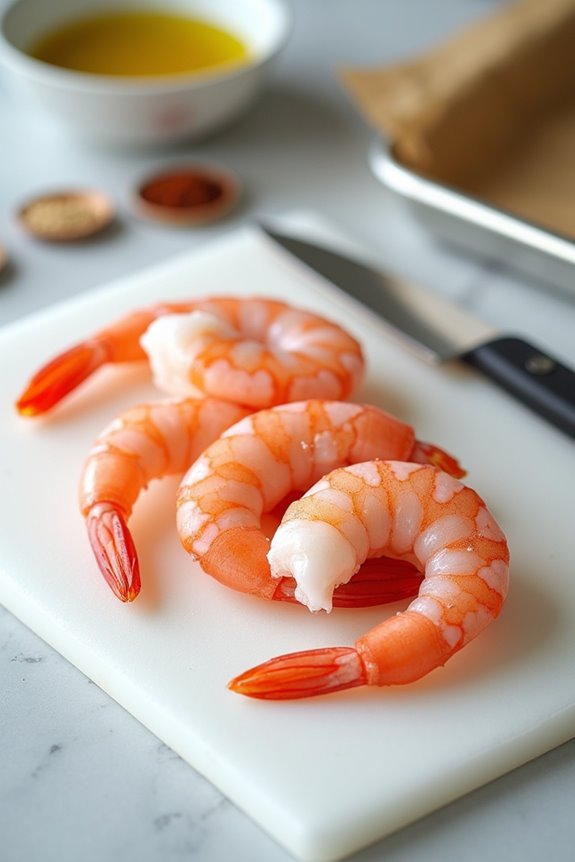
Where exactly does gluten sneak into your shrimp? You’d be surprised how many places it lurks. Fresh shrimp themselves are naturally gluten-free, but that changes fast during preparation. Here’s what you need to watch for:
- Breading and batters coat your shrimp with gluten-containing flour
- Marinades and sauces hide sneaky gluten in their ingredients
- Cross-contamination happens when seafood utensils touch gluten foods
- Imitation crab mixed into dishes contains hidden gluten
Processed shrimp are where gluten-containing ingredients really hide. You’ll find them in breading, sauces, and flavorings. Always check gluten-free labeling carefully. Kitchen cross-contamination risks multiply when shared equipment handles both gluten and non-gluten foods. Read every label. Ask restaurant staff about their shrimp preparation methods. You’ve got this—staying gluten-free with shrimp is totally doable.
Safe Seasonings and Sauces for Shrimp
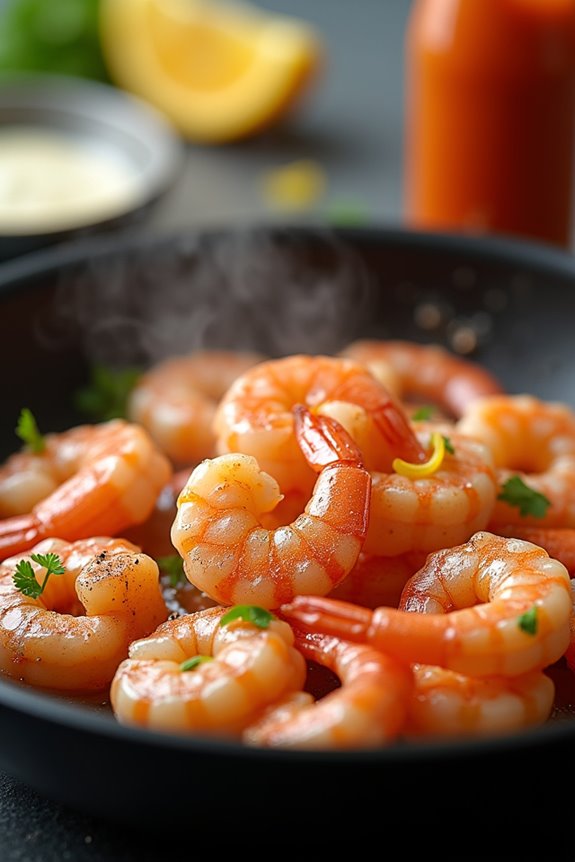
The secret to astonishing gluten-free shrimp? Nailing your seasonings and sauces.
You’ll want to reach for gluten-free staples like salt, pepper, garlic, citrus, herbs, and olive oil. These basics won’t let you down. However, watch out for hidden gluten lurking in common condiments. Regular soy sauce and teriyaki contain gluten, but tamari and coconut aminos are your trusty alternatives.
Master gluten-free shrimp by using simple seasonings like salt, pepper, garlic, and herbs while swapping regular soy sauce for tamari or coconut aminos.
Pre-made marinades often hide gluten in their ingredients, so always read those labels carefully. Look for certified gluten-free versions when shopping. When you’re craving something creamy, choose gluten-free dairy-free sauces to stay safe.
Sauces without gluten aren’t boring—they’re just honest about what’s actually in them. You’ve got plenty of delicious options for creating restaurant-quality gluten-free shrimp dishes at home.
Preventing Cross-Contamination in Your Kitchen
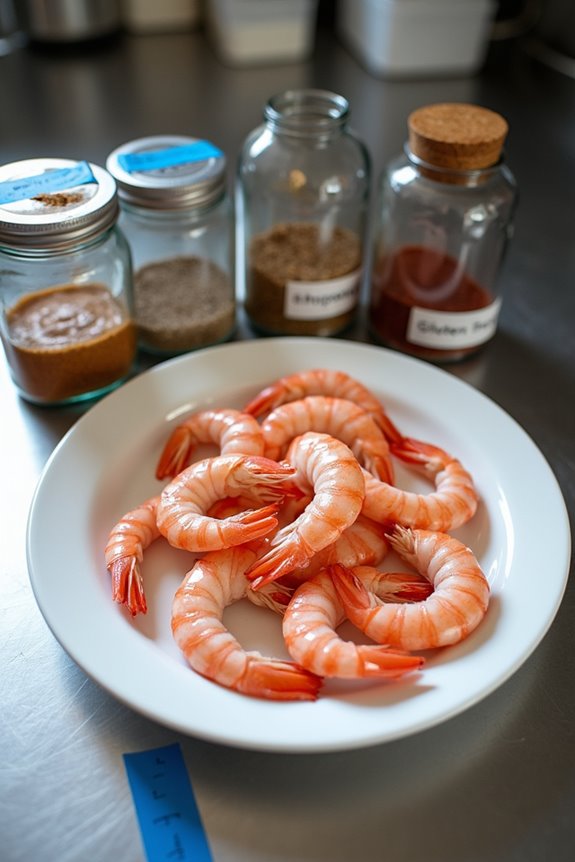
Ever wonder why your gluten-free shrimp dish made you feel sick, even though you checked every label?
Cross-contamination in your gluten-free kitchen might be the culprit. You’re not alone in facing this challenge. Here’s what protects your health:
- Wash hands and utensils thoroughly before handling shrimp to prevent gluten transfer
- Use separate cutting boards and dedicated cookware exclusively for gluten-free foods
- Store shrimp, gluten-free sauces, and seasonings away from gluten-containing products
- Sanitize all surfaces between uses to eliminate hidden gluten residues
Cross-contact prevention requires intentional kitchen safety practices. Designate specific utensils for your gluten-free meals. Verify that marinades and stock bases carry gluten-free labeling. When you establish these habits, you’re joining countless others who’ve successfully protected their health. Your kitchen becomes your safe space, not a source of worry.
How to Order Gluten-Free Shrimp at Restaurants
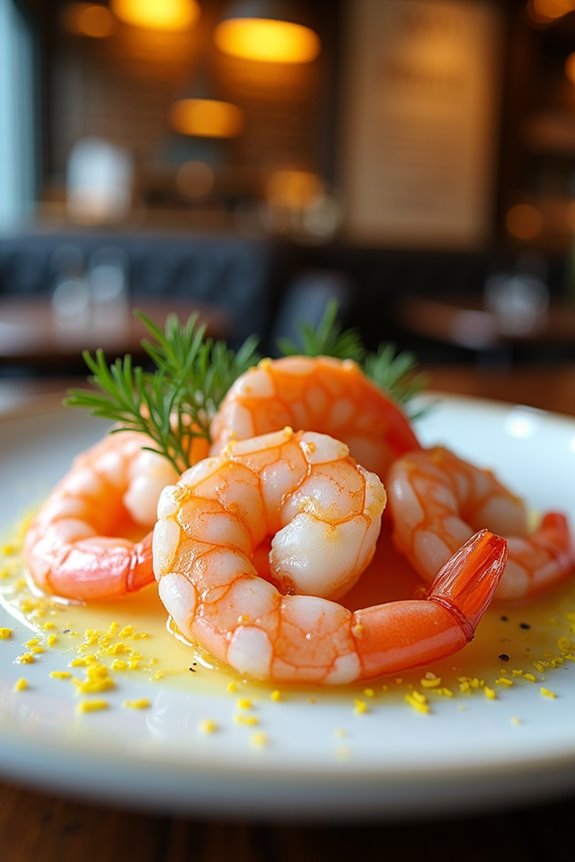
Ordering shrimp at a restaurant sounds simple, doesn’t it? You’d think so, but gluten hides everywhere. When you’re scanning the menu, look for dishes labeled gluten-free or ask your server directly about safe options.
| What to Ask | Why It Matters | Your Action |
|---|---|---|
| Is the shrimp breaded? | Wheat coatings contain gluten | Request unbreaded shrimp |
| What sauces are used? | Teriyaki and soy often contain gluten | Choose oil-based alternatives |
| Separate cooking surfaces? | Cross-contamination risks remain high | Confirm clean utensils |
Request grilled, steamed, or sautéed preparations instead. Ask about sauces separately—teriyaki, soy, and creamy gravies typically contain gluten. Don’t hesitate asking questions; restaurants expect them. Confirm they’re using separate utensils and cooking surfaces for your shrimp. Simple olive oil, garlic, and herbs work beautifully. You’ve got this!
Nutritional Benefits of Shrimp for Gluten-Free Diets
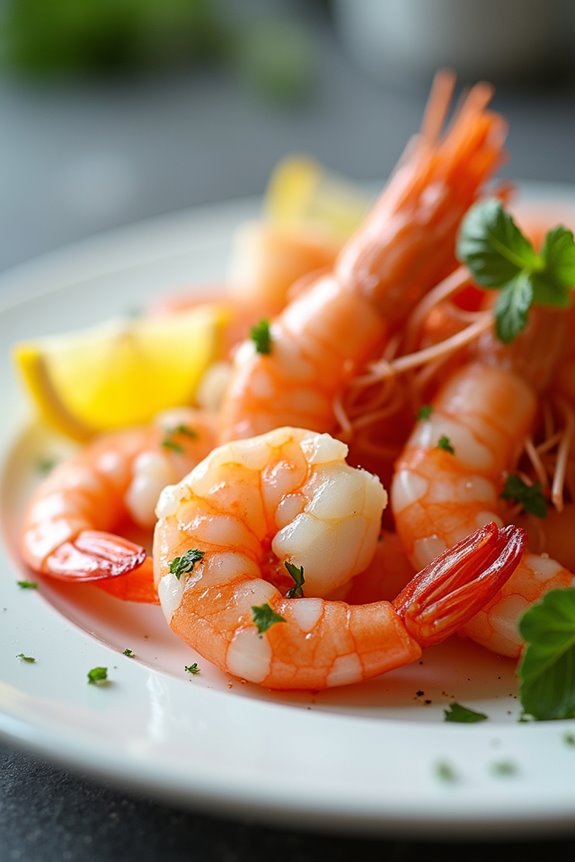
When you’re eating gluten-free, shrimp becomes your covert edge for getting serious nutrition without the fuss. You’ll get about 20 grams of protein per three-ounce serving, which keeps your muscles happy and your wallet lighter than pricier proteins. Plus, shrimp delivers essential minerals like selenium and iodine while staying low in calories, so you’re getting way more bang for your nutritional buck.
Protein Power for Celiac
Most people don’t realize that shrimp’s already doing half the work for you. When you’re managing celiac disease, finding high-quality protein without cross-contamination worries feels like winning the lottery. A 3-ounce serving delivers 17–20 grams of protein with almost no fat. That’s lean muscle support you can actually trust.
Here’s why shrimp fits perfectly into your gluten-free meals:
- Zero gluten naturally—no hidden ingredients lurking in your protein source
- Minimal preparation needed—you’re eating real food, not processed stuff
- Essential minerals like selenium and zinc that your gluten-free diet might miss
- Low carbs that keep your energy steady throughout the day
Skip the breaded versions and gluten-containing sauces. Grilled, steamed, or sautéed shrimp gives you reliable nutrition without the stress. You’re part of a community finding solutions together.
Essential Minerals and Vitamins
Beyond the protein payoff, shrimp’s mineral lineup is where things get really interesting. You’re getting selenium, iodine, and zinc in every serving. These minerals work together to support your thyroid function and boost your immune health. Your body needs them to fight off illness and defend against oxidative stress.
But there’s more. Shrimp delivers B vitamins, especially vitamin B12, which your body uses for red blood cell formation. That means better energy and stronger nervous system health. You’re essentially fueling two critical systems simultaneously.
When you’re navigating a gluten-free diet, these nutrients matter. They fill gaps that might otherwise develop. Pair your shrimp with other whole foods, and you’re building a genuinely balanced eating plan. You’re not just avoiding gluten—you’re actively nourishing yourself.
Low-Cost Nutrient Density
You’ll find shrimp delivers astonishing nutritional value without breaking the bank. When you’re managing a gluten-free lifestyle, affordable protein sources matter big time.
Here’s why shrimp wins for budget-conscious eaters:
- Pack 20–24 grams of protein in just 3 ounces for muscle support
- Cost less per serving than many gluten-free processed alternatives
- Contain selenium and vitamin B12 without premium price tags
- Stay low-calorie and low-fat while staying incredibly filling
You’re getting mineral-rich nutrition that prevents common deficiencies plaguing restrictive diets. Grilled, steamed, or boiled shrimp requires minimal prep and pantry staples. No expensive specialty products needed here. You’ll stretch your gluten-free budget while nourishing your body with real, whole food. That’s the affordable nutrient density you’re looking for.
Gluten-Free Shrimp Recipes for Every Meal
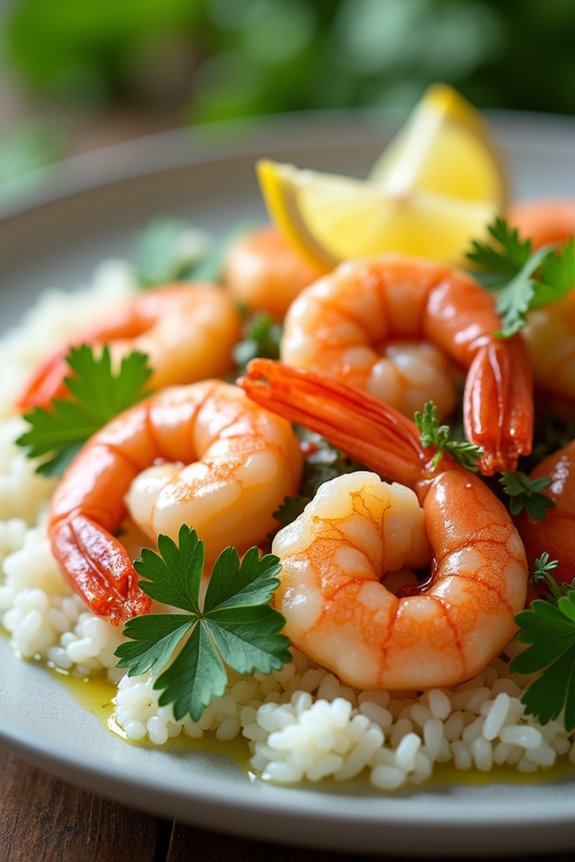
Want to know the easiest protein for a gluten-free kitchen? Shrimp’s your answer. You can whip up gluten-free shrimp recipes for breakfast, lunch, dinner, and snacks without stress.
Start simple with garlic lemon shrimp over rice. Toss your shrimp in olive oil, fresh lemon juice, minced garlic, and herbs. It’s inherently gluten-free and ready in minutes.
For lunch, try shrimp and vegetable stir-fry using gluten-free soy sauce instead of regular. You’ll love how quickly it comes together.
Dinner calls for shrimp salads with avocado and citrus dressing. Pair your seafood with quinoa or roasted vegetables for complete gluten-free meals.
Here’s the key: always check store-bought seasonings and sauces for hidden gluten or barley malt. Choose certified gluten-free options when shopping.
You’ve got this.
What to Look for on Shrimp Labels and How to Store Them
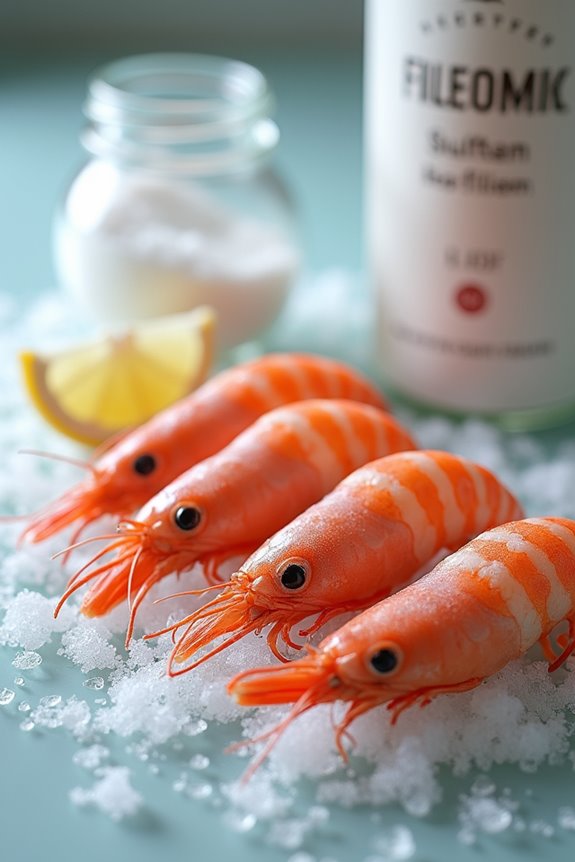
Now that you’ve got some easy recipes down, let’s talk about picking the right shrimp at the store.
Now that you’ve mastered the recipes, it’s time to become a detective and master the art of picking the right gluten-free shrimp at the store.
When you’re shopping, you’re basically detective hunting for hidden gluten sources. Here’s what to check:
- Look for “gluten-free” labels or certifications showing less than 20 ppm gluten
- Scan ingredient lists for suspicious additives and seasonings
- Verify pre-brined shrimp don’t contain gluten-filled hydrolyzed proteins
- Confirm processing facilities don’t cross-contaminate your shrimp
Fresh shrimp belong in your coldest fridge spot—aim for 32–38°F. You’ve got one to two days before using them. Freezing at 0°F or colder keeps them fresh longer.
Always read those labels carefully. You’re not being paranoid; you’re being smart. Your gluten-free journey matters, and knowing exactly what you’re buying makes everything easier.
Easy Ways to Make Shrimp Your Weekly Gluten-Free Staple
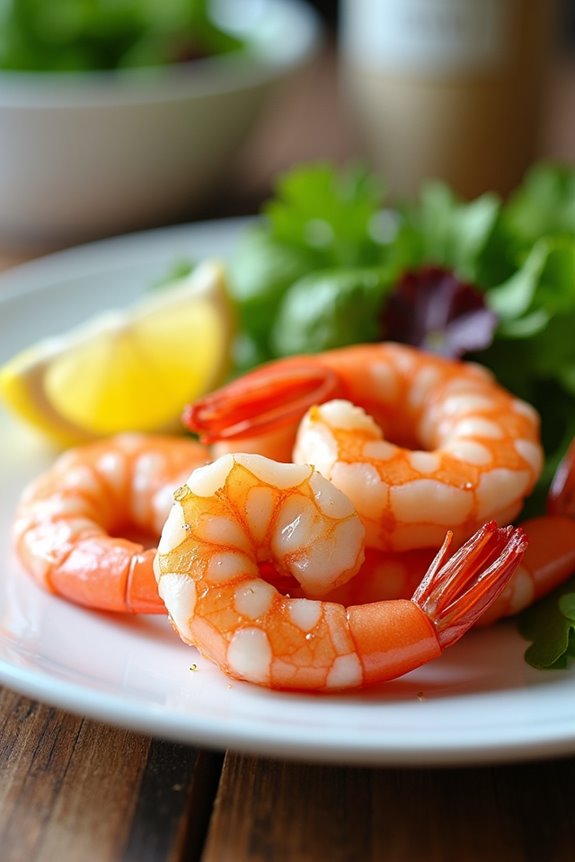
How do you turn shrimp into something you actually eat every week?
Start simple. Sauté shrimp with olive oil and garlic for quick gluten-free prep. You’ll have a high-quality protein ready in minutes. Pair it with gluten-free grains like rice or quinoa, then add fresh vegetables for balanced gluten-free meals.
Another option? Simmer shrimp in gluten-free tomato sauce. It’s foolproof and absolutely delicious. Check your sauces and labels carefully though—hidden gluten sneaks in everywhere.
Stir-fries work great too. Use certified gluten-free soy sauce and whatever vegetables you’ve got. That’s your weekly staple right there.
The trick isn’t fancy cooking. It’s keeping things repeatable and tasty. When shrimp becomes routine, you’re building meals that actually stick around your dinner table.