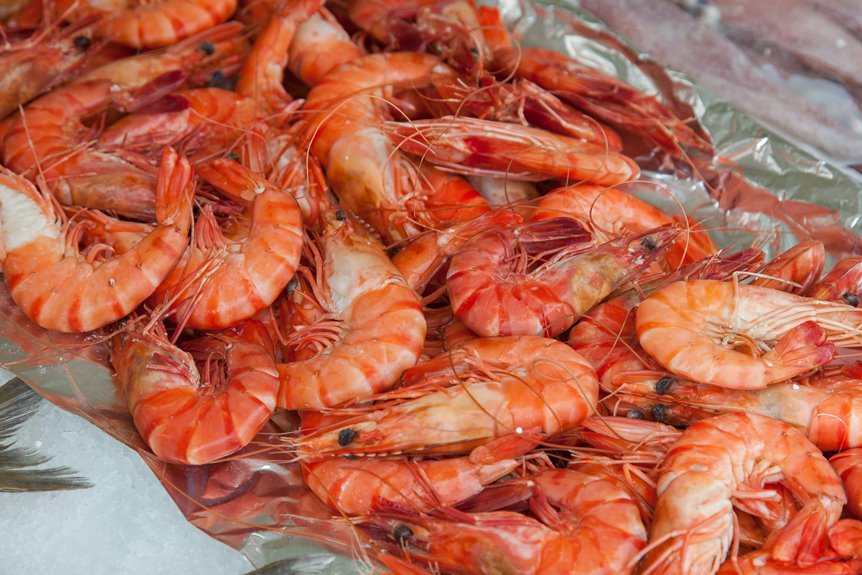
You’ve got 3–6 months with raw frozen shrimp and 2–3 months with cooked shrimp before quality takes a nosedive. The trick? Freeze ’em in a single layer first, then bag ’em with minimal air to dodge freezer burn. Once you thaw them in the fridge (8–12 hours) or cold water (30–45 minutes), use ’em within 1–2 days or they’ll go slimy. Watch for ammonia smells or gray spots—that’s your signal to toss. There’s way more to master about proper thawing and spoilage spotting ahead.
Raw Frozen Shrimp Lasts 3–6 Months for Best Quality
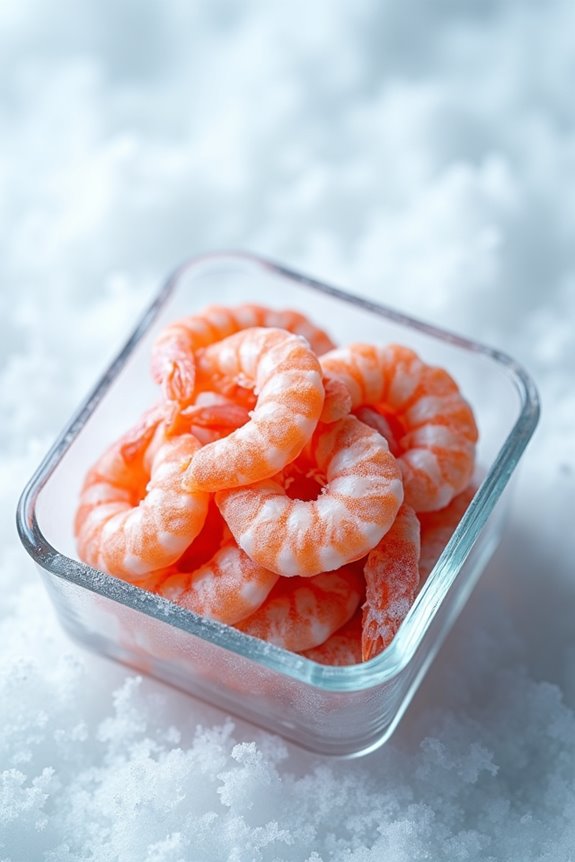
The freezer’s your best friend when you’ve got raw shrimp on hand. You can keep raw shrimp frozen for three to six months while maintaining best quality. During this freezer duration, your shrimp stays fresh and flavorful if you store it right.
Here’s the thing: freezer burn and off-flavors creep in after that six-month window closes. That’s why staying within the best quality timeframe matters. Keep your freezer at zero degrees Fahrenheit or below, and you’re golden.
Pro tip—freeze raw shrimp in a single layer first. Then transfer them to labeled freezer bags or airtight containers. This approach minimizes air exposure and keeps quality high. Once you thaw your shrimp, don’t refreeze it. Cook or use it within one to two days instead.
Cooked Frozen Shrimp: 2–3 Months Before Quality Declines
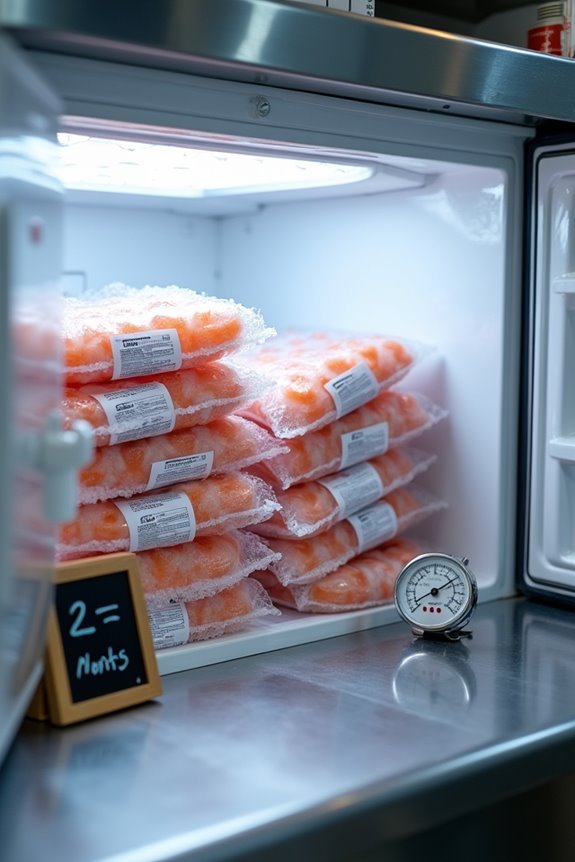
Cooked shrimp’s a different ballgame than raw shrimp regarding freezer storage. You’ve got about 2 to 3 months before quality decline becomes noticeable. After that window closes, your shrimp won’t taste its best.
Here’s the game plan: use airtight storage containers or freezer bags to protect your frozen shrimp from freezer burn and weird odors. Seriously, airtight is your best friend here.
Always label your containers with the date. This simple habit keeps you from wondering how long that mystery bag’s been hiding in back.
When you’re ready to eat them, thaw overnight in your fridge or use cold water. Then consume within 1–2 days. You can refreeze thawed shrimp if you thawed them properly, but quality still takes a hit eventually.
How to Freeze Raw Shrimp to Prevent Clumping and Freezer Burn
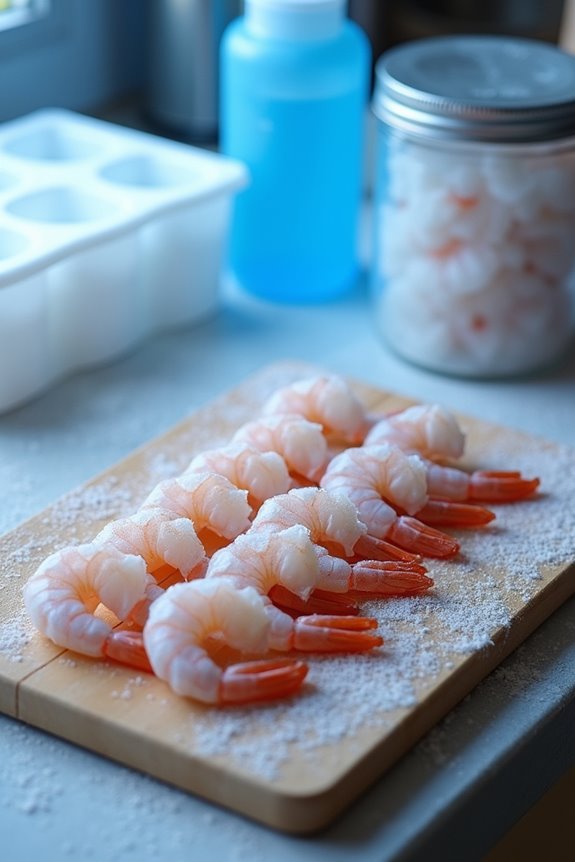
Freezing raw shrimp properly is way easier than you’d think, and it makes a huge difference. Start by patting your shrimp completely dry with paper towels. Moisture causes freezer burn, which honestly ruins the texture. Next, arrange them in a single layer on a baking sheet and pop it in the freezer for a couple hours. This prevents clumping so you’re not stuck with one giant shrimp brick. Once they’re solid, transfer them to freezer bags and squeeze out as much air as possible. Label everything with the date and shrimp type. You’ll want to use them within three to six months for the best quality. Keep your freezer at zero degrees or below, and never thaw and refreeze them.
Thaw Frozen Shrimp Without Turning It Rubbery: 2 Fast Methods
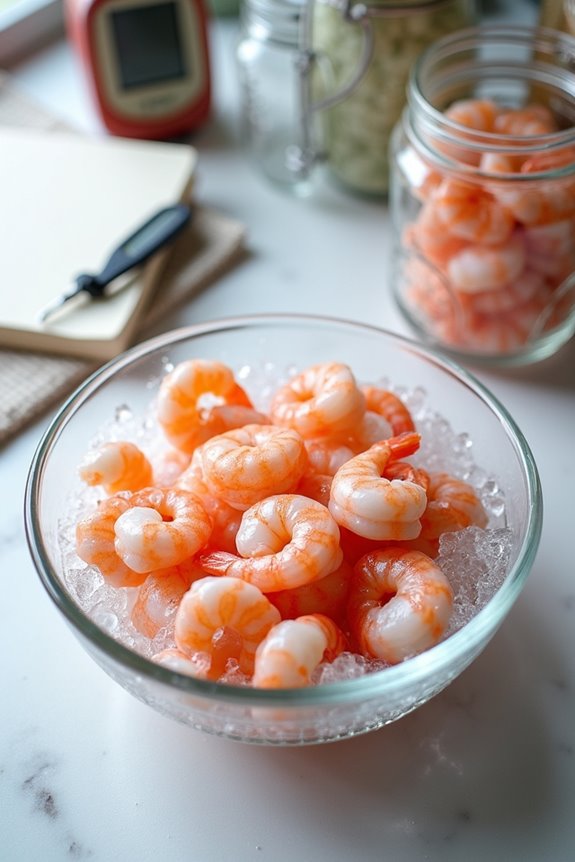
You’ve got two solid ways to thaw shrimp without ending up with that disappointing rubbery texture. The refrigerator method takes overnight but gives you the best results, while the cold water technique gets the job done in 30–45 minutes if you’re short on time. Both methods keep your shrimp tender, so you’ll pick whichever fits your cooking schedule.
Refrigerator Thawing Method
Want shrimp that’s tender instead of tough and chewy? The refrigerator thawing method is your best friend. Simply place your frozen shrimp in the fridge overnight for 8–12 hours. This gentle approach preserves texture and keeps food safety in check. If you’re short on time, try the cold water method instead. Pop your shrimp in a sealed bag and submerge it in cold water. Change the water every 30 minutes, and you’ll have thawed shrimp ready in 30–45 minutes for smaller portions. Here’s the thing: never thaw at room temperature. That invites bacterial growth and spoilage nobody wants. Once thawed, use your shrimp within 1–2 days if raw. This straightforward method means you’re joining the crowd who actually enjoys perfectly cooked shrimp.
Cold Water Thawing Technique
How’s cold water thawing different from the fridge method? It’s faster, honestly. You’ll thaw shrimp in just 15–30 minutes instead of waiting overnight. Here’s the deal: place your sealed shrimp bag in cold water and swap out the water every 30 minutes. This keeps everything evenly thawed without accidentally cooking your shrimp.
| Method | Time | Best For |
|---|---|---|
| Cold Water (changing) | 30–60 minutes | Patient folks |
| Cold Water (quick) | 15–30 minutes | Hungry folks |
| Room Temperature | NOT recommended | Nobody, honestly |
Skip room-temperature thawing entirely—it’ll turn your shrimp rubbery and gross. Once thawed, cook immediately or refrigerate for 1–2 days. Don’t refreeze shrimp storage mistakes. You’ve got this!
How Long Thawed Shrimp Stays Fresh in the Fridge
Once you’ve thawed your shrimp, you’re working against the clock a little bit. Raw thawed shrimp’ll stay fresh for just 1–2 days in your fridge if you keep it at 40°F or colder, while cooked shrimp buys you a few extra days—up to 3–4 days in an airtight container. Before you cook or eat them, give your shrimp the sniff test and look for any slimy texture, ammonia odor, or weird discoloration, because those are your signs that they’ve gone bad and need to hit the trash.
Safe Refrigeration Timeframe
So you’ve thawed your shrimp—now what? Here’s the deal with refrigeration timing. Raw thawed shrimp lasts just 1–2 days in your fridge at 40°F or below. Cooked shrimp? You’ve got a bit more breathing room—3–4 days. The clock starts ticking the moment you thaw them, so refrigerate within two hours. Don’t leave them sitting on your counter. Before cooking or eating, give your shrimp the sniff test. Check the texture and color too. Anything off-smelling or slimy means toss it out. Here’s the kicker: don’t refreeze raw thawed shrimp. Once they’re thawed, that’s it for freezer storage. Follow these guidelines, and you’ll keep your shrimp safe and delicious every single time.
Proper Storage Container Methods
The right container makes all the difference—seriously. You’ll want an airtight container that keeps your thawed shrimp fresh and odor-free. We’ve all opened the fridge to mysterious smells, right? An airtight seal prevents that nightmare.
Store your container on the bottom shelf where temperatures stay most stable at 40°F or below. Raw shrimp lasts 1–2 days this way, while cooked shrimp hangs around 3–4 days. Pretty solid window for meal planning.
Before using freezer storage again, remember: proper thawing methods matter. Whether you thaw overnight in the fridge or use the cold water method, never leave shrimp sitting out. That’s when things get sketchy.
Once thawed, keep everything sealed tight in that airtight container. Your future self will thank you for the organization.
Signs Of Spoilage Detection
How do you know when thawed shrimp’s gone bad? Your nose and eyes are your best friends here. Trust your senses—they’ll alert you to shrimp spoilage before you make a mistake.
| Sign of Spoilage | What to Do |
|---|---|
| Sour, fishy, or ammonia odor | Discard immediately |
| Slimy or mushy texture | Throw it out safely |
| Gray or black spots | Don’t risk it |
Thawed raw shrimp lasts 1–2 days in your fridge. Thawed cooked shrimp hangs around 3–4 days. Here’s the thing: freezer storage doesn’t matter once you’ve thawed. You’re now racing against time. If anything seems off—weird smell, odd texture, strange color—toss it. Foodborne illness isn’t worth the gamble. When in doubt, throw it out.
Can You Refreeze Thawed Shrimp Safely?
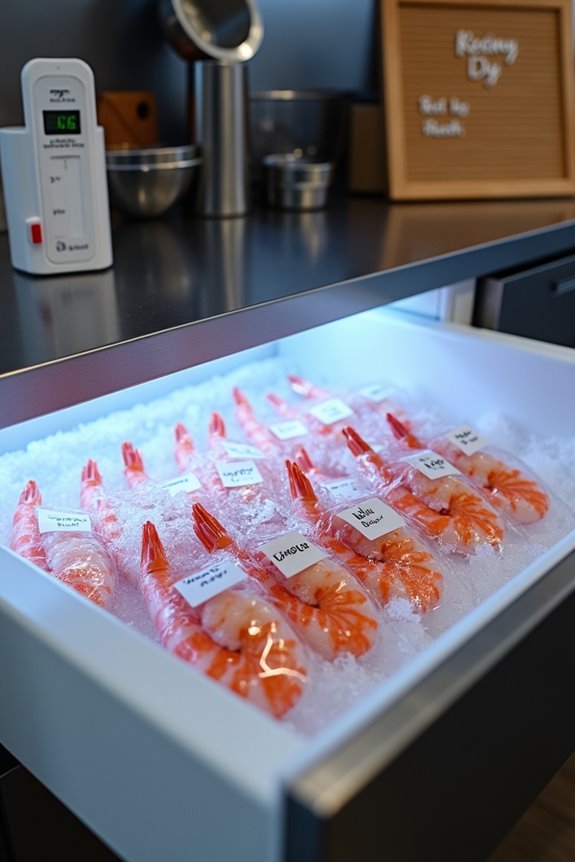
Ever wonder if you can pop thawed shrimp back in the freezer? You actually can, but there’s a right way to do it. Safety depends entirely on how you thawed your shrimp in the first place.
Can you refreeze thawed shrimp? Yes, but the method matters—safe refreezing depends entirely on how you thawed it first.
Here’s what you need to know about refreezing:
- Thaw in your fridge or cold water for safe refreezing options
- Never refreeze shrimp thawed at room temperature
- Cook cold-water-thawed shrimp before refreezing it
If you thawed your shrimp in the refrigerator, you’ve got two hours at room temperature before refreezing becomes risky. Label everything with today’s date so you remember when you originally froze it. Refrozen shrimp stays good for one to two months, but honestly, freezing once is ideal. Your taste buds will thank you for keeping things simple and fresh.
Freezer Burn on Frozen Shrimp: When It’s Safe vs. When to Toss
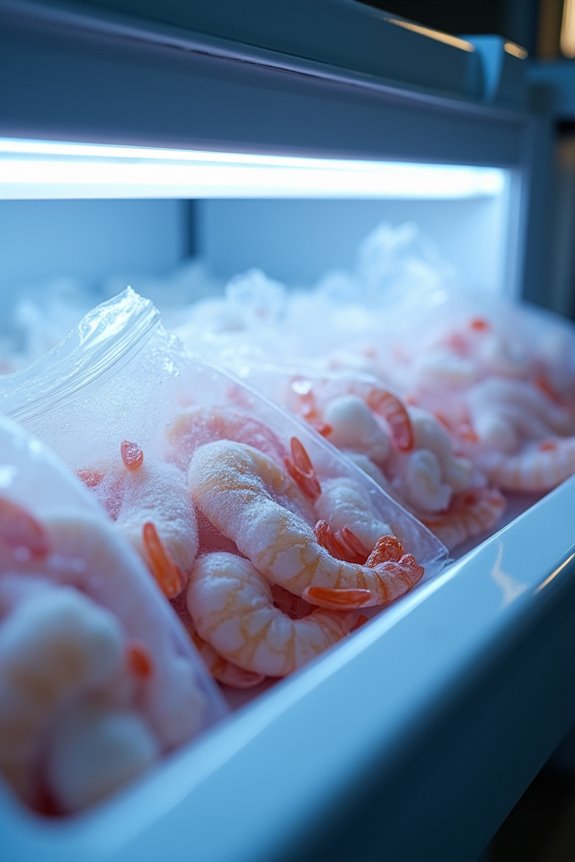
You’ve opened your freezer and spotted white or grayish patches on your shrimp—what’s that all about? That’s freezer burn, and here’s the good news: it’s not a safety issue. Your shrimp are still safe to eat, which honestly beats tossing them out.
The catch? Freezer burn does mess with texture and flavor. The patches form when moisture escapes during freezer storage, leaving behind those telltale white spots.
To prevent this in the future, freeze raw shrimp in a single layer first. Then transfer them to a labeled freezer bag with minimal air. Keep your freezer at a consistent 0–4°F temperature.
Once you thaw frozen shrimp, use them within two days. This helps minimize quality loss beyond what freezer burn’s already caused.
Identifying Spoilage Signs in Frozen Shrimp
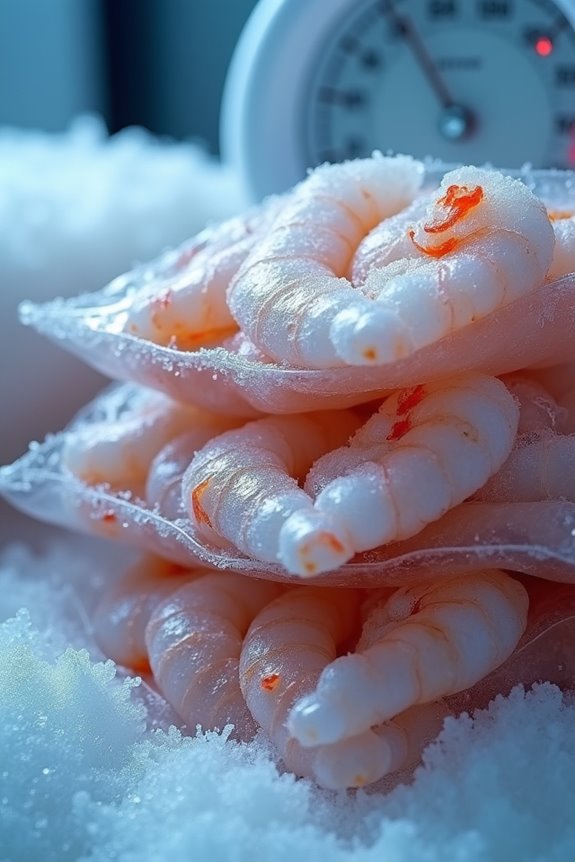
When’s the right time to actually throw out your frozen shrimp? You’ll spot spoilage signs pretty easily if you know what to look for. Beyond freezer-burn, which is just a quality issue, real problems show up differently.
Check for these warning indicators:
- Off odors – Strong ammonia, sour, or fishy smells mean spoilage has happened
- Texture changes – Slimy, mushy, or weirdly chewy shrimp signals bacterial growth
- Discoloration – Yellowing or black spots indicate poor quality or degradation
When you thaw your shrimp, pay attention to the thawed aroma immediately. Fresh shrimp shouldn’t smell strongly unpleasant. If anything seems off—weird texture, funky smell, strange color—toss it without hesitation. Your gut feeling matters here. Trust yourself to make the right call about what stays on your plate.