Yeah, you can totally smoke a pork loin—and it’s honestly easier than you think. Set your smoker to 225°F and plan about 30 minutes per pound. The real trick? Don’t skip the rest period. After hitting 145°F internally, let it sit 10–15 minutes under foil to lock in those juices. Use mild woods like apple or cherry, monitor your temp in a few spots, and you’ll get seriously impressive results. Want to know exactly how to nail it every time?
Yes: Smoke Pork Loin at 225°F for Juicy Results
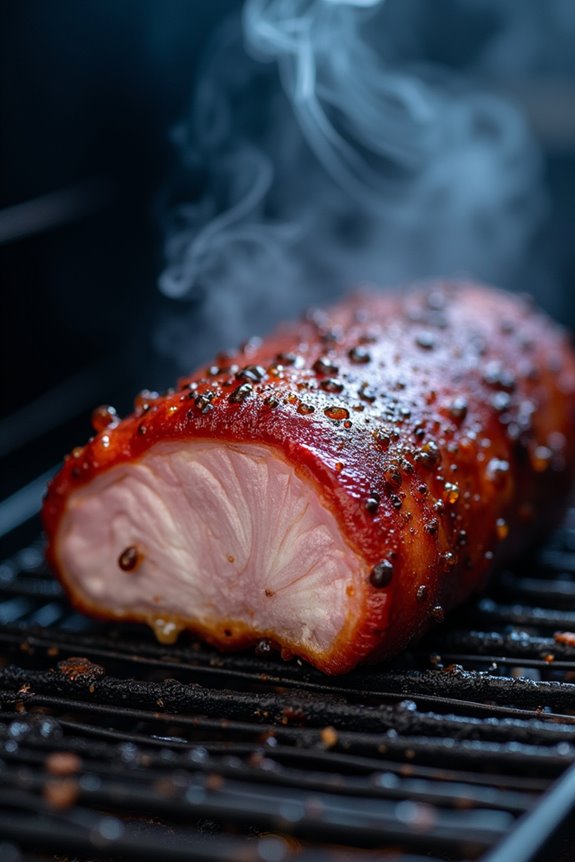
Smoking a pork loin is easier than you’d think, and you’ll end up with incredibly juicy results. Set your smoker to 225°F and plan about 30 minutes per pound. You’re aiming for an internal temperature of 145°F in the thickest part—that’s your real finish line, not the clock.
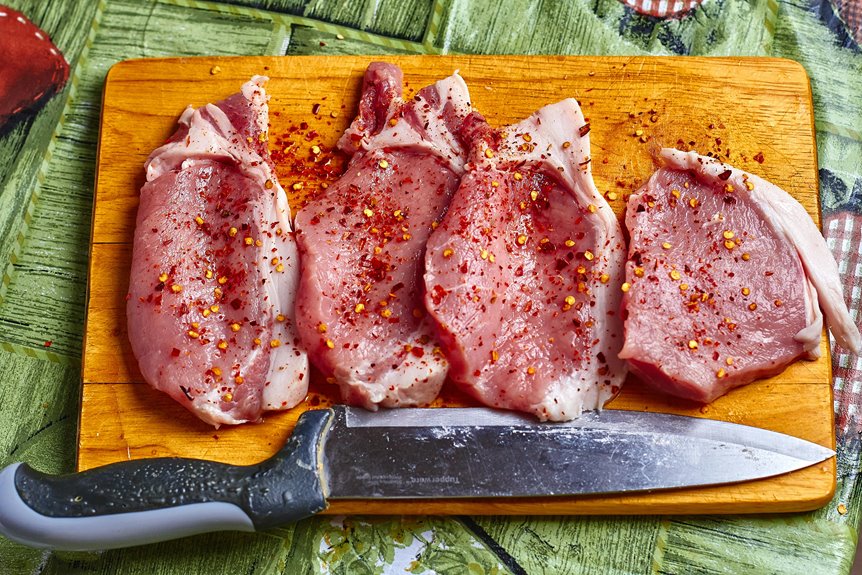
Before smoking, trim excess fat and score what remains to a quarter-inch. Rub your loin with olive oil and a sweet rub like Hey Grill Hey Signature or Bourbon Apple Rub. These enhance the natural pork flavor beautifully.
Use mild fruit woods like apple or cherry for smoking. They won’t overpower your meat. Once you hit that 145°F target, rest your pork for 10–15 minutes. You’ve joined the club of people who actually know how to smoke meat properly.
Pork Loin vs. Tenderloin: Choose the Right Cut
Before you throw any pork cut on the smoker, you’ll want to know which one you’re actually working with. Pork loin and tenderloin might sound interchangeable, but they’re totally different animals—literally.
Pork loin is that big, versatile center-cut from the upper rib area. You can slice it into chops or keep it whole for smoking. Tenderloin, though? It’s a long, thin muscle running along the spine that cooks way faster and can’t really replace loin in recipes.
Here’s the real deal: loin gives you flexibility with size and cooking methods. You’ll smoke it beautifully at 225°F for juicy, tender results. Tenderloin cooks quickly but needs careful attention to avoid drying out.
Both reach safe cooking temperatures around 145°F. Choose loin if you want that classic smoked pork experience with serious flavor and options.
Prep and Season Your Loin for Maximum Smoke Absorption
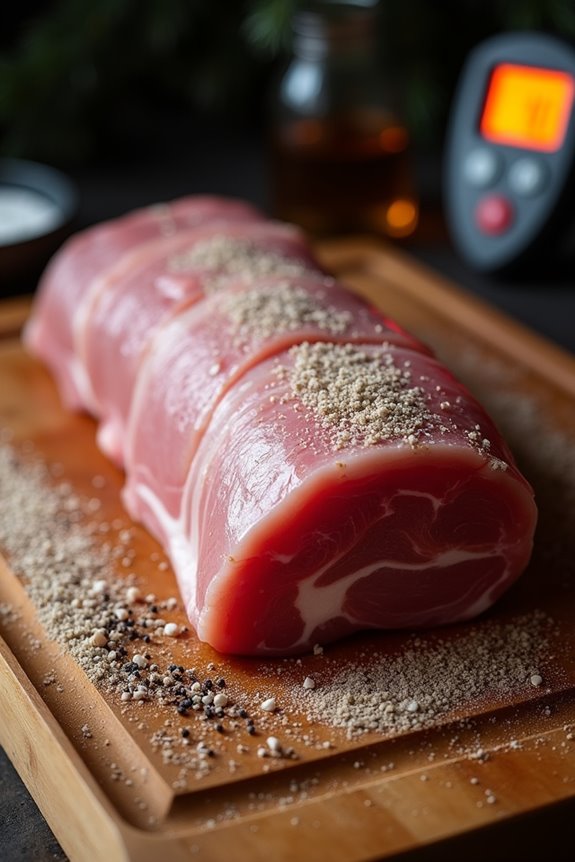
How’s your pork loin looking right now? It’s time to get it smoking-ready.
Start by trimming any excess fat, then score that fat cap diagonally to about 1/4 inch deep. This simple step helps smoke and flavor really penetrate your meat. Next, slather on some Dijon mustard—it’s your secret binder that holds everything together.
Now comes the fun part: coat your loin evenly with a Bourbon Apple Rub. This sweet rub balances perfectly with savory smoke. You’re creating layers of flavor that’ll make everyone wonder what your secret is.
Set your smoke temperature to 225°F and place your rubbed loin directly on the grates. Let that rub work its magic until your internal temperature hits 145°F. Rest it for ten minutes before slicing. You’ve got this!
Smoking Time and Temperature for Pork Loin
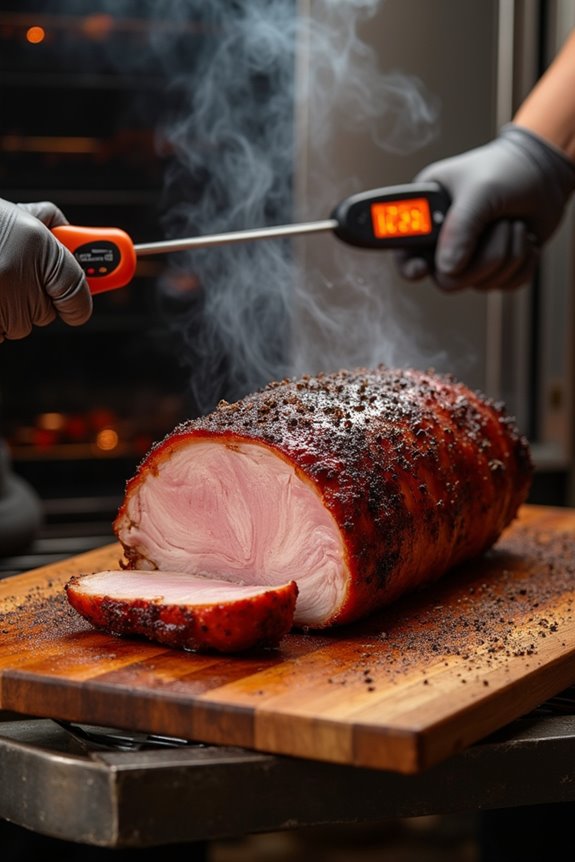
Now that your loin’s dressed up and ready to go, it’s time to actually get it smoking. You’ll want to aim for 225°F in your smoker—that’s the sweet spot for pork loin. As for smoking time, plan roughly 30 minutes per pound. A 3-pound loin takes about 1.5 hours, while a 6-pounder needs around 3 hours. Here’s the thing: these times aren’t set in stone. Your smoker type and temperature consistency matter. The real indicator? Your internal temperature should hit 145°F at the thickest part. Once you reach that temperature, don’t skip resting your meat. That 10-15 minute rest keeps everything juicy and tender before you slice.
How to Avoid Drying Out Your Pork Loin?
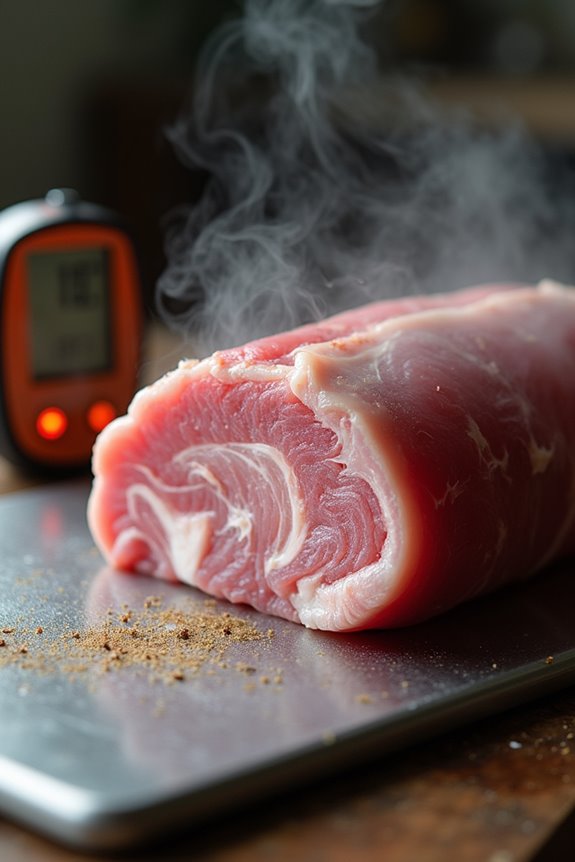
You’ll want to keep that fat layer intact because it’s your best friend against dryness. Check your internal temperature in 2–3 spots so you don’t accidentally overcook it past 145°F, which’ll dry things out fast. Letting your loin rest for 10–15 minutes after smoking gives the juices time to settle back in, making every slice tender and juicy instead of tough.
Retain The Fat Layer
Why does that thin fat cap matter so much? That layer acts as your pork loin’s built-in moisture shield. During smoking at 225°F, it keeps basting juices locked inside where they belong. You’ll want to trim excess fat, but keep that protective layer intact. Score it diagonally to 1/4 inch deep—this lets your rub penetrate while preserving moisture retention. Before applying your rub, slather the loin with olive oil. This extra step seals in moisture and promotes even heat transfer throughout smoking. The fat layer preservation pays off when you finish by pouring resting juices over your sliced meat. You’re basically building a moisture-retention system that works with your smoking temperature, not against it. Your fellow pitmasters understand this trick keeps everything juicy.
Monitor Internal Temperature Carefully
How’d you know when your pork loin’s actually done without slicing into it? That’s where your trusty thermometer becomes your best smoking buddy. You’ll want to aim for an internal temperature of 145°F in the thickest part. Check multiple spots—at least two or three different areas—to ensure even doneness throughout.
Here’s the thing: don’t rely on just one reading. Temperature variations happen, and you’re protecting against both undercooking and that dreaded drying out. Once you hit 145°F, resist the urge to keep poking it. Instead, pull your loin off the heat and let it rest for 10–15 minutes under foil. This rest time lets those juices redistribute throughout the meat, keeping everything tender and juicy.
Rest, Slice, and Serve: Keeping Juices in Every Bite
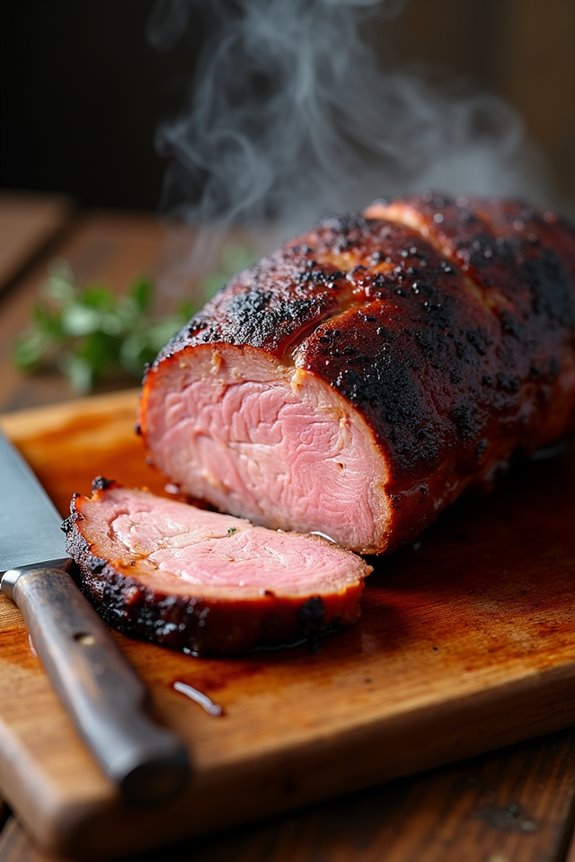
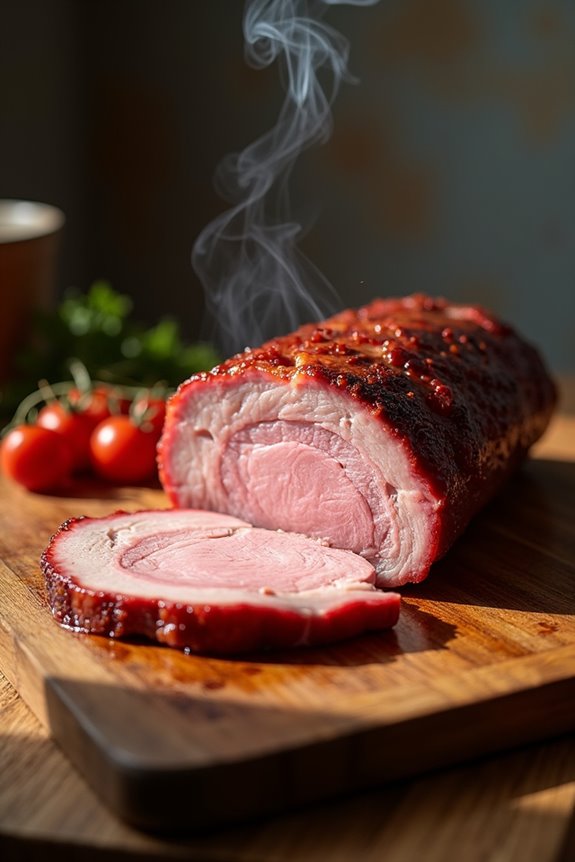
After you pull that pork loin off the smoker, you’ve gotta tent it with foil and let it sit for 10 minutes—this resting period’s non-negotiable if you want juicy slices. When you’re ready to cut, slice against the grain with even strokes to keep the moisture locked inside each piece. Here’s the real move: collect those pan juices and spoon them right over your slices before serving, because that’s where all the flavor hangs out.
The Resting Period Matters
You’ve just pulled your beautiful smoked pork loin off the grill—don’t slice into it yet! This resting period matters more than you’d think. Here’s why your patience pays off:
- Juice redistribution happens during rest. The resting period lets juices move back into the meat instead of pooling on your cutting board.
- Moisture retention keeps slices tender. Waiting 10 to 15 minutes under foil prevents significant juice loss when you cut.
- Sliced against the grain ensures even texture. This technique works best after proper resting distributes those precious juices throughout.
Tent that foil loosely over your loin. This maintains warmth while juices reabsorb into the meat. You’re not just waiting around—you’re locking in flavor and tenderness. Trust the process, and you’ll notice the difference immediately when you slice.
Slicing Against The Grain
Why’s slicing technique so important for your smoked pork loin? Because it determines whether you’re biting into tender, juicy perfection or chewy disappointment.
After resting your loin, you’ll slice against the grain. This shortens muscle fibers, making each bite genuinely tender. You’re essentially breaking down the structure that’d otherwise resist your teeth.
Find the grain direction first. Then slice perpendicular to it, keeping cuts thin and consistent.
| Slicing Method | Texture | Juiciness |
|---|---|---|
| Against grain | Tender, soft | Maximum retained |
| With grain | Chewy, tough | Moisture lost |
| Thick cuts | Dense | Harder to chew |
When juices pool on your cutting board, spoon them back over sliced portions. You’ve earned that moisture through proper resting and slicing. Don’t waste it. That’s the secret to memorable smoked pork loin every single time.
Common Mistakes That Ruin Smoked Pork Loin
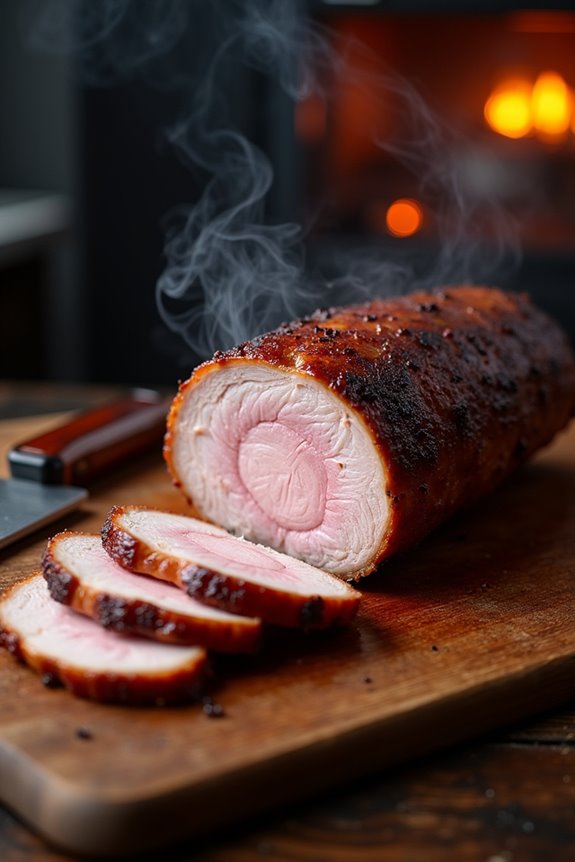
Even the best-laid smoking plans can go sideways pretty fast. You’ve got to avoid some serious pitfalls when smoking your pork loin.
Here’s what’ll trip you up:
- Skipping fat cap scoring prevents smoke from penetrating deeply, leaving you with bland, dry meat that disappoints
- Ignoring smoking temperature control means fluctuating heat that creates uneven doneness and tough, dried-out edges throughout
- Rushing the rest period after smoking causes juice loss; you need 10–15 minutes under foil minimum
Don’t overcook past 145°F either. Monitor internal temperature in 2–3 spots for even results. Long smoking sessions at 225°F without moisture management? That’s dryness waiting to happen.
Your pork loin deserves better. Skip these mistakes, nail your technique, and you’ll join the crew serving seriously impressive smoked meat every single time.