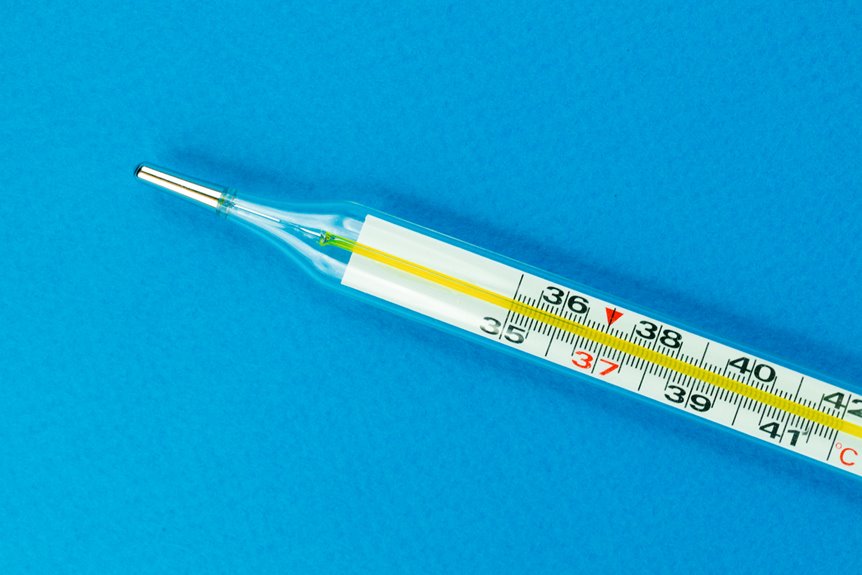
You’ll want to stick your probe in the thickest part of the breast and the deepest part of the thigh—those spots cook slowest and tell you what actually matters. Insert horizontally from the side, positioning the tip about half to one inch from bone, and make sure it’s fully buried in meat. Aim for thigh temps around 170–175°F and breast around 157–160°F. Avoid bones and air pockets, which’ll throw off your readings completely. There’s definitely a right way to do this that’ll change your turkey game.
Place Your Probes: Breast and Thigh Locations
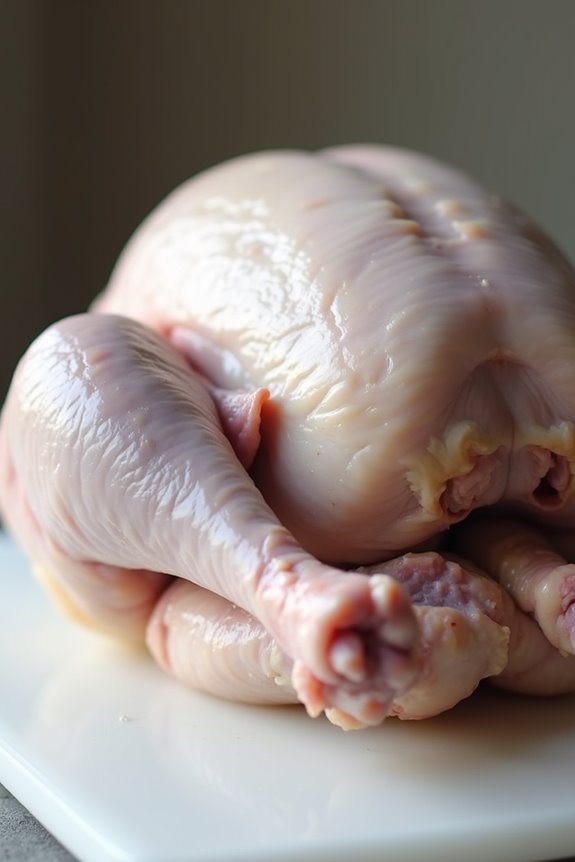
Where exactly should those temperature probes go? You’ll want to place your probes in the thickest muscle portions—that’s where you’ll get reliable doneness readings. For the breast, insert your probe from the side near the neck cavity. Position the tip about 1/2 to 1 inch from the internal cavity, away from bone. Make sure it’s fully submerged in muscle with even meat layering above and below.
Your thigh probe placement matters just as much. Stick it in the deepest part where the leg meets the body. This dark meat cooks slower, so monitoring it separately keeps everything perfectly done. Avoid bones and air pockets—they’ll throw off your readings completely. Center both probes in their thickest muscle sections for accurate, trustworthy temperature checks.
Why Thermal Centers Matter in Turkey Probe Placement
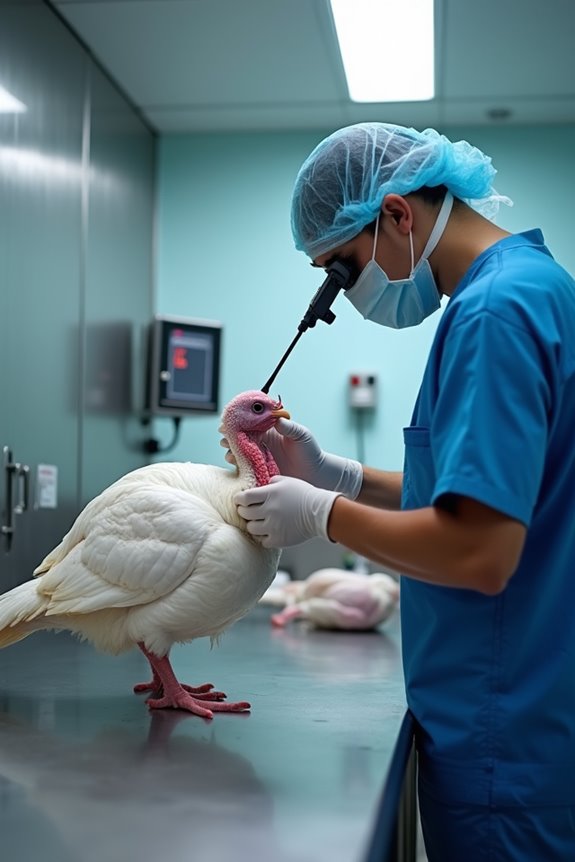
Why does probe placement matter so much? You’re basically hunting for the slowest-heating spot. That’s your thermal center—the thickest part of the breast where doneness actually decides itself.
Here’s why nailing this matters:
Nailing probe placement avoids false readings, prevents bone contact mishaps, makes carryover cooking predictable, and delivers perfectly finished turkey every time.
- You’ll avoid false readings that skip straight to the exterior’s faster heat
- Bone contact ruins everything by tricking your thermometer toward outer temps
- Carryover cooking gets predictable when you start from the actual center
- Your turkey finishes perfectly without dry edges or raw pockets
Insert your oven-safe probe into the deepest breast section, hitting that minimum immersion line. Skip the bones entirely. This doneness reading becomes your reliable guide. Larger turkeys need adjusted placement to actually reach that thermal center. You’re not guessing anymore—you’re measuring what matters.
Inserting Your Probe: Depth, Angle, and Position
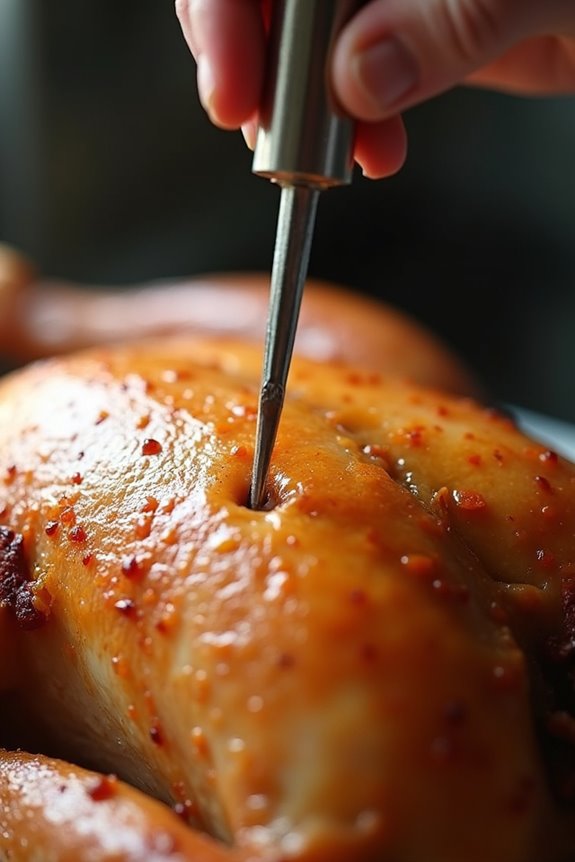
Getting your probe into the right spot isn’t rocket science, but it does take a little finesse. You’ll want to aim horizontally from near the neck cavity. Insert your oven-safe probe into the turkey breast’s thickest muscle, keeping it about 1/2 to 1 inch from the internal cavity.
Here’s the thing about probe depth—you need full submersion to the minimum immersion line for accurate readings. This placement ensures you’re measuring the thermal center, where heat takes longest to reach.
Now, the critical part: avoid bone, gristle, and the pan at all costs. Bone contact gives you false readings that’ll throw off your entire timeline. Position that probe horizontally and keep it steady. You’ve got this!
Avoid Common Placement Mistakes and How to Fix Them
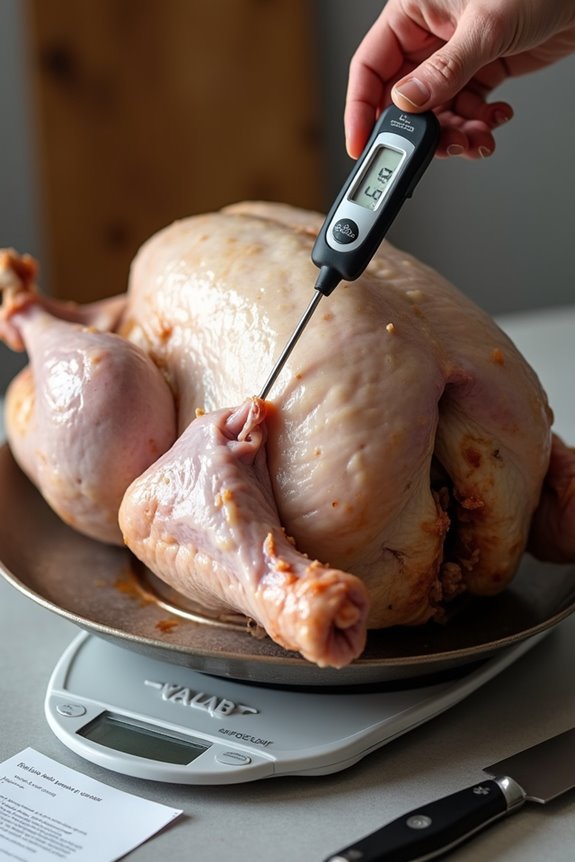
Even the best cooks mess up probe placement—and it’ll tank your temperature readings faster than you’d think.
Even the best cooks mess up probe placement—and it’ll tank your temperature readings faster than you’d think.
Here’s what goes wrong:
- Touching bone – Your probe reads artificially high when it hits bone instead of muscle tissue.
- Shallow insertion – Barely pushing the probe in catches surface temps, not actual doneness.
- Fat pockets – Placing your probe in fatty areas skews readings downward significantly.
- Cable pinching – Metal racks or pan edges distort signals when cables get trapped.
Fix these mistakes by inserting your probe into the thickest part of the breast or deepest part of the thigh. Keep the tip fully centered in muscle—no bone contact, no shortcuts.
Route your cables away from heat sources too. These simple adjustments transform your accuracy completely. You’ve got this!
Verify Doneness: Target Temperatures and Final Checks
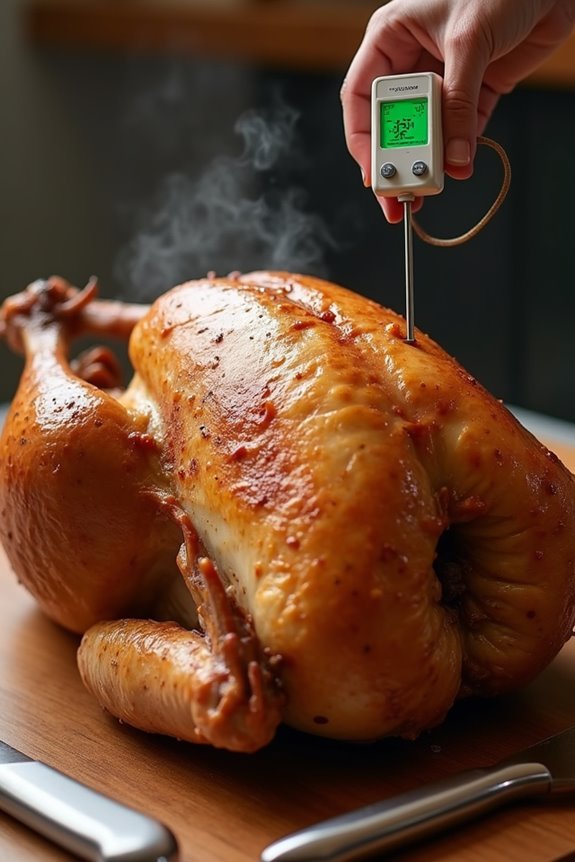
Once you’ve nailed your probe placement, the real payoff comes down to hitting the right target temperatures. You’re looking for your thigh to reach 170–175°F while your breast sits at 157–160°F. Here’s the thing: you’re not done yet. That’s where carryover cooking enters the picture. After you pull your turkey from heat, the meat keeps cooking for another 20–30 minutes. Your thermometer placement matters most during this final check phase. Use your instant-read thermometer in the thickest parts, avoiding bone contact. This ensures you’re actually reading meat, not bone. Let your turkey rest those 20–30 minutes so juices redistribute and safe final temperatures settle in. You’ve got this.