
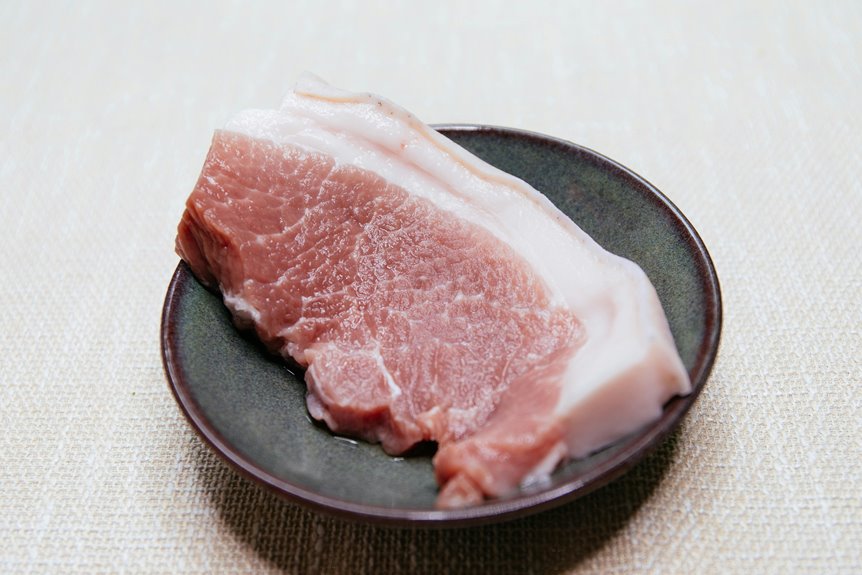
Pork jowl’s the cheek meat from a hog—tender, fatty, and honestly underrated. You’ve got two moves: braise it low and slow at 300°F for two hours for silky slices, or cure and smoke it for bacon-like results. Fresh jowl works best for braising; cured jowl gets fried crispy. Hunt for it at specialty markets, looking for firm texture and fresh color. The real magic happens when you finish those braised slices under the broiler for crispy edges.
What Makes Pork Jowl Different From Other Cuts
Ever wonder what that “Po’ Man’s Bacon” label really means? You’re looking at pork jowl—the cheek meat from a hog. Here’s what distinguishes it: it’s got tender meat layered with white fat, creating that silky texture you’ll love. Unlike pork belly, jowl has a different fat-to-meat ratio that works beautifully in hearty dishes. You can cure and smoke pork jowl yourself using just salt and curing salt, then slice it thin for bacon-like results. The real magic? When you cook it, you get crispy edges with that fatty, rich character that transforms beans and greens. It’s not identical to bacon, but it’s genuinely delicious in its own right.
Fresh or Cured? Choosing the Right Jowl for Your Recipe
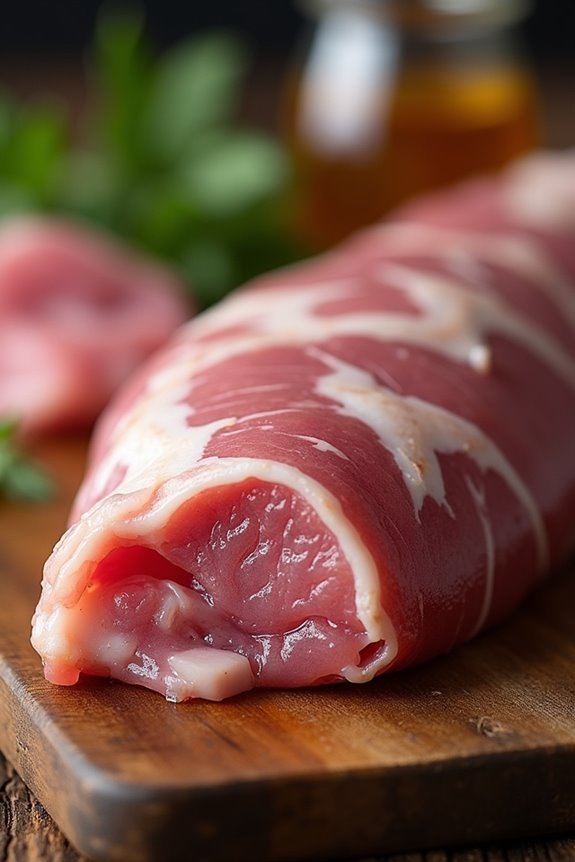
So what’s the difference between fresh and cured jowl? Fresh pork jowl works best when you’re braising. You’ll want to cook it low and slow, around 300°F for about two hours. The meat becomes incredibly tender that way. Cured jowl, also called jowl bacon, takes a different route. You slice it and fry it up like regular bacon. If you’re curing your own pork jowl at home, use a 2% salt and 0.25% curing salt ratio by weight. Then smoke it at 165°F for three to eight hours. Your choice depends on what you’re craving. Want fork-tender meat in a braised dish? Go fresh. Craving crispy, smoky strips? Choose cured.
Sourcing Quality Pork Jowl at the Market
You’ll want to hunt down specialty markets like Mai Wah Market on Clement Street in San Francisco for fresh pork jowl. Look for packages with four jowls that have fresh color, balanced fat-to-meat ratios, and zero weird smells—freshness matters hugely for cooking and curing. Honestly, finding jowl takes patience since butcher shops rarely stock this stuff regularly, but the flavorful payoff makes the search worthwhile.
Finding Fresh Jowl Locally
Where can you actually find pork jowl at your local market? You’ll want to hit up specialty butcher shops or Asian markets first. Places like Mai Wah Market on Clement Street in San Francisco stock fresh jowl in 1 lb packages regularly. Call ahead though—availability’s spotty since restaurants snap them up quick.
When you’re hunting, look for labels like “Sliced Pork Belly” or “Po’ Man’s Bacon.” That’s jowl in disguise. You might also find it sold in packs of four, which gives you options without committing to one giant batch.
The cut’s tender and fatty, perfect for curing at home. Don’t expect your regular grocery store to carry it—jowl remains a specialty item worth the extra effort to track down.
Selecting Quality Meat Cuts
Once you’ve found a butcher or market that stocks pork jowl, the real work begins—picking the good stuff. You’re looking for meat that feels firm to the touch, not mushy or squishy. The color should be clean and fresh-looking, not gray or browning at the edges. Open that package and give it a quick sniff—it shouldn’t smell off or funky. Avoid any packs swimming in excessive liquid or showing discoloration. Remember, pork jowl comes with varying fat-to-meat ratios and sometimes skin, which you can cook or remove depending on your preference. Think of yourself as a detective hunting quality cuts. Trust your instincts, and don’t settle for questionable packages. You’ve got this.
The Braising Method: Low and Slow for Silky Results
Now you’ll master the braising liquid and finishing techniques that transform tough jowl into silk. You’ll combine chicken broth, apple cider vinegar, hot pepper sauce, and warm spices—then let the oven work its magic at 300°F for about two hours. After your jowl’s tender and cooled, you’ll slice it thick and broil each side for just a few minutes until it’s got that perfect caramelized crust.
Braising Liquid Preparation
What makes pork jowl so incredibly tender and flavorful? Your braising liquid does the essential work. You’ll whisk together 1 cup chicken broth, 2 tablespoons apple cider vinegar, and 1 tablespoon hot pepper sauce. Then you’ll add 1/2 teaspoon smoked paprika, 1/2 teaspoon garlic powder, and 1/2 teaspoon dried thyme. This combination becomes your covert tool for penetrating the meat with flavor while keeping it moist throughout cooking.
The key? Make sure your liquid fully covers the jowl in a rimmed dish. You’re not just braising—you’re infusing every fiber with savory goodness. That acidic vinegar tenderizes while the spices build depth. This braising liquid transforms tough cuts into something genuinely spectacular, and honestly, it’s surprisingly simple to pull off.
Broiling Finish Technique
Here’s where things get really exciting—you’ve got tender, juicy pork jowl from your 2-hour braise, and now you’re about to give it a gorgeous, crispy edge.
First, let your pork jowl rest briefly after braising. Then slice it into ½-inch-thick pieces. This thickness is perfect for even cooking.
Position your oven rack six inches from the broiler heat. Place slices on a rimmed sheet and watch closely as you broil. You’ll cook each side for 2–3 minutes until golden brown.
The pork jowl will sizzle and may splatter, so stay nearby. You’re looking for crispy, caramelized edges that contrast beautifully with the tender meat inside.
If broiling feels intimidating, pan-frying or baking works too. Either way, you’re finishing like a pro.
Getting the Braising Liquid Right: Fat and Acid
Why does your braising liquid matter so much? It’s honestly the secret to tender, flavorful pork jowl.
The braising liquid is honestly the secret to tender, flavorful pork jowl.
You’ll combine 1 cup chicken broth with 2 tablespoons apple cider vinegar and 1 tablespoon hot pepper sauce. The acid breaks down tough connective tissue while keeping everything moist. Add ½ teaspoon smoked paprika, ½ teaspoon garlic powder, and ½ teaspoon dried thyme for depth.
Whisk everything together until blended. Use 1 teaspoon Diamond Crystal salt per 1.5 pounds of jowl. Make sure your liquid fully submerges the meat during that 300°F, 2-hour braise.
This balance between acid and savory flavors transforms pork jowl from chewy to fall-apart tender. Trust the process—you’ve got this.
Finishing Techniques: From Broiler to Cast Iron
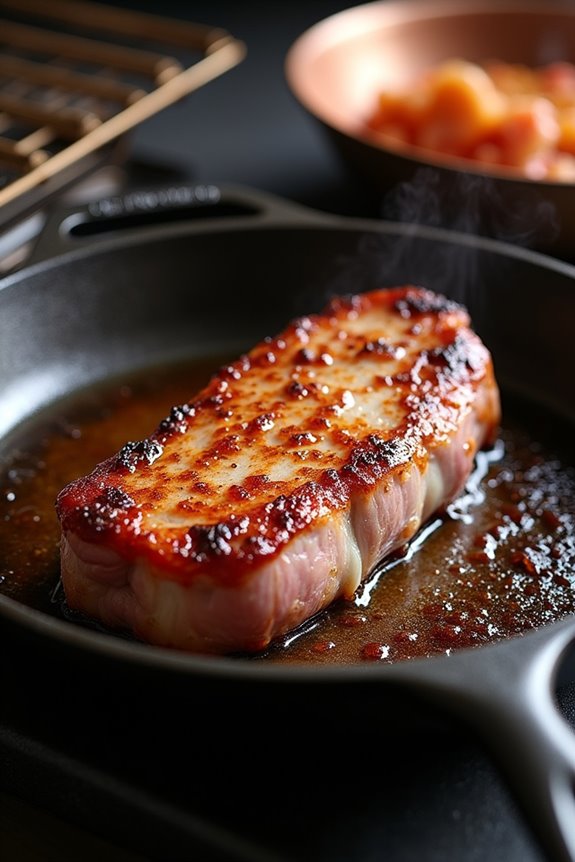
After braising, you’ve got three solid ways to finish your jowl and get that crispy exterior you’re after. You can broil it for just 2–3 minutes per side at about 6 inches from the heat, use your oven at 400°F for 15–20 minutes per side, or pan-fry it in cast iron over medium heat. The key is slicing those ½-inch-thick pieces first, watching your temperature carefully, and letting the internal tenderness from braising meet the golden-brown crust you’re creating.
Broiling For Crispy Texture
Once your braised jowl is fork-tender and glazed, it’s time to get that exterior seriously crispy. Switch your oven to broil and arrange your ½-inch slices on a rimmed sheet. Position them about 6 inches from the heat source. You’ll want to broil each side for 2–3 minutes until they’re golden and crispy like premium jowl bacon. Here’s the thing: remove that foil carefully first to avoid steam burns. The edges can char quickly, so stay nearby and monitor closely. That rimmed sheet catches splatters, making cleanup easier. If broiling feels intimidating, pan-frying or oven-baking at 400°F works great too. But honestly, broiling delivers that restaurant-quality crunch you’re after.
Cast Iron Cooking Methods
Cast iron’s where the real magic happens for finishing your jowl. You’ll get results that rival belly bacon when you nail this technique. After braising, your meat’s tender and ready for the final move.
| Method | Temperature | Time | Result |
|---|---|---|---|
| Broiling | 6 inches from heat | 2–3 min/side | Crispy exterior |
| Pan-frying | Medium-high | 3–4 min/side | Golden brown |
| Baking | 400°F | 15–20 min/side | Even browning |
Slice your jowl into ½-inch pieces first. Use a rimmed sheet to catch splatters when broiling. The high heat develops that crispy exterior you’re after without overcooking inside. Short intervals keep things controlled. Pan-frying gives you hands-on control and gorgeous caramelization. Baking works when you want consistent results without babysitting. Choose your method based on your mood and time.
Temperature Control and Timing
Nailing the finish is where you’ll transform tender braised jowl into something restaurant-worthy. You’ve got three solid finishing options, and honestly, they’re all winners.
Your first choice? The broiler route. Slice your jowl into 1/2-inch pieces and position them six inches from heat. You’ll brown each side for two to three minutes—crispy exterior, tender inside.
Prefer oven-baking? Set your temperature to 400°F and give each side fifteen to twenty minutes. It’s more forgiving than broiling.
Pan-frying over medium heat is your third lane. You’ll get beautiful browning without the guesswork.
Here’s the pro move: remove that foil carefully before slicing. Steam venting matters. Your jowl’s already incredibly tender from braising, so you’re just building flavor and texture now. Pick whichever method fits your vibe.
Quick Weeknight Stir-Fry for Fresh Jowl
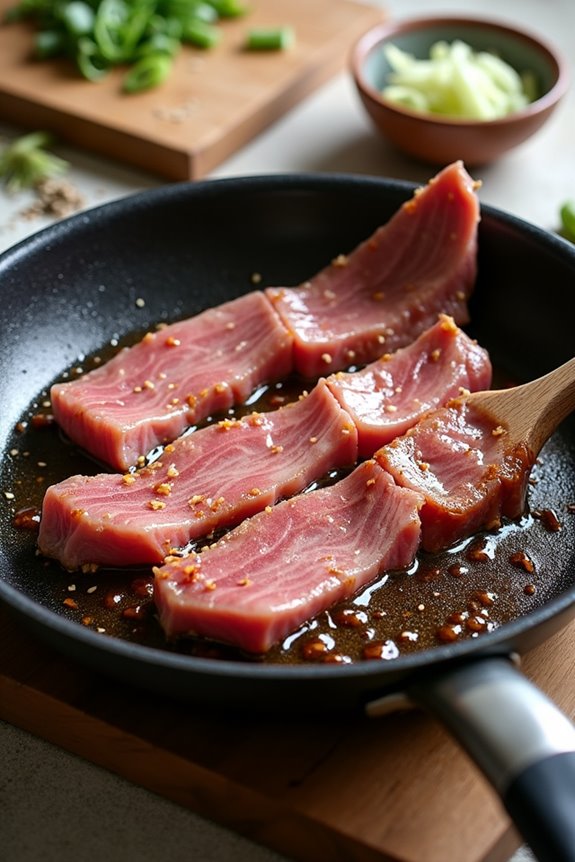
When you’re hungry but short on time, fresh pork jowl becomes your hidden asset. Slice it thin—about quarter-inch strips work great—so it cooks fast and stays tender. Heat your wok or skillet until it’s really hot, then add your pork jowl in a single layer. Let each piece sear properly instead of crowding the pan. You’ll watch that rich fat render beautifully in just minutes.
Toss in minced garlic and ginger, then season with soy sauce and a drizzle of honey. The sweetness balances the jowl’s richness perfectly. Stir in your veggies—peppers, broccoli, onions—whatever you’ve got handy. They cook quickly too. Finish with a splash of vinegar for brightness. That’s it. Dinner’s ready, and you’ve nailed a restaurant-quality dish at home.
Temperature and Timing Charts for Every Method
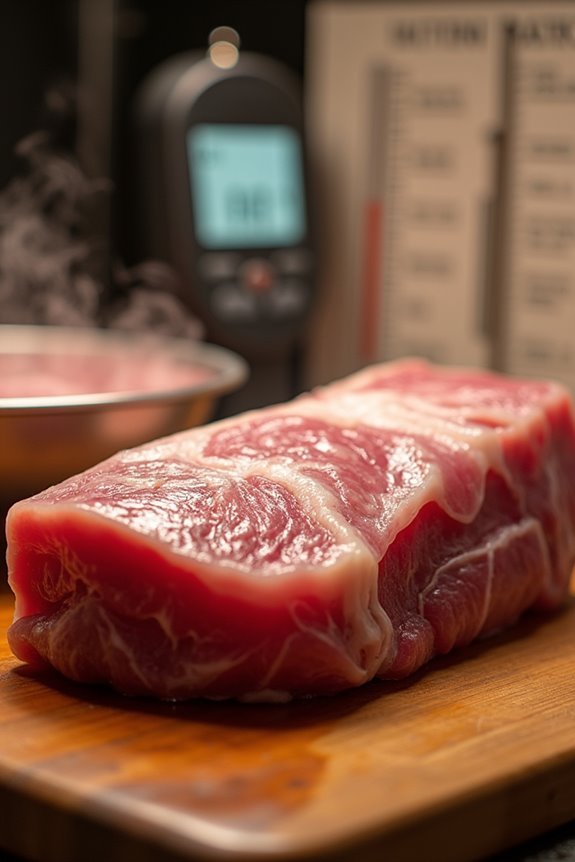
How’d you like to nail pork jowl every single time? You’ve got three solid methods to master:
- Braise then broil: Braise at 300°F for 2 hours until tender. Then broil sliced jowl 6 inches from heat for 2–3 minutes per side.
- Oven-bake finish: Skip broiling and bake at 400°F for 15–20 minutes per side instead.
- Quick pan-fry: Brown sliced jowl on medium heat both sides for a faster option.
The braising step’s non-negotiable—you need that liquid covering your meat. It transforms tough cuts into something incredible. Your choice comes down to how much time you’ve got and what finish you’re craving. Either way, you’re getting restaurant-quality pork jowl at home.
Smoking and Curing Jowl Bacon at Home
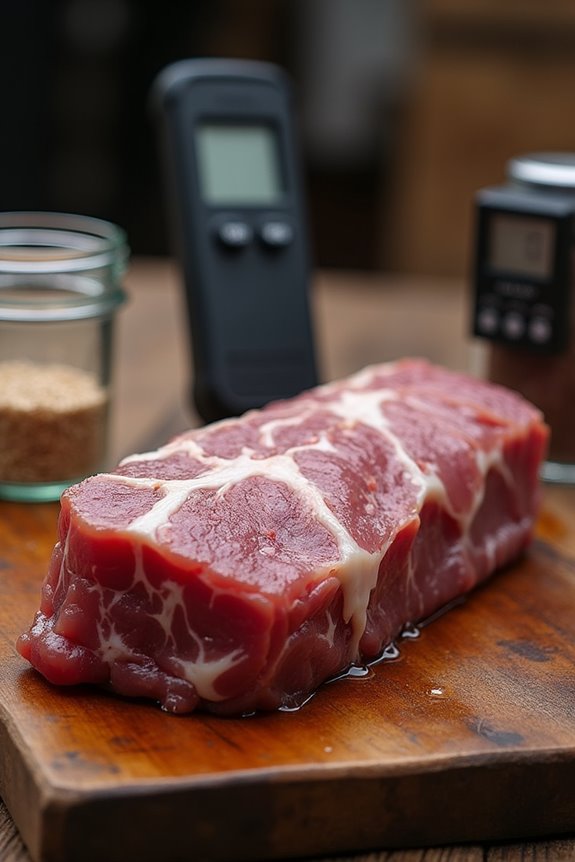
Making your own jowl bacon at home? You’re in for a treat, friend. Start with a simple salt cure using about 2% of your pork jowl’s weight in regular salt, plus 0.25% curing salt. Add optional sugar if you like sweetness. Vacuum seal everything for a week, flipping daily if you’re going old-school without a sealer.
After curing, rinse your jowl thoroughly and pat it dry. Refrigerate it overnight on a rack to develop that perfect texture. Then comes the fun part—smoking. Keep your smoker around 165°F or cooler for three to eight hours using pecan, oak, or cherry wood. You’ll end up with that gorgeous rosy hue and distinct bacon flavor. Cool completely before slicing thin and enjoying your homemade creation.
Sliced Jowl as Po’ Man’s Bacon: Cooking and Storage
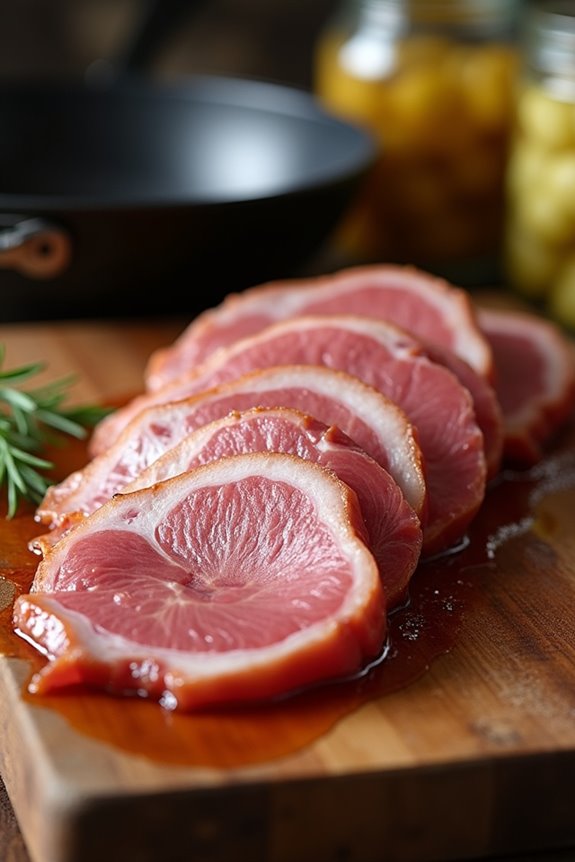
You’ve probably seen packages labeled “Sliced Pork Belly” at your local butcher or grocery store—that’s sliced jowl, the budget-friendly bacon alternative folks call “Po’ Man’s Bacon.” Unlike the cured and smoked jowl bacon you made at home, this stuff comes fresh and unseasoned, which means you’re doing the salting yourself.
Sliced pork jowl—the budget-friendly bacon alternative known as “Po’ Man’s Bacon”—comes fresh and unseasoned, ready for your own seasoning.
Here’s how to cook it like you know what you’re doing:
- Heat a dry cast iron skillet over medium-low heat
- Lay thin slices (around 2 mm) in the pan
- Cook to near-doneness, flip carefully with tongs, then salt and finish off-heat
Store your pork jowl cold and use it within days for best results. This versatile cut deserves space in your kitchen rotation.
Aromatics and Vegetables That Enhance Braised Jowl
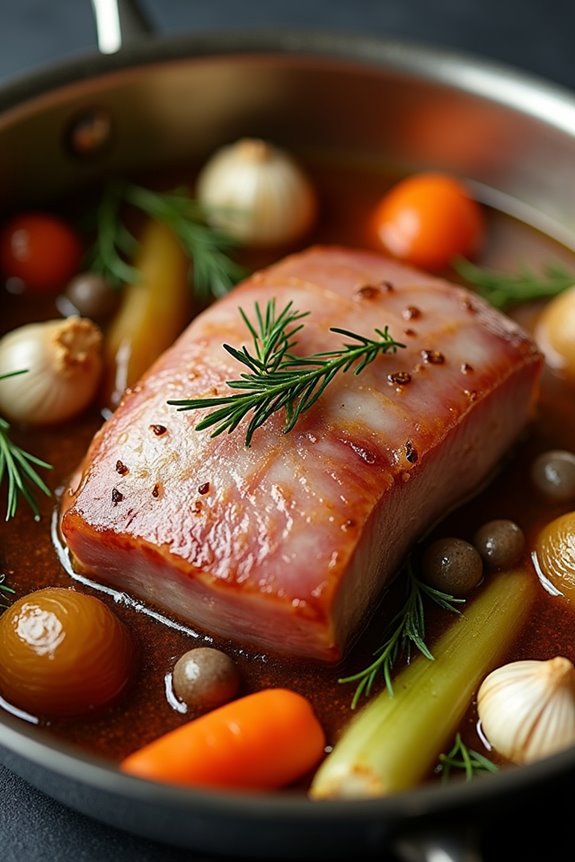
When you’re braising pork jowl, the aromatics you choose’ll make or break the dish. Start with garlic and onion—they’re your flavor foundation. Brown them first to develop deeper, richer notes that’ll carry through everything.
Next, add dried thyme, black pepper, and smoked paprika to build complexity. A dash of hot pepper sauce brings balance without overwhelming the meat’s natural richness.
Your braising liquid combines chicken broth with apple cider vinegar. This acidity cuts through the fat and helps tenderize during those two-plus hours of cooking.
When you’re ready to finish, broil sliced jowl with caramelized aromatics on top. You’ll get that crispy exterior contrasting beautifully with tender meat inside.
Serve alongside roasted vegetables or cauliflower sides. They’ll soak up those delicious braising juices perfectly.
Why Jowl Dries Out (and How to Prevent It)
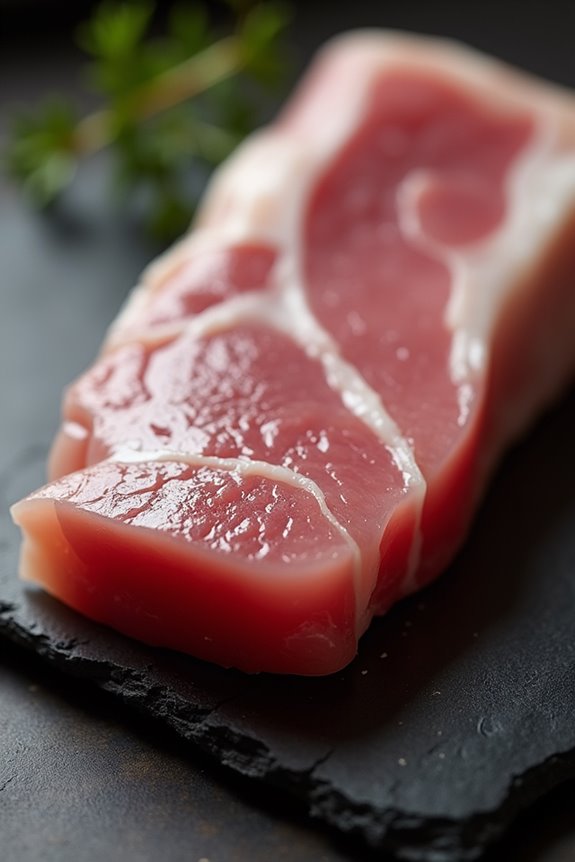
Most home cooks mess up pork jowl by treating it like a lean cut, and that’s where things go sideways. Jowl’s got fat, but it’ll still dry out if you’re not careful.
Pork jowl has fat, but it’ll still dry out if you treat it like a lean cut. That’s where things go sideways.
Here’s what actually happens:
- High heat after braising zaps the moisture you worked to build up
- Thin slices under ½ inch expose too much surface area to evaporation
- Uncovered cooking lets liquid escape, leaving you with tough, stringy meat
The fix? Keep your jowl submerged in braising liquid the whole time. When you’re done braising, skip aggressive finishing methods. A brief pan-sear or quick broil works, but nothing longer. You’ll nail tender, juicy jowl every time by respecting the cooking process and resisting the urge to rush it.
Make Guanciale-Style Jowl Bacon
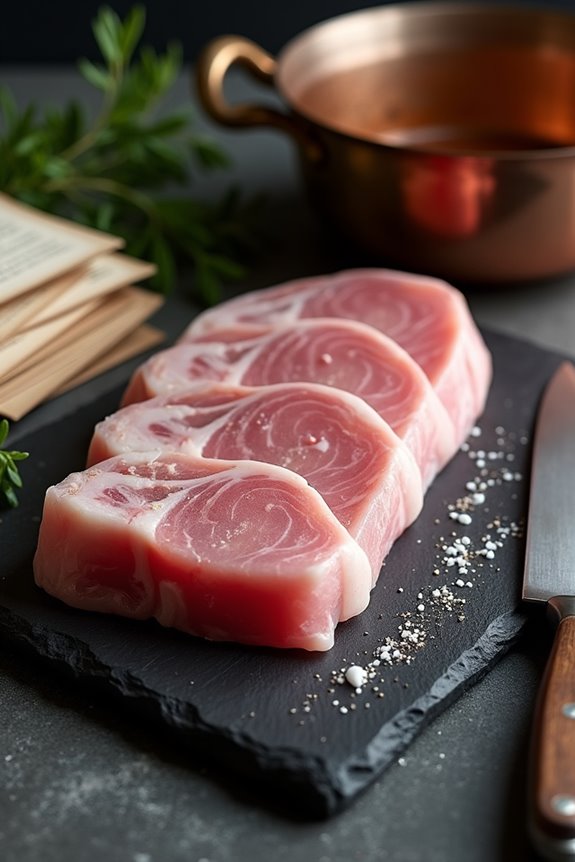
You’ll want to start with a simple salt cure: mix 2% regular salt and 0.25% curing salt by weight, then vacuum-seal your jowl and refrigerate it for deep flavor development. Once you’ve cured it, cold-smoke the jowl around 165°F or lower for 3–8 hours using woods like oak or hickory until it turns that perfect rosy bacon color. After smoking, you’ll slice it thin (about 2 mm), chill it down, and you’re ready to pan-fry it crispy whenever you need that silky, fatty Southern-style bacon in your beans or pasta.
Curing Method and Measurements
The magic of homemade guanciale starts with a simple salt cure that’s honestly easier than you’d think. You’ll massage your jowl with these three essentials:
- Regular salt at about 2% of your jowl’s weight
- Curing salt at roughly 0.25% for that authentic flavor
- Optional brown sugar (around 0.5 cup) for subtle sweetness
After massaging thoroughly, vacuum-seal everything and refrigerate for about a week. If you’re skipping the vacuum seal, flip your jowl daily instead. Pork jowl curing this way develops remarkable depth. Once that week’s up, rinse it off completely and pat it dry. Refrigerate it on a rack overnight before smoking. You’re now ready for the next step—transforming this into something genuinely special.
Smoking, Chilling, and Storage
Once your cured jowl’s dried and ready, it’s time for smoke. You’ll want to keep temperatures cool—around 165°F works perfectly. Smoking takes three to eight hours, depending on how deep you want that flavor. Pecan, oak, hickory, or apple wood all give you that delicious bacon-like taste we’re after.
After smoking, chill your jowl completely in the fridge before slicing. This step matters—it makes everything easier and tastier. Once it’s cold, slice thin, around two millimeters. That thinness gives you tender, perfect pieces for frying.
Storage is where your patience pays off. Properly stored jowl keeps for weeks in your fridge. Vacuum-seal it, and you’ve got bacon magic lasting over a year. Pretty solid payoff for your effort.
What to Do With Leftover Braised Jowl
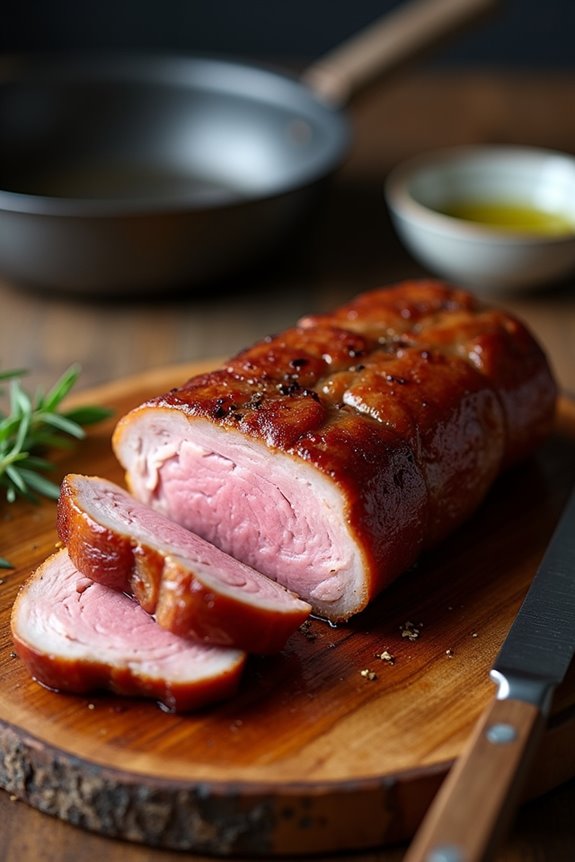
How’re you planning to use that leftover braised jowl? You’ve got some seriously tasty options that’ll make you glad you cooked extra pork jowl in the first place.
Slice your leftovers into ½-inch pieces and choose your reheating method:
- Broil slices 6 inches from heat for 2–3 minutes per side to re-crisp the exterior
- Pan-fry over low to moderate heat with a splash of braising liquid for moisture
- Oven-bake for gentle, even warming that preserves tenderness
The real secret? Use that braising liquid when reheating. It keeps everything moist and flavorful.
Pair your pork jowl with mashed cauliflower, roasted vegetables, or sweet potatoes. The smoky seasoning complements these sides perfectly.
Store leftovers tightly wrapped in your fridge and use within a few days. Trust us—your taste buds will thank you.
Pairing Jowl With Your Favorite Sides
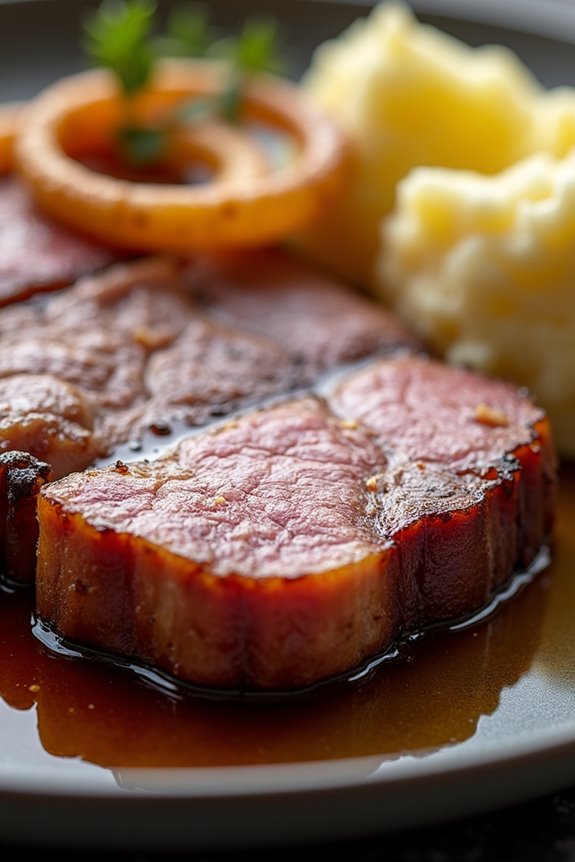
Now that you’ve mastered reheating your braised jowl, it’s time to think about what goes on the plate alongside it. You’ll want sides that balance jowl’s rich, fatty goodness without competing for attention. Hearty starches like mashed sweet potatoes or roasted vegetables work beautifully. They soak up that delicious rendered fat you’ve worked so hard to develop.
Here’s the thing: beans and greens are your indispensable asset. Think collard greens or a classic bean dish where your jowl’s fat adds serious depth. The earthiness matches perfectly.
Don’t forget brightness, though. A squeeze of lemon or splash of apple cider vinegar cuts through richness. Just go easy on glazes—you don’t want overpowering flavors drowning out your jowl’s natural pork taste.