
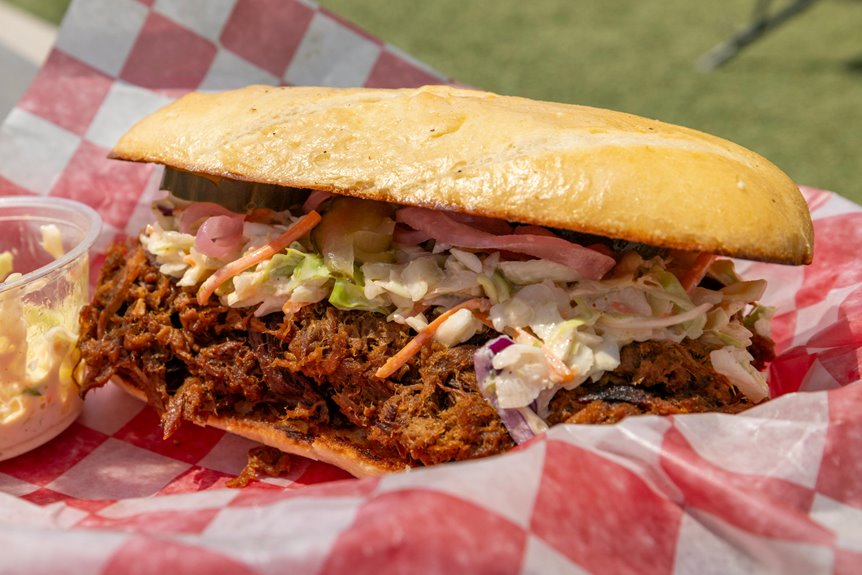
You’ll want ¾ to 1 pound of raw pork per person—not cooked weight. Here’s why: pork shrinks about 40% when you smoke it, so that raw amount gives you roughly ⅓ to ½ pound cooked per person. It sounds like a lot upfront, but trust me, it accounts for all that moisture and fat that disappears during cooking. Planning from raw weight prevents the painful moment when you run out early. Stick around to see how this changes for buffets versus plated dinners.
The Quick Answer: ¾ to 1 Pound Raw Per Person
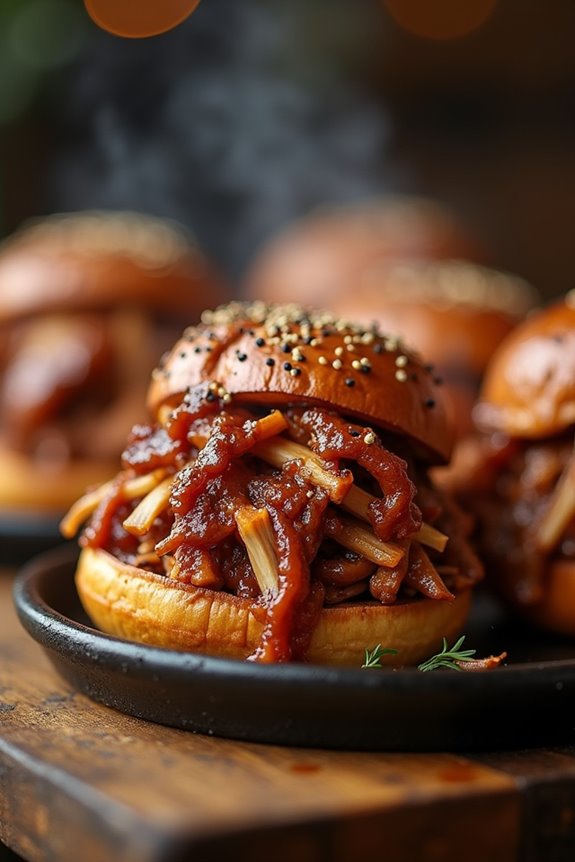
When you’re planning pulled pork for a crowd, here’s the golden rule: grab ¾ to 1 pound of raw pork per person.
This range accounts for the shrinkage and trimming that happens during cooking. You’re not losing money—you’re just getting realistic about what actually makes it to the plate.
Here’s why this matters: raw pork shoulder loses significant weight as fat renders and moisture evaporates. That cooking yield typically gives you ⅓ to ½ pound of actual pulled pork per person, depending on how generously you’re serving.
Why Raw Weight Matters More Than Cooked Weight?
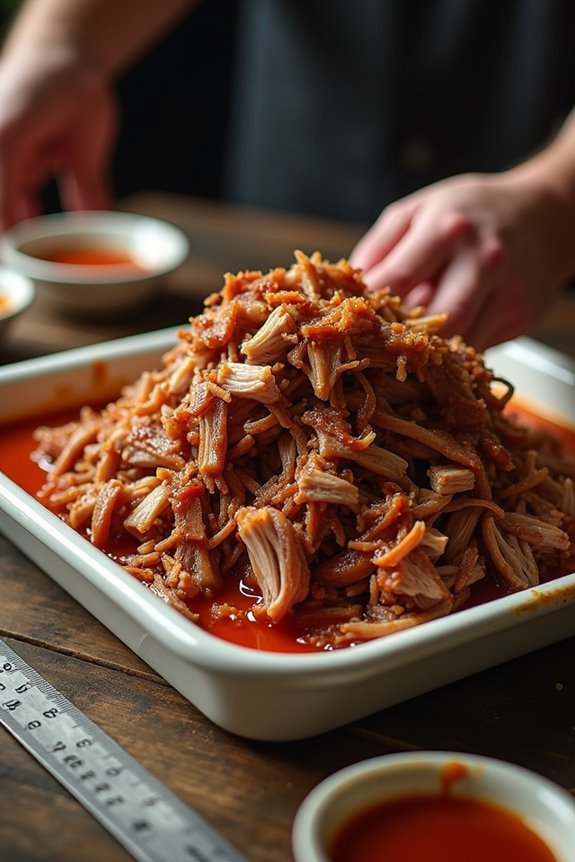
Why does raw weight matter so much more than cooked weight?
When you cook pork, it shrinks about 40% due to trimming, bone, and moisture loss—that’s why raw weight matters.
You’ll want to work backwards from your cooked yield target. Here’s why: when you cook pork, it shrinks about 40% due to trimming, bone, and moisture loss. That means your final cooked weight is only roughly 60% of the raw weight you started with.
Let’s say you need 10 pounds of cooked pulled pork. You’d actually purchase about 16.7 pounds raw. If you planned based on cooked weight alone, you’d come up short and disappoint your guests.
Raw weight gives you the real picture of how much meat to buy. Working with cooked yield targets keeps you from over-purchasing or under-serving. It’s the practical approach that prevents costly mistakes and ensures you’ve got enough delicious pulled pork for everyone.
Why Pulled Pork Shrinks (and How Much to Expect)
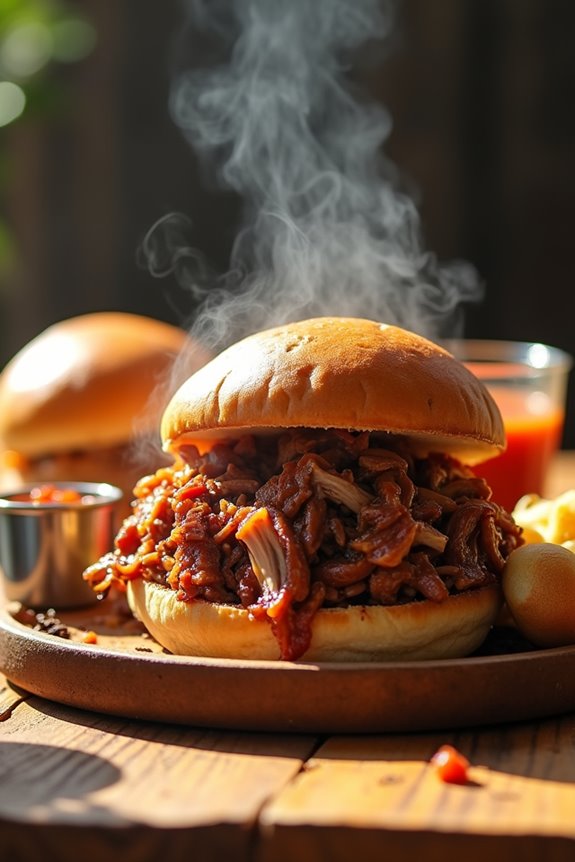
Ever wonder where all that meat goes when you’re smoking a pork shoulder? The answer is moisture loss, rendered fat, and bone removal. Your pulled pork shrink can reach 40% of its original weight during smoking.
Here’s what happens during the cooking process:
| Factor | Impact | Weight Loss |
|---|---|---|
| Moisture evaporation | Steam escapes continuously | 15–20% |
| Fat rendering | Liquid fat drips away | 15–25% |
| Bone and trim removal | Inedible portions discarded | 5–10% |
Understanding raw-to-cooked conversion helps you plan correctly. If you want 10 pounds of cooked yield, divide by 0.6 to get your raw weight needs. You’ll need roughly 16–17 pounds raw pork. Variables like cut size, wrap method, and cooker performance affect your actual shrink rate. Always round up slightly to avoid running short at your gathering.
Self-Serve vs. Plated: How Service Style Changes Portions
How you serve pulled pork dramatically shifts how much meat you’ll actually need. With self-serve buffets, guests grab generous portions and often circle back for seconds. You’re looking at roughly 1/4 pound of cooked pulled pork per person as your baseline. But here’s the thing—people fill their plates differently when they’re doing the serving. That means you’ll want to bump your total meat amount up by about 10–20% compared to plated service. Plated service gives you way more control. Your kitchen team portions everything, so guests get consistent, slightly smaller amounts. You’ll spend less money overall because there’s less waste and overfilling. Think of it this way: buffets need buffer stock, while plated meals are precision-engineered. Choose based on your crowd’s vibe and your budget.
Adjust Pulled Pork Portions for Kids and Appetites
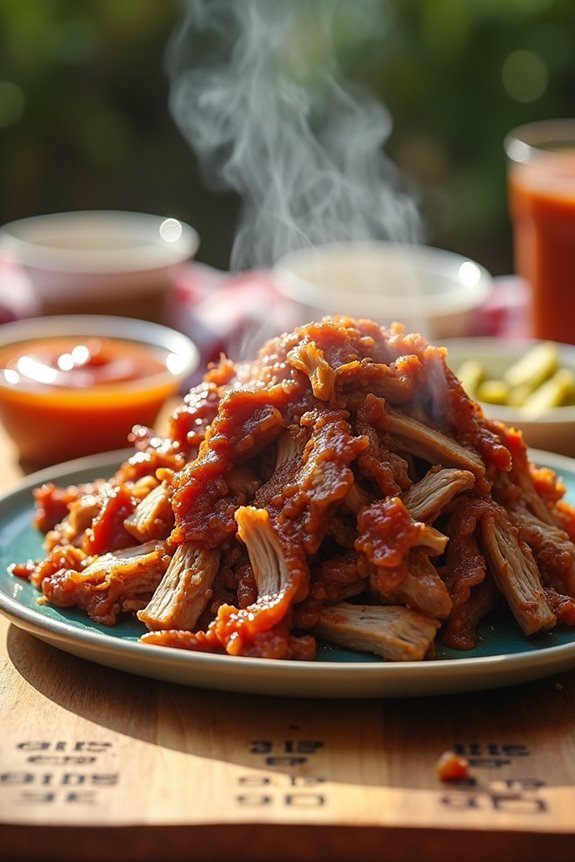
When you’re feeding a mixed crowd of adults and kids, your pulled pork math gets a little trickier. Kids generally eat less than adults, so you’ll want to plan accordingly. Instead of assuming everyone needs a full pound raw, use a conservative estimate like ¾ pound per person across your group. This approach prevents overbuying while keeping everyone satisfied.
| Group Type | Raw Pork Per Person | Cooked Yield | Kids Portions |
|---|---|---|---|
| Adults Only | 1 pound | ⅓–½ pound | N/A |
| Mixed Adults & Kids | ¾ pound | ¼–⅜ pound | ¼–½ pound |
| Mostly Kids | ½ pound | ⅙–¼ pound | ¼–⅜ pound |
| Heavy Appetites | 1¼ pounds | ⅜–⅝ pound | ⅜–½ pound |
How Sides and Other Proteins Reduce Pulled Pork Needs
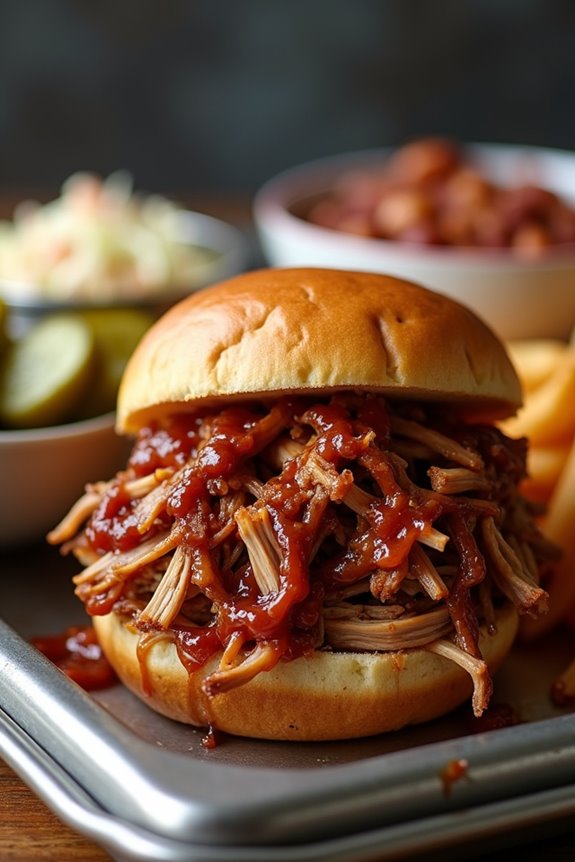
Want to stretch your pulled pork budget without leaving anyone hungry? Here’s the thing: sides and other proteins work magic on your servings math.
When you’ve got ample sides like coleslaw, baked beans, or mac and cheese, your guests won’t need a full half-pound of pork per person. You can comfortably scale down to one-third or one-half pound instead. Starches like rolls and potatoes fill bellies quickly, naturally reducing how much pulled pork people actually eat.
Adding a second protein—think brisket or chicken—shifts expectations too. Your appetite-conscious guests will mix and match proteins rather than loading up solely on pork.
The catch? Buffet formats can backfire. Self-serve setups encourage bigger helpings, so you might keep portions higher if you’re expecting guests to load multiple items on their plates.
Serving Sizes: Lunch vs. Dinner vs. Appetizer
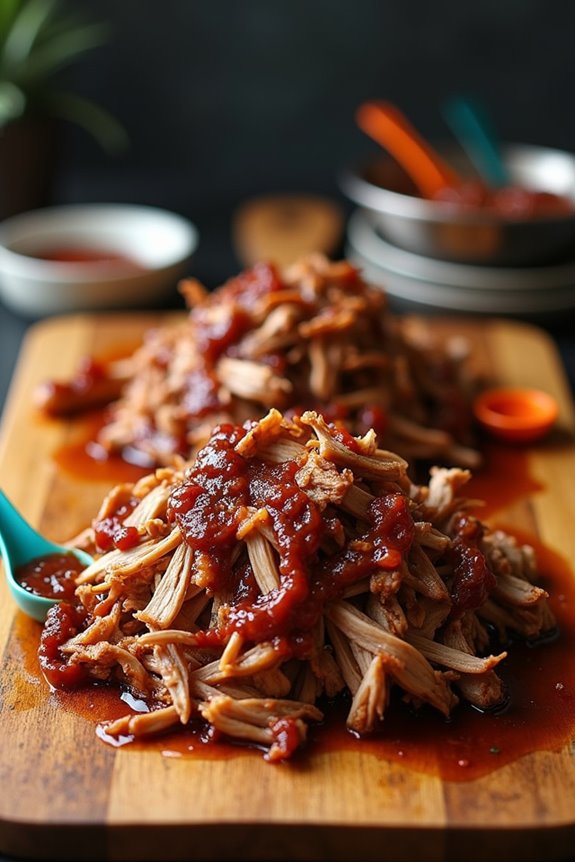
You’ll notice your appetite shifts dramatically depending on when you’re eating pulled pork. For lunch, you’re probably grabbing a sandwich or two, so 1/4 to 1/3 pound per person does the trick. But dinner? That’s when you’re genuinely hungry, and you’ll want 1/3 to 1/2 pound per person to feel satisfied.
Meal Type Portion Differences
How much pulled pork you’ll need really depends on what meal you’re serving.
For lunch, you’re looking at a lighter pork per person—around 1/4 to 1/3 pound of cooked meat. It’s satisfying without being overwhelming. Dinner’s different though. You’ll want 1/2 pound or more cooked meat per person because people expect heartier portions when it’s the main event.
Appetizers require tiny portions size: just 1/4 to 1/3 cup, or about 2–3 ounces cooked meat per person. Think bite-sized tastings.
When you’re doing sandwiches with buns, bump it up to around 1/2 pound per person. The bun and toppings take up space, but everyone still wants plenty of meat.
Got heavy sides or another main dish? Scale back to 1/4 to 3/8 pound per person. You’re basically giving your guests options, which they’ll appreciate.
Time Of Day Appetite Adjustments
Your guests’ stomachs operate on a schedule, and that’s where things get interesting. Time of day dramatically shifts how much pulled pork people actually eat. You’ll notice appetite adjustments happen naturally throughout the day, so smart planning means matching portions to when you’re serving.
Here’s what you’re working with:
- Lunch crowds eat lighter—aim for 1/3 to 1/2 pound per person
- Dinner guests typically consume more—bump up to 1/2 to 3/4 pounds per person
- Appetizer settings need just 1/4 to 1/3 pound per person
- Buffet-style dinners see higher intake than plated lunches
Avoid These 5 Common Calculation Mistakes
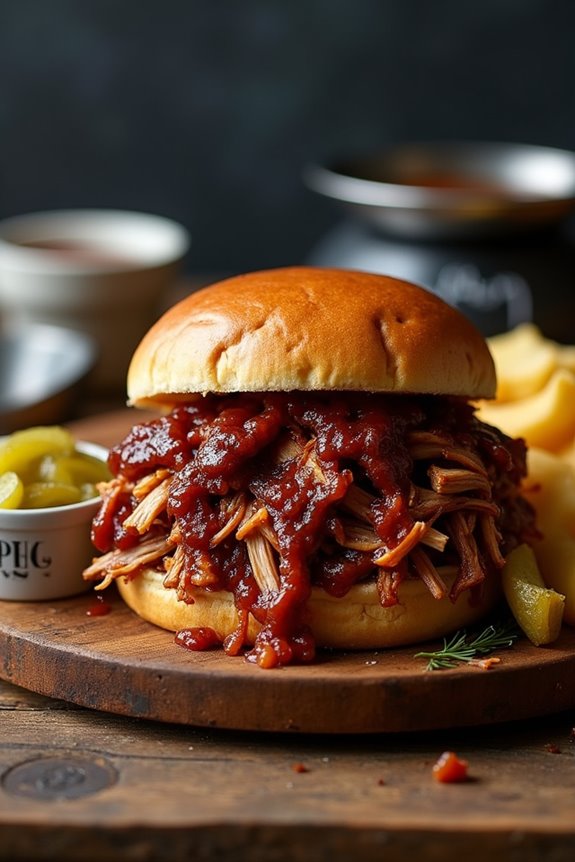
When you’re buying pulled pork for a crowd, it’s surprisingly easy to mess up your math. You’ll want to dodge these five common pitfalls that trip up even experienced grillers.
First, don’t confuse cooked vs raw weight. Raw pork shrinks about 40% when cooked, so using cooked-weight estimates backwards leaves you short. Second, serving size varies wildly—anywhere from 1/4 to 1/2 pound per person depending on your crowd’s appetite.
| Mistake | Impact | Fix |
|---|---|---|
| Raw/cooked confusion | Buy too little | Multiply cooked by 1.67 |
| Ignoring bone-in pork yield | Underestimate needs | Account for 25% bone waste |
| Skipping side dishes | Miscalculate servings | Reduce meat portions accordingly |
| Forgetting waste allowance | Run short | Add 10% buffer |
Third, bone-in cuts affect your pork yield differently than boneless. Fourth, sides and buns shrink your per-person meat needs. Finally, account for reheating losses and spillage.
Calculate Portions for 10, 20, 50, and 100 Guests
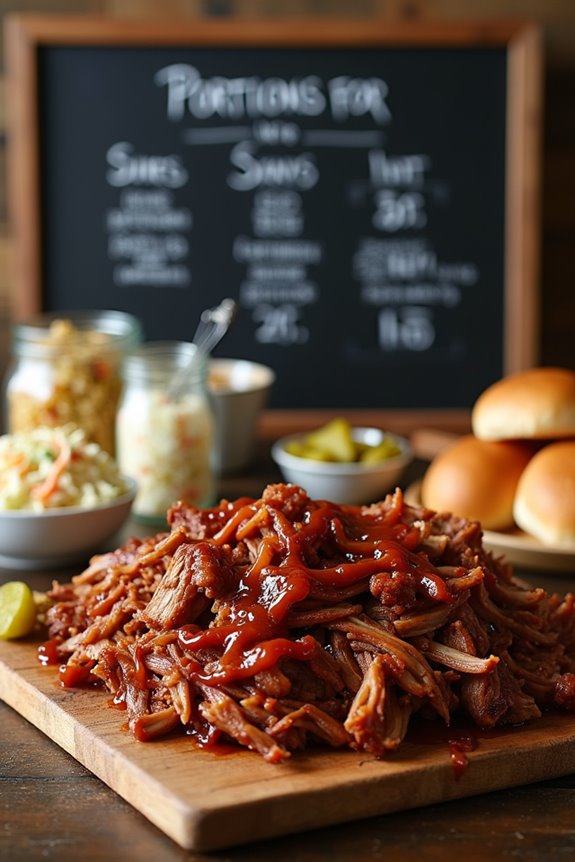
Once you’ve nailed down your math basics, it’s time to get specific. Here’s what you’re looking at for different crowd sizes:
- 10 guests: Grab 7 to 10 pounds of raw pork weight for smooth execution
- 20 guests: Plan 15 to 20 pounds raw pork to yield about 10 to 12 pounds cooked pork yield
- 50 guests: Budget 38 to 50 pounds raw pork weight for roughly 25 to 32 pounds cooked
- 100 guests: Target 75 to 100 pounds raw pork to produce 50 to 66 pounds cooked pork yield
Your pork per person stays consistent at about ⅓ to ½ pound cooked meat. The shrinkage factor matters here—raw meat loses roughly 50% during cooking. These numbers keep everyone satisfied without wasteful leftovers piling up.
Work Backward: From Cooked Meat to Raw Pounds
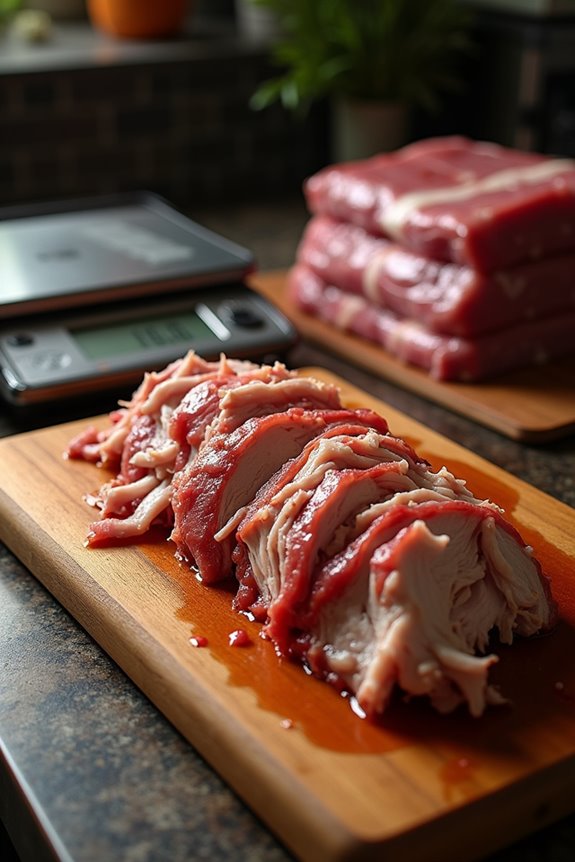
Those portion calculations we just covered work great if you’re starting from scratch. But here’s the reality: you’ll need more raw meat than your cooked target suggests.
Pork butt shrinks about 40% during cooking. That means your cooked meat weighs only 60% of what you started with. So you’ve got to work backward from your cooked goal.
Let’s say you want 30 pounds of pulled pork ready to serve. You’d divide by 0.6 to find your raw starting point: roughly 50 pounds of raw pork butt.
This cooked to raw ratio saves you from underestimating your shrinkage. You’ll account for fat render-off, moisture loss, and trimming. Your guests get satisfied, and you’re not scrambling for extra meat halfway through the cookout.
How Many Sandwiches Does Your Pulled Pork Make?
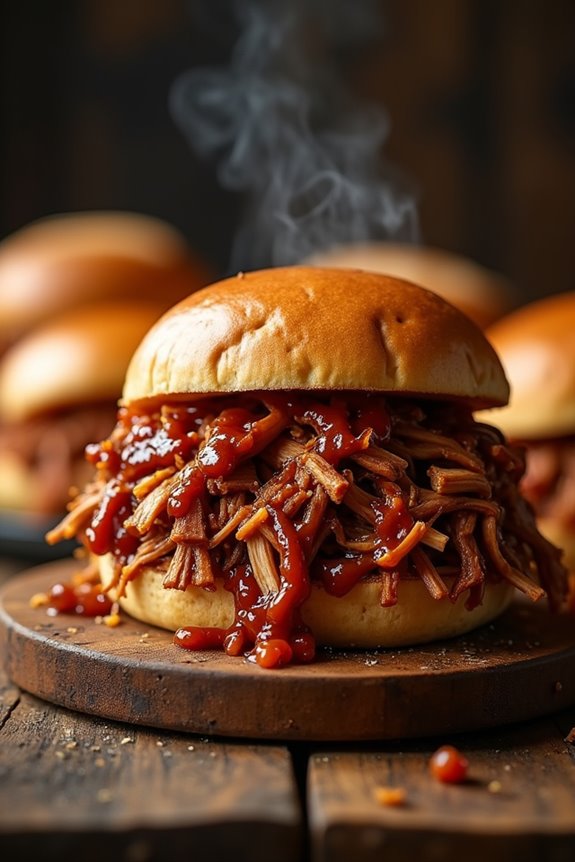
You’re probably wondering how many sandwiches you’ll actually get from your pulled pork, and that’s where portion size and serving method really matter. A pound of cooked pork typically makes about four sandwiches, but smaller buns might stretch it to five or six, while loaded sandwiches might cut it down to two or three. The key is figuring out whether you’re serving dainty slider-style portions or those massive, messy sandwiches people actually want at a BBQ.
Sandwiches Per Pound
How many sandwiches can you actually make from a pound of pulled pork? The yield depends on your serving size and bun choice. Here’s what you’re working with:
- Standard buns: 4 to 6 sandwiches per pound
- Slider buns: 6 to 8 sandwiches per pound
- Generous portions: 2 to 3 sandwiches per pound
- Average serving: 3/4 cup of meat per sandwich
You’ll typically use about 3/4 cup of cooked pulled pork for each sandwich. That’s your sweet spot for a satisfying, not-too-skimpy portion. If you’re going bigger or piling it high, you’ll get fewer sandwiches. Slider buns stretch your meat further, giving you more servings. The key is knowing your crowd and adjusting accordingly. Plan for 4 to 6 sandwiches per pound as your reliable baseline.
Portion Size Calculations
Now let’s figure out exactly how many sandwiches you’ll actually get from your pork. The math is simpler than you’d think.
Most cooks use about 3/4 cup of pulled pork per sandwich. That’s your baseline for a solid, satisfying sandwich. From one pound of cooked meat, you’re looking at roughly four sandwiches. Pretty straightforward, right?
If you want bigger sandwiches, you’re dropping to three per pound. Going lighter? You might stretch one pound to six servings.
Here’s what helps with portion size planning: assume 1/2 pound of raw pork per person. This gives you that sweet spot of 1/3 to 1/2 pound of cooked pulled pork for each sandwich.
Track your servings per pound carefully. You’ll nail your quantities and impress your crowd every single time.
Serving Method Impact
The way you’re serving pulled pork actually changes how much you’ll need. Your serving method directly impacts the pork yield and cooked-to-raw ratio you should plan for.
Here’s what changes your serving size:
- Plated dinners require 6 ounces cooked per person
- Self-serve buffets need 9 to 12 pounds cooked per 10 guests
- Sandwich stations work with 3 to 4 sandwiches per pound
- Drop-in events demand extra portions for uncertainty
When you’re doing a buffet, guests naturally grab more. They’ll take 1.5 to 2 sandwiches instead of one. That means you’re looking at roughly 15 to 20 pounds raw per 10 guests.
If you’re plating individual servings, you’ll need less. The cooked-to-raw ratio stays consistent, but controlled portions mean less waste. Think about your crowd’s hunger level too. Heartier eaters? Bump your estimates up.
Plan Extra: Why You Should Overestimate Slightly
Ever wonder why your pulled pork estimates seem to fall short? You’re not alone in this common pitfall. Here’s the thing: raw pork shrinks about 40% during smoking. That means you’ll lose weight from trimming, bone, and moisture loss. So if you’re aiming for ⅓ to ½ pound cooked per person, you’ll actually need ¾ to 1 pound raw. For 50 guests wanting 25 pounds cooked, buy roughly 40–45 pounds raw pork. Using multiple smaller butts helps you hit your target more reliably than one giant piece. Overestimate slightly—it’s way better having leftovers than running short when hungry guests are counting on you. Trust us, your pork yield matters more than you’d think.
What to Do With Leftover Pulled Pork
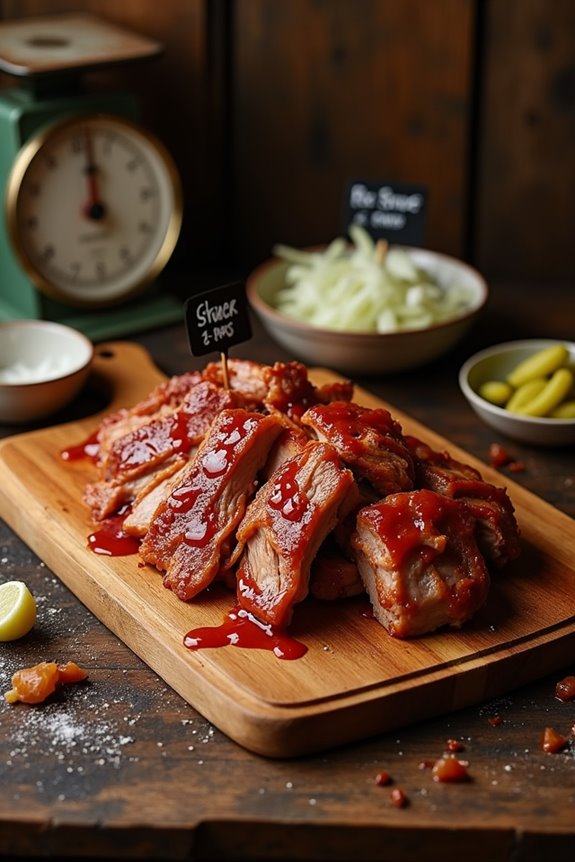
What happens when you’ve cooked way too much pulled pork? Don’t worry—you’re in good company, and those pork leftovers are actually your secret weapon for waste reduction.
Store your extras in airtight containers within two hours of cooking. Label them with the date so you’ll remember what you’ve got. Here’s how to make the most of them:
Store pulled pork in airtight containers within two hours, label with the date, and unlock endless meal possibilities.
- Transform them into sandwiches with coleslaw and sauce
- Load tacos or nachos for quick weeknight dinners
- Toss them into soups for extra heartiness
- Pack them into breakfast scrambles or hash browns
When reheating, bring everything to 165°F to stay safe. You’ll stretch your portions further and feel proud knowing you’re minimizing waste. Your future self will thank you for the shortcut dinner options.